Sugawara Shrine (Yabase Honmachi, Akita City, Akita Prefecture) Complete Guide
Located at 4-4-3 Yabase Honmachi, Akita City, Akita Prefecture, Sugawara Shrine is a historic shrine dedicated to Sugawara no Michizane, known as the god of learning. During exam season, it is bustling with worshippers from all over the prefecture praying for success, and is a beloved center of local faith.
This article comprehensively covers everything you need to know before visiting Sugawara Shrine, including its history, enshrined deities, goshuin (shrine stamp) information, access methods, and points to consider when visiting.
Basic Information about Sugawara Shrine
Location and Contact Information
- Address: 4-4-3 Yabase Honmachi, Akita City, Akita Prefecture 010-0973
- Phone Number: 018-823-2090
- Visiting Hours: Open 24 hours (Please check separately for shrine office hours)
Deity Enshrined
The deity enshrined at Sugawara Shrine is Sugawara no Michizane. A scholar and politician active during the Heian period, Sugawara no Michizane, enshrined as Tenjin-sama after his death, is worshipped nationwide as the god of learning, literature, and calligraphy.
Within Akita City, it is widely known as a shrine for praying for academic success and passing exams, and many students and their families visit in preparation for exams.
History and Origins of Sugawara Shrine
From Founding to Relocation to Current Location
According to the Akita Prefectural Shrine Association’s records, the history of Sugawara Shrine dates back to the Keian era (1648-1652). Initially, the Tenjin shrine located in Kitano, Tenno Village, Minami-Akita District, was invited to Hakooka, Kawajiri Village, and was called Hakooka Tenmangu.
Later, it moved to the south of Hiyoshi Shrine, but in Enkyo 3 (1746), due to the construction of the Toshogu Juryoin, it was relocated to its current location in Yabase Honmachi, Akita City, and renamed Sugawara Shrine.
Historical Background and Connection to the Region
Sugawara Shrine, which has existed since the Edo period, has functioned as a center of academic faith in Akita’s castle town. As a shrine dedicated to Tenjin-sama (Sugawara no Michizane), it has attracted the faith of a wide range of people, from the samurai class to commoners. Especially during the era when terakoya (temple schools) education flourished, people praying for academic success visited the shrine.
Even today, it remains deeply rooted in the community as the tutelary shrine of the Yatsuhashi district, attracting many worshippers throughout the year, including for New Year’s visits, Shichi-Go-San (a traditional rite of passage for children), and during exam season.
Highlights of the Shrine Grounds
Worship Hall and Main Sanctuary
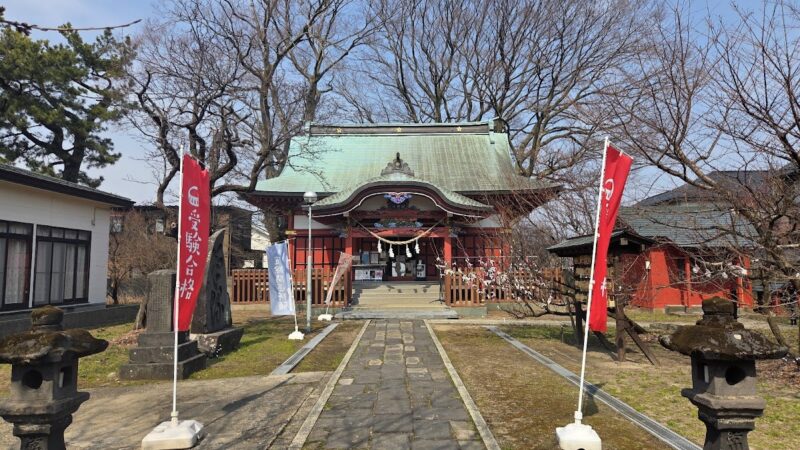
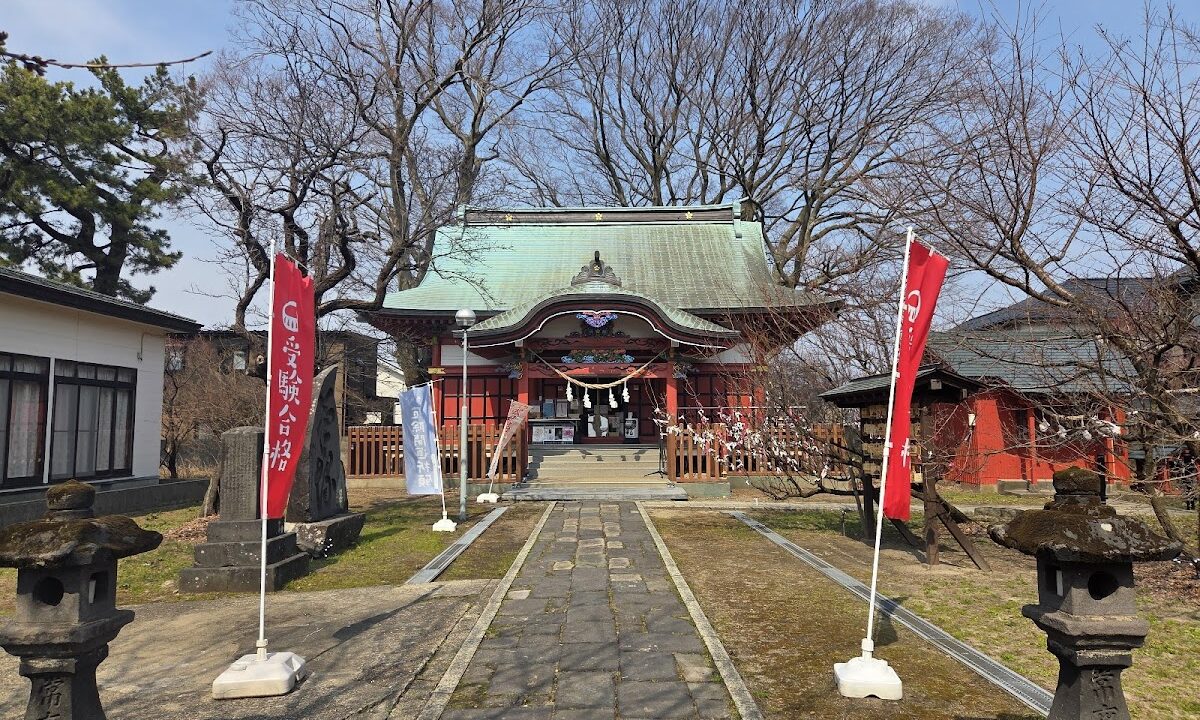
The worship hall of Sugawara Shrine underwent a complete renovation and painting at the end of March 2023, welcoming worshippers with its vibrant vermilion paint. The renovation has restored the beauty of the shrine building, creating an even more solemn atmosphere.
Inside the worship hall are enshrined a statue of Sugawara no Michizane and related offerings, reflecting the deep faith in the god of learning.
Atmosphere of the Shrine Grounds
Although Sugawara Shrine is located in a residential area, stepping onto the grounds reveals a tranquil atmosphere that makes you forget the hustle and bustle of the city. The grounds are meticulously clean, indicating that they are carefully maintained by the local community.
Plum trees are planted on the grounds, a planting that delights visitors, in honor of the plum tree beloved by Sugawara no Michizane.
About Goshuin (Shrine Seals)
How to Obtain Goshuin
Goshuin are available at Sugawara Shrine. Those wishing to receive a goshuin are advised to contact the shrine by phone (018-823-2090) before visiting.
Goshuin are generally given as pre-printed (on paper). They can be received inside the main hall or at a designated location; please check during your visit.
Goshuin (Shrine Seal) Design
The goshuin at Sugawara Shrine features the shrine’s name and date of visit written in ink, along with the shrine’s seal. Its simple yet powerful calligraphy is a distinctive feature, making it popular among goshuin collectors.
Even if you bring your own goshuin book, it’s recommended to check in advance, as they often provide pre-printed goshuin.
Access Information
Access by Train
From JR Akita Station
- Walking: Approximately 46 minutes (approximately 3.6 km)
- Bus: Get off at the “Yabashi” bus stop (Akita Chuo Kotsu Bus), approximately 2 minutes on foot
Since it’s a bit of a distance from JR Akita Station, taking the bus is convenient. From the Akita Station West Exit Bus Terminal, take an Akita Chuo Kotsu bus and get off at the “Yabashi” bus stop. Sugawara Shrine is approximately a 2-minute walk from there.
From JR Izumigai Asahikawa Station
- Walking: Approximately 37 minutes (approximately 2.9 km)
While it’s possible to access the shrine on foot from JR Izumigai Asahikawa Station, it’s a considerable distance, so we recommend allowing ample time for your visit.
Access by Car
The shrine is approximately 10 minutes by car from the center of Akita City. It’s approximately 15 minutes from the Akita Chuo Interchange on the Akita Expressway.
Parking: Parking is available on the shrine grounds or nearby, but it can become full during peak seasons such as exam season, so please consider using public transportation.
Access from Nearby Shrines
- From Koshio Shrine: Approximately 26 minutes on foot
Many visitors combine their shrine visit with a visit to Koshio Shrine when touring shrines in Akita City.
Points and Manners for Visiting the Shrine
Visiting Hours
Sugawara Shrine is open for worship 24 hours a day, but if you wish to receive a Goshuin (shrine stamp) or have prayers performed, it is recommended to call ahead to confirm and visit during daytime hours.
Visiting Manners
- Bow before passing through the torii gate: Bow before entering the shrine grounds.
- Purify yourself at the water basin: If there is a water basin, purify your hands and mouth before praying.
- Two bows, two claps, one bow: At the front of the main hall, pray using the two bows, two claps, and one bow ritual.
- Worship quietly: Be quiet on the shrine grounds and remember to be considerate of other worshippers.
Crowds during Exam Season
Sugawara Shrine, which enshrines the god of learning, is especially crowded with many students and their families during exam season (January to March). The shrine is expected to be crowded before the National Center Test for University Admissions and other entrance examinations, so it is recommended to visit with plenty of time to spare.
What you can pray for at Sugawara Shrine
Academic Success and Passing Exams
The most famous blessings of Sugawara Shrine are academic success and passing exams. Sugawara no Michizane is known as the god of learning, and many people visit the shrine not only as students taking exams, but also as working adults preparing for qualification exams and children and students praying for academic improvement.
Other Blessings
- Literary Improvement: Improvement in all literary arts, such as calligraphy and literature
- Exorcism: To ward off misfortune and pray for peaceful days
- Family Safety: To pray for the health and safety of family members
Yabashi District and Sugawara Shrine
Characteristics of the Yabashi District
The Yabashi district, where Sugawara Shrine is located, has developed as a residential area close to the center of Akita City. The surrounding area has many schools and commercial facilities, making it a highly convenient place to live.
Connection to Yatsuhashi Dolls
The Yatsuhashi district is also known for its Yatsuhashi dolls. These dolls include those modeled after Tenjin-sama (Sugawara no Michizane), as well as Hina dolls and May dolls, and have been passed down as a traditional craft of the region. The Sugawara Shrine and the worship of Tenjin-sama are deeply intertwined with the local culture.
Annual Events
New Year’s Visit
Many worshippers visit the shrine for their first shrine visit of the new year. It is bustling with local residents praying not only for academic success and passing exams, but also for good health and protection from illness in the new year.
Tenjin Festival
The Tenjin Festival, related to the anniversary of Sugawara no Michizane’s death, is sometimes held. Please contact the shrine directly for detailed dates.
Special Prayers During Exam Season
During exam season, special prayers for passing exams are held. Ema (votive tablets) are offered, and amulets are distributed, attracting many students.
Nearby Tourist Attractions
Koshio Shrine
Koshio Shrine, considered the oldest shrine in Akita City, is approximately a 26-minute walk from Sugawara Shrine. We recommend visiting both shrines, as it offers a glimpse into Akita City’s history.
Akita Citizens’ Market
Located near Akita Station, Akita Citizens’ Market offers fresh seafood and Akita’s local specialties. It’s a great place to stop for a meal or some shopping after your visit.
Senshu Park
Senshu Park, the site of the former castle of the Satake clan, the lords of the Akita domain, is a representative tourist spot in Akita City. In spring, it’s a popular cherry blossom viewing spot, attracting many visitors.
Visitor Feedback
The following are comments from visitors who have come to Sugawara Shrine:
- “We visited the shrine with our family before the entrance exam. We were able to pray properly in a quiet and peaceful atmosphere.”
- “The newly painted main hall is very beautiful, and I look forward to visiting again.”
- “It’s a shrine deeply rooted in the community, and you can feel how much it’s cherished by the local people.”
- “I appreciate the courteous service in allowing me to receive the Goshuin (shrine stamp) in advance.”
About Sugawara no Michizane
Life and Achievements
Sugawara no Michizane (845-903) was a scholar and politician active during the Heian period. He excelled in Chinese and Japanese poetry, served Emperor Uda and Emperor Daigo, and rose to the position of Minister of the Right. However, due to slander by Fujiwara no Tokihira, he was demoted and exiled to Dazaifu, where he died.
Establishment of Tenjin Worship
After Michizane’s death, various calamities occurred in Kyoto, leading to the construction of Kitano Tenmangu Shrine to appease his vengeful spirit. Eventually, Michizane came to be revered as Tenjin-sama, and his worship as the god of learning spread throughout Japan.
Plum Blossoms and Tenjin-sama
Michizane-sama was known for his love of plum blossoms, and he left behind the famous waka poem: “When the east wind blows, send forth your fragrance, O plum blossoms, do not forget spring, even though your master is absent.” For this reason, plum trees are often planted at shrines dedicated to Tenjin-sama, and plum trees can be seen at Sugawara Shrine as well.
Photography Permission
Photography is generally permitted on the shrine grounds, but please note the following:
- Photography inside the main hall: Permission may be required, so please check in advance.
- Consideration for other worshippers: Please be considerate and avoid including worshippers in your photos.
- Use of tripods: If the shrine grounds are small, please refrain from using tripods or obtain permission beforehand.
- Commercial use: Permission from the shrine is required before taking photographs for commercial purposes.
Things to know before visiting
Attire
Casual attire is acceptable, but please dress neatly. If you are receiving a prayer, slightly more formal attire is recommended.
Items to bring
- Goshuincho (stamp book): If you wish to receive a Goshuin (shrine stamp).
- Offering: It is convenient to have small change ready.
- Camera: For those who wish to record the beautiful scenery of the shrine grounds.
Inquiries
If you have any questions regarding visiting hours, prayers, Goshuin, etc., we recommend contacting the shrine by phone (018-823-2090) in advance.
Summary
Sugawara Shrine, located in Yabase Honmachi, Akita City, Akita Prefecture, is a shrine dedicated to Sugawara no Michizane, the god of learning, and is popular with many worshippers, especially students preparing for exams. With a long history dating back to the Keian era, the shrine’s main hall, beautifully restored after a complete renovation in 2023, welcomes visitors.
During exam season, it is bustling with people from all over the prefecture praying for success, and is cherished as a center of local faith. It is open 24 hours a day for worship, and Goshuin (shrine stamps) can be obtained with prior notice.
It is easily accessible, about 10 minutes by bus from JR Akita Station, and about 2 minutes on foot from the “Yabase” bus stop. When visiting Akita City, why not visit Sugawara Shrine and offer your prayers to the god of learning?
The time spent quietly praying in the historic grounds will surely bring peace to the heart of each visitor.