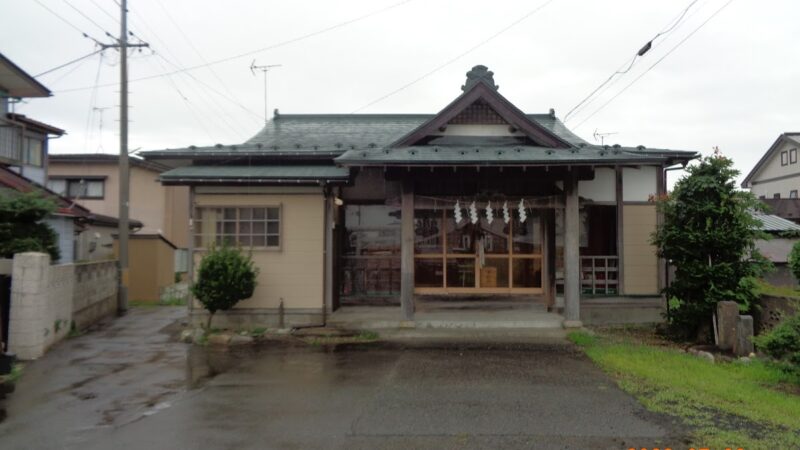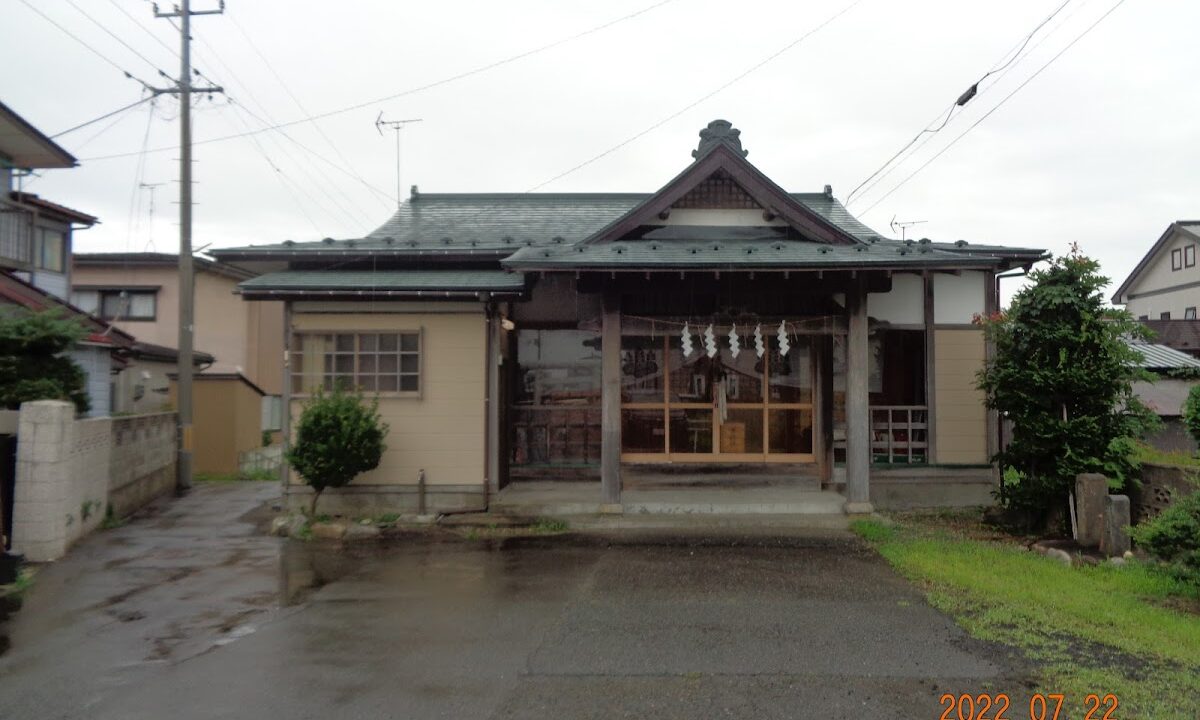
Complete Guide to Higashidate Shrine (Akita Prefecture) | A Thorough Explanation of History, Deities, Worship Etiquette, and Cultural Assets
Higashidate Shrine, located in Akita City, Akita Prefecture, is a historic shrine that has been cherished by the local community for centuries. This article comprehensively explains all the information you need to know before visiting Higashidate Shrine, including its detailed information on deities, worship etiquette, access methods, and annual festivals.
Basic Information on Higashidate Shrine
Higashidate Shrine is a shrine belonging to the Akita Prefectural Shrine Association and is a beloved place of worship for local residents in Akita City. The shrine’s official information is based on the official records of the Akita Prefectural Shrine Association, and it is a venerable shrine under the umbrella of the Association of Shinto Shrines.
Location and Map
Higashidate Shrine is located in Akita City and has long been revered as the local guardian deity. Access to the shrine is relatively easy from the center of Akita City, making it a place visited not only by local residents but also by worshippers from outside the prefecture.
For specific addresses and map information, please check the official website of the Akita Prefectural Shrine Association. Those planning a visit are advised to confirm the exact location beforehand.
Nearest Station, Route, and Access Methods
Access to Higashidate Shrine is convenient by public transport or private car. Checking access routes from major stations in Akita City in advance will ensure a smooth visit.
Access by Public Transport:
- Taking a bus from Akita Station is the most common method.
- The shrine is within walking distance from the nearest bus stop.
- It is recommended to check the bus timetable in Akita City in advance.
Access by Private Car:
- Accessible relatively quickly by car from central Akita City.
- It is recommended to check the availability of parking in advance.
- Searching for the shrine name on a car navigation system is convenient.
History and Background of Higashidate Shrine
The history of Higashidate Shrine is deeply intertwined with the local history of Akita. Akita Prefecture has a long history of strong Shinto worship, with numerous shrines dedicated to local guardian deities scattered throughout the region. Higashidate Shrine is one such shrine, having developed alongside the region.
Founding and History
The shrine’s founding date and detailed history are based on local traditions and records. Like many shrines in Akita Prefecture, Higashidate Shrine has served as a guardian deity of the region, receiving various prayers for agricultural prosperity, family safety, and protection from evil.
Connection to the Community
Higashidate Shrine has functioned as a central presence in the local community. The festivals and events held throughout the year provide important opportunities for local residents to gather, playing a vital role as a place for intergenerational exchange.
Deities and Divine Virtues
The deities enshrined at Higashidate Shrine are central to the region’s faith. In Akita Prefecture, various deities are enshrined according to the history and characteristics of each region, each possessing unique divine virtues.
Connection to the Community
Higashidate Shrine has functioned as a central presence in the local community. ### About the Main Deity
Details about the deity enshrined at Higashidate Shrine are recorded in the official records of the Akita Prefectural Shrine Association. By understanding the divine virtues of the enshrined deity, worshippers can offer their prayers with deeper faith.
Divine Virtues and Blessings
The divine virtues bestowed by visiting a shrine generally include the following:
- Family Safety: Health and peaceful life for the family
- Business Prosperity: Development and prosperity of business
- Protection from Misfortune: Protection from disaster
- Traffic Safety: Safe travel and protection during journeys
- Academic Success: Improvement in studies and passing examinations
- Matchmaking: Meeting a good partner
Correct Worship Etiquette
There are traditional customs for visiting shrines. Understanding and practicing the correct worship etiquette will allow for a more heartfelt visit.
How to Pass Through a Torii Gate
A torii gate, the entrance to a Shinto shrine, is an important boundary marking the entrance to a sacred area. When passing through the torii gate, please pay attention to the following points:
- Bow before the torii gate.
- The center of the approach is the path for the gods, so walk on either the left or right side.
- Calm your mind and be mindful of entering the sacred area.
How to purify yourself at the water basin
Purifying yourself at the water basin (chozuya) is an important ritual for purifying your mind and body:
- Take the ladle with your right hand and purify your left hand.
- Switch the ladle to your left hand and purify your right hand.
- Switch the ladle back to your right hand, receive water in your left hand, and rinse your mouth.
- Purify your left hand once more.
- Stand the ladle upright and let water flow over the handle to purify it.
- Return the ladle to its original position.
How to worship at the main hall
The basic way to worship at the main hall is “two bows, two claps, one bow”:
- Two bows: Bow deeply twice.
- Two Claps: Clap your hands twice at chest height.
- Prayer: Express your wish sincerely.
- One Bow: Bow deeply once at the end.
It is considered polite to gently place your offering into the offering box rather than throwing it.
Annual Festival Calendar and Event List
At Higashikan Shrine, various festivals and events are held throughout the year. These festivals preserve local traditions and provide important opportunities to feel the changing seasons.
Major Annual Events
In Akita Prefecture, the following festivals are generally held at shrines:
Spring Festivals:
- New Year’s Day Festival (January 1st): The most important festival celebrating the New Year
- Prayer Festival (February): A major spring festival praying for a bountiful harvest
- Spring Grand Festival: An important annual event at the shrine
Summer Festivals:
- Summer Purification Ceremony (June 30th): A Shinto ritual to cleanse away the impurities accumulated over the past six months
- Summer Festival: A lively festival where local residents gather
Autumn Festivals:
- Annual Grand Festival (Autumn): The most important festival at the shrine
- Niiname-sai Festival (November 23rd): A festival to give thanks for the harvest
Winter Festivals:
- Year-End Purification Ceremony (December 31st): A Shinto ritual to cleanse away the impurities accumulated over the year
- New Year’s Eve Festival: A festival marking the end of the year.
Specific dates for the festival can be found on the Akita Prefectural Shrine Association’s official website or on the shrine’s bulletin board.
Life Rituals and Prayers at Shrines
Shrines play an important role at milestones in life. Various life rituals are performed at Higashidate Shrine.
First Shrine Visit (Omiyamairi)
This is a ceremony where a baby visits a shrine for the first time after birth. Generally, it is done on the 31st day after birth for boys and the 32nd day for girls, but this varies depending on the region and family. Prayers are offered for the baby’s healthy growth.
Shichi-Go-San Ceremony
This is a traditional event to celebrate a child’s growth and pray for their future health:
- 3 years old: Boys and girls (Hair-cutting ceremony)
- 5 years old: Boys (Hakama-wearing ceremony)
- 7 years old: Girls (Obi-untying ceremony)
While it is generally celebrated around November 15th, many families visit between October and November.
Prayer for Protection from Misfortune During Unlucky Years
Unlucky years are considered turning points in life and ages when one is more susceptible to misfortune:
Unlucky Years for Men:
- Pre-unlucky Years: 24, 41, 60
- Main Unlucky Years: 25, 42 (Major Unlucky Year), 61
- Post-unlucky Years: 26, 43, 62
Unlucky Years for Women:
- Pre-unlucky Years: 18, 32, 36
- Main Unlucky Years: 19, 33 (Major Unlucky Year), 37
- Post-unlucky Years: 20, 34, 38
Prayer for Safe Childbirth
On the Day of the Dog in the fifth month of pregnancy, prayers are offered for the health of mother and child and for a safe delivery. This day is chosen because dogs are known for their fertility and easy births.
Other Life Rituals
- Coming-of-Age Ceremony: Reporting to the gods that one has reached adulthood.
- Wedding Ceremony: A traditional wedding ceremony held before the gods.
- 60th Birthday Celebration: A celebration of longevity upon reaching 60 years of age.
Construction Rituals (Groundbreaking Ceremony, etc.)
Shrines also perform rituals when constructing buildings.
Groundbreaking Ceremony
This is a ceremony held before construction begins to pray to the gods of the land for the safety of the construction and the prosperity of the building. Construction personnel and the building owner attend, and a Shinto priest recites a prayer.
Ridgepole Raising Ceremony
This ceremony is held when the framework of the building is completed, and prayers are offered for the safe completion of the building and its future prosperity.
Completion Ceremony
This ceremony is held when the building is completed, and prayers are offered for the safety and prosperity of the building.
Visiting Shrines During Mourning and Bereavement
In Shinto, “death” is treated as impurity, so special consideration is required during periods of mourning and bereavement. ### Period of Mourning
Generally, the period of mourning is 50 days after the death of a close relative (until the 50th-day memorial service):
- Parents, spouse, children: 50 days
- Grandparents, siblings: 30 days
- Uncles and aunts: 20 days
It is customary to refrain from visiting shrines during the period of mourning.
Period of Bereavement
The bereavement period is longer than the period of mourning, generally lasting one year. Celebratory events are refrained from during the bereavement period, but normal visits to shrines are possible after the mourning period ends.
Visiting Shrines After the End of Mourning
After the 50th-day memorial service, the mourning period ends, and it is possible to visit shrines. However, it is customary to refrain from participating in celebratory events for one year.
About Jingu Taima and Kamidana (Household Altar)
Jingu Taima are sacred amulets from Ise Grand Shrine, and are amulets of Amaterasu Omikami, the tutelary deity of all Japanese people.
Let’s enshrine the Jingu Taima (Ise Grand Shrine Amulet)
By enshrining the Jingu Taima in your home’s household shrine, you can pray for the safety and prosperity of your family. It is distributed through shrines throughout Akita Prefecture, and it is customary to replace it with a new amulet every year.
How to Install a Shinto Altar
Installation Location:
- A clean place, such as the living room where the family gathers.
- Higher than eye level.
- South or east-facing is ideal.
- A bright and clean place.
Order of Worship:
- Center: Jingu Taima (amulet from Ise Grand Shrine)
- Right: Amulet from the local guardian deity (such as Higashidate Shrine)
- Left: Amulets from other revered shrines
Daily Worship
Worship the Shinto altar daily and offer the following:
- Rice (washed or cooked rice)
- Salt
- Water
- Sakaki (a type of evergreen tree)
On special occasions, offer sake or seasonal first fruits.
About the Akita Prefectural Shrine Association
The Akita Prefectural Shrine Association is an organization that oversees shrines in Akita Prefecture, managing shrines, training Shinto priests, and promoting Shintoism.
Role of the Akita Prefectural Shrine Association
Main Duties:
- Comprehensive management and guidance of shrines within the prefecture
- Administrative matters concerning the status of Shinto priests
- Research and studies on shrines
- Promotion and educational activities of Shinto
- Training of shrine personnel
- Guidance on shrine architecture
History of the Akita Prefectural Shrine Association
The Akita Prefectural Shrine Association was established following the enactment of the Religious Corporations Law after World War II. The Akita Prefectural Shrine Association’s brief chronology records its history from its establishment to the present, serving as an important resource for understanding the history of shrines in Akita Prefecture.
Related Organizations
The Akita Prefectural Shrine Association collaborates with the following organizations:
- Association of Shinto Shrines (an organization encompassing shrines nationwide)
- Akita Prefectural Association of Shrine Representatives
- District Shinto Priests’ Associations
- Shinto Youth Association
Searching for and Information on Shrines in the Prefecture
Numerous shrines are located within Akita Prefecture, and the Akita Prefectural Shrine Association’s official website allows you to search for shrines in various ways.
Search by Japanese Alphabet
This function allows you to search for shrines alphabetically by name. For example, you can find Higashidate Shrine under the “Ha” section. This search method is convenient if you already know the shrine’s name.
Search by City/Town
You can search for shrines by city/town within Akita Prefecture:
- Akita City
- Odate City
- Nikaho City (Kisakata area, Kanoura area, Nikaho area)
- Gojome Town
- Noshiro City
- Other cities/towns
This method is convenient when searching for shrines in a specific area.
Shrine Search System
The official website of the Akita Prefectural Shrine Association provides a detailed shrine search system where you can find the following information:
- Shrine Name
- Location
- Deity
- Annual Festival Date
- Contact Information
Cultural Properties and Registered Tangible Cultural Properties within the Prefecture
Many shrines in Akita Prefecture possess buildings and treasures designated as national or prefectural cultural properties, or registered tangible cultural properties.
Types of Cultural Properties
Nationally Designated Cultural Properties:
- Important Cultural Properties (Buildings)
- Important Cultural Properties (Fine Arts and Crafts)
- Historic Sites
- Natural Monuments
Registered Tangible Cultural Properties:
- Shrine buildings registered as structures
- Shrine buildings and torii gates of historical value
Prefecturally Designated Cultural Properties:
- Cultural properties designated by Akita Prefecture
- Important assets that convey the history of the region
Protection of Cultural Properties
Shrine cultural properties are valuable assets that convey the history and traditions of the region. Their protection requires the cooperation of not only shrine officials but also local residents and the government.
Trivia about Shrines and Shinto
Here are some interesting facts about shrines and Shinto that will deepen your visit.
Differences between Shrines and Temples
- Shrine: A Shinto facility where gods are enshrined.
- Temple: A Buddhist facility where Buddha is enshrined.
The etiquette for worship also differs; at shrines, clapping is done, while at temples, only joining hands in prayer is performed.
Meaning of Torii
A torii gate is a gate that marks the entrance to a sacred area, representing the boundary between the secular world and the sacred realm. Passing through a torii gate purifies the mind and prepares one to enter the sacred area.
Meaning of Shimenawa (Sacred Rope)
A shimenawa indicates a sacred place, signifying that the area inside is a pure and clean space. It is displayed on the main hall and sacred trees of shrines.
Role of Komainu (Guardian Dogs)
Komainu, placed at the entrance of shrines or in front of the worship hall, are guardian beasts protecting the sacred area. Generally, the one on the right (facing the viewer) has its mouth open (“A-gyo”), and the one on the left has its mouth closed (“Un-gyo”).
About Goshuin (Shrine Seals)
Goshuin are seals and calligraphic inscriptions given as proof of visiting a shrine. They can be recorded in a goshuincho (seal book) and are popular as souvenirs of shrine visits. However, remember that goshuin are proof of worship, not a stamp rally.
Shrine Experts for Children
Helping children understand shrines and Shinto is important for passing on Japan’s traditional culture to the next generation.
Visiting a Shrine with Children
When visiting a shrine with children, teach them the following:
- Bow before the torii gate: A greeting when entering the gods’ home
- Walk along the edge of the path: The middle is the gods’ path
- Wash your hands at the purification fountain: Prepare to worship with a pure heart
- Worship quietly: To show respect to the gods
- Express gratitude: Express gratitude as well as making requests
Experiencing Seasonal Events
By participating in the annual events of a shrine, you can learn about Japan’s four seasons and traditions:
- Hatsumode (First Shrine Visit of the Year): New Year’s greetings
- Setsubun Festival: Driving away evil spirits with bean-throwing
- Shichi-Go-San (Seven-Five-Three Festival): Celebrating growth
- Summer Festival: Interacting with local people
Pages for Shinto Priests and Shrine Management
The Akita Prefectural Shrine Association’s official website has pages for Shinto priests only, and a password is required.
Role of Shinto Priests
Shinto priests are professionals who perform rituals at shrines and assume the following roles:
- Conducting ceremonies
- Offering prayers
- Managing and operating shrines
- Educational activities
- Collaboration with the local community
Ranks of Shinto Priests
Shinto priests have ranks, which are advanced through training and practical experience:
- Regular Rank (Shōkai)
- Assistant Regular Rank (Gonshōkai)
- Regular Rank (Chokkai)
- Assistant Regular Rank (Gonchokkai)
Akita Prefecture Shrine Calendar and Radio Broadcasts
The Akita Prefecture Shrine Association actively disseminates information about shrines.
Akita Prefecture Shrine Calendar
The Akita Prefecture Shrine Calendar compiles information on annual festivals and Shinto practices at shrines within the prefecture, making it an important resource for shrine officials and believers.
Information Dissemination via Radio Broadcasts
The Akita Prefecture Shrine Association disseminates information about shrines and Shinto through radio broadcasts. The broadcast covers a wide range of topics, including information on shrine events and Shinto teachings.
Akita Prefecture Shrine Officials’ Conference and Representatives’ Meeting
In Akita Prefecture, conferences for shrine officials are held regularly.
Akita Prefecture Shrine Officials’ Conference
This is a forum where people involved with shrines, such as Shinto priests, representatives, and parishioners, gather to discuss the development and challenges of shrines. Lectures and training sessions are also held, contributing to improving the quality of shrine management.
Akita Prefecture Shrine Representatives’ Meeting
The Akita Prefecture Shrine Representatives’ Meeting celebrated its 70th anniversary, and a commemorative conference was held. Representatives play a crucial role in supporting the operation of shrines and serve as a bridge between parishioners and shrines.
Related Links
For more detailed information about Higashidate Shrine and shrines in Akita Prefecture, please refer to the following links.
Official Websites
- Akita Prefecture Shrine Association Official Website: Search for shrines in the prefecture, festival information, basic knowledge of Shinto, etc.
- Association of Shinto Shrines: Official website of the organization that oversees shrines nationwide
Reference Information
- National Designated Cultural Properties Database: Cultural property information operated by the Agency for Cultural Affairs
- Various Shrine Information Sites: Information on Goshuin (shrine stamps), pilgrimage records, etc.
Summary: Through Visiting Higashidate Shrine
Higashidate Shrine, a historical shrine located in Akita City, Akita Prefecture, has long been a place of worship for the local people. Understanding the correct way to worship and learning about the shrine’s history and enshrined deities will allow for a more meaningful visit.
Shrines are not merely tourist spots; they are places where the Japanese spirit and traditional culture breathe life into. We hope that your visit to Higashidate Shrine will bring you peace of mind and provide an opportunity to experience traditional Japanese culture.
Various festivals are held throughout the year, so visiting in different seasons will allow you to enjoy the shrine’s different aspects. Furthermore, performing rituals at shrines during important life milestones can foster a deeper sense of gratitude and renewed determination.
The Akita Prefectural Shrine Association’s official website provides detailed information on shrines throughout the prefecture, including Higashidate Shrine, so please check it before your visit. Cherishing local shrines contributes to passing on Japan’s traditional culture to future generations.
We pray that your visit to Higashidate Shrine will be a truly enriching experience.