Miyoshi Shrine (Nakano, Yotsugoya, Akita City, Akita Prefecture) Complete Guide | History, Benefits, and Access Information
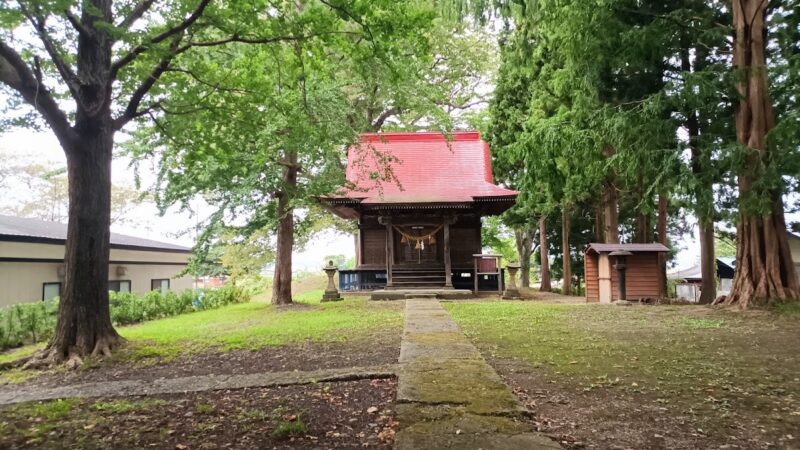
Located in Nakano, Yotsugoya, Akita City, Akita Prefecture, Miyoshi Shrine is a branch shrine of Taiheizan Miyoshi Shrine and enjoys deep roots in the local community. This article provides a detailed explanation of the history, enshrined deities, benefits, access methods, and festival dates of Nakano Miyoshi Shrine—all essential information to know before visiting.
Basic Information on Miyoshi Shrine (Nakano)
Location: 13-1 Nakano, Yotsugoya, Akita City, Akita Prefecture
Deity Enshrined: Miyoshi no Okami
Annual Festival Date: June 17th
Shrine Rank: Former Village Shrine (including merged shrines)
Located in the Yotsugoya district of Akita City, Miyoshi Shrine is affectionately known as “Miyoshi-san” or “Sankichi-san” by local residents and is worshipped as a guardian deity of victory, success, and business prosperity.
History and Origins of Miyoshi Shrine
Founding History
The history of Nakano Miyoshi Shrine dates back to the late Edo period. It is believed to have begun in July of Tenpo 8 (1837), when the Taiheizan Miyoshi Shrine, located in Taihei Village, Minami Akita District, was invited to this location. Later, in Keio 3 (1867), a small shrine was built at the current location, attracting the faith of the villagers. ### Development during the Meiji Period
During the Meiji era, Miyoshi Shrine underwent significant development. In 1881 (Meiji 14), the shrine buildings were expanded and renovated at the initiative of devotees such as Tsurumatsu Kagaya. Furthermore, in 1911 (Meiji 44), it merged with four other shrines: the Hatta Village Shinmei Shrine, the unranked Aizome Shrine, the Kami-Hatta Shrine, and the Kisoishi Shinmei Shrine, becoming a designated village shrine.
This merger solidified Nakano Miyoshi Shrine’s position as a central shrine in the region, attracting a greater number of worshippers.
Relationship with Kiso-Yoshiyama
Kiso-Yoshiyama played a crucial role in the development of the Miyoshi faith. In 1846 (Koka 3), Tatsudennosuke, an elderly resident of Hatta Village in Minami-Akita District, restored Kiso-Yoshiyama and established Kiso-Yoshiyama Shrine on the mountain, enshrining the Miyoshi deity. This marked the beginning of the widespread adoption of the Miyoshi faith, which became established as a belief system for praying for national prosperity.
Later, in August 1898 (Meiji 31), the shrine on the mountain was renovated, further developing it as a center of the Miyoshi faith.
About the Deity: Miyoshi Reijin
Divine Nature of Miyoshi Reijin
Miyoshi Reijin (Miyoshi no Okami) is the principal deity of Taiheizan Miyoshi Shrine and is known as the god of strength and victory. According to shrine tradition, Fujiwara no Miyoshi (Tsurujumaru), the lord of Taihei Castle, was deified, but fundamentally, he is a god of mountain worship, presiding over strength, victory, and the upholding of justice and the vanquishing of evil.
Benefits
Miyoshi Reijin is believed to bestow the following benefits:
- Victory and Success: Success in all competitive endeavors, such as exams, job hunting, and sports.
- Business Prosperity: Business success and corporate development.
- Repelling Evil and Revealing Righteousness: Driving away evil spirits and guiding the right path.
- Granting of Strength: The power to overcome difficulties and strengthening of mind and body.
It is said that since ancient times, Sakanoue no Tamuramaro prayed here for victory during his campaign against the eastern barbarians, and the shrine has been worshipped as a god of lasting military fortune.
Relationship with Taiheizan Miyoshi Shrine Headquarters
About the Headquarters
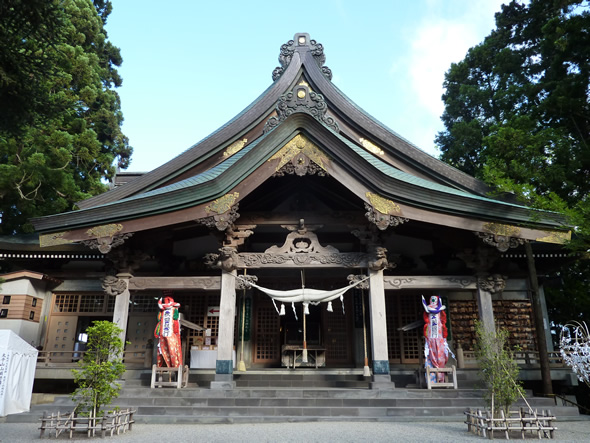
Miyoshi Shrine in Nakano, Yotsugoya, Akita City, is a branch shrine of Taiheizan Miyoshi Shrine Headquarters, located in Hiroomote Akanuma, Akita City. The main shrine is an ancient shrine said to have been founded in 673 AD (the second year of the Hakuhō era) by En no Gyōja Ozunu during the reign of Emperor Tenmu. The inner shrine is located on the summit of the sacred Mount Taihei (1,170m above sea level), and the lower shrine is situated in Hiroomote, Akita City.
The main shrine is widely revered as the head shrine of Miyoshi shrines and the Taiheizan-kō (Taiheizan religious group) throughout Japan and São Paulo, Brazil.
Spread of Miyoshi Faith
Miyoshi faith has spread not only within Akita Prefecture but also throughout northern Japan. There are several Miyoshi shrines registered with the Akita Prefectural Shrine Association, each maintaining its own unique form of worship while retaining a connection to the main shrine.
The Miyoshi Shrine in Nakano, Yotsugoya, is also part of this network and serves as a center of local faith.
Annual Festival and Events
Annual Festival (June 17th)
The annual festival of Nakano Miyoshi Shrine is held every year on June 17th. The annual festival is the most important ritual for the shrine, a ceremony to express gratitude to the enshrined deity and pray for peace and prosperity in the region. Local residents participate, and traditional rituals are solemnly performed.
Connection to the Miyoshi Bonten Festival
At the main shrine of Taiheizan Miyoshi Shrine, a special ritual called the “Miyoshi Bonten Festival” is held every year on January 17th. This is a magnificent festival known as a winter tradition in Akita, where various groups dedicate colorful decorations called “honden.”
Some parishioners of Nakano Miyoshi Shrine also participate in this Bonten Festival, demonstrating a strong connection to the main shrine.
Various Prayers and Visits
Types of Prayers
At Miyoshi Shrine, you can receive the following types of prayers:
- Exorcism of Misfortune: Prayers for protection against misfortune for those entering their unlucky year
- First Shrine Visit: Prayers for the healthy growth of a baby
- Shichi-Go-San: Prayers for celebrating a child’s growth and for their future health
- Prayer for Success in Exams: Prayers for the success of students taking exams
- Business Prosperity: Prayers for the development of a business
- Traffic Safety: Blessings for cars, etc.
- Family Safety: Prayers for the health and peace of the family
While the main shrine’s prayer reception hours are 9:00 AM to 4:00 PM (no reservation required), it is recommended to check in advance regarding prayers at Nakano Miyoshi Shrine.
Etiquette for Visiting a Shrine
The basic etiquette for visiting a shrine is as follows:
- Bow before passing through the torii gate.
- Purify your body and mind at the water basin.: Purify your left hand, right hand, and mouth in that order, and finally your left hand.
- Walk along the edge of the path.: The center is the path for the gods.
- Bow twice, clap twice, and bow once in front of the main hall.
- Make your wish specific in your heart.
- Bow once at the torii gate on your way out.
Access and Transportation Information
Location
Address: 13-1 Nakano, Yotsugoya, Akita City, Akita Prefecture 010-1232
Latitude and Longitude: 39.67086575°N, 140.13797564°E
Map Code: 303 601 179*56
Elevation: Approximately 5m
Access by Car
The shrine is located about 20 minutes by car from the center of Akita City. It’s also accessible in about 10 minutes from the Akita Minami Interchange on the Akita Expressway. There is parking available around the shrine, but congestion is expected during events such as festivals, so it’s recommended to allow ample time for your visit.
Access by Public Transportation
The shrine is somewhat inconvenient to access by public transportation, as it is a considerable distance from the nearest bus stop and train station. The nearest station is Yotsugoya Station on the JR Uetsu Main Line, but walking from there takes time, so taking a taxi is recommended.
Landmarks in the Surrounding Area
The Yotsugoya area is located in the southeastern part of Akita City and is a mixed area of residential and agricultural land. It’s easily accessible from National Route 13, and searching for “Miyoshi Shrine Yotsugoya” on a car navigation system or smartphone map app will show the exact location.
Nearby Shrines and Temples
Miyoshi Shrine Network in Akita City
There are several Miyoshi Shrines in Akita City. The most famous is the Taiheizan Miyoshi Shrine Main Shrine (Satomiya) in Hiroomote Akanuma, Akita City, but the Miyoshi Shrine in Yotsugoya, Nakano, is also an important center of worship in the region.
Merged Shrines
As mentioned above, four shrines were merged in 1911 (Meiji 44):
- Shinmei Shrine (Hatta Village Shrine)
- Aizome Shrine (Unranked Shrine)
- Kamihatta Shrine (Unranked Shrine)
- Kisoishi Shinmei Shrine (Unranked Shrine)
The faith of these shrines has been passed down to the current Miyoshi Shrines, preserving the region’s history and traditions.
Shrine Trivia: Characteristics of Miyoshi Faith
Connection to Mountain Worship
At the root of Miyoshi faith lies mountain worship of the sacred Mount Taihei. Mount Taihei has long been known as a sacred site for Shugendo (mountain asceticism), and is a sacred mountain said to have been opened by En no Gyoja Ozunu. The inner shrine is located at the summit, 1,170m above sea level, and is visited by hikers and devotees.
Faith as a God of Strength
Miyoshi Reijin is particularly known as a “god of strength.” This includes not only physical strength, but also mental strength to face difficulties and the willpower to achieve goals. Therefore, it attracts worshippers from various fields, such as athletes, students taking exams, and entrepreneurs.
God of Repelling Evil and Revealing Justice
“Repelling evil and revealing justice” means defeating evil and revealing the right path. Miyoshi Reijin, possessing this power, is also worshipped for prayers for protection against misfortune and evil influences.
Visiting Shrines During Mourning
Visiting Shrines During Mourning
In Shinto, there is a belief that the defilement of death is important. Generally, it is considered best to refrain from visiting shrines during the period of mourning (kichu). The duration of this period varies depending on the relationship to the deceased, but it is usually considered to last until the 49th day.
Visiting Shrines During Mourning
Mourning (mochu) is a longer period than the period of mourning (kichu), generally lasting one year. While the rules regarding shrine visits during mourning are not as strict as during the period of mourning (kichu), it is generally advisable to refrain from participating in celebrations and festivals. Regular visits are generally considered acceptable after the mourning period has ended.
For more details, we recommend contacting the shrine directly.
Miyoshi Shrine in the Showa Era
Changes During the Showa Era
With the arrival of the Showa era, Nakano Miyoshi Shrine also evolved alongside the changes in the local community. Before the war, it served as a village shrine and a spiritual pillar of the region. After the war, under the auspices of the Association of Shinto Shrines, it explored new forms of faith for the modern era.
During the Showa era, the shrine buildings were repaired and the grounds were improved, forming the foundation for its current appearance. Even as the region becomes increasingly urbanized, the shrine continues to function as a spiritual anchor for local residents.
Relationship with the Local Community
Throughout the Showa era, Miyoshi Shrine played a central role in the local community. Annual festivals and various events provide valuable opportunities for residents to gather and interact, fostering bonds across generations.
Special Rituals and Annual Events
Special Rituals at the Main Shrine
At the main shrine of Taiheizan Miyoshi Shrine, various special rituals are performed throughout the year:
- January 1st: New Year’s Day Festival
- January 17th: Miyoshi Bonten Festival (the most famous special ritual)
- May 17th: Annual Grand Festival
- December 31st: New Year’s Eve Festival
Parishioners of the branch shrine, Nakano Miyoshi Shrine, sometimes participate in these rituals, deepening their connection with the main shrine.
Local Events
At Nakano Miyoshi Shrine, local events are held, centered around the annual festival on June 17th. These events play an important role in passing on the history and traditions of the region to future generations.
Notes and Manners for Visiting the Shrine
Attire
For regular visits, no special attire is required, but please dress neatly and modestly. If you are receiving a prayer, a suit or formal attire is preferable.
Photography
Photography is generally permitted on the shrine grounds, but please refrain from taking pictures inside the main hall or during Shinto rituals. If you are unsure, please check with a Shinto priest.
Offerings
There are no set rules for the amount of the offering, but it is customary to offer a 5-yen coin as a symbol of “good fortune.” Since offerings express gratitude to the gods, the sentiment is more important than the amount.
The Role of Miyoshi Shrine in the Community
As a Spiritual Pillar
In the Yotsugoya district, Miyoshi Shrine is more than just a religious facility. It embodies the history of the region, functions as a spiritual pillar for residents, and serves as a place for intergenerational exchange.
Cultural Inheritance
Through the shrine’s festivals and events, the region’s traditional culture is passed down to the next generation. Children participating in shrine events provide opportunities to deepen their attachment to their hometown and their understanding of tradition.
A Hub for Regional Disaster Prevention
Historically, shrines have been the center of local communities, functioning as evacuation sites and information exchange centers during disasters. Even today, they play a role in strengthening community bonds.
Summary: Visiting Miyoshi Shrine (Yotsugoya, Nakano)
Located in Nakano, Yotsugoya, Akita City, Miyoshi Shrine is a branch shrine of the main shrine of Taiheizan Miyoshi Shrine and has attracted local faith since the late Edo period. The shrine enshrines Miyoshi Reijin as its principal deity and is revered by a wide range of people as a guardian deity of victory, success, and business prosperity, as well as a god of strength and victory.
It has a history of becoming a village shrine in 1911 through the merger of four shrines, and even today it plays an important role as a spiritual pillar of the community. Various Shinto rituals are held throughout the year, including the annual festival on June 17th, making it a place of faith and interaction for local residents.
Located about 20 minutes by car from the center of Akita City, it is relatively easy to access. Those facing competitions, those praying for business development, and those who wish to experience the history and culture of the region should definitely consider visiting.
Visiting this shrine along with the main shrine of Taiheizan Miyoshi Shrine will allow you to understand the Miyoshi faith more deeply. Please experience the blessings of Miyoshi Reijin, affectionately known as “Miyoshi-san” or “Sankichi-san.”