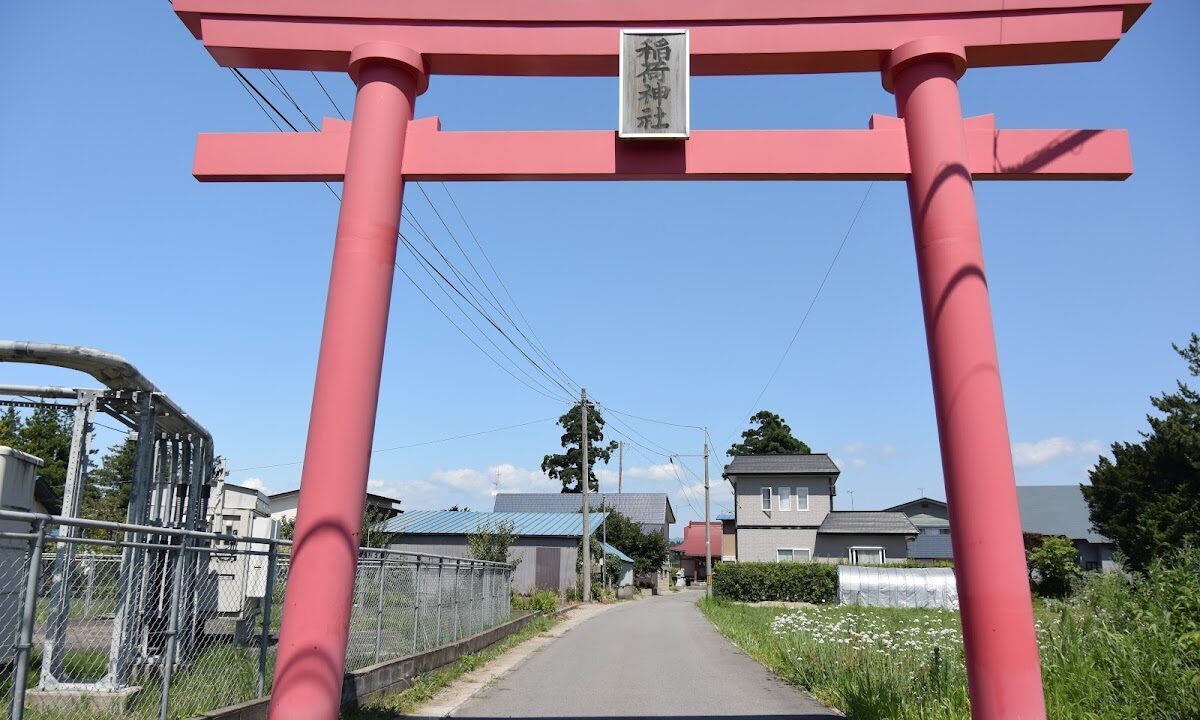
Inari Shrine (Hanawa, Kazuno City, Akita Prefecture) Complete Guide | History, Access, and Surrounding Information
The Inari Shrine, located in Hanawa, Kazuno City, Akita Prefecture, is a shrine deeply rooted in local faith. This article provides detailed information about this Inari Shrine, from basic information to the surrounding environment, access methods, and the historical background of the region.
Basic Information on ‘Inari Shrine’
This section provides detailed information about the Inari Shrine located in Hanawa, Kazuno City, Akita Prefecture.
Location and Contact Information
Address
〒018-5201
86 Hanawa, Kazuno City, Akita Prefecture
Corporate Number
3410005003367
This corporate number is an official identification number that can be found on the corporate number publication site managed by the National Tax Agency. It is important information that can be used when searching for temples and shrines nationwide.
About Inari Shrines
Inari shrines are said to number over 30,000 throughout Japan, making them one of the top-ranked shrines in the country in terms of the number of shrines with the same name. They enshrine Ukanomitama-no-kami as their main deity and are believed to bring blessings such as abundant harvests, business prosperity, and family safety.
Several Inari shrines exist in the Hanawa district of Kazuno City, each functioning as a spiritual pillar of the local community. The Inari shrine in Masegawa, Hanawa, is one of the important shrines that attracts the faith of local residents.
Regional Characteristics of Hanawa, Kazuno City
Hanawa, Kazuno City, was once a thriving area known as Hanawa Town. On April 1, 1972 (Showa 47), it merged with Osarizawa Town, Towada Town, and Hachimantai Village in Kazuno District to form Kazuno City. The Hanawa district is located in the center of Kazuno City and has a history of developing as an administrative and commercial center.
Major Rivers
- Yoneshiro River
- Mase River
- Neichi River
The place name “Mase River,” where the Inari Shrine is located, originates from the Mase River that flows through this area. The area along the river has flourished as a place of life for people since ancient times, and the shrine has also attracted worshippers within this living area.
Map of the area around the Inari Shrine
When planning access to the Inari Shrine, it is important to understand the surrounding geographical environment.
Geographical Location
The Inari Shrine is located in the urban area of Hanawa, Kazuno City. The Hanawa area is in the northeastern part of Akita Prefecture, near the border with Aomori Prefecture, and is known as a base for accessing tourist destinations such as Lake Towada and Hachimantai.
Access Methods
Access by Train
- The nearest station is Kazuno-Hanawa Station on the JR Hanawa Line.
- Accessible on foot or by car from the station.
Access by Car
- Approximately 15 minutes from Kazuno-Hachimantai Interchange on the Tohoku Expressway.
- National Route 282 and National Route 103 are major arterial roads.
Access by Air
- Approximately 1 hour by car from Odate-Noshiro Airport.
- Approximately 1 hour 30 minutes by car from Aomori Airport.
Surrounding Facilities
The Hanawa area is home to administrative offices such as the Kazuno City Hall, shopping streets, and educational facilities. It is also the center of the Hanawa Festival, known for its Hanawa Bayashi music, and is a region where traditional culture thrives.
Map Confirmation using QR Code
When heading to the location using a smartphone, it is convenient to use map apps such as Google Maps or Yahoo! Maps. Searching for “86 Masegawa, Hanawa, Kazuno City, Akita Prefecture” will provide route guidance from your current location. Recently, many shrine information websites provide QR codes, and services that allow users to instantly launch map apps by scanning them with their smartphones have become widespread.
List of Nearby Shrines
In addition to the Inari Shrine (Hanawa, Masegawa) in Kazuno City, Akita Prefecture, there are several other shrines. According to the complete list of shrines, various shrines are scattered throughout Kazuno City, each supporting local religious beliefs.
Inari Shrines in the Hanawa District of Kazuno City
There are several Inari Shrines in the Hanawa district alone.
Inari Shrine (Hanawa, Terasaka)
- Address: 88 Terasaka, Hanawa, Kazuno City, Akita Prefecture
- Postal Code: 018-5201
- Corporate Number: 5410005003365
Inari Shrine (Hanawa, Shimonagane)
- Address: 63 Shimonagane, Hanawa, Kazuno City, Akita Prefecture
- Postal Code: 018-5201
- Corporate Number: 4410005003366
These Inari shrines are located in different districts and are revered as the tutelary deities of their respective areas.
Other Inari Shrines in Kazuno City
Inari Shrine (Hachimantai)
- Address: 58, Hachimantai, Kazuno City, Akita Prefecture
- Postal Code: 〒018-5141
- Corporate Number: 6410005003364
Kōinari Shrine Otabisho
In Hanawa, Kazuno City, there is also an Otabisho (branch shrine) of Kōinari Shrine. An Otabisho is a place where the portable shrine is temporarily placed during festivals, and is an important facility in Shinto worship.
Ranking of Shrines by Prefecture and Akita Prefecture
Akita Prefecture shows a distinctive distribution in the ranking of shrines by prefecture, both in terms of the number of shrines per capita and per capita by area. Along with the complete list of Buddhist temples, the complete list of shrines is an important resource for understanding the religious culture of the region.
Kazuno City is located in the northeastern part of Akita Prefecture and has long prospered from mining and forestry. Along with the development of these industries, local shrines have also attracted worshippers.
Nearby Tourist and Cultural Facilities
Cultural Properties of Hanawa District
- Hanawa Bayashi (UNESCO Intangible Cultural Heritage)
- Historical Townscape
- Traditional Festival Events
Nearby Tourist Attractions
- Lake Towada (approx. 40 minutes by car)
- Hachimantai (approx. 30 minutes by car)
- Osarizawa Mine (approx. 15 minutes by car)
- Kosaka Town Korakukan (approx. 30 minutes by car)
Frequently Asked Questions about Inari Shrine in Kazuno City, Akita Prefecture
What are the visiting hours for Inari Shrine?
Generally, shrines are open 24 hours for worship, but the hours when the shrine office is open are limited. If you wish to receive a Goshuin (shrine stamp) or prayer, it is recommended to check in advance. Many local shrines are best visited during the daytime.
Is there parking?
Small local shrines may not have their own parking lots. Before visiting, please check for available parking spaces in the surrounding area or consider using public transportation. There are also public parking lots near Kazuno-Hanawa Station.
Can I get a Goshuin (temple/shrine stamp)?
The availability of Goshuin varies depending on the shrine. Smaller shrines may not have a resident priest. If you wish to receive a Goshuin, it is recommended to inquire in advance.
What is the difference between the Inari Shrine in Hanawa-aza-Masegawa and the other Inari Shrines in the Hanawa area?
There are several Inari Shrines in the Hanawa area of Kazuno City, each an independent shrine with a different corporate number. They are located in various areas such as Hanawa-aza-Masegawa (corporate number 3410005003367), Hanawa-aza-Terasaka (corporate number 5410005003365), and Hanawa-aza-Shimonagane (corporate number 4410005003366). Each has its own history and beliefs as the local guardian deity.
When are the festivals held? Inari shrine festivals are generally held on Hatsuumai (the first Day of the Horse in February) or during the autumn grand festival, but this varies depending on the region and shrine. In the Hanawa district as a whole, a grand festival known for the Hanawa Bayashi music is held in August, enveloping the entire area in a festive atmosphere.
How to access Kazuno City?
Kazuno City is located in the northeastern part of Akita Prefecture, near the border with Aomori Prefecture.
Access from major cities
- From Morioka City: Approximately 1 hour 30 minutes by car
- From Akita City: Approximately 2 hours by car
- From Aomori City: Approximately 2 hours by car
The JR Hanawa Line runs through the city, and it is also possible to access it by train from Morioka Station to Kazuno-Hanawa Station.
History of Kazuno City and Inari Worship
History of Hanawa Town
Hanawa Town was a town that existed in Kazuno District, Akita Prefecture, and corresponds to the present-day Hanawa, Kazuno City. On April 1, 1972 (Showa 47), Kazuno City was established through the merger of Osarizawa Town, Towada Town, and Hachimantai Village in Kazuno District.
Hanawa was under the control of the Morioka Domain from the Edo period and developed as the center of the Kazuno region. Mining and forestry, in particular, flourished, making it an economically important area.
Spread of Inari Worship
Inari worship was originally revered as the god of agriculture, but from the Edo period onward, with the development of commerce, it also became widely worshipped as the god of business prosperity. In the Kazuno region, people engaged in agriculture, mining, and commerce prayed at Inari shrines for abundant harvests and business prosperity.
The existence of multiple Inari shrines in the Hanawa area reflects the history of each local community worshipping Inari as their respective tutelary deity.
Relationship between the Community and Shrines
Shrines in Kazuno City, Akita Prefecture, are deeply connected to local traditional events and festivals. The festival culture, exemplified by the Hanawa Bayashi, is closely linked to local Shinto shrine worship and is an important cultural event that attracts many participants every year.
Etiquette for Visiting Inari Shrines
Basic Worship Etiquette
When visiting a shrine, please observe the following basic manners.
How to Pass Through the Torii Gate
- Bow before passing through the torii gate.
- Walk along the edge of the path, as the center is considered the path of the gods.
How to Wash Your Hands
- Hold the ladle in your right hand and wash your left hand.
- Hold the ladle in your left hand and wash your right hand.
- Hold the ladle again in your right hand, receive water in your left hand, and rinse your mouth.
- Finally, hold the ladle upright and wash the handle.
Worship at the Shrine
- Quietly place your offering in the offering box.
- Bow twice, clap twice, and bow once (two bows, two claps, one bow).
Regarding Attire
Everyday clothes are acceptable for worship, but please dress neatly. If you are receiving a prayer, slightly more formal attire is preferable.
Tourism in Kazuno City and Inari Shrine
Traveling in Kazuno
Kazuno City is focusing on tourism promotion under the slogan “Traveling in Kazuno,” utilizing its tourist resources such as Lake Towada, Hachimantai, and Osarizawa Mine. Visiting these tourist spots in conjunction with a visit to Inari Shrine allows for a comprehensive experience of Kazuno City’s nature and culture.
Korakukan Theater and Kosaka Town
Kosaka Town, adjacent to Kazuno City, is home to the Korakukan Theater, one of Japan’s oldest theaters. Located about 30 minutes by car from Kazuno-Hanawa Station, it is a valuable cultural asset that conveys the atmosphere of the Meiji era.
Seasonal Charms
Spring
- Cherry blossom season; the area around the shrine is also adorned with spring colors.
- Important Inari shrine festivals such as the Hatsuumasai festival.
Summer
- Hanawa Bayashi festival (August).
- Lush, natural environment.
Autumn
- A beautiful season of autumn leaves.
- The annual autumn festival.
Winter
- The shrine amidst a snowy landscape.
- A solemn atmosphere.
Comparison with Inari Shrines Nationwide
Nationwide Ranking of the Number of Shrines with the Same Name
Inari shrines are one of the most common shrine names in the nationwide ranking of shrines with the same name. There are said to be over 30,000 such shrines nationwide, with Fushimi Inari Taisha in Kyoto as the head shrine, and many branch shrines throughout the country.
Inari Shrines in Akita Prefecture
Numerous Inari shrines exist within Akita Prefecture, each attracting local devotion. Looking at the list of shrines by prefecture, Akita Prefecture has one of the highest shrine densities in the Tohoku region.
Regional Characteristics
The Inari Shrine in Kazuno City possesses a unique form of worship nurtured within the climate and natural environment of northern Tohoku. The prayers of the local people, who endure the harsh winters, are reflected in their shrine faith.
Summary
The Inari Shrine (corporate number 3410005003367), located in Hanawa, Kazuno City, Akita Prefecture, is an important shrine that attracts deeply rooted local faith. Several Inari Shrines exist in the Hanawa area, each with its own unique history and beliefs.
When visiting Kazuno City, in addition to visiting the Inari Shrine, you can experience the diverse charms of the region by exploring traditional culture such as Hanawa Bayashi, the natural beauty of Lake Towada and Hachimantai, and industrial heritage sites such as the Osarizawa Mine.
When searching for temples and shrines nationwide, using corporate numbers and address information will allow you to access accurate information. Databases such as the complete list of shrines and the complete list of Buddhist temples will also be useful for planning your shrine visits.
The Inari Shrine in Hanawa, Kazuno City, is a valuable place that preserves the history and culture of the region, and will undoubtedly continue to attract the faith of many people for years to come.