Complete Guide to Sakiwai Inari Shrine (Kazuno City, Akita Prefecture) | History, Hanawa Bayashi Festival, Otabisho (Temporary Shrine), and Access Information
Sakiwai Inari Shrine, located in Kazuno City, Akita Prefecture, is a venerable shrine with a history of over 800 years. Known as the stage for the “Hanawa Bayashi” festival held every August, it is a central figure in the festival, which is registered as a UNESCO Intangible Cultural Heritage, and attracts the faith of the local community. This article provides a detailed explanation of Sakiwai Inari Shrine’s history, enshrined deities, festival events, Otabisho (temporary shrine), access methods, and surrounding area information.
What is Sakiwai Inari Shrine?
Sakiwai Inari Shrine is located at the foot of Mt. Kawatodake (elevation 1112m) in the Hanawa district of Kazuno City, Akita Prefecture. It is pronounced “Sakiwai Inari Jinja” and is affectionately known as “Sakiwai-san” in the local community. As the tutelary deity of Kazuno City, it has long been revered by people from the surrounding areas.
Basic Information
Address: 56 Inarikawahara, Hanawa, Kazuno City, Akita Prefecture
Postal Code: 〒018-5201
Corporate Number: 7410005003371
Date of Corporate Number Assignment: October 5, 2015
Telephone Number: Please inquire with the Shrine Association or the local tourism association
Visiting Hours: Grounds are open freely (please check the hours of the shrine office)
Parking: Available (gets crowded during festivals)
History of Kōinari Shrine
Founding and History
The exact founding date of Kōinari Shrine is unknown due to the loss of ancient records in a fire, but it is said to have been founded during the Genkyū era (1204-1206). According to tradition, the shrine was established when the divine spirit was divided during a pilgrimage of the divided spirits of the Ise Grand Shrine (Naiku and Geku).
Relationship with the Nanbu Domain
In Bunmei 2 (1470), the shrine building was rebuilt by the lord of the Nanbu Domain. Since then, successive lords of the Nanbu Domain have repeatedly renovated and remodeled the shrine, and it has developed under the protection of the domain. This historical background indicates that Kōinari Shrine was not merely a local guardian shrine, but a shrine highly valued by the entire domain.
Modern Changes
The current shrine building was rebuilt in Showa 17 (1942). The fact that the shrine building was rebuilt despite the difficult period of war demonstrates the deep faith of the local residents. Even after the war, it has continued to play an important role as a spiritual pillar of the community and as the festival shrine for the Hanawa Bayashi festival.
Deities and Divine Virtues
Three deities are enshrined at Kōinari Shrine.
Toyouke-hime no Mikoto
Toyouke-hime no Mikoto, the principal deity of the Outer Shrine of Ise Grand Shrine, is the goddess who presides over food and grains. She is believed to bestow blessings of abundant harvests, industrial development, and business prosperity. As the principal deity of Inari shrines, she has watched over the prosperity of local agriculture and commerce.
Sarutahiko no Mikoto
A Kunitsukami (earthly deity) who guided the descent of the heavenly grandchild, he is known as the god of opening paths. He is believed to bestow blessings of traffic safety, protection from misfortune, and good fortune, and is worshipped as a god who guides people correctly on their life’s path.
Ame-no-Uzume no Mikoto
The goddess who danced to lure Amaterasu Omikami out of the cave in the Amano-Iwato myth. She is believed to bestow blessings of improvement in performing arts, matchmaking, and marital harmony, making her a fitting deity for the Koinari Shrine, which has the Hanawa Bayashi performing arts festival.
Hanawa Bayashi | A UNESCO Intangible Cultural Heritage Festival
What is Hanawa Bayashi?
Hanawa Bayashi is a festival music and dance performance held annually on August 19th and 20th as part of the annual festival of Koinari Shrine, continuing throughout the night. In 2016, it was registered as a UNESCO Intangible Cultural Heritage as one of the “Mountain, Float, and Procession Festivals,” making it an internationally recognized traditional event.
Festival Structure
In Hanawa Bayashi, each of the 10 neighborhoods of the Hanawa district pulls out magnificent floats, parading through the town while playing unique music with flutes, drums, and gongs. The floats are approximately 5 meters tall and weigh about 3 tons, adorned with intricate carvings and decorations.
One of Japan’s Three Great Festival Musical Styles
Hanawa Bayashi is sometimes counted as one of Japan’s Three Great Festival Musical Styles, alongside Kyoto’s Gion Bayashi and Tokyo’s Kanda Bayashi (there are various theories). Its elegant and powerful sound is also called “Japan’s No. 1 Festival Musical Style,” and it captivates many tourists.
Mikoshi Procession and Temporary Shrine
During the festival period, on August 16th, the mikoshi (portable shrine) procession takes place from the main shrine of Koinari Shrine. After parading through the town, the mikoshi is placed in the temporary shrine located in the city center. The Hanawa Bayashi performances on the 19th and 20th are held as a dedication ceremony to the deity enshrined at this temporary shrine.
About Koinari Shrine’s Temporary Shrine
Role of the Temporary Shrine
An otabisho (temporary shrine) is a place where the mikoshi is temporarily placed during a shrine’s festival. This temporary shrine serves as a branch or office of the main shrine, and the deity resides here during the festival period.
Location and Access to the Temporary Shrine
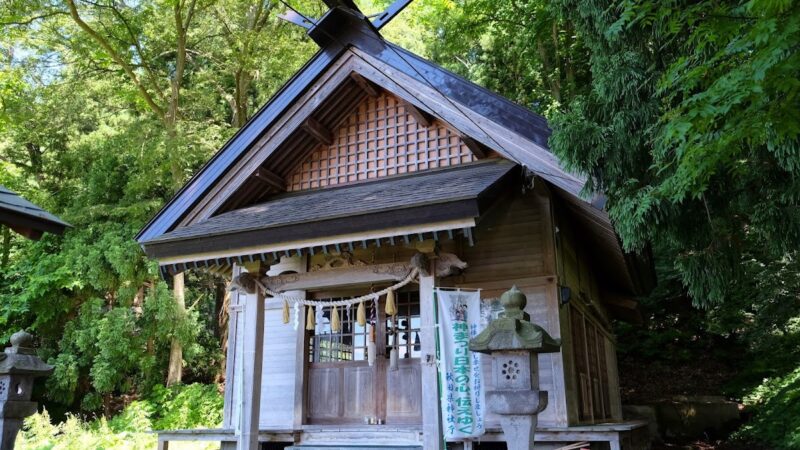
Address: Hanawa, Kazuno City, Akita Prefecture (City Center)
Nearest Station: Approximately 7 minutes on foot (approx. 566m) from Kazuno-Hanawa Station on the JR Hanawa Line
Nearest Bus Stop: Approximately 2 minutes on foot (approx. 136m) from the Yachida-machi bus stop on the Towada-Hachimantai Shikisai Line
The temporary shrine is located in the city center, making it more accessible than the main shrine, and it is bustling with many worshippers during the Hanawa Bayashi festival.
Historical Significance of the Temporary Shrine
With the development of the Hanawa area, the establishment of the temporary shrine in the city center allowed more residents to participate in the festival. Currently, it plays an important role in the transmission of local culture as the central stage of the Hanawa Bayashi festival.
Access Information
Access to the Head Office
Access by Train
- Approximately 10 minutes by car from JR Hanawa Line, Kazuno-Hanawa Station
- Taking a taxi from JR Hanawa Line, Kazuno-Hanawa Station is convenient.
Access by Car
- Approximately 15 minutes from Tohoku Expressway, Kazuno-Hachimantai IC
- Accessible via National Route 282
- Search for “56 Inarigawara, Hanawa, Kazuno City, Akita Prefecture” or phone number in your car navigation system.
Parking Information
There is parking space on the head office grounds, but it becomes extremely crowded during the Hanawa Bayashi festival. During the festival, we recommend using public transportation or temporary parking lots in the city.
Access to the Otabisho (Temporary Shrine)
Access by Train
- Approximately 7 minutes on foot (approx. 566m) from JR Hanawa Line, Kazuno-Hanawa Station
- Straight ahead from the station towards the city center; located in the shopping district.
Access by Bus
- Approximately 2 minutes on foot (approx. 136m) from Towada Hachimantai Shikisai Line, Yachida-machi Bus Stop
- City loop buses are also available (please check routes and timetables).
Points to Note During Your Visit
Visiting the Main Shrine
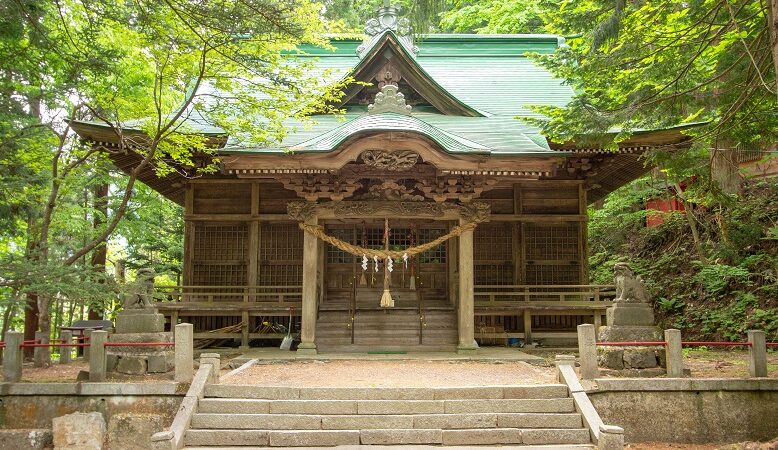
The main shrine is situated in a quiet environment at the foot of the mountain, offering a solemn atmosphere for worship. The grounds feature a magnificent torii gate and shrine building, creating a beautiful landscape in harmony with the surrounding nature.
Proper Worship Etiquette
- Bow before passing through the torii gate.
- Cleanse your hands and mouth at the water basin.
- Bow twice, clap twice, and bow once before the main hall.
- Offer your prayers with gratitude.
About Goshuin (Shrine Seals)
Goshuin may be available at Koinari Shrine. However, since there may not always be a resident priest, it is recommended to check with the Akita Prefectural Shrine Association or the local tourism association beforehand. Special goshuin may be available during the Hanawa Bayashi festival.
Nearby Tourist Attractions
Highlights of Kazuno City
Oyu Stone Circles
A large-scale stone circle from the late Jomon period, designated as a National Special Historic Site. It is registered as a World Heritage Site as part of the “Jomon Prehistoric Sites in Hokkaido and Northern Tohoku,” and is approximately a 20-minute drive from Koinari Shrine.
Lake Towada
A beautiful caldera lake straddling Aomori and Akita prefectures, approximately 40 minutes by car from Koinari Shrine. It’s one of Tohoku’s leading tourist destinations, offering beautiful scenery throughout the seasons.
Goshogake Onsen & Mushinoyu Onsen
A hot spring resort known as a hidden gem of Hachimantai. You can enjoy a hot spring tour in conjunction with a visit to Koinari Shrine.
Specialty Products of Kazuno City
- Kazuno Apples: Sweet and delicious apples grown in a climate with large temperature differences.
- Hinai Chicken: A representative local chicken brand of Akita.
- Kiritanpo: A representative local dish of Akita.
Annual Events and Festivals
Main Annual Events
- January 1st: New Year’s Day Festival
- First Horse Day of February: First Horse Day Festival
- August 16th: Mikoshi Procession
- August 19th-20th: Grand Festival (Hanawa Bayashi)
- November: Harvest Festival
- December 31st: Great Purification Ceremony and New Year’s Eve Festival
Details of the Hanawa Bayashi Schedule
The Hanawa Bayashi festival is held annually on August 19th and 20th. The schedule is as follows (subject to slight variations each year):
August 19th
- Around 7:00 PM: Floats depart from each neighborhood
- Around 8:00 PM: Station Square Event (Float Performance)
- Until late at night: Neighborhood Procession
August 20th
- Around 7:00 PM: Floats depart from each neighborhood
- Around 9:00 PM: Morning Closing Ceremony
- Until the next morning: Performance continues all night
Cultural Value of Koinari Shrine
Center of the Local Community
Koinari Shrine has functioned as a spiritual pillar of the Hanawa district in Kazuno City for over 800 years. Through the Hanawa Bayashi festival, intergenerational community bonds are fostered, and traditional culture is passed down.
Significance as an Intangible Cultural Heritage
The Hanawa Bayashi festival, registered as a UNESCO Intangible Cultural Heritage, is a valuable example demonstrating the diversity and continuity of Japanese festival culture. Supported by the voluntary participation and pride of local residents, it serves as a source of cultural identity.
Potential as a Tourism Resource
In recent years, Koinari Shrine and the Hanawa Bayashi festival have attracted attention both domestically and internationally. They contribute to the revitalization of the local economy and are recognized as a good example of cultural tourism.
Points to Note When Visiting
Dress Code and Manners
- As this is a sacred place, please dress appropriately.
- Maintain silence within the shrine grounds and be considerate of other visitors.
- Photography is permitted, but please be careful not to disrupt the festival events.
Precautions During the Festival
- The Hanawa Bayashi festival period is extremely crowded.
- Early reservations for accommodation are essential.
- Traffic restrictions will be in place, so the use of public transportation is recommended.
- As the festival takes place at night, please remember to dress warmly.
Accessibility Information
The main shrine is located at the foot of a mountain, so there are stairs and slopes. Those wishing to visit in a wheelchair are advised to inquire in advance. The Otabisho (temporary shrine) is located on flat ground within the city, making it relatively easy to access.
Engagement with the Community
Volunteers and Supporters
While the Hanawa Bayashi festival is run by local residents, volunteer staff are sometimes recruited during the festival period. As a valuable opportunity to experience local culture, those interested should inquire with the Kazuno City Tourism Association.
Experiencing Traditional Culture
Some neighborhoods offer Hanawa Bayashi experience classes and tours. Experiencing the music firsthand allows for a deeper understanding of the festival culture.
Nearby Accommodations
Hotels and Ryokans in Kazuno City
- Business hotels available near Kazuno-Hanawa Station
- Early reservations are essential during the Hanawa Bayashi festival
- Hot spring inns scattered throughout the city and surrounding areas
Accommodations in Nearby Areas
- Lake Towada: Numerous resort hotels and ryokans
- Hachimantai Area: Abundant hot spring accommodations
- Odate City: Conveniently located accommodations available
Summary
Kouinari Shrine is a historic shrine in Kazuno City, Akita Prefecture, said to have been founded in 1204. It enshrines three deities: Toyouke-hime no Mikoto, Sarutahiko no Mikoto, and Ame-no-Uzume no Mikoto, and has long been revered as the local tutelary deity.
Its most distinctive feature is that it is the festival shrine for the “Hanawa Bayashi,” a UNESCO Intangible Cultural Heritage. The Hanawa Bayashi festival, held annually on August 19th and 20th, is a magnificent festival that continues throughout the night, attracting attention both domestically and internationally as one of Japan’s representative festivals. The main shrine is located at the foot of Mt. Kawatodake, while the temporary shrine is situated in the heart of the city, each possessing its own unique charm. It’s easily accessible from Kazuno-Hanawa Station on the JR Hanawa Line, and the surrounding area boasts numerous tourist attractions, including the World Heritage Site, the Oyu Stone Circles, and Lake Towada.
Kōinari Shrine is steeped in history, tradition, and the pride of the local people. While it’s a must-see during the Hanawa Bayashi festival, a peaceful visit to the shrine grounds is also highly recommended. When visiting Akita Prefecture, be sure to stop by Kōinari Shrine.
Frequently Asked Questions (FAQ)
Q1: How do you pronounce Kōinari Shrine?
A: It’s pronounced “Sakiwai Inari Jinja.” Locally, it’s affectionately known as “Sakiwai-san.”
Q2: When is the Hanawa Bayashi festival held?
A: The festival is held annually on August 19th and 20th, continuing through the night. The portable shrine procession takes place on August 16th.
Q3: Can I get a Goshuin (temple/shrine stamp)?
A: Goshuin may be available, but there may not always be a resident Shinto priest. It is recommended to check with the Akita Prefectural Shrine Association or the local tourism association beforehand.
Q4: Is there parking?
A: There is parking space within the main shrine grounds. However, it becomes extremely crowded during the Hanawa Bayashi festival, so using public transportation is recommended.
Q5: What is the difference between the main shrine and the Otabisho (temporary shrine)?
A: The main shrine is the permanent shrine building at the foot of the mountain, while the Otabisho is a temporary shrine located in the city where the deity stays during the festival. The Hanawa Bayashi festival is centered around the Otabisho.
Q6: How do I access it from the nearest station?
A: The nearest station is Kazuno-Hanawa Station on the JR Hanawa Line. It’s about a 10-minute drive to the main shrine and about a 7-minute walk to the Otabisho (temporary shrine).
Q7: What are some nearby tourist attractions?
A: There are the Oyu Stone Circles (a World Heritage Site, about a 20-minute drive), Lake Towada (about a 40-minute drive), and the Hachimantai hot spring resort.
Q8: Can anyone see the Hanawa Bayashi festival?
A: Yes, the Hanawa Bayashi festival is open to the public, and anyone can freely watch it. However, early reservations are recommended for accommodation.