Sugawara Shrine (Kazuno City, Akita Prefecture) Complete Guide | Deities, History, Access, and Goshuin Information
Located in Hachimantai, Kazuno City, Akita Prefecture, Sugawara Shrine is a historic shrine dedicated to Sugawara no Michizane, known as the god of learning. Locally known as “Matsudate Tenmangu,” it has a long history and has attracted the faith of the community. This article comprehensively introduces useful information for visitors, including detailed information about Sugawara Shrine, its historical background, highlights for worshippers, and access methods.
Basic Information about Sugawara Shrine
Shrine Name and Location
Official Name: Sugawara Shrine
Alternate Names: Matsuda Tenmangu Shrine, Matsuda Sugawara Shrine
Location: 33 Tenjinkan, Hachimantai, Kazuno City, Akita Prefecture 018-5141
Phone Number: Please contact the Shrine Agency or a related local organization.
Sugawara Shrine is located in Kazuno City, in northern Akita Prefecture, and its name remains in the place name Tenjinkan in the Hachimantai area. The place name “Tenjinkan” itself indicates that there is a shrine dedicated to Tenjin-sama (Sugawara no Michizane) in this area.
Deity Enshrined
Main Deity: Sugawara no Michizane
Sugawara no Michizane was a scholar and politician of the Heian period, known for his outstanding learning and sincere character. He rose to the position of Minister of the Right, but was demoted to Dazaifu by his political rival Sanuki, where he died. After his death, a series of natural disasters occurred in Kyoto, leading to his enshrinement as Tenjin-sama. Currently, he is revered nationwide as the god of learning, literature, and sincerity.
He is believed to bestow blessings for success in examinations, academic achievement, improvement in calligraphy, and literary advancement, attracting many students and those preparing for exams.
History and Origins of Sugawara Shrine
Origin of Founding
There are several legends regarding the founding of Sugawara Shrine, and its history dates back to ancient times.
The Chian 2nd Year (1022) Theory: According to one theory, Matsudate Seizaemon Seicho enshrined Tenjin-gu and established the shrine in Chian 2nd year. This period falls during the late Heian period, coinciding with the time when Sugawara no Michizane was deified and Tenman-gu shrines began to be built throughout the country.
The 1301 (Shōan 3) Theory: Another tradition states that the shrine was founded in the 3rd year of Shōan (1301). This corresponds to the late Kamakura period, a time when the importance of learning and culture began to be recognized within samurai society.
In any case, Sugawara Shrine may have a history of over 700 years, or even close to 1000 years, and has long been revered as a center of faith in this region.
Historical Changes
The history of Sugawara Shrine has several important turning points.
Keichō Era (1596-1615): According to shrine records, during the Keichō era, the Tenjin deity of Kitano, Tennō Village, Minami-Akita District, was invited to Hakooka, Kawajiri Village, and named Hakooka Tenmangū. However, this may be a record of a different shrine from the Sugawara Shrine in Kazuno City, and further verification is needed.
Edo Period: The shrine received fervent devotion from influential local figures and residents, including the Matsudate clan, and functioned as a spiritual pillar of the region. As the god of learning, he was also revered as the guardian deity of children studying at temple schools.
After the Meiji Era: While many shrines were consolidated and reorganized due to the Meiji-era separation of Shinto and Buddhism, Sugawara Shrine survived as an important local shrine.
Relationship with the Matsudate Clan
The Matsudate clan, who are said to have been deeply involved in the founding of Sugawara Shrine, were a powerful family in this region. The tradition that Matsudate Seizaemon Seicho invited the deity of Tenjin-gu indicates that this family valued learning and culture and dedicated themselves to the promotion of education and culture in the region.
Worshipping Tenjin-sama had practical significance beyond mere faith, including the encouragement of learning and the emphasis on education in the region.
Highlights of the Shrine Grounds
Shrine Buildings and Grounds Layout
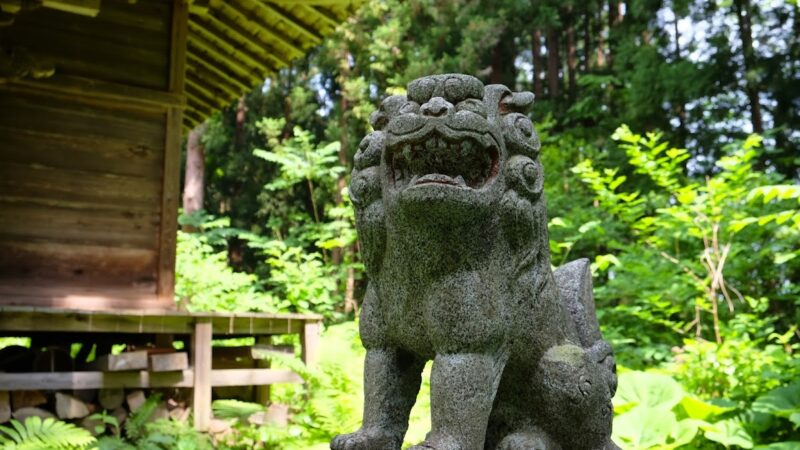
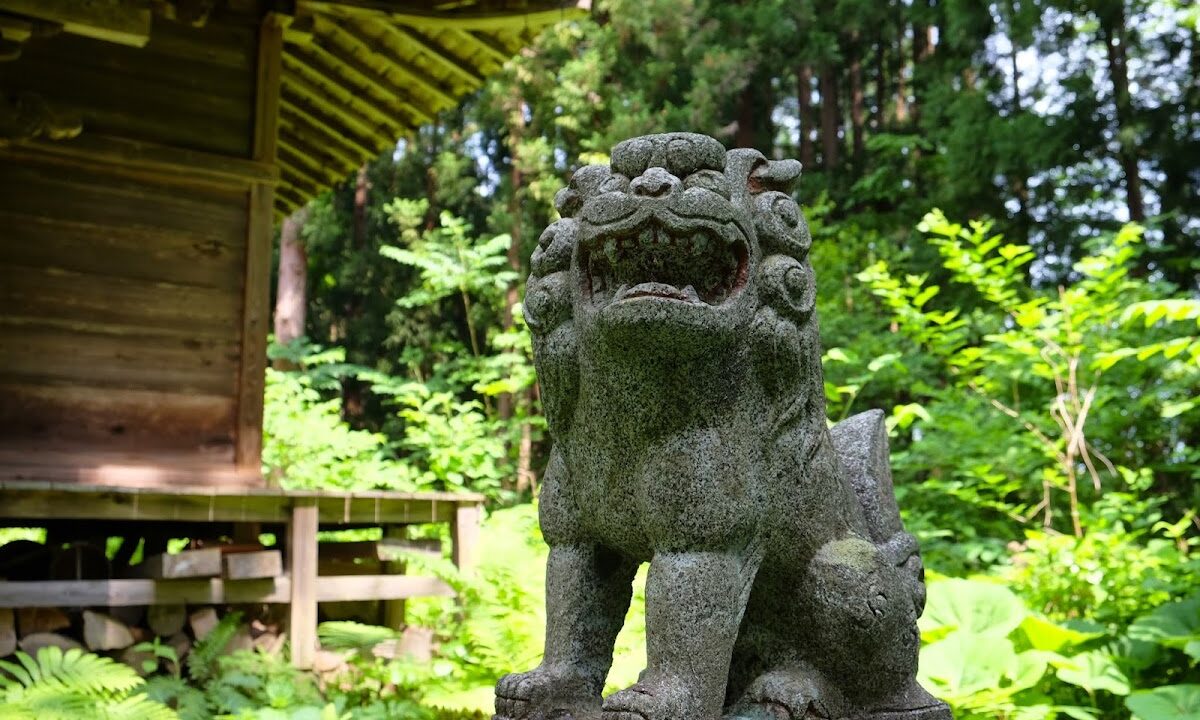
As the place name Tenjinkan suggests, the grounds of Sugawara Shrine were once developed as an important place for worshipping Tenjin-sama.
Main Shrine: The main shrine, dedicated to the enshrined deity Sugawara no Michizane, is built in the traditional style of Shinto shrine architecture. Worshippers offer their prayers from the worship hall towards the main shrine.
Worship Hall: This is where worshippers offer their prayers; a donation box is located here.
Shrine Precincts: Around the main shrine, there may be smaller shrines dedicated to local guardian deities or related gods.
Natural Environment of the Shrine Precincts
The area surrounding Sugawara Shrine, located in the Hachimantai region, is blessed with abundant nature. One of the shrine’s charms is the opportunity to experience the changing seasons of northern Akita Prefecture while worshipping.
Spring: The fresh green leaves sprout, filling the shrine grounds with vitality.
Summer: Lush green trees provide coolness for worshippers.
Autumn: The autumn foliage is beautiful, creating a tranquil atmosphere for worship.
Winter: The snow-covered shrine grounds are enveloped in a solemn and sacred atmosphere.
Etiquette and Manners for Visiting a Shrine
Basic Etiquette for Visiting a Shrine
There are basic etiquette rules for visiting a shrine. At Sugawara Shrine, the following etiquette is recommended:
- Bow at the Torii Gate: Bow before entering the shrine grounds, in front of the torii gate.
- Purification at the Water Basin: If there is a water basin, purify your left hand, then your right hand, then your mouth.
- Walking the Path: The center of the path is considered the path of the gods, so walk along the sides.
- Worship at the Main Hall: Two bows, two claps, and one bow is the basic etiquette.
- Bow deeply twice
- Clap your hands twice
- Recite your prayer silently
- Bow deeply once
Points to Note When Visiting
- Dress Code: There are no specific regulations, but it is desirable to wear clothing that reflects the sacred nature of the place.
- Photography: Photography is generally permitted on the shrine grounds, but please refrain from taking pictures inside the main hall or in areas where photography is prohibited.
- Quietness: Please be quiet on the shrine grounds and be considerate of other visitors.
About Goshuin (Shrine Seals)
Issuance of Goshuin
The issuance of Goshuin at Sugawara Shrine varies depending on the size and management system of the shrine. Generally, smaller shrines may not have resident priests, and the issuance of Goshuin may be limited.
For those wishing to receive a Goshuin (temple/shrine stamp):
- We recommend contacting the Akita Prefectural Shrine Association or a relevant local organization in advance.
- If the shrine is also managed by a larger nearby shrine, it may be possible to receive the stamp there.
- Taking a photograph as proof of your visit is also an option.
About Goshuincho (Stamp Books)
If you wish to collect Goshuin, please prepare a dedicated Goshuincho. These can be purchased at shrines and temples, as well as bookstores and stationery stores. You will need to check directly with the shrine to see if they have an original Goshuincho.
Annual Events and Festivals
Main Festivals
Sugawara Shrine holds various festivals and events throughout the year.
Reitaisai (Annual Grand Festival): This is the most important festival for the shrine and is usually held once a year. Local parishioners and devotees gather for Shinto rituals and offerings.
Tenjin Matsuri (Tenjin Festival): This festival is held around February 25th, the anniversary of Sugawara no Michizane’s death, or at a time based on the lunar calendar. As a shrine dedicated to the god of learning, it attracts many visitors praying for academic success.
New Year’s Visit: Visiting the shrine at the start of the new year is an excellent opportunity to pray for a safe year and academic success.
Exam Season: During the exam season from January to March, the number of visitors praying for success increases.
2025 Event Schedule
Specific festival dates are determined by the shrine and local customs. We recommend checking the detailed schedule using the methods below.
- Inquiries to the Akita Prefectural Shrine Association
- Inquiries to the Kazuno City Tourism Association
- Check local bulletin boards and newsletters
Access Information
Detailed Location
Address: 33 Tenjinkan, Hachimantai, Kazuno City, Akita Prefecture 018-5141
Nearest Station and Line
Access by Train:
The nearest stations are JR Hanawa Line “Rikuchu-Osato Station” or “Kazuno-Hanawa Station”.
- From Rikuchu-Osato Station: Approximately 10-15 minutes on foot or by taxi
- From Kazuno-Hanawa Station: Approximately 15-20 minutes by taxi
Since the JR Hanawa Line has limited service, it is recommended to check the timetable in advance.
Access by Car
Access from Major Roads:
- From the Tohoku Expressway “Kazuno Hachimantai IC”: Approximately 15-20 minutes
- Using National Route 282: Head towards Hachimantai and aim for the Tenjinkan area.
Car Navigation Settings:
- Address: 33 Tenjinkan, Hachimantai, Kazuno City, Akita Prefecture
- Searching by phone number may also be possible (prior confirmation recommended)
Parking
The availability and number of dedicated parking spaces vary depending on the size of the shrine. Smaller shrines may have limited space. When visiting, please be considerate of the neighbors and avoid parking on the street.
Precautions When Using Public Transportation
Kazuno City has limited public transportation options. Since bus services are infrequent, please note the following:
- Check the timetable in advance
- Consider using a taxi
- Renting a car may be convenient in some cases
Nearby Tourist Attractions
Highlights of the Hachimantai Area
The Hachimantai area, where Sugawara Shrine is located, has other attractive tourist spots.
Hachimantai: A volcanic plateau area spanning Akita and Iwate prefectures, offering beautiful natural scenery. Enjoy hiking and trekking in the summer, and skiing in the winter.
Oyu Stone Circle: A late Jomon period archaeological site designated as a National Special Historic Site. A representative historical spot of Kazuno City.
Oyu Onsenkyo (Oyu Hot Spring Village): A historic hot spring resort, perfect for relaxing after visiting the shrine.
Shrines and Temples in Kazuno City
Ohirumemuchi Shrine: One of Kazuno City’s major shrines, with a long history.
Kouinari Shrine: A shrine that attracts the faith of the local community.
For those who enjoy visiting shrines, planning to visit multiple shrines is highly recommended.
Divine Virtues and Faith of Sugawara Shrine
Academic Achievement and Prayer for Passing Exams
The most well-known divine virtue of Sugawara Shrine is academic achievement and prayer for passing exams. The enshrined deity, Sugawara no Michizane, displayed exceptional talent from a young age and excelled in academic pursuits.
Protection for Students Taking Exams: People taking all kinds of exams, including high school entrance exams, university entrance exams, and qualification exams, visit the shrine.
Academic Improvement: Popular with students who want to improve their daily learning.
Improvement in Calligraphy and Literature
Sugawara no Michizane was also an excellent Chinese poet who left behind many masterpieces. Therefore, he is revered by people involved in calligraphy and literature.
Calligraphers: People praying for improvement in their calligraphy skills visit the shrine.
Writers and Poets: Prayers for success in creative endeavors.
God of Sincerity
Sugawara no Michizane was known for his sincere and honest character. Therefore, he is also worshipped as the “God of Sincerity,” and people seeking an honest way of life visit the shrine.
Best Season for Visiting
Spring (March-May)
This is a suitable time to pray for a successful start to learning, coinciding with the beginning of the new academic year. It’s also a good season for reporting success in school entrance or promotion.
Summer (June-August)
You can quietly pray for academic success in the lush green grounds. It’s also a good time to visit to pray for success in exams before summer vacation.
Autumn (September-November)
This is a beautiful season with vibrant autumn foliage, offering a peaceful atmosphere for worship. The number of people visiting to pray for success in exams increases before the exam season.
Winter (December to February)
This is the busiest time of year for visitors, with many coming for New Year’s prayers and to pray for success in exams. Visiting the shrine amidst a snowy landscape is a solemn and special experience.
Q&A about visiting Sugawara Shrine
Q1: Are there set visiting hours for Sugawara Shrine?
A1: While most shrines are open 24 hours, the hours of the shrine office are limited. If you wish to receive a Goshuin (shrine stamp) or prayer, it is recommended to check in advance.
Q2: Can I receive a prayer at Sugawara Shrine?
A2: This varies depending on the size of the shrine and the presence of priests. If you wish to receive a prayer, it is recommended to inquire with the Akita Prefectural Shrine Association or related organizations in advance.
Q3: Is it convenient to access by car?
A3: Public transportation in Kazuno City is limited, so access by car is the most convenient. It’s accessible from the Tohoku Expressway, and you can easily arrive using a car navigation system.
Q4: Can I visit outside of exam season?
A4: Of course. Sugawara Shrine is open for worship throughout the year. Visitors are welcome not only for academic success, but also for improvement in calligraphy, literary arts, and living an honest life.
Q5: Are there any accommodations nearby?
A5: There are accommodations in Kazuno City and the Oyu Onsen area. There are various types of accommodations, including hot spring inns and business hotels, so you can choose according to your travel style.
Q6: Where can I get a Goshuin (shrine stamp) from Sugawara Shrine?
A6: In the case of small shrines, there may not be a resident priest. If you wish to receive a Goshuin, please inquire with the Akita Prefectural Shrine Association in advance, or it may be available at a nearby shrine where a priest is also in charge.
Q7: Are there any precautions to take when visiting in winter? **
A7: Winters in northern Akita Prefecture bring heavy snowfall, so warm clothing and non-slip shoes are essential. Also, check road conditions; winter tires or chains may be necessary.
Summary
Sugawara Shrine, located in Hachimantai, Kazuno City, Akita Prefecture, is a historic shrine dedicated to Sugawara no Michizane, the god of learning. With a history spanning over 700 years, or even nearly 1000 years, it has been revered as a center of local faith.
It offers many divine blessings, including academic success, passing exams, improvement in calligraphy, and literary advancement, attracting students, pupils, and those involved in cultural activities. Its tranquil environment, surrounded by the rich nature of Hachimantai, provides a peaceful setting for prayer.
Access is convenient by car, and it is relatively close to the Tohoku Expressway. The surrounding area boasts numerous tourist attractions, including the natural scenery of Hachimantai and the Oyu Onsen hot spring resort.
Sugawara Shrine is open for worship throughout the year, not just during exam season. When you visit Akita Prefecture, be sure to stop by. Receive the blessings of the god of learning and take a step towards achieving your goals.