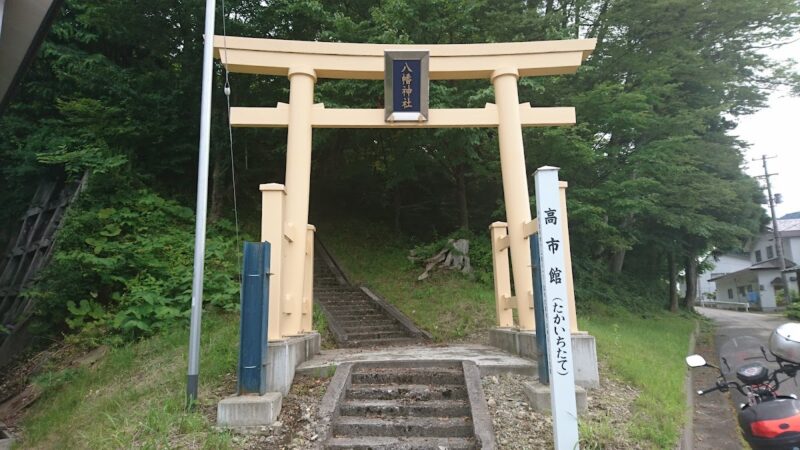
Hachiman Shrine (Shibauchi Takasawa, Hanawa, Kazuno City, Akita Prefecture) Complete Guide
Hachiman Shrine, located in Shibauchi Takasawa, Hanawa, Kazuno City, Akita Prefecture, is a shrine that conveys the history and faith of the region to the present day. This article provides detailed information useful for those considering visiting Hachiman Shrine, including its enshrined deities, history, features of the grounds, and access methods.
Basic Information on Hachiman Shrine
Location and Contact Information
Location: Shibauchi Takasawa, Hanawa, Kazuno City, Akita Prefecture
Kazuno City is located in the northeastern part of Akita Prefecture, close to the border with Aomori Prefecture. The Hanawa district is located in the center of Kazuno City and is a historical area that once flourished as a castle town of the Nanbu clan. Shibauchi Takasawa is located in a corner of the Hanawa district, and the shrine stands amidst a quiet residential area and natural surroundings.
Deities Enshrined
The deities enshrined at Hachiman Shrines are based on the Hachiman faith, with Emperor Ōjin (Homudawake-no-Mikoto) as the principal deity. Hachiman has long been revered by the samurai class as the god of military fortune and victory, but is also widely worshipped as the guardian deity of agriculture and commerce.
In many Hachiman Shrines, the following deities are commonly enshrined alongside Emperor Ōjin:
- Empress Jingū: Mother of Emperor Ōjin
- Himegami: Goddesses such as the Munakata Three Goddesses
- Tamayorihime-no-Mikoto
In some local Hachiman Shrines, local guardian deities or tutelary deities may also be enshrined alongside these deities.
Divine Blessings and Virtues
The main blessings you can expect at Hachiman Shrine are as follows:
- Long-lasting military fortune and improved luck: Due to its nature as a god of war, prayers are offered for success in all kinds of competitions.
- Family safety and protection from evil: As the guardian deity of the region, it protects the safety of families.
- Abundant harvests and business prosperity: Prayers are offered for the development of agriculture and commerce.
- Prosperity of descendants and safe childbirth: Due to the divine virtues of Empress Jingu.
- Traffic safety: In modern times, it is also used as a prayer for safety in a car-dependent society.
History and Origins of Hachiman Shrine
Hachiman Faith and the Kazuno Region
Hachiman faith is one of Japan’s representative Shinto beliefs, which spread throughout the country from the Heian period onward. It was particularly revered as the guardian deity of the samurai class, and the Kamakura Shogunate’s emphasis on Tsurugaoka Hachimangu Shrine led to the establishment of Hachiman shrines in various regions.
The Kazuno region was once under the rule of the Nanbu clan and was an important base for the Nanbu domain from the Sengoku period to the Edo period. A castle town developed around Hanawa Castle, and it flourished as a region inhabited by samurai, merchants, and farmers. It is believed that the Hachiman Shrine was founded within this historical context as a spiritual pillar of the region.
Role as a Local Guardian Deity
In the Shibauchi Takasawa district, the Hachiman Shrine has played a role not merely as a place of worship, but as the center of the local community. From the Edo period through the Meiji, Taisho, Showa, and into the present day, the following important local events have been held around the shrine:
- Spring Festival/Autumn Festival: Expressing gratitude for a bountiful harvest
- Annual Grand Festival: Fostering community unity through portable shrine processions and offerings
- Hatsumode (First Shrine Visit of the Year): Praying for good health and protection from illness in the new year
- Shichi-Go-San (Seven-Five-Three Festival): Celebrating the growth of children
- Exorcism of Misfortune: Praying for protection from misfortune at important life milestones
Highlights of the Shrine Grounds
Shrine Architecture
Many local Hachiman shrines, though small in scale, possess meticulously maintained shrine buildings. Shrine architecture in northern Akita Prefecture often exhibits the following characteristics:
- Snow-resistant roofs: Steeply pitched roofs designed to withstand heavy snowfall
- Simple decorations: Simple yet dignified construction
- Use of local materials: Utilizing locally sourced timber such as Akita cedar
Natural Environment of the Shrine Grounds
Kazuno City is blessed with abundant nature, and the shrine grounds offer a place to enjoy the beauty of nature throughout the seasons:
- Spring: Cherry blossoms and fresh greenery adorn the grounds
- Summer: Lush green trees create a cool and refreshing space
- Autumn: Beautiful autumn leaves, a season of gratitude for the harvest
- Winter: A tranquil landscape covered in snow, creating a sacred atmosphere
Stone Monuments and Memorials
Many local shrines have historical stone monuments and memorials such as the following:
- Shrine Renovation Memorial: Records of past repairs and reconstructions
- Dedication Monuments: Records of donations from local residents and parishioners
- War Memorial: Commemorating those from the region who went to war.
These are valuable historical documents that provide insight into the region’s history.
Annual Events and Festivals
Main Annual Events
At Hachiman Shrine, various Shinto rituals and events are held throughout the year:
January
- New Year’s Day Festival: Prayers for the New Year
- First Shrine Visit of the Year: Visits by local residents
February
- Setsubun Festival: Exorcism of evil spirits through bean-throwing
- Kigensai Festival: Festival celebrating the founding of the nation
Spring (April-May)
- Spring Grand Festival: Prayers for a bountiful harvest
- Kinensai Festival: Prayers for a good harvest
Summer (July-August)
- Summer Purification Ceremony: Purification of impurities accumulated over the past six months
- Summer Festival: Community exchange event
Autumn (September-October)
- Autumn Grand Festival: Thanksgiving for the harvest
- Niiname-sai (Harvest Festival): Offering the new harvest to the gods
Winter (November-December)
- Shichi-Go-San (Seven-Five-Three Festival): Celebrating the growth of children
- Oharai (Great Purification Ceremony): Purifying oneself of the year’s impurities
Characteristics of the Annual Grand Festival
At the annual grand festival of a local Hachiman shrine, the following traditional events may take place:
- Mikoshi Togyo (Portable Shrine Procession): The gods parade through the community
- Dedicatory Performances: Traditional performing arts such as Kagura (Shinto music and dance) and folk songs
- Stalls: A lively gathering of local residents
- Naorai (Post-Ritual Feast): A meal after the Shinto rituals
Etiquette and Manners for Worship
Basic Worship Method
Knowing the correct way to worship at a shrine will allow you to worship with more sincerity:
1. Before Passing Through the Torii Gate
- Bow before entering the shrine grounds
- Walk along the side of the path, as the center is the path for the gods
2. Purification at the Water Basin
- Take the ladle with your right hand and purify your left hand.
- Switch the ladle to your left hand and purify your right hand.
- Switch the ladle back to your right hand, receive water in your left hand, and rinse your mouth.
- Finally, stand the ladle upright and purify the handle.
3. Worship at the Main Hall
- Quietly place your offering in the offering box.
- Ring the bell if there is one.
- Two Bows, Two Claps, One Bow: Bow deeply twice → Clap twice → Bow deeply once.
- Recite your wish silently.
4. When Leaving
- Turn around and bow once after exiting the torii gate.
Points to Note When Visiting
- Attire: Clean and subdued clothing is preferable.
- Photography: Photography is often prohibited inside the shrine.
- Noise: Be quiet on the shrine grounds.
- Pets: Please be considerate as it is a sacred place.
- Garbage: Always take your trash with you.
About Goshuin (Shrine Seals)
Receiving Goshuin (Shrine Seals)
At smaller local shrines, there may not be a resident priest, so it’s necessary to check in advance regarding the issuance of Goshuin. Major shrines in Kazuno City and shrines affiliated with the Association of Shinto Shrines may offer this service.
If you wish to receive a Goshuin:
- Prior Confirmation: Check by phone or other means whether they are able to issue Goshuin.
- After Visiting: Complete your prayers first, then receive the Goshuin.
- Bring Your Goshuincho (Shrine Seal Book): Prepare a dedicated Goshuincho.
- Offering Fee: Generally around 300-500 yen.
The Meaning of Goshuin
A Goshuin is not simply a stamp; it is a precious item bestowed by the shrine as proof of your visit. Please keep the following points in mind:
- It is a memento of your visit, not for collection purposes.
- It is proof of your connection with the gods.
- Keep your goshuincho (stamp book) safe.
Access Information
Access by Car
From the Tohoku Expressway
- Approximately 10-15 minutes from Kazuno Hachimantai IC
- Approximately 15-20 minutes from Towada IC
Parking
- There is often parking space for visitors on the temple grounds or nearby.
- Temporary parking may be provided during festivals.
Access by Public Transportation
JR Hanawa Line
- Get off at “Kazuno Hanawa Station”.
- Approximately 10-15 minutes on foot or by taxi from the station.
- You can also use Akita Kita Bus routes (depending on the route).
Notes
- Public transportation in Kazuno City is limited, so it is necessary to check the timetable in advance.
- Due to snow in winter, winter tires are essential if visiting by car.
Nearby Landmarks and Facilities
The Shibauchi Takasawa area is close to the Hanawa city center, and the following facilities are located nearby:
- Kazuno City Hall Hanawa Branch
- Hanawa Ski Resort
- Michi-no-Eki Kazuno (Antoraa)
- Kazuno Tourism and Hometown Hall (Antoraa)
Kazuno City Tourist Attractions
You can enjoy sightseeing in Kazuno City in conjunction with visiting Hachiman Shrine.
Historical and Cultural Facilities
Oyu Stone Circle
- A late Jomon period archaeological site and a national special historic site
- A component of the World Heritage Site “Jomon Prehistoric Sites in Hokkaido and Northern Tohoku”
- Approximately 20 minutes by car from Hachiman Shrine
Kazuno City Historical and Folk Museum
- Exhibits local history and folklore materials
- Abundant materials from the Nanbu Domain period
Hanawa Bayashi
- One of Japan’s three major festival music traditions
- A festival held annually on August 19th and 20th
- Characterized by its gorgeous floats and music
Nature and Hot Springs
Lake Towada
- A beautiful caldera lake located in the eastern part of Kazuno City
- Approximately 40 minutes by car from Hachiman Shrine
Hachimantai
- A highland resort on the border of Akita and Iwate prefectures
- Enjoy trekking, skiing, and hot springs
Goshogake Onsen/Mushinoyu Onsen
- A hidden hot spring in Hachimantai
- Hot springs rich in sulfurous properties
Yuse Onsen
- A hot spring resort along the Yoneshiro River
- Enjoy bathing while listening to the sound of the river
Gourmet
Kiritanpo
- A local dish from northern Akita Prefecture
- Kazuno City is considered one of its places of origin
Kazuno Beef
- A brand of beef from Kazuno City
- Characterized by its fine marbling
Horse Meat Dishes
- A traditional dish from the Nanbu region
- Enjoy dishes such as sakura nabe (cherry blossom hot pot) and basashi (horse sashimi)
Climate and Clothing in Kazuno City
Seasonal Characteristics
Spring (March-May)
- Snow still remains in March
- Gradually warmer from April
- May is a beautiful season of fresh greenery
- Clothing: Spring jacket, layering is recommended as it gets chilly in the mornings and evenings
Summer (June-August)
- Relatively cool and pleasant
- Bustling with tourists during the Hanawa Bayashi festival in August
- Clothing: Short sleeves are acceptable, sun protection is necessary.
Autumn (September-November)
- A season of beautiful autumn foliage
- Temperatures begin to drop from October
- Possibility of first snowfall in November
- Clothing: Long sleeves, sweater, coat from late October
Winter (December-February)
- Heavy snowfall areas with significant snow accumulation
- Temperatures can drop below freezing
- Clothing: Thick coat, gloves, hat, and winter boots are essential
How to Interact with the Community
Ujiko System and Local Community
Hachiman Shrine is supported by local residents called Ujiko (parishioners) as the local guardian deity. The Ujiko system is a traditional Japanese community structure:
- Maintenance and management of the shrine: Cleaning, repairs, and event management
- Implementation of festivals: Continuation of traditional events such as the annual grand festival
- Community bonds: A place for intergenerational exchange
What you can do as a worshipper
Worshippers from outside the region can also support the shrine in the following ways:
- Offerings and first fruits: A valuable source of funding for shrine operations
- Participation in cleaning activities: Participating in local cleaning events
- Participation in festivals: Observing local festivals and understanding local culture
- Contribution to the local economy: Using local shops and restaurants
The significance of visiting Hachiman Shrine
Shrines as a spiritual haven
In modern society, shrines are not merely tourist destinations, but places where one can find peace of mind. Visiting Hachiman Shrine offers:
- Escape from Daily Life: Find peace of mind in the tranquil shrine grounds
- Harmony with Nature: Experience the changing seasons
- Dialogue with History: Reflect on the faith of our ancestors
- Gratitude: An opportunity to appreciate the blessings of everyday life
Learning about Local History
Visiting a small local shrine provides an opportunity to deeply understand the history and culture of the area. Through Hachiman Shrine:
- The origins of the Kazuno region
- The history of the Nanbu domain era
- The lives and beliefs of local residents
- The continuation of traditional events
You can learn about these things.
Summary
Hachiman Shrine, located in Shibauchi Takasawa, Hanawa, Kazuno City, Akita Prefecture, is an important place that conveys the history and faith of the region to the present day. It enshrines Hachiman, known as the god of military fortune and victory, and has been cherished by local residents as the guardian deity of the region for many years.
Though small in scale, the carefully preserved shrine buildings, the changing seasons, and the warm faith of the local people offer peace and strength to visitors. When visiting Kazuno City, be sure to stop by Hachiman Shrine and experience the region’s history and culture.
Combining a tour of local shrines with sightseeing at places like the Oyu Stone Circles, Hanawa Bayashi festival, Lake Towada, and Hachimantai will be a wonderful experience that allows you to deeply appreciate the charm of northern Akita Prefecture.
When you visit, quietly put your hands together in prayer and convey your daily gratitude and wishes to the gods. Maintaining a respect for the region’s history and culture will ensure that Hachiman Shrine continues to be protected as a treasure of the community.