Shinmei-gu Shrine (Sawada, Hirosaki City, Aomori Prefecture) | The Complete Picture of the Byobu-iwa Rock Cave and the Sawada Candle Festival
Nestled in the mountains of the Sawada district, formerly part of Soma Village, in western Hirosaki City, Aomori Prefecture, Shinmei-gu Shrine is known as one of the most mystical shrines in the Tsugaru region. Located at the foot of the massive Byobu-iwa rock formation, approximately 100 meters high and 600 meters long, this shrine, which houses a “rock cave hall” where the natural rock itself is enshrined as the deity, has long been a center of local faith.
This article provides a comprehensive overview of this sacred place of prayer, including the history of Shinmei-gu Shrine, the unique topography and the allure of the rock cave hall, the fantastical “Sawada Candle Festival” held every March, and detailed access information for visitors.
History and Origins of Shinmei Shrine
An Ancient Shrine with Unknown Origins
Regarding the founding date of Shinmei Shrine, the travelogue “Tsugaru no Ochi” by Edo period travel writer Sugae Masumi (1754-1829) states that “it is unknown when it was enshrined,” and its origins remain shrouded in mystery. This description indicates that it is an ancient shrine that existed at least before the mid-Edo period.
Deity and Beliefs
The deity enshrined at Shinmei Shrine is Amaterasu Omikami (Amaterasu-Ōmikami). The name Shinmei Shrine is used for shrines that enshrine Amaterasu-Ōmikami, and there are said to be 712 such shrines throughout Japan. Sawada’s Shinmei Shrine is one of them, and has served as a place of prayer for the local people, centered on the worship of Amaterasu-Ōmikami, the sun goddess.
History as “Kokura’s Shinmei-sama”
During the old feudal era, this area was called “Kokura Village,” and Shinmei Shrine was affectionately known as “Kokura’s Shinmei-sama.” This name is still used by elderly locals today, reflecting the deep-rooted faith in the region over its long history.
The Mystery of Byobu-iwa Rock and Iwayado Hall
Overwhelming Natural Beauty
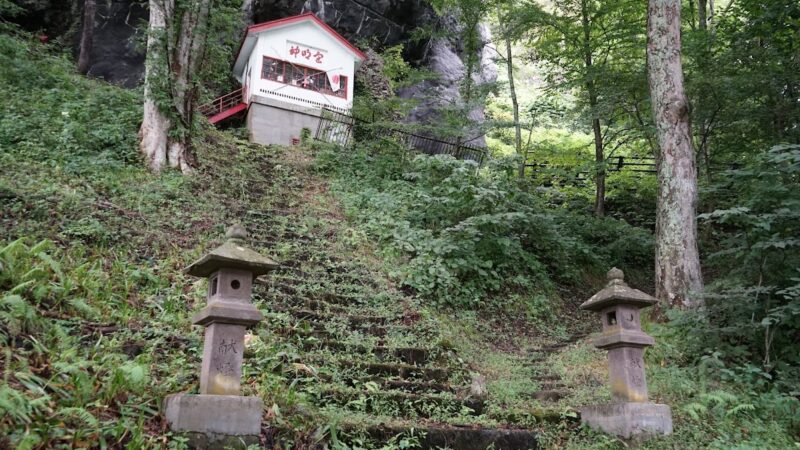
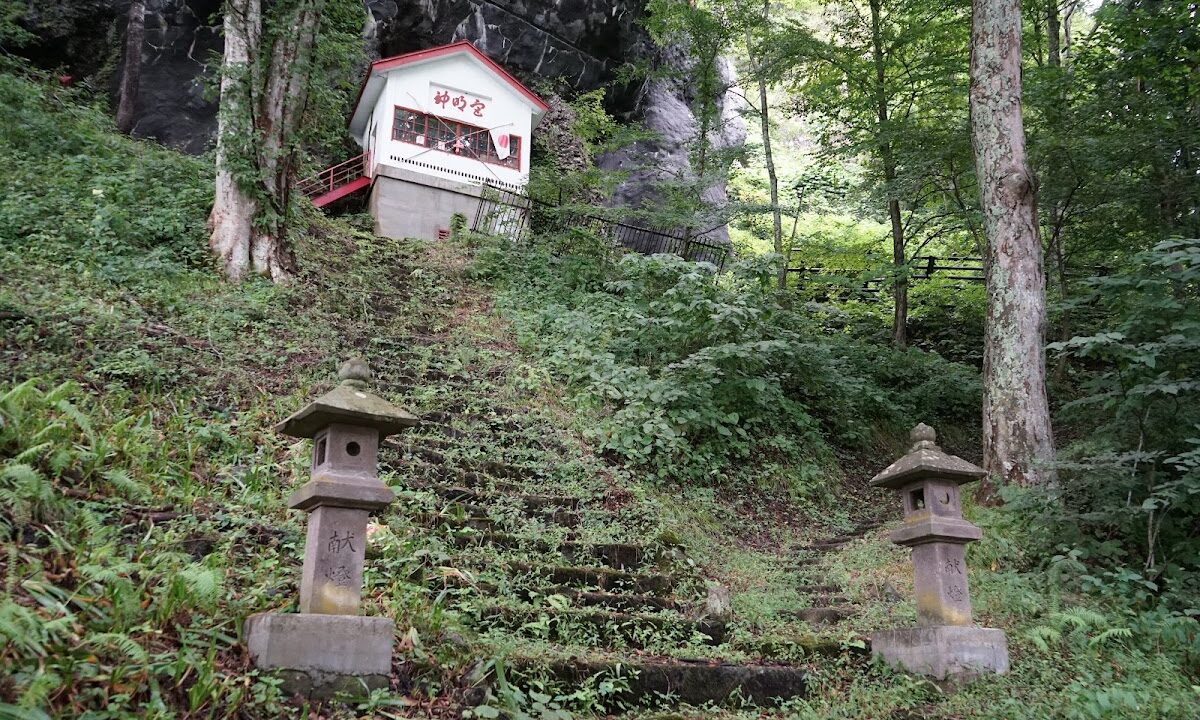
The most striking feature of Shinmei Shrine is the massive Byobu-iwa Rock towering behind it. This rock face, approximately 100 meters high and 600 meters long, is a black, heavy rock face that has been eroded by wind and snow over many years, rising like a sharp, sheer cliff. Its shape truly resembles a folding screen, welcoming visitors with an overwhelming display of natural beauty.
The Unique Form of Worship: Iwayado
On the slopes of Byobu-iwa (Folding Screen Rock) lies a space called “Iwayado.” This is a sacred place where the natural rock itself is worshipped as a deity, and it is a valuable example that preserves the remnants of “Iwakura worship,” a primitive form of Japanese belief. Iwayado is not an artificial structure, but a prayer space utilizing natural rock cavities and caves, imbued with a reverence for nature that transcends human hands.
The Rock Face as a Sacred Place of Prayer
The rock face surrounding Iwayado is a sacred place of prayer where worshippers can directly light candles. Especially during the Sawada Candle Festival, countless candles are lit on this rock face, creating a fantastical scene. The contrast between the eternity of the rock, a natural object, and the transience of the temporary light creates a unique spirituality.
The Charm of the Sawada Candle Festival
Festival Overview and Event Information
The Sawada Candle Festival is a representative festival of Shinmei Shrine, held annually on March 3rd. This festival, a traditional event of the Little New Year, has been passed down through generations and is an important opportunity for local people to pray for family safety and a bountiful harvest.
Event Information:
- Date: March 3rd every year
- Time: 17:00-20:30
- Location: Sawada Shinmei Shrine (18 Sonemura, Sawada, Hirosaki City)
- Organizer: Sawada Candle Festival Executive Committee
A Fantastical World Woven by Countless Lights
The festival’s greatest highlight is the countless candles lit on the rock face of the gigantic Byobu-iwa (Folding Screen Rock). Worshippers visit the Iwayado (rock cave hall) and offer prayers by placing candles directly on the rock face. From dusk until nightfall, the sight of hundreds, even thousands, of candles illuminating the rock face is nothing short of mystical.
The warm glow of the candles against the dark, imposing rock face symbolizes the joy of welcoming spring after enduring Tsugaru’s harsh winter and a sense of gratitude towards nature. In the cold of early March, with snow still on the ground, the contrast of light and shadow created by the flickering candle flames leaves a profound impression on visitors.
A Tradition and Prayer Rooted in the Region
The Sawada Candle Festival is not merely a tourist event; it is an expression of the faith that the local people have passed down through generations. The act of lighting candles, each with its own wish—for family safety, a bountiful harvest, good health, and more—encapsulates the spirit of the Tsugaru people who have lived in harmony with nature.
The festival’s preparation and operation are primarily handled by a local residents’ executive committee, which also plays a role in strengthening community bonds.
Shinmei-gu Shrine Grounds and Points for Visiting
Approach and Shrine Building
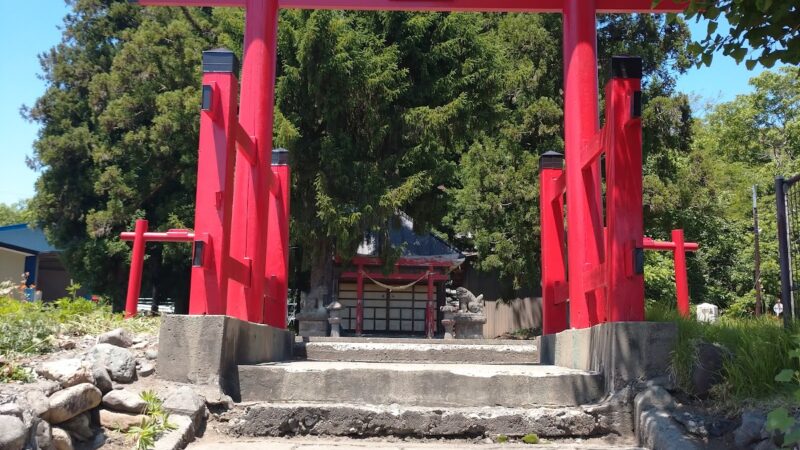
Shinmei-gu Shrine is located in a mountainous area on the outskirts of the Sawadaen Village settlement in Hirosaki City. The approach is relatively simple, and the area is characterized by a quiet atmosphere surrounded by natural forest. The shrine building is built with Byobu-iwa (a rock formation) as its backdrop, creating a harmonious integration with nature.
Etiquette and Precautions for Visiting
When visiting Shinmei-gu Shrine, please note the following:
- Respect for Nature: The area around Iwayado is a sacred place. Please be careful not to damage the rocks or leave any trash.
- Safety Assurance: The ground can be slippery, especially in winter and rainy weather. We recommend wearing appropriate footwear.
- Respect for Silence: This is a quiet mountain environment. Please refrain from loud conversations and pray quietly.
- Photography Etiquette: Photography is permitted, but please be considerate of other visitors.
Surrounding Natural Environment
The area around Shinmei Shrine is blessed with abundant nature, allowing visitors to enjoy the scenery of each season. It displays different expressions with each season: fresh greenery in spring, deep green in summer, autumn leaves in fall, and snowscapes in winter. The natural beauty created by Byobu-iwa Rock and the surrounding forest is particularly worth seeing.
Access and Basic Information
Location and Geographical Position
Address: 18 Sonemura, Sawada, Hirosaki City, Aomori Prefecture
Coordinates: 140°19′58.46″E, 40°33′45.33″N
Shinmei Shrine is located approximately 17km west of the center of Hirosaki City, in the Sawada district of the former Soma Village. It is about a 30-minute drive from Hirosaki city center and is situated in a naturally rich environment in the mountainous region of Tsugaru.
Access by Car
The most convenient way to access Shinmei Shrine is by car:
- From Hirosaki City Center: Head west on National Route 7, then take the prefectural road for approximately 30 minutes.
- From Tohoku Expressway: Approximately 40 minutes from the Owani-Hirosaki Interchange.
- Parking: There are parking spaces for visitors around the shrine (especially during the Sawada Candle Festival, temporary parking may be available).
Access by Public Transportation
Public transportation access is limited:
- If using the bus from Hirosaki Station, there are few buses going towards Sawada, so it is recommended to check the timetable in advance.
- Taking a taxi is also an option, but you need to consider arrangements for your return trip.
Best Time and Season for Visiting
Optimal Time to Visit:
- Early March: The most special time to experience the Sawada Candle Festival.
- Spring to Autumn: A season to enjoy the natural beauty of fresh greenery and autumn leaves.
- Winter: You can enjoy a mystical atmosphere amidst the snowy landscape, but be aware of road conditions.
Visiting Hours:
- Daytime visits are generally recommended.
- The Sawada Candle Festival is held at night from 17:00 to 20:30.
Tourist Spots Around Shinmei Shrine
Major Tourist Attractions in Hirosaki City
When visiting Shinmei Shrine, you can also visit other tourist spots in Hirosaki City:
- Hirosaki Castle: One of Japan’s representative existing castle keeps. Also famous as a cherry blossom viewing spot.
- Hirosaki Apple Park: A facility where you can experience the apple culture of the Tsugaru region.
- Tsugaru Clan Neputa Village: A tourist facility where you can experience the traditional culture of Tsugaru.
- Iwakiyama Shrine: An ancient shrine located at the foot of Mt. Iwaki, also known as Tsugaru Fuji.
Nature of the Former Soma Village Area
The former Soma Village area, where Shinmei Shrine is located, is known as a region rich in nature. Located in the vicinity of the Shirakami Mountains, this area boasts unspoiled nature, including clear streams and forests. Visitors can enjoy nature walks and forest bathing, experiencing a peaceful escape from the hustle and bustle of city life.
Tsugaru Region’s Religious Culture and Shinmei Shrines
Shinmei Faith in Tsugaru
Numerous Shinmei shrines exist in the Tsugaru region, where the worship of Amaterasu Omikami is deeply rooted. This is closely related to the history of the Tsugaru domain and its agricultural-centered lifestyle. Amaterasu Omikami, the sun goddess, was particularly important to farmers praying for bountiful rice harvests.
The Genealogy of Iwaya Faith
The form of worship that uses natural rocks as sacred objects, such as the Iwaya-do (rock cave hall) at Sawada Shinmei Shrine, is a form of primitive Japanese belief. Especially in the Tohoku region, there has long been a culture of revering large and unusual rock formations, and Shinmei shrines inherit this tradition.
Candle Festival as a Little New Year Event
The Sawada Candle Festival, held on March 3rd, is a traditional event that continues the tradition of the Little New Year (around January 15th) in the old lunar calendar. The Little New Year is an important time for praying for a bountiful harvest, and various traditional events have been held throughout the country. The act of lighting candles symbolizes the light and hope of the new year.
Practical Guide to Visiting Shinmei Shrine
Clothing and Items to Bring
Basic Clothing:
- Comfortable walking shoes (sneakers or hiking boots are recommended due to the mountainous terrain)
- Warm clothing appropriate for the season (especially essential for the Candle Festival in March)
- Rain gear (due to the unpredictable weather in the mountainous area)
Items to Bring:
- Camera (for capturing the fantastical scenery)
- Flashlight (for participating in the Candle Festival at night)
- Drinking water
- Garbage bags (be sure to take your own trash home)
Photography Tips
Here are some points to consider when photographing Shinmei Shrine and Byobu-iwa Rock:
- Daytime Photography: To capture the entire view of Byobu-iwa Rock, it is recommended to photograph from a slightly distant position.
- Photography during the Candle Festival: A tripod is useful (ideal for long-exposure photography at night)
- Best Timing: The most beautiful time to visit is 1-2 hours after the festival begins, when many candles are lit.
Manners and Precautions
- Iwayado is a sacred place. Damaging the rocks or vandalizing it is strictly prohibited.
- Crowds are expected during the Candle Festival. Please visit with consideration for others.
- Please be extremely careful when handling fire.
- To protect the natural environment, please take all your trash with you.
- As this is also a residential area for local residents, please be mindful of noise and illegal parking.
Cultural Value and Preservation of Shinmei Shrine
Importance as a Regional Cultural Property
Sawada Shinmei Shrine is a valuable cultural property that conveys the history of faith culture and nature worship in the Tsugaru region. In particular, the unique form of worship known as Iwayado is an important subject of study from the perspectives of Japanese religious history and folklore.
Relationship between the Local Community and the Shrine
Shinmei Shrine is not merely a tourist spot; it continues to function as a spiritual anchor for the local community. Through the operation of the Sawada Candle Festival, intergenerational exchanges are fostered, strengthening community bonds. In rural areas facing depopulation, the community-maintaining function of such traditional events is extremely important.
Sustainable Tourism and Preservation Activities
In recent years, interest in Shinmei Shrine and the Candle Festival has increased, but concerns remain about the environmental impact of tourism development. The region is exploring sustainable tourism models that welcome visitors while protecting the natural environment and cultural heritage. It is crucial that each visitor has an awareness of preserving this precious culture and nature for future generations.
Summary: The Spirituality Conveyed by Shinmei Shrine
Shinmei Shrine, located in Sawada, Hirosaki City, Aomori Prefecture, is a sacred place that conveys ancient beliefs amidst a unique natural environment featuring a massive Byobu-iwa rock and a rock cave hall. Despite being an ancient shrine with unknown origins, it continues to play an important role today as a place of prayer for local people and as the stage for the traditional Sawada Candle Festival.
The towering black rock face reaching 100 meters high, the Iwayado (rock cave hall) where the natural rock itself is considered the sacred object of worship, and the fantastical sight of countless candles lit every March, evoke a sense of awe towards nature and remind visitors of the importance of praying to beings beyond human comprehension.
Despite its relatively accessible location, just about 30 minutes by car from the center of Hirosaki City, Shinmei-gu Shrine, nestled in the tranquility of the mountains, will continue to welcome many people as a place to rediscover the spirituality that modern people are in danger of forgetting.
Shinmei-gu Shrine is a special space where the nature, culture, and faith of Tsugaru merge. Why not visit this mystical shrine of prayer at least once?