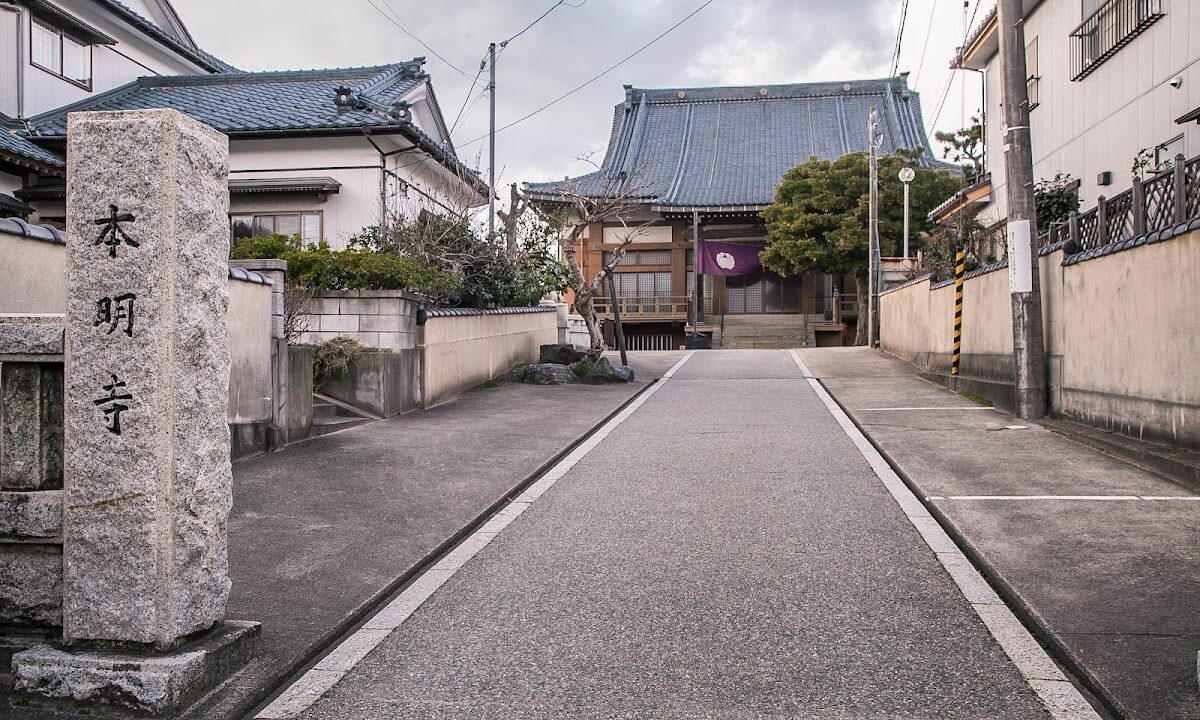
Honmyoji Temple (Chuo-ku, Niigata City, Niigata Prefecture) | A Complete Guide to the History, Access, and Features of this Shinshu Otani-ha Temple
Located on Furumachi-dori in Chuo-ku, Niigata City, Honmyoji Temple is a historic temple belonging to the Shinshu Otani-ha sect. Situated in Niigata’s “Shimomachi” area, and built on a unique terrain atop sand dunes, this temple maintains deep ties with the local community while continuing to pass down the teachings of Shinran Shonin. This article comprehensively introduces useful information for visitors, from detailed information about Honmyoji Temple to its historical background, features of the temple grounds, and access methods.
Basic Information about Honmyoji Temple
Location and Access Details
Address: 2881, Furumachi-dori 12-bancho, Chuo-ku, Niigata City, Niigata Prefecture
Postal Code: 951-8063
Phone Number: 025-222-3533
Sect: Shinshu Otani-ha (Higashi Honganji-ha)
Honmyoji Temple is located in the heart of Niigata City, on the downstream side of Nishibori-dori in the Furumachi area. It is close to Furumachi, Niigata’s bustling downtown area, and stands in a historically preserved neighborhood.
Transportation Access
Using Public Transportation:
- Nearest Station: Approximately 2.5km from JR Niigata Station
- Bus: Approximately 3 minutes on foot from the Niigata Kotsu Bus “Nishibori-dori Jubancho” bus stop
- Hakusan Station: Accessible on foot from Hakusan Station on the Echigo Line
From Niigata Station, using a local bus is convenient. Take a bus bound for Furumachi and get off at Nishibori-dori Jubancho. Honmyoji Temple is a few minutes’ walk from there.
If traveling by car:
It’s about a 10-minute drive from Niigata Station. Located along Furumachi Street, you can easily reach it by entering “Honmyo-ji” or the address into your car’s navigation system. However, since there are many one-way streets in the Furumachi area, we recommend checking the surrounding roads beforehand.
About the History of Honmyoji Temple and the Shinshu Otani School
What is the Shinshu Otani School?
The Shinshu Otani School is one of the sects of Jodo Shinshu Buddhism, with Higashi Honganji Temple in Kyoto as its head temple. Inheriting the teachings of its founder, Shinran Shonin, it focuses on the concept of “reliance on the power of others,” preaching salvation through the vow of Amida Buddha.
Shinran Shonin was a monk who was active during the Kamakura period and spread the teachings of Nembutsu as a disciple of Honen Shonin. The Shinshu Otani sect is headed by the Otani family, who have inherited the lineage of Shinran Shonin, and has approximately 8,900 temples throughout Japan.
Development of the Shinshu Otani Sect in Niigata Prefecture
Niigata Prefecture is known for having a large number of Shinshu Otani sect temples. As of 2025, there are approximately 2,795 temples in Niigata Prefecture, and a significant number of these belong to the Shinshu Otani sect. This is due to the historical background of the widespread acceptance of Shinshu teachings along the Sea of Japan coast from the Hokuriku region to Niigata during the Edo and Meiji periods.
In Niigata City’s Chuo Ward, there are 76 temples, and Honmyoji Temple has served as a center of local faith.
Historical Background of Honmyoji Temple
The Furumachi area, where Honmyoji Temple is located, has flourished as the commercial and cultural center of Niigata since the Edo period. Niigata is a port town that developed at the mouth of the Shinano and Agano Rivers, where they flow into the Sea of Japan, and prospered as a port of call for Kitamae-bune (northern trade ships).
While detailed records of the time of Honmyoji Temple’s construction are limited, its location on Niigata’s sand dunes suggests that the temple’s placement was designed considering Niigata’s topographical features. Niigata city is formed on a series of sand dunes, and Honmyoji Temple is built on one of these dunes.
Honmyoji Temple’s Grounds and Architectural Features
A Temple Built on Sand Dunes
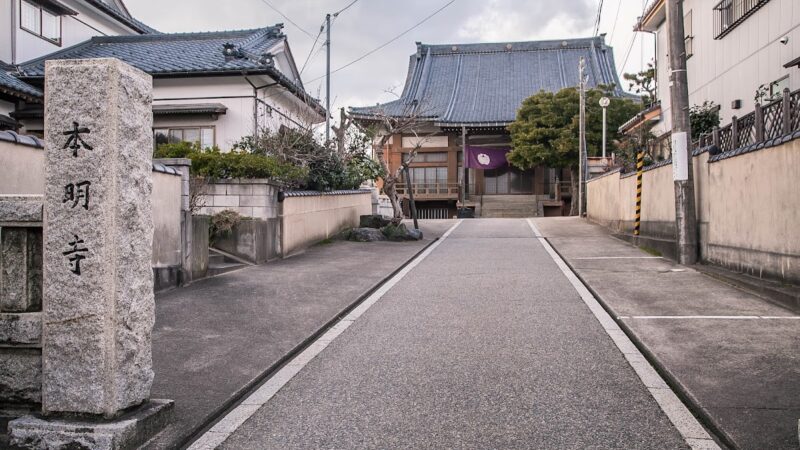
The most distinctive feature of Honmyoji Temple is its location on Niigata’s sand dunes. The approach to the temple is a gentle slope, and the temple grounds are slightly higher than the surrounding land. This is a layout that utilizes Niigata’s unique topography of sand dunes, and is a valuable example that conveys Niigata’s former geographical characteristics to the present day.
Niigata city developed on several sand dune series that were formed along the coastline of the Sea of Japan. These sand dunes are called the “Niigata Sand Dunes” and form the foundation of the city. The sand dunes on which Honmyoji Temple is located are thought to have served to protect the temple from floods and storm surges.
Temple Grounds
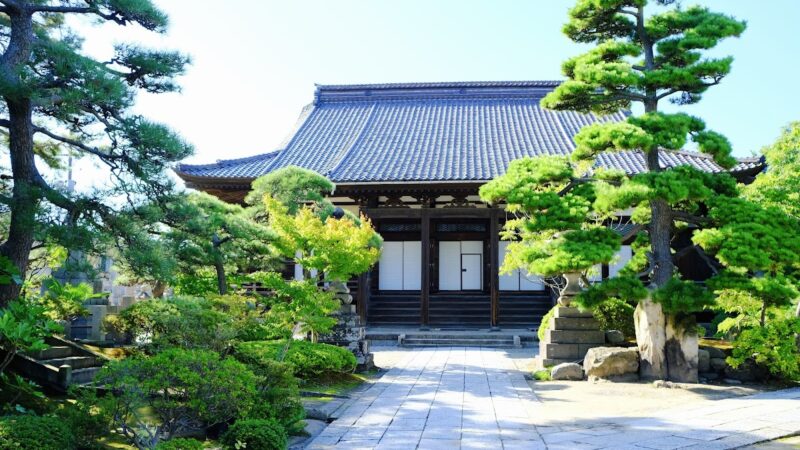
As you ascend the approach to the temple, you will find the main hall built on higher ground than the surrounding area. This difference in elevation allows for panoramic views of the surrounding townscape from the temple grounds, making it a valuable place to experience the former topography of Niigata.
Besides the main hall, there is a bulletin board along the approach to the temple, displaying Buddhist teachings and seasonal messages. This bulletin board functions as a place for communication, connecting the temple with local residents.
Management by a Female Acting Priest
For over 20 years, Honmyoji Temple has been managed by a female acting priest. With the attitude of “making an effort to listen carefully to the stories of various people,” the temple is managed in a way that is attentive to the needs of visitors.
While female priests are not uncommon in the Shinshu Otani sect, Honmyoji Temple’s long-standing and community-based activities are a significant characteristic.
Temple Culture and the Furumachi Area in Niigata City’s Chuo Ward
History of Furumachi (“Shimomachi”)
The “Shimomachi” area, where Honmyoji Temple is located, is a particularly historically significant area within the Furumachi district. “Shimomachi” means “downtown,” and it was once a thriving center of Niigata’s merchant culture.
During the Edo period, Niigata was an important port town under the direct control of the shogunate (tenryo). Furumachi, as the center of Niigata town, was a bustling commercial district lined with merchant houses, restaurants, and temples. Even today, the old town layout remains, and historical buildings and alleys can be found scattered around Honmyoji Temple.
Distribution of Temples in Niigata City’s Chuo Ward
There are 76 temples in Niigata City’s Chuo Ward, but most are concentrated in the Furumachi and Teramachi areas. This is a remnant of the Edo period urban planning, which concentrated temples in specific areas.
Nearby Honmyoji Temple are several other temples with the character “Hon” (本) in their names, such as Honkakuji and Honjoji. These temples, though belonging to different sects, have supported the religious culture of Niigata.
The Teachings of the Shinshu Otani School and Life of Faith at Honmyoji Temple
The Teachings of Shinran Shonin
The core of the teachings of Shinran Shonin as conveyed by the Shinshu Otani School is the idea of “other-power vow.” This is the teaching that salvation is achieved not through one’s own power (self-power), but through the power of Amida Buddha’s original vow (other-power).
Shinran Shonin left behind the famous words, “If even good people attain rebirth in the Pure Land, how much more so wicked people?” This means that since even good people are saved by the power of Amida Buddha, wicked people who cannot be saved by their own power are precisely the objects of Amida Buddha’s original vow.
This teaching is a groundbreaking idea that all people are equally saved, regardless of social status or ability, and it was widely accepted among the common people from the medieval to the early modern period.
Characteristics of the Shinshu Otani School
The Shinshu Otani School has several characteristics that differ from other Buddhist sects:
- Regarding Goshuin (Temple Seals): Shinshu Otani temples generally do not issue Goshuin. This is because Shinshu places the utmost importance on “faith” and discourages the pursuit of formal merit. Honmyoji Temple also does not issue Goshuin.
- Funerals and Memorial Services: In Shinshu, memorial services are not about praying for the deceased’s enlightenment, but rather about confirming that they have already attained rebirth in the Pure Land through the power of Amida Buddha, and are viewed as an opportunity for those left behind to encounter Buddhist teachings.
- Graves and Perpetual Memorial Services: Shinshu does not strictly use the term “memorial service,” emphasizing the recitation of the Nembutsu (invocation of Amida Buddha). However, in practice, within the danka (parishioner) system, grave management and memorial services are important temple activities.
Attractions and Cultural Facilities Around Honmyoji Temple
Tourist Spots in the Furumachi Area
When visiting Honmyoji Temple, we recommend exploring the surrounding Furumachi area.
Furumachi-dori Shopping Street: A representative shopping street of Niigata, lined with long-established kimono shops and Japanese confectionery stores. The arcade is well-maintained, allowing you to enjoy a stroll regardless of the weather.
Former Saito Family Residence: The former residence of the Saito family, wealthy merchants of Niigata, featuring a beautiful Japanese garden designated as a national scenic spot. It is within walking distance of Honmyoji Temple.
Niigata City History Museum (Minatopia): A museum where you can learn about Niigata’s history and culture, and understand the development of Niigata as a port city.
History of Nishibori-dori and the Moat
Nishibori-dori, which Honmyoji Temple faces, is the site where a moat once flowed. Niigata is known as a city of water, and many moats encircled the city. These moats played an important role as transportation routes for goods and as a source of water for fire prevention.
Currently, many of the moats have been filled in and converted into roads, but their names remain in place names such as “Nishibori-dori” (West Moat Street) and “Higashibori-dori” (East Moat Street).
Temple Culture in Niigata Prefecture and the Position of Honmyoji Temple
Buddhist Situation in Niigata Prefecture
Niigata Prefecture has a large number of temples compared to the rest of Japan. As of 2025, there are 76,660 temples nationwide, and Niigata Prefecture has 2,795. This is a high number even when compared to other prefectures.
This is due to several factors, including Niigata’s long history of cultural exchange with the Hokuriku region, the widespread acceptance of Jodo Buddhism, including Shinshu Buddhism, among the common people, and the need for temples in each settlement due to the heavy snowfall in the region.
Shinshu Otani-ha Niigata Diocese
Honmyo-ji Temple belongs to the Shinshu Otani-ha Niigata Diocese. The Niigata Diocese is the organization that oversees Shinshu Otani sect temples in Niigata Prefecture, promoting educational activities and cooperation among temples.
The Niigata Diocese regularly holds training sessions and Dharma meetings (gatherings to learn Buddhist teachings), providing opportunities for monks and parishioners (temple members) to learn the teachings of Shinran Shonin.
About Graves and Perpetual Memorial Services
Cemetery at Honmyoji Temple
Like many temples, Honmyoji Temple is believed to have a cemetery for its parishioners. Because Niigata City’s Chuo Ward is an urban area, cemetery space is limited, but long-standing parishioners have maintained the graves for generations.
What is a Perpetual Memorial Grave?
In recent years, due to the declining birthrate, aging population, and the rise of nuclear families, the inheritance of graves has become increasingly difficult. Therefore, interest in “perpetual memorial graves,” where temples provide perpetual memorial services and management, is growing.
Perpetual memorial graves come in various forms, including communal burials without individual tombstones and those where remains are individually interred for a certain period before being communalized. For information regarding perpetual memorial services at Honmyoji Temple, please contact the temple directly.
The Significance of Visiting Graves
In Shin Buddhism, visiting graves is seen not merely as an act of praying for the repose of the deceased, but rather as an opportunity to encounter Buddhist teachings through the deceased and to reflect on one’s own life. Praying before the grave is a precious time to express gratitude to Amida Buddha and renew one’s feelings for the deceased.
Manners and Precautions When Visiting Honmyoji Temple
Basic Manners for Visiting a Temple
When visiting a temple, please pay attention to the following points:
- Attire: Unless it is a special memorial service, everyday clothes are acceptable, but clean and subdued attire is preferable.
- Approach to the Temple: Walk quietly along the approach to the temple and be considerate of other visitors.
- Etiquette in the Main Hall: In Shin Buddhism, when entering the main hall, remove your shoes and bow with clasped hands towards the principal image, Amida Buddha.
- Photography: Photography is permitted on the temple grounds as long as it does not disturb other worshippers or religious services. However, photography is often prohibited inside the main hall, so please check beforehand.
Regarding Goshuin (Temple Seals)
As mentioned above, Shinshu Otani sect temples do not issue Goshuin. Honmyoji Temple also does not issue Goshuin, so please refrain from visiting solely for the purpose of obtaining one.
Visiting Hours and Contact Information
If you wish to visit Honmyoji Temple, we recommend contacting them by phone in advance. Since religious services and ceremonies may be taking place, making a reservation is recommended if you wish to guarantee your visit.
Phone Number: 025-222-3533
Niigata’s History and the Role of Temples
Development of Niigata as a Port City
From the Edo period to the Meiji period, Niigata flourished as the largest port city on the Sea of Japan coast. As a port of call for Kitamae-bune (northern route trading ships), goods from Hokkaido to Kansai passed through Niigata, and many merchants amassed wealth.
This economic prosperity also contributed to the development of temple culture. Wealthy merchants became parishioners of temples and expressed their faith through donations of temple buildings and Buddhist artifacts. It is believed that Honmyoji Temple also developed in close connection with this commercial culture of Niigata.
Disasters and Temples
Because Niigata is located at the mouth of two major rivers, the Shinano River and the Agano River, it has historically suffered from floods. Furthermore, the 1964 Niigata Earthquake caused significant damage to the city center.
During such disasters, temples have played an important role as evacuation centers and community hubs. The fact that Honmyoji Temple is built on a high position atop a sand dune may also be part of a flood control measure.
The Role of Honmyoji Temple in Modern Times
As a Core of the Local Community
In modern Japan, the role of temples is changing. While they were once the core of faith communities centered around the danka (parishioner) system, today they have diverse functions, such as places to convey local culture and history, spiritual havens, and community gathering places.
At Honmyoji Temple, they approach visitors with the attitude of “listening carefully to the stories of various people.” This can be said to be one of the important roles that temples should play in modern society.
Transmitting Buddhist Teachings to the Modern Age
The teachings of Shinran Shonin were expounded 800 years ago during the Kamakura period, but their essence contains universal truths that are still relevant today. The term “tariki hongan” (reliance on the power of others) is often misused today, but it originally has a profound meaning of acknowledging one’s own limitations and entrusting oneself to a greater power.
Local temples like Honmyoji Temple play a vital role in conveying these Buddhist teachings in modern language, providing spiritual support to people.
Summary: The Significance of Visiting Honmyoji Temple
Located on Furumachi-dori in Chuo-ku, Niigata City, Honmyoji Temple is a historic temple of the Shinshu Otani sect, preserving the teachings of Shinran Shonin. Its unique location on the Niigata sand dunes, the warm management by a female acting head priest, and its connection to the historical and cultural aspects of the Furumachi area contribute to its deeply rooted community activities.
When visiting Niigata, consider stopping by Honmyoji Temple as part of your Furumachi stroll. Experience Niigata’s history and Buddhist culture in its tranquil grounds. Climbing the slope of the approach and standing on the elevated grounds, you can experience Niigata’s former topography and feel the weight of history in which Shinran Shonin’s teachings have been passed down to the present day.
Honmyoji Temple is one of 76 temples in Chuo Ward, Niigata City, and plays a vital role in the preservation of Buddhist culture as part of a network of 2,795 temples in Niigata Prefecture and 76,660 temples nationwide. Its history, present, and future activities can be considered a microcosm of Japanese temple culture.
When visiting, please contact the temple in advance by phone (025-222-3533), take your time to explore the grounds, and listen to the messages on the bulletin boards. You will likely find messages there for us living in the modern age.