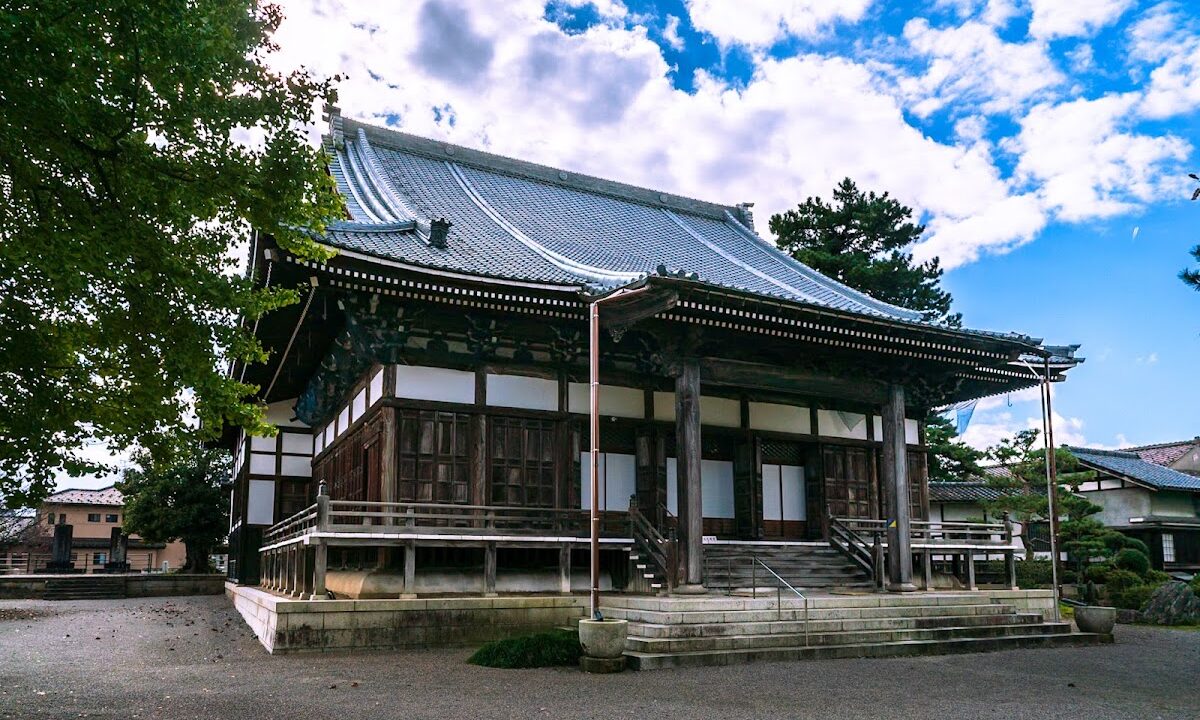
Muishinji Temple (Agano City, Niigata Prefecture) Complete Guide | History and Cultural Assets of the 11th Historic Site of the Twenty-Four Disciples
What is Muishinji Temple?
Muishinji Temple is a Shinshu Otani sect Buddhist temple located in Shimojo-cho, Agano City, Niigata Prefecture. Its official name is “Busshozan Kongoin Muishinji,” and it is known as a historically significant temple founded by Muishinbo (Muishin), one of the 24 leading disciples of Shinran Shonin.
In Jodo Shinshu Buddhism, which considers Shinran Shonin as its founder, Muishinji Temple holds an important position as the 11th historical site of the Twenty-Four Disciples, and has produced many learned monks throughout its long history. In particular, it is a noteworthy temple in the history of Shinshu Buddhism, having produced outstanding figures such as Kojuin Tokuryu.
While Muishinji Temple is currently located in Agano City, Niigata Prefecture, its origins lie in Aizu, and its history of several hundred years before its reconstruction at its current location is a tumultuous one.
History of Muishinji Temple
Origins and Founder: Muishinbo
The history of Muishinji Temple dates back to the Kamakura period. Its founder, Muishinbo (Muishi), is an important figure, counted among Shinran Shonin’s 24 most prominent disciples. When Shinran Shonin was exiled to Echigo, Muishinbo deeply embraced his teachings and dedicated his life to spreading Jodo Shinshu Buddhism.
Muishinji Temple is said to have originally been founded in Aizu during the Bun’ei era (1264-1275). This temple, established by Muishinbo to spread Shinran Shonin’s teachings, functioned as a base for Jodo Shinshu propagation in the Aizu region.
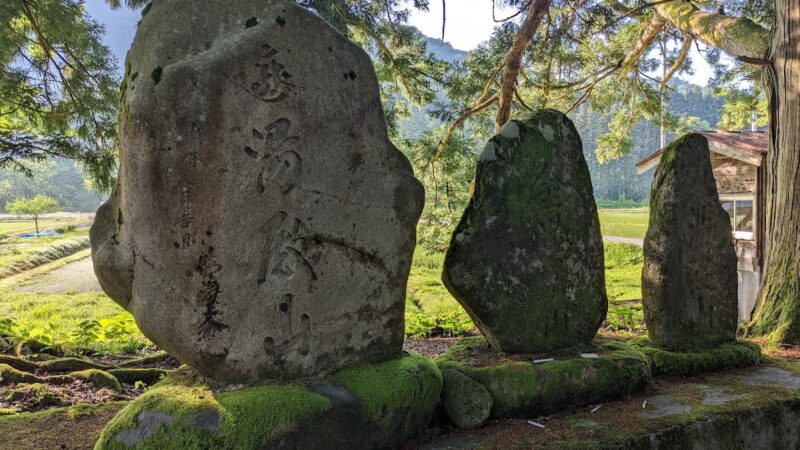
Since Muishin’s grave still exists at Komyoji Temple, a Tendai sect temple in Ichinoseki, Kadota-machi, Aizuwakamatsu City, it is presumed that the birthplace of Muishinji Temple was also in this area. However, the exact location within Aizu has not yet been determined.
Transition from Aizu to Echigo
After its founding in Aizu, Muishinji Temple underwent various changes over a long period of time. It is thought that there were times when its continued existence as a temple became difficult amidst the turmoil of the Sengoku period and the social changes of the Edo period.
Regarding the details of Muishinji Temple’s activities and changes in Aizu, many aspects remain unclear due to the loss of historical records. However, it is undeniable that, as a temple founded by a leading disciple of Shinran Shonin, it remained a center of faith for Shinshu followers in the region.
Reconstruction in Kansei 12
The most important turning point in the history of Muishinji Temple was its reconstruction in Kansei 12 (1800). In this year, thanks to the efforts of Sato Izaemon (house name: Izumiya, Buddhist name: Soei), a wealthy landowner in Shimojo Village, Kanbara District, Echigo Province (present-day Shimojo-machi, Agano City, Niigata Prefecture), Muishinji Temple was relocated and rebuilt at its current location.
Sato Izaemon was a devout follower of the Shinshu sect, and by rebuilding Muishinji Temple, a former site of the Twenty-Four Disciples, on his own land, he sought to establish a center of faith for the region. His wealth and enthusiasm led to the construction of a magnificent temple complex, and Muishinji Temple began a new chapter in its history as an important temple of the Shinshu Otani sect in Echigo Province.
Since its rebuilding, Muishinji Temple has developed into a temple that attracts the faith of the local people in Shimojo-machi, Agano City, Niigata Prefecture.
Kojuin Tokuryu and the Scholars He Produced
The Achievements of Kojuin Tokuryu
One of the reasons why Muishinji Temple is considered particularly important in the history of Shin Buddhism is that it produced an outstanding scholar-monk named Kojuin Tokuryu.
Kojuin Tokuryu was a scholar-monk of the Shinshu Otani sect who was active from the mid to late Edo period, and he left behind outstanding achievements in doctrinal research. He trained at Muishinji Temple and later became a figure who greatly contributed to the development of Shin Buddhist studies.
Tokuryu’s writings and doctrinal views had a great influence on the Shin Buddhist academic world at the time, and he trained many disciples. Tokuryu’s presence greatly influenced Muishinji Temple’s reputation as a temple of learning.
Other Scholar-Monks and Talented Individuals Produced
Besides Kojuin Tokuryu, many other outstanding scholar-monks and individuals have emerged from Muishinji Temple. Muishinji Temple is not merely a local temple; it also serves as a training ground for Shin Buddhism, producing individuals who have led the regional Buddhist culture throughout history.
These learned monks, based on the knowledge they cultivated at Muishinji Temple, played an active role not only in the Echigo region but also in Shin Buddhist temples throughout Japan, contributing to the spread of Jodo Shinshu teachings. This is why Muishinji Temple is recognized as a “temple that produced learned monks.”
Cultural Properties of Muishinji Temple
Important Cultural Properties and Designated Cultural Properties
Muishinji Temple preserves numerous valuable cultural properties that have been protected and passed down through its long history. Of particular note are the temple treasures designated as Niigata Prefecture Designated Tangible Cultural Properties.
The ancient documents, Buddhist statues, Buddhist implements, and paintings passed down within the temple serve as important historical materials that tell the story of Shin Buddhist temples from the medieval to the early modern period. These cultural artifacts demonstrate the historical value of Muishinji Temple and are also valuable resources for understanding the development of Buddhist culture in Niigata Prefecture.
Fujiwara Family Genealogy and Historical Documents
Among the cultural artifacts preserved at Muishinji Temple, the Fujiwara family genealogy and other ancient documents are particularly noteworthy. These genealogies and documents provide important clues to understanding the origins of the temple’s founder, Muishinbo, and the temple’s historical changes.
The Fujiwara family genealogy suggests the possibility that Muishinbo was a descendant of the Fujiwara clan and is a valuable historical document for understanding the social background of Shinran Shonin’s leading disciples. Documents detailing the temple’s history from its time in Aizu to its restoration in Echigo also remain, conveying the turbulent history of Muishinji Temple.
Public Display and Preservation of Temple Treasures
While Muishinji Temple’s treasures are usually kept under strict security, they are sometimes made available to the public on special occasions. Seeing these cultural artifacts in person allows you to truly appreciate the weight of Muishinji Temple’s history and the richness of Shinshu Buddhist culture.
The temple strives for the proper preservation and management of its cultural properties, continuing its efforts to pass on this valuable heritage to future generations.
Temple Grounds and Buildings
Main Hall and Other Buildings
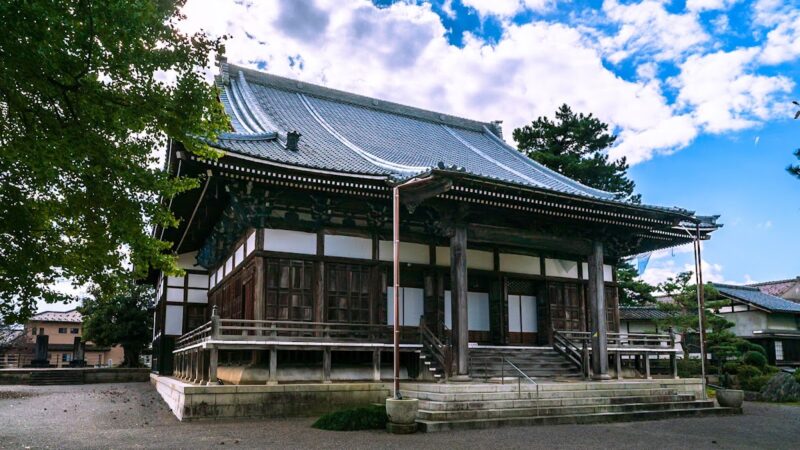
The grounds of Muishinji Temple are far more extensive than visitors might expect. The temple buildings, which have been maintained since its reconstruction in 1790 (Kansei 12), exhibit a typical layout for a Shinshu Otani sect temple.
The central main hall houses Amida Buddha as its principal image, and daily services and religious ceremonies are held there. The main hall’s splendor follows the style of the Shinshu Otani sect, and a portrait of Shinran Shonin is also enshrined there.
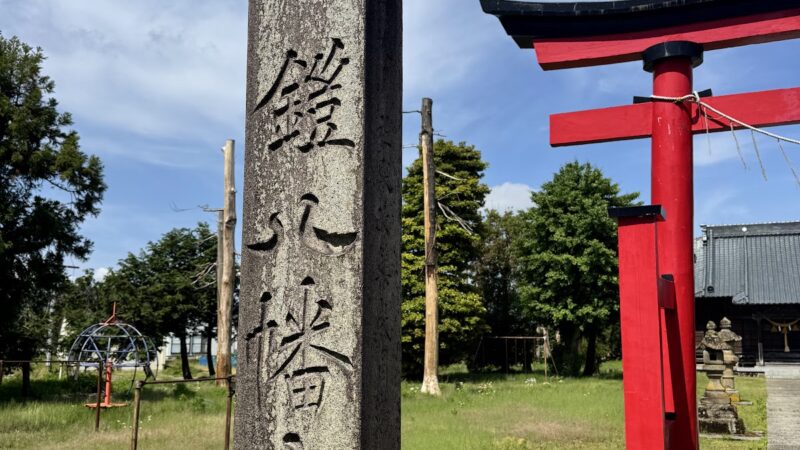
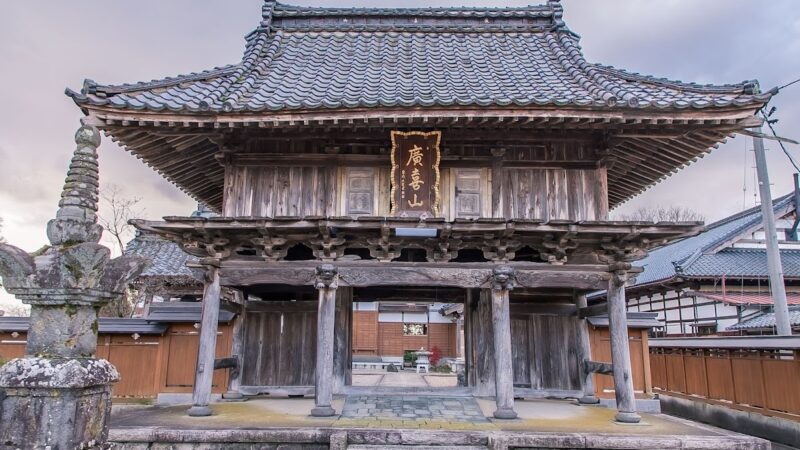
In addition to the main hall, the temple grounds include the priest’s quarters, bell tower, and main gate, creating a tranquil atmosphere throughout the entire temple area.
Atmosphere and Environment of the Temple Grounds
Mui-Shinji Temple is located in a rural area of Agano City, Niigata Prefecture, in a tranquil environment surrounded by nature that changes with the seasons. Cherry blossoms bloom in spring, the greenery is lush in summer, the autumn leaves are beautiful, and a snowy landscape unfolds in winter, each season displaying a different face.
The spacious temple grounds are meticulously maintained, allowing visitors to stroll at their leisure. It is a space where one can quietly contemplate Buddhist teachings in tranquility, far removed from the hustle and bustle of the city.
Access to Mui-Shinji Temple
Location
Address: 8-21 Shimojo-cho, Agano City, Niigata Prefecture
Mui-Shinji Temple is located in the Shimojo-cho district of Agano City, Niigata Prefecture. Agano City is located in the central part of Niigata Prefecture, in the southeastern part of the Niigata Plain, and is a region that developed around the former Suibara Town.
Access by Car
From the Ban-etsu Expressway:
- Approximately 15 minutes by car from the Niitsu Interchange on the Ban-etsu Expressway
- Take National Route 49 or similar towards Agano City
Parking: The temple has a parking lot for visitors, making it convenient to access by car. There is ample parking space, so multiple vehicles can visit.
Access by Public Transportation
Using the JR Uetsu Main Line:
- Get off at Mizuhara Station on the JR Uetsu Main Line, approximately 3 minutes by car (approximately 15-20 minutes on foot)
- Taxis are also available from Mizuhara Station
When using public transportation, Mizuhara Station is the nearest station, but since the temple is a bit of a distance from the station, we recommend taking a taxi or walking with ample time to spare.
Access Information
- Due to snowfall in winter, snow tires are essential when visiting by car.
- When searching with a car navigation system, searching by address or phone number is the most reliable method.
- The temple may be crowded during events such as memorial services, so it is recommended to check in advance.
Information on Visiting and Viewing
Visiting Hours and Viewing Hours
Mui-Shinji Temple is generally open to visitors, but if you wish to view the interior of the main hall or the temple’s treasures, it is recommended to contact the temple in advance.
Daily visits can be made during daylight hours, but it is considered polite to refrain from visiting in the evening or early morning.
Viewing Temple Treasures
If you wish to view temple treasures, including those designated as tangible cultural properties of Niigata Prefecture, you must contact the temple in advance. This is because cultural properties are usually stored away and are often not open to the public except on special occasions.
When viewing temple treasures, please follow the temple’s instructions regarding photography and viewing rules, from the perspective of cultural property protection.
Memorial Services and Annual Events
At Muishinji Temple, a temple of the Shinshu Otani sect, various memorial services and events are held throughout the year. In particular, the Hoonko, the memorial service commemorating the death of Shinran Shonin, is celebrated grandly as the most important memorial service.
By participating in these services, you can gain a deeper understanding of the teachings of Jodo Shinshu Buddhism.
Nearby Tourist Attractions
Highlights of Agano City
When visiting Muishinji Temple, you can also visit other tourist attractions in Agano City. Agano City has Hyoko Lake, famous as a wintering ground for swans, and many swans can be observed there during the winter.
Furthermore, hot spring resorts such as Gozu Onsenkyo are nearby, allowing you to enjoy a hot spring bath in addition to your temple visit.
Shinshu Historical Sites in Niigata Prefecture
Niigata Prefecture is the land where Shinran Shonin was exiled to Echigo, and many Shinshu historical sites are scattered throughout the prefecture. By visiting these historical sites in conjunction with Muishinji Temple, you can learn about the deep connection between Shinran Shonin and Echigo.
The Present and Future of Muishinji Temple
Role in the Community
Currently, Muishinji Temple, as an important temple of the Shinshu Otani sect in Agano City, Niigata Prefecture, plays a role in supporting the religious lives of the local people. It contributes not only to funerals and memorial services for parishioners but also to the formation of a local community through Buddhism.
Cultural Property Protection and Inheritance
Muishinji Temple has a responsibility to pass on the valuable cultural properties inherited throughout its long history to future generations. The proper preservation and management of temple treasures, including Niigata Prefecture-designated tangible cultural properties, is not merely a matter for one temple, but an important undertaking from the perspective of the inheritance of Japanese Buddhist culture as a whole.
Dissemination of Shinshu Buddhist Studies
With a tradition of producing many learned monks, including Kojuin Tokuryu, Muishinji Temple continues to serve as a place for learning Shinshu Buddhist studies in modern times. One of Muishinji Temple’s important missions is to convey the teachings of Shinran Shonin in an easily understandable way to people living in the modern age.
Summary
Muishinji Temple is a venerable temple with a history of over 700 years, founded by Muishinbo, a leading disciple of Shinran Shonin, and is the eleventh of the twenty-four disciples. Originally founded in Aizu during the Bun’ei era, it was rebuilt in Shimojo-machi, Agano City, Niigata Prefecture in 1800 (Kansei 12), and has since developed as an important temple of the Shinshu Otani sect in this location.
Having produced many learned monks, including Kojuin Tokuryu, and having preserved valuable temple treasures, including Niigata Prefecture’s designated tangible cultural properties, Muishinji Temple is not merely a local temple, but holds an important position in the history of Shinshu Buddhism.
Located at 8-21 Shimojo-cho, Agano City, Niigata Prefecture, Muishinji Temple boasts excellent accessibility, being approximately 15 minutes by car from the Niitsu Interchange on the Ban-etsu Expressway and about 3 minutes by car from Mizuhara Station on the JR Uetsu Main Line. With its spacious grounds and tranquil atmosphere, it’s a temple well worth visiting, allowing visitors to reflect on the teachings of Shinran Shonin.
Mui-shinji Temple is a must-see spot not only for Shinshu followers, but also for anyone interested in Buddhism, history, or cultural properties of Niigata Prefecture.