Isozawa Kannon (Obanazawa City, Yamagata Prefecture) | History and Pilgrimage Guide to the 21st Temple of the Mogami Thirty-Three Kannon Pilgrimage
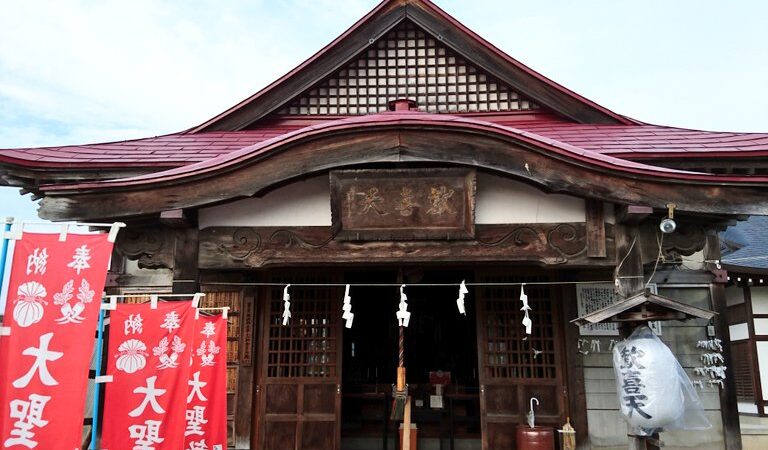
Located in Obanazawa City, Yamagata Prefecture, Isozawa Kannon is the 21st temple of the Mogami Thirty-Three Kannon Pilgrimage and has long been a sacred site cherished by the local people. With a deep history of faith born amidst the turmoil of the Sengoku period, and enshrining the principal image, a statue of the Holy Kannon Bodhisattva said to have been created by Jikaku Daishi, this temple remains an important spot on the Yamagata Dewa Hundred Kannon Pilgrimage, welcoming many visitors even today.
History and Origin of Isozawa Kannon
The Story of the Kanamori Family and the Kannon Statue
The history of Isozawa Kannon dates back to the turbulent Sengoku period. The ancestors of the Kanamori family, who were daimyo of Kaga Province (present-day Ishikawa Prefecture), worshipped a statue of the Holy Kannon Bodhisattva as their guardian deity for generations. This Kannon statue is a historically significant Buddhist image, said to be the work of Jikaku Daishi Ennin, a high-ranking priest of the Heian period.
During the Sengoku period (Warring States period), the then-lord, Kanamori Iwamori, suffered a defeat in battle and fled from Kaga Province to Dewa Province (present-day Yamagata Prefecture) with his senior retainers, Mori Mataemon and Kato Soshiro. The group arrived in Isozawa, where they began a new life as local samurai.
Founding of Kikaku-ji Temple and Construction of the Kannon Hall
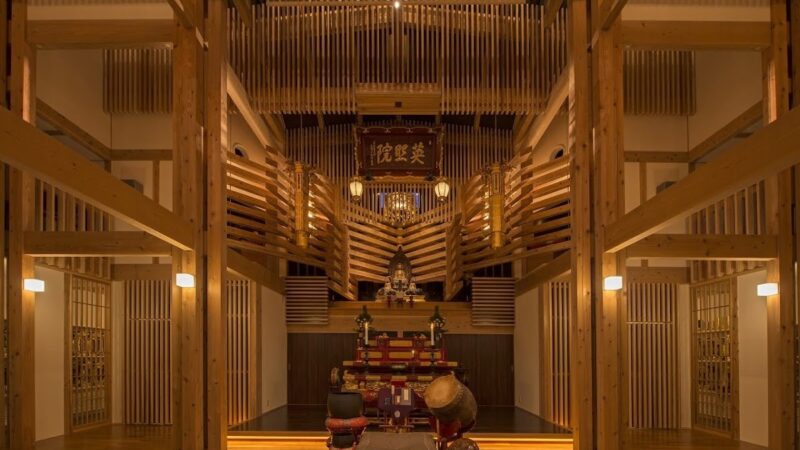
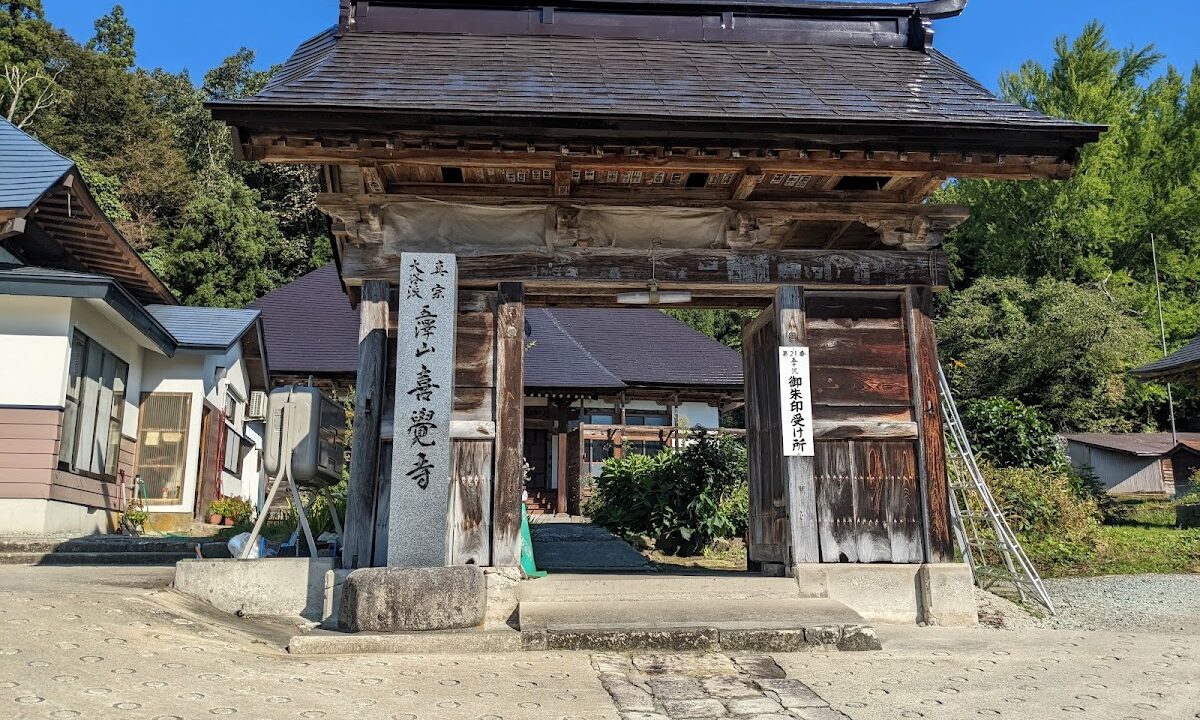
Having experienced the ups and downs of a turbulent era, Kanamori Iwamori felt the impermanence of the world and developed a desire for enlightenment. In March of Keicho 19 (1614), he became a disciple of Sennyo Shonin, the 13th head priest of Higashi Hongan-ji Temple, and took the Buddhist name Shakujoshin. He then founded Kikaku-ji Temple, a Jodo Shinshu Buddhist temple.
Furthermore, a Kannon Hall was built on the mountainside of Kanamoriyama, and a statue of the Holy Kannon Bodhisattva, a guardian deity brought from Kaga, was enshrined there. This Kannon Hall was opened to the villagers and became a beloved center of local faith. This marks the beginning of the present-day Isozawa Kannon.
Positioning as the 21st Temple of the Mogami Thirty-Three Kannon Pilgrimage
What is the Yamagata Dewa Hyakukannon?
Isozawa Kannon is the 21st temple of the Mogami Thirty-Three Kannon Pilgrimage and one of the important sacred sites that make up the “Yamagata Dewa Hyakukannon.” The Yamagata Dewa Hyakukannon is a collective term for three Kannon pilgrimage sites in Yamagata Prefecture: the Mogami Thirty-Three Kannon, the Shonai Thirty-Three Kannon, and the Okitama Thirty-Three Kannon, comprising a total of 99 temples (33 in Shonai).
It is rare in Japan for a pilgrimage of 100 Kannon to be completed within a single prefecture, and it is considered one of only three 100 Kannon pilgrimages in Japan, alongside the Japan 100 Kannon and the Tokai 100 Kannon. It is a valuable cultural heritage that demonstrates Yamagata Prefecture’s rich spiritual culture and deep devotion to Kannon.
Characteristics of the Mogami 33 Kannon Pilgrimage
The Mogami 33 Kannon pilgrimage sites are scattered throughout the Murayama and Mogami regions of Yamagata Prefecture. This pilgrimage route has continued since the Edo period and is still visited by many believers and tourists today.
The “oizuri,” an essential garment for the pilgrimage, is actually a distinctive garment unique to Yamagata Prefecture, originating from the Mogami 33 Kannon pilgrimage. An “oizuri” is a box carried on the back by mountain ascetics during their training, containing Kannon statues and daily necessities. The oizuri was worn to prevent the back of their kimono from chafing. For pilgrims, wearing this garment signifies carrying Kannon (Goddess of Mercy) on their backs, and the inscription “Two Traveling Together” expresses the constant companionship of Kannon during their journey.
Characteristics of the Principal Image and Temple
About the Holy Kannon Bodhisattva
The principal image of Isozawa Kannon is the Holy Kannon Bodhisattva, said to be the work of Jikaku Daishi Ennin. Kannon Bodhisattva has been widely worshipped since ancient times as a compassionate bodhisattva who hears the cries of suffering beings and provides relief according to their circumstances.
Kannon is believed to accompany worshippers’ wishes and transform into 33 different forms to save people. Therefore, the custom of pilgrimage to 33 sacred sites to pray for peace and happiness in this life and the next has been practiced since ancient times. The Holy Kannon Bodhisattva is considered the basic form of Kannon Bodhisattva and is depicted with one face and two arms.
Overview of Jokakuji Temple
Jokakuji Temple, which manages the Isozawa Kannon, is a Jodo Shinshu Buddhist temple. Founded by Kanamori Iwamori, it is a historic temple that continues to function as a center of local faith.
Jodo Shinshu is a Buddhist sect founded by Shinran Shonin, and preaches salvation through the power of Amida Buddha’s vow. This temple, where Kannon worship and Jodo Shinshu faith coexist, is a fine example of the diversity and tolerance of Japanese religious culture.
Points of Interest and Highlights for Visitors
Natural Environment of Kanamori Mountain
Isozawa Kannon is located on the mountainside of Kanamori Mountain, in a tranquil environment surrounded by abundant nature. The experience of praying to Kannon amidst the mountain’s greenery and silence brings peace of mind, far removed from the hustle and bustle of everyday life.
The mountain scenery, which changes with the seasons, is also one of its attractions. You can enjoy the beauty of each season: fresh greenery in spring, deep green in summer, vibrant autumn leaves, and snowy landscapes in winter.
Pilgrimage Etiquette
When making a pilgrimage to the 33 Kannon temples of Mogami, it is customary to recite sutras such as the Heart Sutra at each temple and receive a temple stamp. At Isozawa Kannon, it is important to offer your prayers with sincerity and take time to communicate with Kannon.
Wearing a pilgrim’s robe will make your pilgrimage experience more authentic. Traveling with Kannon in the spirit of “two traveling together” will be a valuable opportunity for self-reflection.
Basic Information
Temple Name: Jyokinzan Kikakuji (Isozawa Kannon)
Sect: Jodo Shinshu
Pilgrimage Site: 21st of the Mogami Thirty-Three Kannon Pilgrimage
Principal Image: Holy Kannon Bodhisattva (said to be the work of Jikaku Daishi)
Address: 488 Isozawa, Obanazawa City, Yamagata Prefecture 999-4227
Phone Number: 0237-22-2582
Access:
- Approximately 15 minutes by car from JR Yamagata Shinkansen “Oishida Station”
- Approximately 10 minutes by car from Tohoku Chuo Expressway “Obanazawa IC”
Parking: Available (Free)
Visiting Hours: Anytime during the day (Advance contact recommended)
Admission Fee: Free
Goshuin (Temple Stamp): Available (Available at the temple office)
Nearby Spots
Tourist Attractions in Obanazawa City
When visiting Isozawa Kannon, it’s recommended to also visit other tourist spots in Obanazawa City.
Ginzan Onsen: Ginzan Onsen, famous nationwide as a hot spring town overflowing with Taisho-era romance, is about a 30-minute drive from Isozawa Kannon. The scenery of wooden inns lined up under gas lamps is beautiful, like a set from a historical drama.
Tokura Lake: This artificial lake near the center of Obanazawa city offers cherry blossoms in spring, fresh greenery in summer, and autumn leaves in fall. A promenade is maintained along the lakeside, making it ideal for a stroll.
Basho & Seifu Historical Museum: This facility exhibits materials related to Matsuo Basho’s visit to Obanazawa during his journey on “The Narrow Road to the Deep North.” You can learn about the interaction between Basho and Suzuki Seifu, a wealthy merchant of Obanazawa.
Other Temples of the Mogami Thirty-Three Kannon Pilgrimage
If you are planning a pilgrimage to the Mogami Thirty-Three Kannon Pilgrimage, including Isozawa Kannon, consider visiting nearby temples.
Temple No. 20: Another temple in Obanazawa City is nearby, allowing you to efficiently progress through your pilgrimage.
Temple No. 22: The pilgrimage route leading to the next temple offers a valuable opportunity to experience the nature and culture of Yamagata.
Each temple has its own unique history and characteristics, and encounters with each Kannon statue will enrich your pilgrimage.
Obanazawa’s Cuisine
Obanazawa City is famous as a production area for “Obanazawa watermelons.” In the summer, you can enjoy sweet and juicy watermelons. Obanazawa beef is also known as a local brand of beef and can be enjoyed at restaurants in the city.
Local soba noodles are also highly regarded, and there are several soba restaurants you can stop at during your pilgrimage. Yamagata Prefecture is a region with a thriving soba noodle culture, where you can enjoy unique soba dishes in various locations.
MAP
Isozawa Kannon Temple is located in the Isozawa district of Obanazawa City, Yamagata Prefecture.
Access from Major Cities:
- From Yamagata City: Approximately 50km via National Route 13, about 1 hour by car
- From Sendai City: Approximately 90km via Tohoku Expressway and Tohoku Chuo Expressway, about 1 hour 30 minutes by car
- From Tokyo: Approximately 3 hours by Yamagata Shinkansen to Oishida Station, then about 15 minutes by car
Car Navigation Settings:
- Address Search: 488 Isozawa, Obanazawa City, Yamagata Prefecture
- Phone Number Search: 0237-22-2582
- Facility Name Search: Kikakuji Temple or Isozawa Kannon
Using Public Transportation:
Taking a taxi from JR Oishida Station is convenient. Since the number of bus services is limited, it is recommended to check the timetable in advance.
Planning a Visit to Isozawa Kannon
Best Time to Visit
Isozawa Kannon is open year-round, but each season offers its own unique charm.
Spring (April-June): A beautiful season of fresh greenery, with mild weather, ideal for visiting. The surrounding nature becomes even more vibrant during cherry blossom season.
Summer (July-September): Enjoy the lush mountain scenery. However, summers in Yamagata are hot, so heatstroke prevention is necessary.
Autumn (October-November): The autumn foliage season is particularly beautiful, attracting many visitors. Autumn in Yamagata is short, so gathering information is crucial to avoid missing the peak of the autumn colors.
Winter (December-March): Visiting amidst a snowy landscape is magical, but road conditions can deteriorate due to snow. If visiting in winter, sufficient preparation, such as using snow tires, is necessary.
Attire and Items to Bring When Visiting a Temple
Attire:
- Comfortable, easy-to-walk-in shoes (especially non-slip shoes in winter)
- Seasonal clothing for warmth and heat
- For full-fledged pilgrimages, pilgrimage attire such as a pilgrim’s robe (oizuri)
Items to Bring:
- A pilgrimage notebook (if receiving temple stamps)
- Prayer beads
- Offering money
- Camera (for commemorative photos, but please observe proper photography etiquette)
- Drinks (especially in summer)
Manners for Visiting a Temple
When visiting a temple, please observe the following basic manners:
- Bow at the temple gate: Bow before entering the temple grounds.
- Purify yourself at the water basin: If there is a water basin, purify your hands and mouth.
- Worship quietly: Refrain from speaking loudly or making noise.
- Worship at the Main Hall: If there is a bell, ring it, offer a donation, and bow with clasped hands.
- Consideration for Photography: Refrain from taking photos in areas where photography is prohibited, and be careful not to disturb other worshippers.
- Maintaining Cleanliness of the Temple Grounds: Always take your trash with you.
The Charm of the Yamagata Dewa Hyakukannon Pilgrimage
Pilgrimage as a Journey of the Heart
The pilgrimage to the Yamagata Dewa Hyakukannon, including Isozawa Kannon, is not merely sightseeing, but a journey of self-reflection. Kannon, also known as “Avalokiteshvara Bodhisattva,” is believed to be a being who gazes upon the suffering of all people and offers salvation.
The number 33 represents the number of forms Kannon transforms into to save sentient beings. By visiting each temple, you can experience Kannon’s compassion and the diverse forms of salvation.
Learning about Yamagata’s Culture and History
The Hyakukannon Pilgrimage is also an opportunity to deeply understand the history and culture of Yamagata Prefecture. Each temple has its own unique origin and history, reflecting the faith and lives of the local people.
In the case of Isozawa Kannon, you can learn about the turmoil of the Sengoku period and the story of the faith of the people who overcame it. The history of the Kanamori family, who fled from Kaga to Dewa and found peace of mind through Kannon worship in their new land, teaches us much even in modern times.
Interacting with the Local Community
Interacting with the local people is a major pleasure of the pilgrimage. Through conversations with temple priests and locals, you can learn about the charm and history of the region that are not found in guidebooks.
Furthermore, by using the restaurants and souvenir shops along the pilgrimage route, you can contribute to the local economy. Enjoying local cuisine and purchasing local specialties are also important elements of the journey.
Comparison of Isozawa Kannon with Other Kannon Pilgrimage Sites
Differences from Isogawa Kannon of the Okitama Thirty-Three Kannon Pilgrimage
In Yamagata Prefecture, there is also “Isogawa Kannon,” which has a similar name to “Isozawa Kannon.” Isogawa Kannon is the 31st temple of the Okitama Thirty-Three Kannon Pilgrimage, and is a Shingon Buddhist temple, Sakuramoto-zan Shōjuin, located in Isogawa, Nagai City.
Although the names are similar, they are different temples with different locations and sects, so care should be taken not to confuse them during pilgrimage. Each is a valuable pilgrimage site with its own unique history and characteristics.
Relationship with Kannon Pilgrimage Sites Nationwide
While there are numerous Kannon pilgrimage sites in Japan, the Yamagata Dewa Hyakukannon is a rare pilgrimage site consisting of 100 Kannon sites completed within a single prefecture. The Japan Hundred Kannon Pilgrimage, encompassing the 33 temples of Saigoku, the 33 temples of Bando, and the 33 temples of Chichibu, is a large-scale pilgrimage spanning multiple regions. However, a significant feature is that the entire 100 Kannon pilgrimage can be completed within Yamagata Prefecture alone.
The Significance of Visiting Isozawa Kannon
Visiting Isozawa Kannon is a precious experience where historical romance and faith intersect. The stories of those who survived the turmoil of the Sengoku period, the Kannon statue said to have been created by Jikaku Daishi, and the local faith that continues to this day—all of these are condensed within this small mountain temple.
As part of the Yamagata Dewa Hundred Kannon Pilgrimage, and as the 21st temple of the Mogami Thirty-Three Kannon Pilgrimage, Isozawa Kannon is an important spot embodying Yamagata Prefecture’s rich spiritual culture. When visiting Obanazawa City, be sure to visit this historic pilgrimage site and quietly offer your prayers. By experiencing the compassion of Kannon and the profound faith of our ancestors, you will find new peace and insight in your heart.
A pilgrimage is not solely about reaching the destination. The true value of pilgrimage lies in the people and landscapes encountered along the way, and in the dialogue with your own inner self. We hope that your visit to Isozawa Kannon will be the first step on your spiritual journey.