Complete Guide to Kaikoji Temple (Yamagata Prefecture) | A Shingon Buddhist Temple with the Only Two Sokushinbutsu (Self-Mummified Buddhas) in Japan
Located in Hiyoshi-cho, Sakata City, Yamagata Prefecture, Kaikoji Temple is a Shingon Chizan sect temple that is the only one in Japan to house two Sokushinbutsu in a single temple. This ancient temple, said to have been founded approximately 1200 years ago by Kobo Daishi Kukai, has a long history as a center of Yudono-san worship. This article thoroughly explains the charm of this mystical temple, from its history and details of the Sokushinbutsu to information on visiting.
History and Origin of Kaikoji Temple
Founding Legend by Kobo Daishi Kukai
Kaikoji Temple was founded in the early Heian period, approximately 1200 years ago. It is said to have been founded by Kobo Daishi Kukai, the founder of Shingon Buddhism, and has developed as an important center of Shingon Esoteric Buddhism in the Tohoku region. This temple, whose mountain name is Sakōzan, is one of the few temples said to have been founded by Kūkai during his pilgrimage through the Tohoku region.
Deep Connections to the Yudono-san Faith
Since the Edo period, Kaikoji Temple has functioned as an important center of the Yudono-san faith, one of the three sacred mountains of Dewa. As a branch temple of Yudono-san Chūrenji Temple, successive chief priests underwent rigorous training at Yudono-san, enshrining Yudono-san Daigongen (whose principal deity is Dainichi Nyorai) and continuing to uphold the faith. Even today, it is one of the few temples that preserves the tradition of Yudono-san rituals.
When Shinzen Shōnin built the temple buildings, a deep religious connection with Yudono-san was established, and since then, it has also acquired the characteristics of a sacred site for Shugendō (mountain asceticism). This historical background led to the later development of the Sokushinbutsu (self-mummified monk) faith.
Kaikoji Temple in Modern Times
Despite the impact of the anti-Buddhist movement and the separation of Shinto and Buddhism during the Meiji era, Kaikoji Temple survived as a center of local faith. It also has a deep connection with Yudono-san Churenji Temple, the setting for Atsushi Mori’s novel “Gassan,” and has played a crucial role in preserving Buddhist culture in the Shonai region.
Currently belonging to the Shingon Chizan sect, it is an important cultural property and tourist spot in Sakata City, Yamagata Prefecture, attracting many visitors from all over Japan.
The Only Temple in Japan with Two Sokushinbutsu
What are Sokushinbutsu?
Sokushinbutsu are the mummified remains of ascetic monks who entered a state of meditative bliss while still alive. These are not merely mummies, but are considered the result of ultimate ascetic practice, where the monks sacrificed their bodies with the wish to save all sentient beings.
While there are 16 Sokushinbutsu in the Tohoku region, 8 in Yamagata Prefecture, and 6 in the Shonai region, Kaikoji Temple is the only temple in Japan to enshrine two Sokushinbutsu, making it an extremely rare existence. ### Chūkai Shōnin
Chūkai Shōnin was a self-mummified monk who entered into nirvana in 1755 (Hōreki 5). He secluded himself in Senninzawa on Mount Yudono, undergoing extreme ascetic practices including abstaining from five grains and then ten grains, accumulating 1000 days of training.
The abstinence from five grains involves completely abstaining from major grains such as rice, wheat, millet, beans, foxtail millet, or barnyard millet. Furthermore, in the abstinence from ten grains, he abstained from almost all grains, surviving only on nuts and tree bark while continuing his training. This process reduced his body fat to the absolute minimum, enabling natural mummification after his nirvana.
Even now, approximately 270 years later, Chūkai Shōnin’s self-mummified body continues to quietly watch over people’s prayers, relieving their suffering and fulfilling their wishes for future generations.
Enmyokai Shonin
Enmyokai Shonin is a mummified monk who entered into self-mummification in 1822 (Bunsei 5). Approximately 67 years after Chukai Shonin, he also underwent rigorous training at Yudono-san Senninzawa and became a mummified monk.
Enmyokai Shonin also followed a harsh path, including abstaining from five grains, then ten grains, and 1000 days of ascetic training. It is said that, against the backdrop of the late Edo period, he resolved to sacrifice his life to alleviate the suffering of people afflicted by famine and disease.
Visiting the Mummified Monk Hall
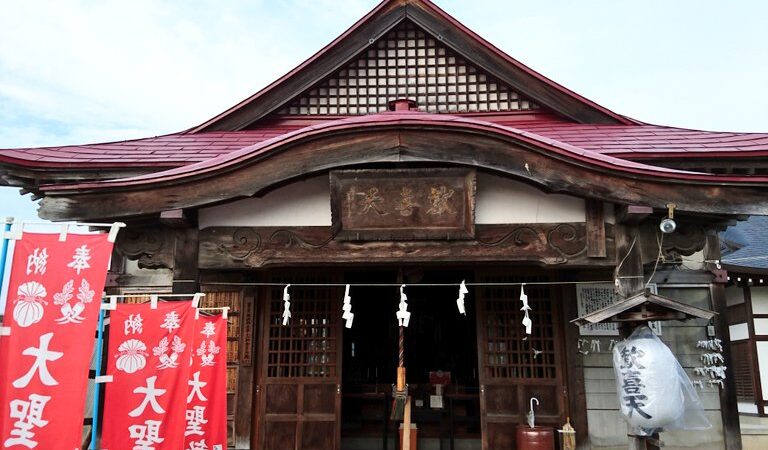
The Mummified Monks Hall (Sokubutsu-do) at Kaikoji Temple houses these two mummified monks. The hall is enveloped in a solemn atmosphere, naturally inspiring a sense of reverence in visitors.
In addition to the mummified monks of Chukai Shonin and Enmyokai Shonin, the Mummified Monk Hall also displays artifacts of Tetsumonkai Shonin. Tetsumon Kaijo was a high-ranking monk who trained at Yudono-san and is an important figure in the Shonai region’s Sokushinbutsu (self-mummified monk) faith.
When visiting, you can quietly join your hands in prayer and reflect on the compassionate hearts of the two monks. Photography is prohibited, so please focus on a heartfelt visit.
Grounds and Highlights of Kaikoji Temple
Main Hall
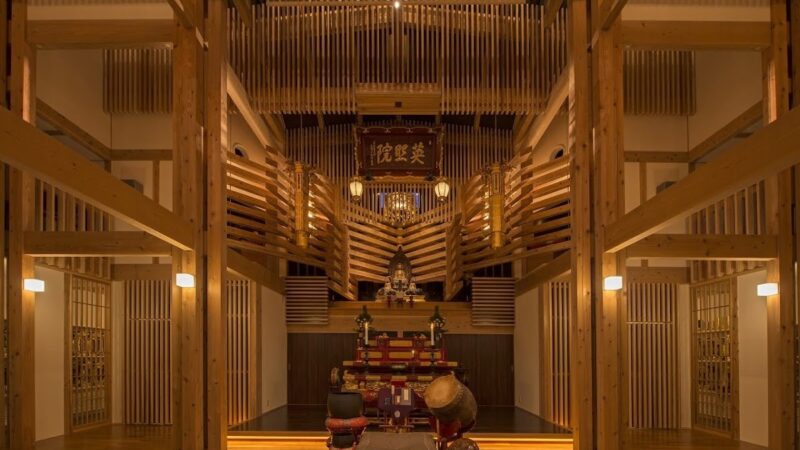
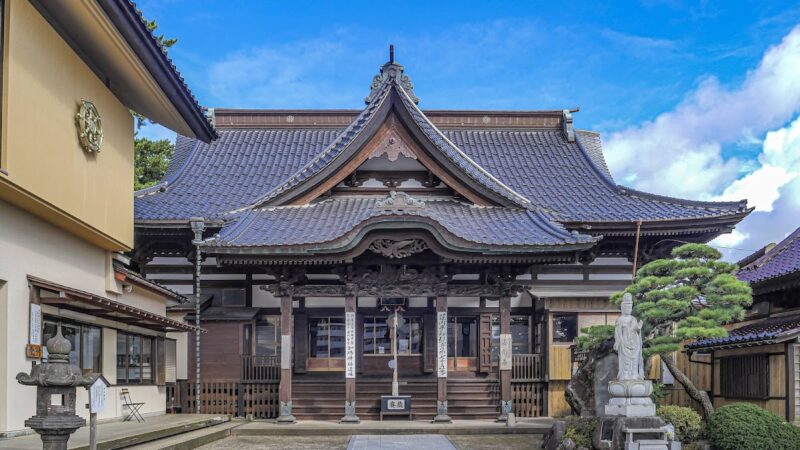
The main hall of Kaikoji Temple is a magnificent structure typical of Shingon Buddhist temples. The principal image is Dainichi Nyorai, a Buddha embodying the universal truth that is central to the teachings of Shingon Esoteric Buddhism. Regular religious services are held inside the hall, attracting the faith of the local people.
View from the Temple Grounds
Kaikoji Temple is located on a hill overlooking Sakata City, and from the grounds you can see the Dewa Sanzan mountains. On a clear day, you can see the sacred peaks of Gassan, Hagurosan, and Yudono-san stretching out before you, and feel the atmosphere of a sacred site of Shugendo (mountain asceticism).
The location of Sakata, a town near the Sea of Japan, and the sacred Dewa Sanzan mountains, offering views of both sea and mountains, reflects the origin of the temple’s name, “Temple Facing the Sea.”
Stone Monuments and Memorial Towers on the Temple Grounds
The temple grounds are dotted with memorial towers for successive chief priests and stone monuments related to faith. These are valuable historical materials that tell the story of faith in the Shonai region from the Edo period to the modern era.
Background and Significance of Sokushinbutsu Faith
Why Did They Become Sokushinbutsu?
The practice of becoming a Sokushinbutsu is not merely asceticism, but holds deep religious significance. Under the vow to continue saving people until Maitreya Bodhisattva appears 5.67 billion years from now, they left their own bodies as symbols of eternal prayer.
During the Edo period, the Shonai region suffered greatly from famine, disease, and poverty. The monks who became Sokushinbutsu hoped that by sacrificing their lives, they would take on the suffering of the people and watch over them forever. ### Training to Become a Sokushinbutsu (Self-Mummified Buddha)
The training to become a Sokushinbutsu required a long period of preparation, ranging from several years to over a decade.
- Wood-Based Training: Abstaining from grains and eating only nuts and tree bark.
- Five-Grain Abstinence: Abstaining from all major grains.
- Ten-Grain Abstinence: Abstaining from almost all grains.
- 1000-Day Training: Undergoing rigorous training at sacred sites such as Yudono-san.
- Entering Meditation: Entering a stone chamber underground, chanting sutras while ringing a bell, and eventually entering eternal meditation.
This process reduced body fat to the absolute minimum and involved consuming plants containing components that prevent internal decay, enabling natural mummification.
Sokushinbutsu Culture of the Shonai Region
The existence of six Sokushinbutsu in the Shonai region is thought to be largely due to the influence of the Yudono-san faith. Yudono-san has been known since ancient times as a sacred site for Shugendo (mountain asceticism), attracting many ascetics who practiced their disciplines in its harsh natural environment.
Each of these sites, including the two statues at Kaikoji Temple, the statue of Tetsumon Kaishonin at Shimenji Temple, and the mummified monk at Nangakuji Temple, has a profound story behind it, forming a unique religious culture of the Shonai region.
Visiting Information and Access
Basic Information
- Official Name: Sakozan Kaikoji Temple
- Sect: Shingon-shu Chizan-ha
- Location: 2-7-12 Hiyoshi-cho, Sakata City, Yamagata Prefecture
- Visiting Hours: Usually 9:00 AM – 4:00 PM (may vary depending on the season)
- Admission Fee: Approximately 500 yen for adults (subject to change, please check in advance)
- Parking: Available (free)
Access Methods
Access by Train
- Approximately 10 minutes by car from JR Sakata Station
- Taking a taxi from JR Sakata Station is convenient
Access by Car
- Approximately 15 minutes from Sakata IC on the Yamagata Expressway
- Approximately 10 minutes from Sakata Chuo IC on the Nihonkai Tohoku Expressway
- Parking available
Route Bus
- Accessible by Shonai Kotsu bus from Sakata Station (routes vary, please check beforehand)
Points to Note When Visiting
- Photography: Photography is prohibited inside the Sokushinbutsu Hall. Photography is permitted on the temple grounds, but please check beforehand if photography is permitted inside the main hall.
- Attire: Please dress appropriately for visiting a temple.
- Quietness: Please pray quietly in the Sokushinbutsu Hall.
- Visiting Hours: Visiting hours may be shortened during winter. We recommend checking in advance.
- Women’s Visiting: While there was a time when women were forbidden from visiting, currently both men and women are welcome to visit.
Nearby Tourist Attractions
Highlights in Sakata City
When visiting Kaikoji Temple, we recommend visiting other tourist attractions in Sakata City.
Sankyo Warehouses: A group of rice warehouses from the Meiji era, these historical buildings tell the story of Sakata’s prosperity. The zelkova tree-lined avenue is beautiful and a popular photo spot. The Former Honma Family Residence: This is the former residence of the Honma family, known as Japan’s wealthiest landowners, offering a glimpse into the lifestyle of a wealthy merchant.
Sakata City Museum of Art: This museum showcases local arts and culture, and features numerous special exhibitions.
Other Sokushinbutsu in the Shonai Region
If you are interested in Sokushinbutsu, why not visit other Sokushinbutsu sites in the Shonai region?
Shimenji Temple: This temple is the setting for Atsushi Mori’s novel “Gassan,” and houses the Sokushinbutsu of Tetsumon Kaisho.
Nangakuji Temple: This temple in Tsuruoka City enshrines a Sokushinbutsu.
Dainichibo Temple: Located at the foot of Yudono-san, it houses the Sokushinbutsu of Shinnyo Kaisho.
Pilgrimage to the Dewa Sanzan Mountains
Visiting the Dewa Sanzan Mountains (Gassan, Hagurosan, and Yudono-san), which have strong ties to Kaikoji Temple, is also recommended. In particular, Yudono-san is a sacred site where the mummified monks of Kaiko-ji Temple practiced asceticism, and you can feel its spiritual power firsthand.
Annual Events at Kaiko-ji Temple
Main Ceremonies and Events
Kaiko-ji Temple holds various ceremonies and events throughout the year.
Spring Grand Festival: In spring, parishioners and believers gather for a grand ceremony.
Yudono-san Horaku: A traditional ceremony based on the Yudono-san faith, and an important annual event at Kaiko-ji Temple.
Autumn Grand Festival: A ceremony is held to give thanks for the autumn harvest and to pray for a bountiful harvest.
Opportunities for Special Visits
In addition to regular visits, there may be opportunities for deeper religious experiences on special ceremony days. Please contact Kaiko-ji Temple directly for details.
The Significance of Visiting Kaikoji Temple
Spirituality and Modern Society
What do the mummified monks of Kaikoji Temple tell us in modern society? In an age that pursues material wealth, the image of these ascetic monks who sacrificed their lives for the happiness of others poses profound questions to us.
These monks who became mummified monks embody a universal compassion that transcends individual desires. Encountering their image will provide an opportunity to re-examine our own way of life.
Value as Cultural Assets
The mummified monks of Kaikoji Temple are extremely valuable not only for their religious significance but also as cultural assets. They possess high academic value as living historical materials that convey the forms of faith, the realities of ascetic practices, and the social conditions of the Edo period.
The rarity of being the only temple in Japan where two mummified monks can be viewed in one location is a major reason to visit Kaikoji Temple.
A Place of Healing and Prayer
Many visitors say they found peace of mind after visiting Kaikoji Temple. The time spent quietly praying before a mummified monk offers a precious opportunity to escape the hustle and bustle of everyday life and confront oneself.
In the presence of a mummified monk who continues eternal meditation to fulfill wishes and alleviate suffering, a sense of humility and gratitude naturally arises.
Summary
Kaikoji Temple in Sakata City, Yamagata Prefecture, is a religiously and culturally extremely important Shingon Chizan sect temple, the only one in Japan to enshrine two mummified monks. This ancient temple, said to have been founded by Kobo Daishi Kukai approximately 1200 years ago, has supported people’s prayers throughout its long history as a center of Yudono-san faith.
The two mummified monks, Chūkai Shōnin (who entered nirvana in 1755) and Enmyōkai Shōnin (who entered nirvana in 1822), underwent extreme ascetic practices including abstaining from five grains, ten grains, and 1000 days of training, before entering eternal meditation to alleviate the suffering of people until the end of time. That compassionate spirit continues to speak to us even today, transcending 270, 200 years.
Located on a hill overlooking Sakata city, and offering views of the Dewa Sanzan mountains from its grounds, Kaikoji Temple is a special place of solace for modern people seeking spirituality. When visiting the Shonai region, we highly recommend visiting this mystical temple and offering a quiet prayer before the mummified monk.
A visit to Kaikoji Temple is more than just sightseeing; it will be an opportunity to deeply reflect on life and faith. The constant stream of visitors from all over Japan is a testament to the temple’s special spiritual power and the quiet energy emanating from the mummified monk.