Jofuku-ji Temple (Sakata City, Yamagata Prefecture) Complete Guide | Visiting the Karamon Gate Donated by Honma Mitsuoka and its History
Jofuku-ji Temple, located in Sakata City, Yamagata Prefecture, is an ancient temple of the Shinshu Otani sect, dating back to the Muromachi period. The Karamon gate, donated by Honma Mitsuoka, a prominent merchant of Sakata, is registered as a city-designated cultural property and is the oldest building in Sakata City, conveying history and architectural beauty to the present day. This article comprehensively introduces information you should know before visiting Jofuku-ji Temple, including its history, highlights, and access methods.
History and Origins of Jofuku-ji Temple
Founding and Construction History
Jofuku-ji Temple was founded in 1475 (Bunmei 7) by Myojun. Founded during the late Muromachi period, when the teachings of Jodo Shinshu Buddhism were spreading to the Tohoku region, this temple has a history spanning approximately 550 years as a central figure of the Shinshu Otani sect in Sakata.
It is said that the founder, Myojun, dedicated himself to spreading the teachings of Jodo Shinshu Buddhism among the common people in Sakata. At that time, Sakata was developing as a port of call for Kitamae ships, and Jofuku-ji Temple played an important role as a spiritual haven for merchants and sailors.
Principal Image and Sect
The principal image of Jofuku-ji Temple is Amida Buddha. As a temple belonging to the Shinshu Otani sect (Higashi Honganji sect), it transmits the philosophy of salvation through the power of others, a teaching of Shinran Shonin. A magnificent statue of Amida Buddha is enshrined in the main hall, warmly welcoming visitors.
The Shinshu Otani sect is one of the two major sects of Jodo Shinshu Buddhism, with Higashi Honganji Temple in Kyoto as its head temple. Jofuku-ji Temple also has a deep connection with this head temple, and its influence is strongly evident in the architectural style of the Karamon gate, which will be discussed later.
The Role of Jofuku-ji Temple in Sakata
From the Edo period to the Meiji period, Sakata boasted such prosperity as a center of Kitamae-bune (northern route) trade that it was known as “Sakai in the west, Sakata in the east.” Against the backdrop of this economic prosperity, Jofuku-ji Temple attracted the fervent faith of influential figures in the region, and its relationship with the Honma family deepened in particular.
The Honma family, known as wealthy merchants of Sakata, were parishioners of Jofuku-ji Temple for generations. The donation by the third head of the family, Honma Mitsuoka, is one of the most important events in the history of Jofuku-ji Temple.
The Charm of Sakata’s Oldest Building, the Karamon Gate
Donation by Honma Mitsuoka
The greatest highlight of Jofuku-ji Temple is undoubtedly the Karamon Gate, donated by Honma Mitsuoka. Honma Mitsuoka (1733-1801), as the third head of the Honma family, dedicated himself to the development of Sakata and is known for investing his private fortune in land reclamation and social projects.
In 1800 (Kansei 12), Mitsuoka donated a gate to Jofuku-ji Temple, modeled after the Karamon gate of the Otani Mausoleum of Higashi Hongan-ji Temple in Kyoto. This donation demonstrated Mitsuoka’s deep faith and devout devotion to Jofuku-ji Temple. Skilled carpenters were invited from Kyoto and Omi (Shiga Prefecture) to construct the gate, bringing together the highest level of technology of the time.
Architectural Style and Characteristics of the Karamon Gate
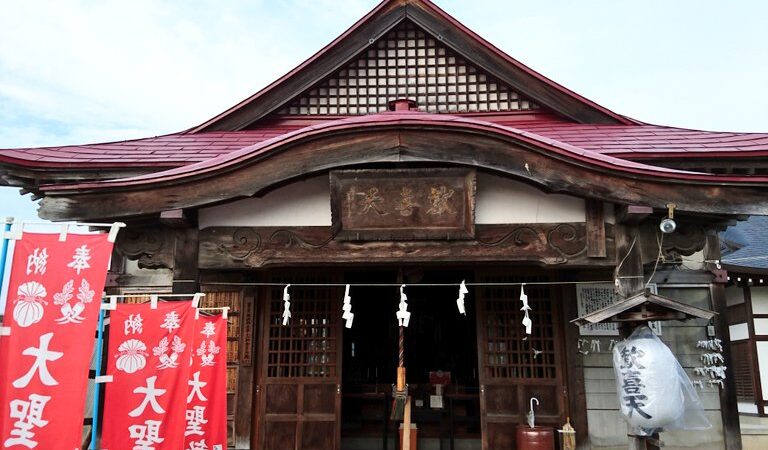
The Karamon gate of Jofuku-ji Temple has an elegant form combining a hipped roof with a curved gable, and the roof is tiled. This style is modeled after the Karamon gate of the Otani Mausoleum of Higashi Hongan-ji Temple in Kyoto, making it an extremely valuable architectural heritage in the Tohoku region.
A Karahafu is a curved gable (the gable end of a roof) with a central section that curves upward, and is a design used in high-status buildings. The Karamon Gate of Jofuku-ji Temple beautifully showcases the Karahafu (curved gable) style, creating a majestic and magnificent impression when viewed from the front.
The gate’s intricate carvings adorn its details, demonstrating the high level of skill of the craftsmen of the time. Combined with the deep hues resulting from the aging of the wood, it exudes a sense of historical weight.
Value as a Sakata City Designated Cultural Property
The Karamon Gate of Jofuku-ji Temple is registered as a Sakata City Designated Cultural Property, being the oldest existing building in Sakata City. Even after more than 220 years since its completion in 1800, it has largely retained its original appearance, making it a valuable cultural asset that conveys the architectural techniques and aesthetic sensibilities of the late Edo period.
Beyond its architectural value, it also holds significant historical importance as a record of the life of Honma Mitsuoka, a prominent figure in Sakata. The Karamon Gate is a symbol of Sakata’s prosperous period and speaks to the high level of culture at that time.
Highlights of the Temple Grounds
The Architecture and Interior of the Main Hall
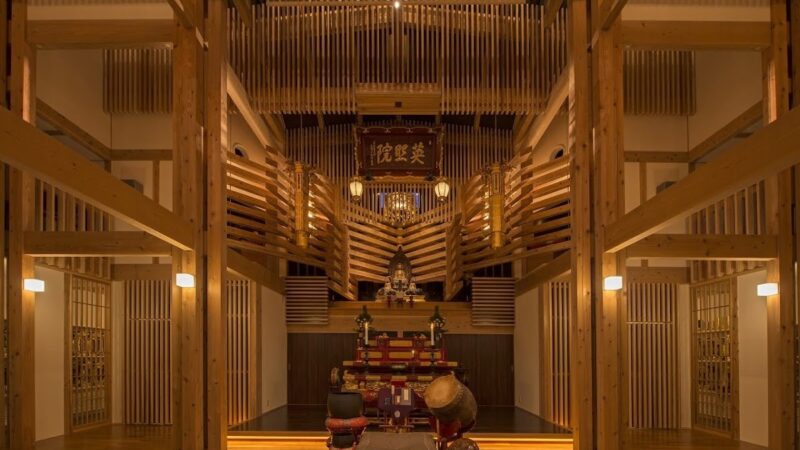
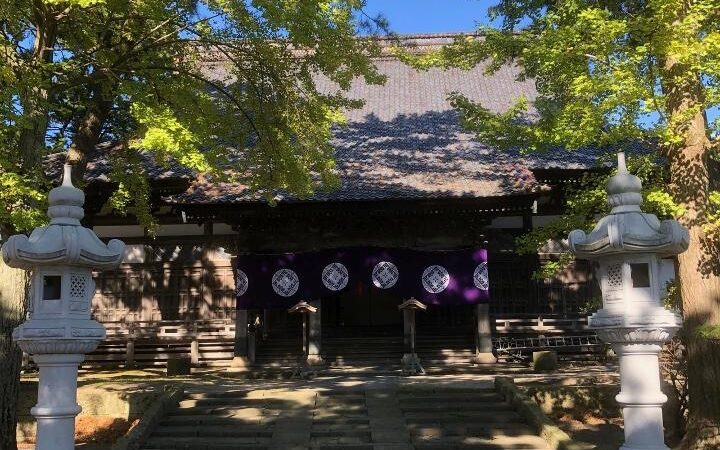
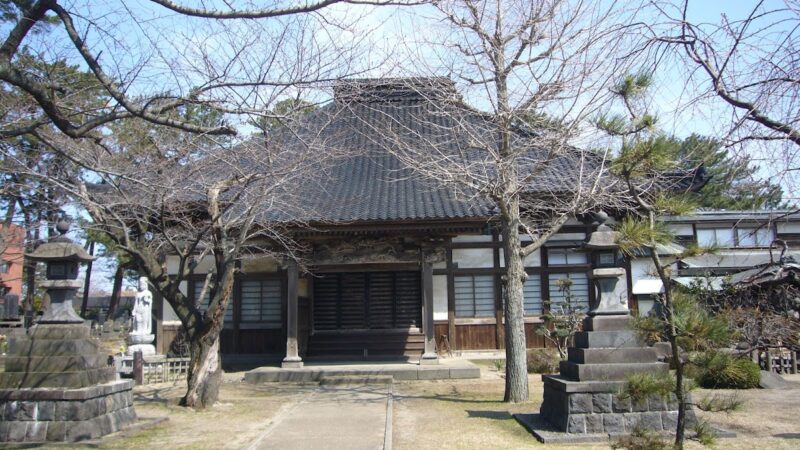
Upon passing through the Karamon gate, the magnificent main hall comes into view. The main hall exhibits a typical architectural style of the Shinshu Otani sect, and the principal image, a statue of Amida Buddha, is enshrined inside. The hall is enveloped in a solemn atmosphere, allowing for peaceful worship.
The inner sanctuary of the main hall is adorned with golden decorations, and especially during religious services, many believers gather, filling the space with the sound of chanting. Traditional designs can be seen on the ceiling and pillars, making it an impressive architectural sight.
The Atmosphere and Seasonal Scenery of the Temple Grounds
Despite being located in the city of Sakata, the grounds of Jofuku-ji Temple maintain a tranquil space. The well-maintained garden features plantings that change with the seasons, allowing visitors to enjoy various landscapes depending on the time of year.
In spring, cherry blossoms and plum blossoms bloom; in summer, the greenery deepens; and in autumn, the autumn leaves color the temple grounds. The Karamon gate, standing amidst the winter snowscape, is particularly picturesque and a popular spot for photography enthusiasts.
Cemetery and Perpetual Memorial Services
Jofuku-ji Temple has a large cemetery where the graves of generations of parishioners are lined up. In recent years, perpetual memorial graves, tree burials, and columbariums have been established, offering memorial services that meet modern needs.
They also offer consultations regarding grave closure and reburial, providing options for those with relatives living far away or those without successors. For details, it is recommended to contact the temple directly.
The History of Honma Mitsuoka and Sakata
The Prosperity of the Honma Family
The Honma family flourished from the Edo period to the Meiji period as a leading merchant family in Sakata. As the folk song “Though we cannot compare to the Honma family, we at least wish to become lords” suggests, their wealth was said to surpass even that of daimyo (feudal lords).
The Honma family amassed their fortune through rice trading, shipping, and finance, and invested their wealth in social projects. Their dedication to the public good, including land reclamation, road construction, and famine relief, is still recounted by the citizens of Sakata today.
The Achievements and Faith of Honma Mitsuoka
As the third head of the Honma family, Honma Mitsuoka not only focused on developing the family business but also dedicated himself to contributing to the local community. He successfully developed new rice fields in the sand dune area, dramatically increasing agricultural productivity, and also invested his personal fortune in port development and flood control projects.
Furthermore, Mitsuoka was a deeply religious man. His donation of the Karamon gate to Jofuku-ji Temple is a symbolic act, reflecting his devotion to Buddhism and his desire for the improvement of local culture. Mitsumaru’s grave is also located at Jofuku-ji Temple, and many people still visit it today.
The Prosperity of Sakata and the Kitamae Ships
The prosperity of Sakata, known as “Sakata of the East,” was rooted in the Kitamae ship trade. These ships traveled from Osaka along the Sea of Japan coast to Hokkaido, carrying local specialties and generating enormous profits.
Sakata, located at the mouth of the Mogami River, played a crucial role as a hub for collecting goods from inland areas and as a port of call for Kitamae ships. This economic prosperity enabled the construction of magnificent temples like Jofuku-ji, fostering a culturally rich region.
Access Information to Jofuku-ji Temple
Location and Basic Information
Location Sakata City, Yamagata Prefecture (Please check official information for the detailed address before visiting)
Sect Shinshu Otani School (Higashi Honganji School)
Founding 1475 (Bunmei 7)
Founder Myojun
Principal Image Amida Buddha
Access by Train and Bus
Jofuku-ji Temple is approximately 2 kilometers from JR Sakata Station.
Walking Approximately 25-30 minutes on foot from Sakata Station. Visiting while strolling through Sakata city is also recommended.
Bus City loop buses operate from Sakata Station. Access is possible within a few minutes’ walk from the nearest bus stop. It is recommended to check the bus timetable in advance.
Taxi Approximately 5-10 minutes by taxi from Sakata Station. The fare is approximately 1,000 yen. ### Access by Car and Parking
By Car
- Approximately 10 minutes from Sakata IC on the Yamagata Expressway
- Approximately 5 minutes from Sakata Chuo IC on the Nihonkai Tohoku Expressway
Parking
While the temple has parking spaces for visitors, the number of spaces is limited. During busy periods, please consider using nearby paid parking lots. Parking may be particularly crowded during memorial services and events.
Notes for Visitors
Jofuku-ji Temple is an active temple and a place of worship for its parishioners. Please consider the following points when visiting.
- Please pray quietly within the temple grounds.
- If a memorial service or funeral is taking place, please refrain from observing or be considerate so as not to disturb.
- Please take photographs only where permitted, and refrain from taking pictures in areas where photography is prohibited, such as inside the main hall.
- Please take all your trash with you.
- Please do not touch cultural properties such as the Karamon Gate.
Nearby Tourist Attractions
Former Honma Family Residence
The residence of the Honma family, who have a deep connection with Jofuku-ji Temple, is open to the public as the Former Honma Family Residence. It is a rare building combining the styles of a samurai residence and a merchant’s house, and is registered as a National Important Cultural Property. It is an essential spot for learning about the history and culture of the Honma family.
Honma Museum of Art (Seienkaku)
This museum exhibits art collected by the Honma family. Within the grounds is “Seienkaku,” a villa built by Honma Mitsuoka, where you can enjoy an elegant space along with the garden. You can experience the cultural heritage of the Honma family in conjunction with a visit to Jofuku-ji Temple.
Sankyo Warehouses
These rice storage warehouses were built during the Meiji era and are still partially in use today. The beautiful zelkova tree-lined avenue makes them one of Sakata’s representative tourist attractions. They are also known as a filming location for the NHK morning drama series “Oshin.”
Sakata City Museum of Art
This museum primarily exhibits works by Shigeru Morita, a Western-style painter from Sakata, as well as works by other artists associated with the region. Regular special exhibitions are also held, offering a culturally enriching experience.
Hiyoriyama Park
Located on a hill overlooking Sakata Port, this park was once a place where sailors of Kitamae-bune (northern route trading ships) checked the weather. Historical sites such as directional stones and permanent lanterns, which tell the history of maritime transport, are scattered throughout the park.
Buddhist Services and Events at Jofuku-ji Temple
Annual Events
As a temple of the Shinshu Otani sect, Jofuku-ji Temple holds various Buddhist services and events throughout the year.
Spring and Autumn Equinoxes
Autumn and spring equinox services are held to honor ancestors, and many parishioners visit to pay their respects.
Ho-on-ko (Memorial Service)
This is the most important memorial service of the Shinshu Otani sect, commemorating the virtues of the sect’s founder, Shinran Shonin. It is usually held in late November.
Obon Festival
During the Obon festival in August, a memorial service is held to welcome the spirits of ancestors.
During these events, the main hall is solemnly decorated, and the chanting of sutras by monks resonates throughout the hall. While non-parishioners can attend, it is recommended to check with the temple beforehand.
Memorial Services and Funerals
Jofuku-ji Temple also conducts memorial services and funerals for its parishioners. We handle all aspects of Buddhist services, from the seventh day after death to the forty-ninth day, the first anniversary, the third anniversary, and other annual memorial services.
Sakata’s Shinshu Culture and Jofuku-ji Temple
The Spread of the Shinshu Otani School in Tohoku
The Shinshu Otani School is a branch of Jodo Shinshu Buddhism, founded by Shinran Shonin, with Higashi Hongan-ji Temple in Kyoto as its head temple. Missionary work in the Tohoku region began in earnest during the Muromachi period, and Jofuku-ji Temple was founded within this context.
In port towns like Sakata, people from various social strata, including merchants and sailors, lived together, and the teachings of Shinshu Buddhism, which preached egalitarianism, were widely accepted. Jofuku-ji Temple has become deeply rooted in the local community as a spiritual haven for these people.
Popular Belief and the Role of Temples
During the Edo period, temples functioned not only as religious institutions but also as centers of education and culture. They played diverse roles, including providing education at temple schools, performing ceremonies such as weddings and funerals, and serving as meeting places for local communities.
Similarly, Jofuku-ji Temple has been closely intertwined with the lives of the people of Sakata. While receiving support from influential figures such as the Honma family, the temple has cherished the faith of ordinary people and has carved its history as a temple open to the community.
Preservation and Inheritance as a Cultural Property
Preservation and Restoration of the Karamon Gate
The Karamon Gate of Jofuku-ji Temple, despite having a history of over 220 years, remains in excellent condition. This is a testament to the careful maintenance and management by successive chief priests and parishioners.
Regular repairs are essential for wooden buildings, and Jofuku-ji Temple has carried out repair work as needed. Restoration efforts are made using traditional methods and materials to avoid compromising its value as a cultural property.
Inheritance to the Next Generation
Preserving cultural properties requires not only physical restoration but also efforts to understand their value and pass it on to future generations. Jofuku-ji Temple is also focusing on educational activities for younger generations through collaboration with local schools and the holding of cultural property tours.
Sakata City also provides support for the preservation of the Karamon Gate, which is a city-designated cultural property, and a system of public-private cooperation for cultural property protection is in place. ## Manners and Etiquette for Visiting Temples
Manners and Etiquette for Visiting Shinshu Otani-ha Temples
This section introduces the basic etiquette for visiting temples of the Shinshu Otani-ha sect.
A Bow at the Temple Gate
Before passing through the Karamon gate, stop and bow once. This is an act of respect for entering the realm of Buddha.
Visiting the Main Hall
When entering the main hall, remove your shoes and arrange them neatly. Before the main image of Buddha, clasp your hands together, bow once, and quietly put your hands together. In Shinshu Buddhism, chanting “Namu Amida Butsu” is fundamental.
Offering Money
Offering money is an expression of gratitude. There are no set amounts, but quietly place it in the offering box.
Regarding Photography
Photography is often permitted on the temple grounds and the exterior of the Karamon gate, but photography inside the main hall and during religious ceremonies is generally prohibited. Please check with the temple in advance regarding photography permission or follow the signs within the temple grounds.
When posting on social media, please be mindful not to tarnish the temple’s dignity. Pay particular attention to the privacy of the temple’s parishioners.
Significance of Visiting Jofuku-ji Temple
Experiencing History and Culture
Visiting Jofuku-ji Temple is not simply about sightseeing; it’s a valuable opportunity to experience 550 years of history and the culture of Sakata’s prosperous period. The Karamon gate, donated by Honma Mitsuoka, is a crystallization of Edo-period technology and aesthetic sensibilities, and speaks to the deep faith of the people of that time.
Finding Peace of Mind
Taking time away from the hustle and bustle of modern life and calming your mind in a quiet temple can lead to mental refreshment. By offering prayers in the main hall and strolling through the temple grounds, you can regain inner peace.
Deepening Understanding of Local History
The history of Jofuku-ji Temple is the history of Sakata itself. Through this temple, one can understand the multifaceted history of Sakata, including the prosperity of the port town that flourished through Kitamae-bune trade, the social contributions of the Honma family, and the religious life of ordinary people.
Summary
Jofuku-ji Temple in Sakata City, Yamagata Prefecture, is a historic Shinshu Otani sect temple founded in 1475. Its greatest highlight, the Karamon Gate, is the oldest building in Sakata City, donated by Honma Mitsuoka in 1800, and is carefully preserved as a city-designated cultural property. The elegant architecture, modeled after the Otani Mausoleum of Higashi Hongan-ji Temple in Kyoto, with its hipped roof and curved gable, is a valuable cultural heritage that conveys the technology and aesthetic sense of the late Edo period.
It is easily accessible, about a 5-minute drive or 30-minute walk from Sakata Station. Nearby, there are many tourist spots where you can feel the history of Sakata, such as the former Honma family residence and the Sankyo Warehouse. As an active temple, religious services and events are held, so visitors are expected to maintain silence and treat cultural properties with care. When you visit Sakata, be sure to stop by Jofuku-ji Temple and experience the legacy of Honma Mitsuoka and the history and culture of Sakata. The tranquil grounds and the beauty of the Karamon gate, which has been preserved for over 220 years, will surely create a memorable experience.