Complete Guide to Kurumamochi Shrine (Takasaki City, Gunma Prefecture) | History, Deities, Access, and Highlights Explained in Detail
About Kurumamochi Shrine
Kurumamochi Shrine is a historic shrine located in Jumonji-cho, Takasaki City, Gunma Prefecture. Situated in a mountainous area at an altitude of approximately 500 meters on the southeastern foot of Mt. Haruna, the shrine grounds are located slightly south of National Route 154, which connects Shinto Village to Shimomuroda. It is located about 10 kilometers north of Annaka Station on the Shin’etsu Main Line, and the shrine grounds face southeast, near the Jumonji Community Center.
This shrine, which has long been a center of local faith, is known as one of the most historically significant shrines in Gunma Prefecture. Its presence in a quiet mountain village evokes the charm of a traditional Japanese shrine for visitors.
Deities and History of Kurumamochi Shrine
Deities
Kurumamochi Shrine enshrines deities associated with the Kurumamochi clan, a powerful ancient clan. The Kurumamochi clan is an ancient powerful family that appears in the Kojiki and Nihon Shoki, and is known for playing an important role in the myth of the descent of the heavenly grandchild.
The Kurumamochi clan is considered to be related to the Nakatomi clan, whose ancestral deity is Amenokoyane-no-Mikoto, and was a powerful clan that served the imperial court. In particular, the Kurumamochi clan is believed to have been responsible for the transportation and management of tribute items to the imperial court, and as their name suggests, they are thought to have been involved in the transportation of goods using “carts.”
History and Origins
While there are no clear records of the founding date of Kurumamochi Shrine, its origins are believed to date back to ancient times. Gunma Prefecture was known as “Kozuke Province” in ancient times and was a region with deep ties to the imperial court.
The area at the foot of Mount Haruna has been a place of human habitation and worship since ancient times. Mount Haruna itself is revered as a sacred mountain, and many shrines were built around it. Kurumamochi Shrine is one such shrine, attracting the faith of the local people.
Even after the Middle Ages, it remained an integral part of people’s lives as the local tutelary deity, with prayers offered for abundant harvests, family safety, and traffic safety. The name “Kurumamochi” (meaning “carrier-carrying”) suggests a long-standing belief in transportation and logistics.
Highlights of the Shrine Grounds
Shrine Buildings and Main Hall
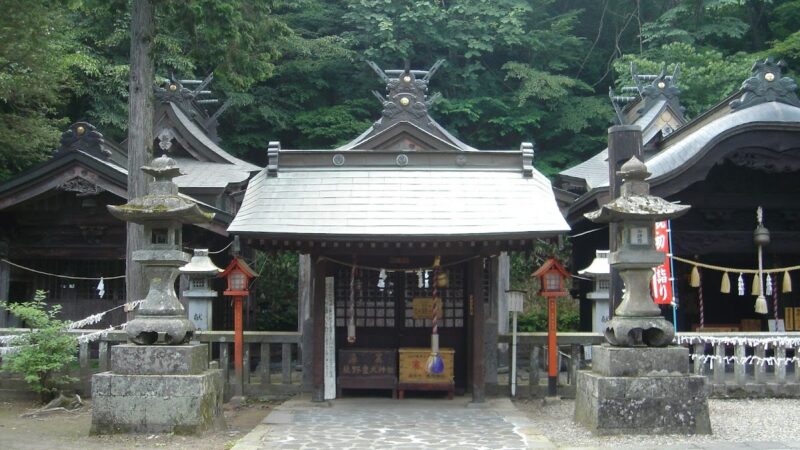
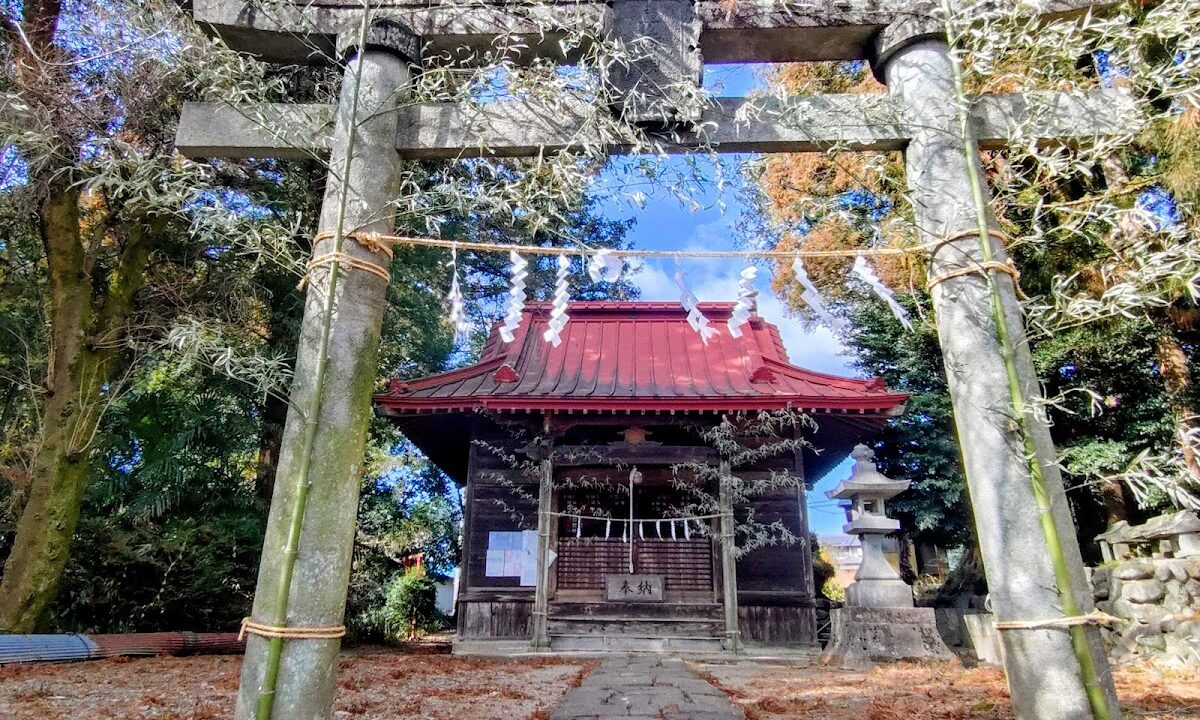
The grounds of Kurumamochi Shrine face southeast. Passing through the torii gate at the front, the path leads to the shrine buildings. Although small, the grounds are meticulously maintained, reflecting the deep faith of the local people.
The main hall is built in a traditional shrine architectural style, harmonizing with the surrounding natural environment. Ancient trees stand around the shrine, creating a solemn atmosphere befitting a sacred site.
Atmosphere of the Shrine Grounds
Located in a quiet mountain valley at the southeastern foot of Mount Haruna, the grounds of Kurumamochi Shrine are enveloped in tranquility, far removed from the hustle and bustle of the city. You can feel the changing seasons, and the scenery is particularly beautiful during the fresh greenery of spring and the vibrant autumn foliage.
From the shrine grounds, you can see the surrounding mountains, and the majestic figure of Mount Haruna can be seen in the distance. This location speaks to the fact that people have felt the power of nature since ancient times and chosen it as a suitable place to enshrine the gods.
How to Access Kurumamochi Shrine
Access by Train
The nearest station is Annaka Station on the Shin’etsu Main Line (JR East). Kurumamochi Shrine is approximately 10 kilometers from Annaka Station.
- Approximately 15 minutes by car from Annaka Station on the JR Shin’etsu Main Line
- Taking a taxi from the station is convenient
- Access by public transport alone is difficult, so we recommend using a rental car or taxi.
Access by Car
Access by car is the most convenient.
- Approximately 30 minutes from Maebashi IC on the Kan’etsu Expressway
- Approximately 25 minutes from Matsuida-Myogi IC on the Joshin’etsu Expressway
- Enter from the south on National Route 154 (from Shinto Village towards Shimomuroda)
- It’s easy to find if you use the Jūmonji Community Center as a landmark
- Parking: There is some space on the temple grounds (prior confirmation is recommended)
Car Navigation Settings
- Address: Jūmonji-machi, Takasaki City, Gunma Prefecture
- Landmark: Jūmonji Community Center
Because it is located in a mountainous area, some roads are narrow. Please drive carefully.
Nearby Tourist Attractions
Mount Haruna and Lake Haruna
Mount Haruna, located about 30 minutes by car from Kurumamochi Shrine, is one of Gunma Prefecture’s most famous mountains. Around Lake Haruna, there are numerous tourist attractions, including Haruna Shrine.
Haruna Shrine is a mystical shrine surrounded by rocky mountains, and its main hall and other buildings, designated as important national cultural properties, are a highlight. Along the approach to the shrine are unusual rock formations and waterfalls, making it a popular power spot.
Mizusawa Kannon (Mizusawa Temple)
Located at the eastern foot of Mount Haruna, Mizusawa Kannon is an ancient temple known as the 16th temple of the Bando Thirty-Three Kannon Pilgrimage. It is a sacred site said to have been an imperial temple of successive emperors, and its beautiful hexagonal hall and main hall are highlights. Mizusawa udon restaurants line the approach to the temple, allowing visitors to enjoy Gunma’s famous cuisine along with their pilgrimage.
Ikaho Onsen
Located about 40 minutes by car from Kurumamochi Shrine, Ikaho Onsen is one of Gunma Prefecture’s leading hot spring resorts. It’s famous for its stone steps, and visitors can enjoy strolling through the hot spring town and taking a day trip to the baths.
Comparison with Major Shrines in Gunma Prefecture
Gunma Prefecture is home to many historically significant shrines. Knowing the differences and characteristics of these shrines will give you a deeper understanding when visiting Kurumamochi Shrine.
Ichinomiya Nukisaki Shrine (Tomioka City)
Knukisaki Shrine, known as the Ichinomiya (first-ranked shrine) of Kōzuke Province, is an ancient shrine with a history of over 1500 years. The main hall and worship hall are designated as important national cultural properties, and it features a unique layout known as a “descending shrine.” The shrine buildings are beautifully painted in vermilion, conveying a sense of high status.
Akagi Shrine (Maebashi City)
Akagi Shrine, located on the shore of Lake Ōnuma on Mount Akagi, is a beautiful shrine with vermilion-painted buildings that appear to float on the lake. As a center of Akagi Mountain worship, it has long been revered and is also known as a shrine that grants women’s wishes.
Kanmuri Inari Shrine (Ota City)
Kanmuri Inari Shrine, with a history dating back to the Heian period, boasts a main hall and worship hall designated as important cultural properties of Gunma Prefecture. The shrine grounds, surrounded by lush greenery, are affectionately known as the “Forest of Tranquility.”
Tamamura Hachimangu Shrine (Tamamura Town)
Known as a shrine for warding off evil, bringing good fortune, safe childbirth and child-rearing, and traffic safety, Tamamura Hachimangu Shrine is an ancient shrine said to have been established by Minamoto no Yoritomo, who invited the deity from Tsurugaoka Hachimangu Shrine. It has a magnificent shrine building and spacious grounds, attracting the faith of the local community.
Compared to these large shrines, Kurumamochi Shrine is smaller in scale, but its distinguishing feature is that it has preserved its ancient faith in a quiet mountain environment. You can experience the simple atmosphere of a shrine that hasn’t been commercialized for tourism.
Points and Etiquette for Visiting a Shrine
Basic Etiquette for Visiting a Shrine
When visiting Kurumamochi Shrine, follow the general etiquette for visiting a shrine.
- Bow before passing through the torii gate: Bow before entering the shrine grounds, in front of the torii gate.
- Walking along the approach: The center of the approach is considered the path of the gods, so walk along the sides.
- Purify yourself at the water basin: If there is a water basin, purify your hands and mouth.
- Worship at the main hall: The basic procedure is two bows, two claps, and one bow.
- Bow upon leaving: When leaving the shrine grounds, turn around after passing through the torii gate and bow.
Suitable Time to Visit
Kurumamochi Shrine is open for visits throughout the year, but each season has its own unique charm.
- Spring (March-May): Enjoy the beautiful fresh greenery and refreshing air during your visit.
- Summer (June-August): The greenery is lush, and the shade of the trees provides coolness.
- Autumn (September-November): The autumn foliage is beautiful, making this the most scenic time.
- Winter (December-February): Visiting amidst a snowy landscape creates a solemn atmosphere. However, caution is needed regarding road conditions during snowfall.
Clothing and Items to Bring
Please note the following points as the shrine is located in a mountainous area.
- Comfortable shoes: The shrine grounds are well-maintained, but since it is in a mountainous area, comfortable shoes are recommended.
- Seasonal clothing: Due to the high altitude, temperatures may be lower than in the lowlands.
- Insect repellent: Insect repellent spray is useful in the summer.
- Camera: Recommended for photographing the rich natural scenery and shrine buildings (however, please be considerate so as not to disturb other worshippers).
Benefits and Faith of Kurumamochi Shrine
Main Benefits
The benefits of Kurumamochi Shrine can be inferred from its name and associated beliefs.
- Traffic Safety: From the name “Kurumamochi,” it is thought that there has been a long-standing belief related to traffic and transportation. In modern times, it also relates to prayers for traffic safety in automobiles.
- Safety in Transportation and Logistics: Because the Kurumamochi clan was responsible for transporting tribute items to the imperial court, it has attracted the faith of people involved in logistics and transportation.
- Family Safety: As the local guardian deity, it is believed to protect the health and safety of families.
- Abundant Harvest: As a shrine in an agricultural region, it is also associated with prayers for a bountiful harvest.
Connections with the Community
Kurumamochi Shrine has long been a place of worship closely intertwined with the lives of the people of Jumonji Town and the surrounding areas. It has also played a role in strengthening community bonds through local festivals and annual events.
Even today, it is carefully preserved and maintained by the local people. Through this local faith and effort, Kurumamochi Shrine has been passed down to the present day.
The Kurumamochi Clan and the History of Ancient Japan
The Role of the Kurumamochi Clan
The Kurumamochi clan played an important role in ancient Japan. In the Kojiki and Nihon Shoki, the Kuramochi clan appears as one of the Five Attendants (Itsutomo no O) who accompanied the heavenly grandchild, alongside Amenokoyane-no-Mikoto, in the myth of the descent of the heavenly grandchild.
The main duties of the Kuramochi clan were the management of the transportation of tribute and supplies to the imperial court. In ancient times, the transportation of goods was a crucial function forming the foundation of state administration, and the Kuramochi clan played a central role in this.
Relationship with Kōzuke Province
Gunma Prefecture (ancient Kōzuke Province) was a region with deep ties to the imperial court. The ancient Tōsandō road passed through it, and it was located on an important transportation route connecting the capital with the eastern provinces.
The fact that Kuramochi Shrine is located in Kōzuke Province suggests that the Kuramochi clan held power in this region, or that Kōzuke Province was a key point for transportation and logistics. Its location at the foot of Mount Haruna also suggests a connection to ancient transportation routes.
Beliefs and Culture at the Foot of Mount Haruna
Haruna Mountain Beliefs
Mount Haruna has been revered as a sacred mountain since ancient times. As an object of mountain worship, the mountain itself was considered sacred, and many shrines and temples were built. Numerous places of worship are scattered throughout the foot of Mount Haruna, including Haruna Shrine.
Kurumamochi Shrine, as a shrine occupying a corner of this Haruna Mountain belief sphere, is thought to have held an important position within the regional belief system.
Culture of Mountain Villages
The villages at the foot of Mount Haruna, including Jumonji Town, have cultivated their own unique cultures while engaging in agriculture and forestry since ancient times. In the harsh natural environment, people have found spiritual support through faith in the gods.
Kurumamochi Shrine has been passed down to the present day as a place of worship closely intertwined with the lives of the people in these mountain villages.
Advice for Visitors
Quiet Worship Environment
Kurumamochi Shrine is a simple shrine that hasn’t been commercialized for tourism. With few visitors, you can worship in a quiet environment. You can escape the hustle and bustle of everyday life and have time to quietly connect with the gods.
Photography
Photography is generally permitted on the shrine grounds, but consideration should be given to avoiding disrupting worship. When photographing sacred areas such as the main hall, please do so with respect.
Consideration for Neighbors
Kurumamochi Shrine is located near a residential area. When visiting, please be considerate of the nearby residents and worship quietly.
Recommended Prior Confirmation
It is recommended to check detailed information such as the opening hours of the shrine office and whether or not goshuin (shrine stamps) are available in advance. Because it is a small shrine, there may not always be a resident priest.
Summary
Kurumamochi Shrine is a historical shrine located in Jumonji-cho, Takasaki City, Gunma Prefecture. Nestled in a naturally rich environment at the southeastern foot of Mount Haruna, this shrine has long been a place of worship for the local people.
Originating from the ancient Kurumamochi clan, this shrine is believed to offer blessings for traffic safety, safe logistics, and family safety, and is cherished as the local guardian deity. Although small in scale, it is a precious shrine where one can quietly worship in a simple atmosphere untouched by tourism.
Visiting it in conjunction with nearby tourist spots such as Mount Haruna, Mizusawa Kannon Temple, and Ikaho Onsen allows you to fully appreciate the rich nature and historical culture of Gunma Prefecture. It is especially recommended for those who want to escape the hustle and bustle of city life and experience the good old days of Japanese faith.
When visiting Gunma Prefecture, be sure to visit Kurumamochi Shrine and spend some peaceful time in its tranquil sacred grounds at the foot of Mount Haruna.