Satomi Shrine (Takasaki City, Gunma Prefecture) Complete Guide | History, Deities, and Deep Connection to Kofun (Ancient Burial Mounds)
Satomi Shrine, located in Shimosatomi-cho, Takasaki City, Gunma Prefecture, is a historical shrine with a unique location built on top of an ancient burial mound and deep ties to the Satomi clan. This article comprehensively introduces all the information you need to know before visiting, including the detailed history of Satomi Shrine, its enshrined deities, highlights of the grounds, and access methods.
Overview of Satomi Shrine
Satomi Shrine is located at 1443 Shimosatomi-cho, Takasaki City, Gunma Prefecture, and sits atop a small hill. This hill is actually the Suwayama Kofun, an ancient burial mound, creating a unique landscape where the shrine and the burial mound are integrated.
It has long been revered as the local guardian deity, and despite being located in a quiet residential area, it is a valuable shrine that retains a strong historical atmosphere. From the shrine grounds, you can overlook the surrounding landscape and feel the importance of this place since ancient times.
Deities and Divine Virtues
Main Deity
The main deity of Gomi Shrine is Takeminakata-no-kami. Takeminakata-no-kami is a deity known as the enshrined deity of Suwa Grand Shrine and possesses characteristics as a god of war and martial arts. He is also worshipped as a god of agriculture and hunting, and has been revered as a god who protects the fertility of the region.
Enshrined Deities
In addition to Takeminakata-no-kami, the following deities are enshrined:
- Tsukuyomi-no-mikoto: God who governs the night, guardian deity of agriculture and fishing
- Hachiman-shin: God of war known as the tutelary deity of the Minamoto clan
- Sugawara-no-michizane: God of learning
By enshrining these deities together, the shrine possesses diverse divine virtues, including military fortune, academic success, and abundant harvests.
Divine Virtues
The divine virtues that can be obtained at Gomi Shrine are diverse.
- Long-lasting military fortune and improved luck in battle: The power of Takeminakata-no-kami and Hachiman-no-kami as war gods
- Academic success and passing exams: The divine virtue of Sugawara no Michizane for learning
- Abundant harvests and business prosperity: The power of Takeminakata-no-kami and Tsukuyomi-no-Mikoto as agricultural gods
- Protection from misfortune and good fortune, and safety for the family: The power of a comprehensive guardian deity
History of Gomi Shrine
Origin of Founding
The founding of Gomi Shrine has deep ties to the Satomi clan. It is said that the shrine began when Satomi Yoshitoshi, the ancestor of the Satomi clan, enshrined Hachiman-no-kami, the tutelary deity of the Minamoto clan, at the Suwayama Kofun (ancient burial mound) located within the shrine grounds.
The Satomi clan was a samurai family based in Kozuke Province (present-day Gunma Prefecture) and is known as a branch of the Nitta clan. As a family descended from the Minamoto clan, it was a natural progression for them to enshrine Hachiman, the tutelary deity of the Minamoto clan.
Connection to Suwa Faith
Since the main deity enshrined is Takeminakata-no-kami, there is a strong connection to Suwa faith. Suwa faith was widely practiced from the medieval period onward, mainly among the samurai class, and was particularly devoutly worshipped by samurai families in the Koshinetsu region, including the Takeda clan.
While there are many Suwa shrines in Gunma Prefecture, Gomi Shrine stands out for its unique form, integrated with a burial mound.
Connection to the Community
Since the Edo period, Gomi Shrine has been protected by the local people as the tutelary deity of Shimosatomi-cho. Even today, it is carefully maintained by local parishioners, and many worshippers visit for New Year’s prayers and annual festivals.
Relationship to Suwayama Kofun
Overview of the Burial Mound
The hill on which Gomi Shrine is located is a burial mound called Suwayama Kofun. This burial mound was constructed during the Kofun period and is believed to be the tomb of a powerful figure who ruled this region.
Examples of shrines built on top of burial mounds are found throughout Japan, demonstrating the sacredness of the mound and its importance to the region. The resting places of ancient rulers were considered to possess special spiritual power by later generations.
Connection to Toyokiirihiko-no-Mikoto
Some documents suggest a connection between this burial mound and Toyokiirihiko-no-Mikoto. Toyokiirihiko-no-Mikoto was a prince of the 10th Emperor Sujin, a legendary figure who, after receiving orders to pacify the eastern provinces, went to Kōzuke Province (present-day Kōzuke Province) and became the ancestor of the region.
However, this is merely a legend and lacks archaeological evidence. Nevertheless, the very existence of such a legend suggests that this burial mound and shrine have long been considered important in the region.
Integrated Landscape of Burial Mound and Shrine
Currently, the burial mound of the Suwayama Burial Mound has been developed as the grounds of a shrine, creating a unique landscape where the burial mound and shrine are integrated. The style of worship, where visitors ascend stone steps, utilizes the elevation of the burial mound, naturally guiding worshippers to the top of the mound.
This location allows for panoramic views of the surrounding area from the shrine grounds, giving a real sense of its strategic and religious importance in ancient times.
Highlights of the Shrine Grounds
Worship Hall and Main Sanctuary
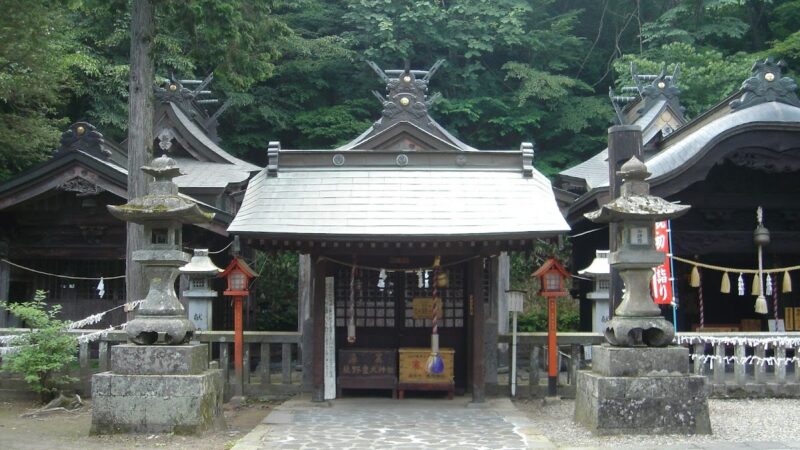
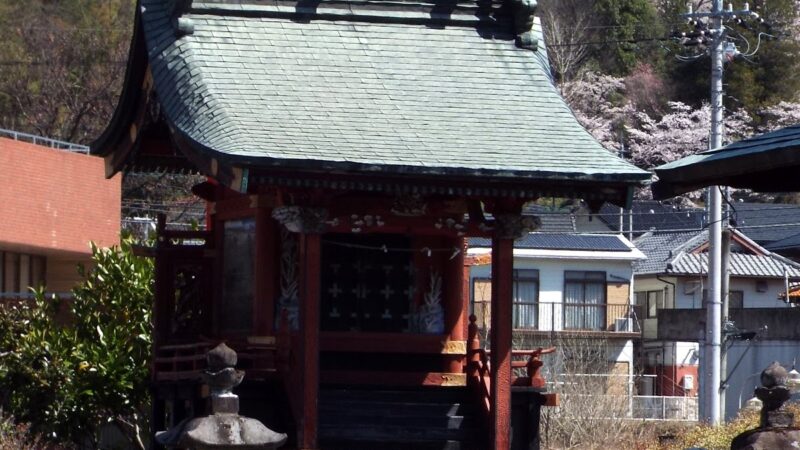
The worship hall of Gomi Shrine is a traditional wooden structure, possessing a tranquil atmosphere typical of a local shrine. Behind the worship hall is the main sanctuary; while worship is usually conducted from the worship hall, it is sometimes possible to view the main sanctuary on special occasions such as festivals.
The main sanctuary features intricate carvings, showcasing architectural techniques from the Edo period to the modern era. It is well-maintained thanks to the cooperation of the parishioners.
Atmosphere of the Shrine Grounds
Due to its location atop an ancient burial mound, the shrine grounds are situated on a higher level than the surrounding area, creating a tranquil space surrounded by trees. The sacred atmosphere is particularly strong in the early morning and evening.
Many ancient trees in the grounds contribute to a landscape that evokes a long history. The scenery changes with the seasons, allowing visitors to enjoy the beauty of each season: the fresh green of spring, the deep green of summer, the vibrant autumn foliage, and the tranquility of winter.
Stone Steps and Approach
The shrine grounds are reached by climbing stone steps that begin at the foot of the mound. These steps also utilize the topography of the burial mound, and as you ascend, you gradually feel yourself moving from everyday life into a sacred realm.
While there aren’t many steps, they provide a moderate workout and are the perfect distance to prepare yourself for worship.
Annual Events and Festival
Annual Festival
The Gomi Shrine holds an annual festival every year. During the festival, solemn Shinto rituals are performed, and prayers are offered for the peace and prosperity of the community and its parishioners. Local people gather here, and traditional festivals are passed down.
New Year’s Visit
At the start of the new year, visitors come for their first shrine visit of the year. While not as crowded as large shrines, it is bustling with people, mainly locals, praying for safety and prosperity in the new year. It’s an ideal spot for those who want to welcome the new year in peace and quiet.
Access Information
Location
1443 Shimosatomi-cho, Takasaki City, Gunma Prefecture 370-3343
Access by Train
The nearest station is Annaka Station on the JR Shin’etsu Main Line. From Annaka Station, you can access the shrine using the following methods:
- Taxi: Approximately 15 minutes
- Bus: Buses are limited, so it’s necessary to check the timetable in advance.
- Walking: Approximately 4km, about 50 minutes on foot
Access by train is somewhat inconvenient, so visiting by car is recommended.
Access by Car
- Approximately 20 minutes from the Annaka-Haruna IC on the Joshinetsu Expressway
- Approximately 30 minutes from the Takasaki IC on the Kanetsu Expressway
Access is via a prefectural road from National Route 18. Entering “Gomi Shrine” or the address into your car navigation system will ensure a smooth arrival.
Parking
There is parking space for visitors around the shrine grounds. However, it is not a large parking lot, so caution is advised during crowded times such as festivals.
Points to Note When Visiting
- As it is located in a residential area, please be considerate of noise levels.
- There are stone steps, so comfortable shoes are recommended.
- The shrine office may not always be staffed.
- If you wish to receive a Goshuin (shrine stamp), it is recommended to check in advance.
Nearby Attractions
Kofun (Ancient Burial Mounds) in Takasaki City
Numerous Kofun, representative of Gunma Prefecture, are located around Gomi Shrine.
- Soja Futagoyama Kofun: A keyhole-shaped burial mound approximately 90m in length.
- Mae Futago Kofun: One of the Soja Kofun Group.
- Hotoyama Kofun: A valuable historical site as a square burial mound.
Visiting Gomi Shrine in conjunction with a tour of the burial mounds will allow you to gain a deeper understanding of the history of ancient Kamitsukeno Province.
Haruna Shrine
In Takasaki City is Haruna Shrine, known as one of the most powerful spiritual spots in the Kanto region. Visiting it along with Gomi Shrine will allow you to experience Gunma Prefecture’s shrine culture more deeply.
Historical Sites in Annaka City
Nearby Annaka City boasts numerous historical sites, including the remains of the Usui Pass checkpoint and the old Nakasendo post town. Enjoying a historical stroll in conjunction with a visit to Gomi Shrine is highly recommended.
Manners and Etiquette for Visiting a Shrine
Basic Etiquette for Visiting a Shrine
- Bow before passing through the torii gate: This is a courtesy before entering the sacred area.
- Walk along the edge of the path: The center is considered the path of the gods.
- Purify yourself at the water basin: If there is a water basin, purify your body and mind.
- Etiquette in front of the main hall: Two bows, two claps, and one bow is the basic procedure.
- Bow when leaving: Turn around and bow before leaving the torii gate.
Regarding Photography
Photography is generally permitted on the shrine grounds, but please note the following:
- Refrain from taking photos in areas where photography is prohibited, such as inside the main hall.
- Be considerate of other visitors.
- Remember that this is a sacred place and take photos with respect.
Summary of the Charms of Gomi Shrine
Gomi Shrine is a shrine whose charm lies in its unusual location, situated on top of an ancient burial mound, its historical connection to the Satomi clan, and the tranquil atmosphere of its grounds. While not a large-scale tourist destination, it is a precious place where one can quietly contemplate history and find peace of mind during a visit.
For those interested in the ancient history of Gunma Prefecture, those who enjoy visiting ancient burial mounds, or those seeking a peaceful shrine to calm their minds, Gomi Shrine is well worth a visit. When visiting Takasaki City, please be sure to stop by.
Related Information and Links
Major Suwa Shrines in Gunma Prefecture
There are several shrines based on the Suwa faith within Gunma Prefecture. Visiting Gomi Shrine along with others will allow you to experience the widespread influence of the Suwa faith within the prefecture.
Historical Sites Related to the Satomi Clan
The Satomi clan was a family that migrated from Kōzuke Province to Awa Province (southern Chiba Prefecture), and historical sites remain throughout the region. Gomi Shrine is one of the important points in tracing the roots of the Satomi clan.
References
For more detailed information about Gomi Shrine, the following resources may be helpful.
- Takasaki City History
- Gunma Prefecture Shrine Records
- Archaeological materials concerning burial mounds in Kōzuke Province
- Historical research books concerning the Satomi clan
These materials can be viewed at the Takasaki City Library and the Gunma Prefectural Library.
Summary
Gōmi Shrine is a historical shrine located in Shimosatomi-chō, Takasaki City, Gunma Prefecture. It is characterized by its unique location atop the Suwayama burial mound, its Suwa faith with Takeminakata-no-kami as its main deity, and its deep connection to the Satomi clan.
Despite being located in a quiet residential area, it is a valuable shrine that conveys ancient history to the present day and is protected by the local people. Access is somewhat inconvenient, but this is precisely what preserves its tranquil atmosphere, which soothes the hearts of visitors.
This shrine is especially recommended for those interested in the history and burial mounds of Gunma Prefecture, and for those who want to visit a quiet shrine at their leisure. Please do visit it at least once.