Sasamori Inari Shrine (Kanra Town, Gunma Prefecture) Complete Guide | An Inari Shrine Associated with the Oda Family, Situated on a Burial Mound
Sasamori Inari Shrine, located in Fukushima, Kanra Town, Kanra District, Gunma Prefecture, is a shrine with an extremely unique location, built on the mound of the Sasamori Kofun, one of the largest burial mounds in the Tomioka-Kanra area. During the Edo period, it received fervent reverence from the Oda family of the Obata Domain, descendants of Oda Nobunaga, and even today it remains a beloved center of faith for the local people.
This article comprehensively introduces information useful for visiting Sasamori Inari Shrine, including its history, enshrined deities, highlights of the grounds, information on the annual festival, goshuin (shrine stamps), and access methods.
History and Origins of Sasamori Inari Shrine
Founding and Ancient Beliefs
There are various theories regarding the founding date of Sasamori Inari Shrine, but one theory suggests it was established in Tenchō 2 (825) during the Heian period. This period was the time when Kobo Daishi Kukai was active, reflecting the historical context of a time when Buddhism and Shintoism were fused.
The Sasamori Kofun, where the shrine is located, is a keyhole-shaped burial mound estimated to have been constructed in the late 6th to early 7th centuries. Boasting a total length of approximately 80 meters, it is one of the largest burial mounds in the Tomioka-Kanra area. Built on a plateau on the right bank of the Ogawa River (a tributary of the Kaburagawa River), facing west, this burial mound was a central location in the region as the burial site of an ancient powerful clan. The fact that a shrine was built on top of the burial mound indicates that this area was recognized as a sacred place from ancient times.
The Deep Relationship Between the Oda Family and Sasamori Inari Shrine
In the Edo period, the history of Sasamori Inari Shrine underwent a major turning point. In 1642 (Kanei 19), Oda Nobuyoshi, a descendant of Oda Nobunaga’s second son, Nobuo, became the lord of the Obata Domain (20,000 koku).
Initially, the Obata Domain’s headquarters were located within the grounds of Inariyama Higashi Gakuin in Fukushima-juku, along the Shimonita Road (Hime Kaido). This Higashi Gakuin served as the Bettō (the temple managing the shrine) for Sasamori Inari Shrine, and because of this connection, successive lords of the Obata Domain came to deeply revere Sasamori Inari Shrine as the guardian deity of their domain.
The Oda family, descendants of Nobunaga, were a prestigious samurai family, and as a shrine revered by the Oda family for generations, Sasamori Inari Shrine established its status and authority in the region. Under the modern shrine ranking system of the Meiji era, it was ranked as a village shrine and continues to attract the faith of the people as the local tutelary deity.
Deities and Divine Virtues
Main Deity: Ukanomitama-no-kami
The main deity of Sasamori Inari Shrine is Ukanomitama-no-kami. This deity, worshipped nationwide as the principal deity of Inari shrines, is a god of grain appearing in the Kojiki and Nihon Shoki, and is believed to bestow blessings of abundant harvests, business prosperity, and industrial development.
The name “Kura-Inadama” means “the spirit (soul) of rice stored in the storehouse,” and has been revered since ancient times as one of the most important gods in Japanese society, which is based on agriculture. During the Edo period, with the development of commerce, the belief in this deity as a god of business prosperity also spread, and even today, many worshippers visit the shrine to pray for business success.
Enshrined Deity: Toyokiirihiko-no-Mikoto
Sasamori Inari Shrine enshrines Toyokiirihiko-no-Mikoto along with Kura-Inadama-no-Kami. Toyokiirihiko-no-Mikoto was a prince of Emperor Sujin, the 10th emperor, and according to the Nihon Shoki, he was ordered to pacify the eastern provinces and is considered the founder of Kamitsukeno Province (present-day Gunma Prefecture).
Toyokiirihiko-no-Mikoto, enshrined in many shrines throughout Gunma Prefecture, is worshipped as the ancestral deity of regional development and as a god of military success and national peace. The fact that Toyokiirihiko-no-Mikoto is enshrined at Sasamori Inari Shrine indicates that this shrine is not merely a center of Inari worship, but is deeply intertwined with the history of the region.
Divine Virtues and Faith
Sasamori Inari Shrine is believed to possess the following divine virtues:
- Abundant Harvests and Agricultural Prosperity: The original divine virtue of Ukanomitama-no-Kami
- Business Prosperity and Success: A representative benefit of Inari worship
- Family Safety and Good Fortune: Divine virtue as the local tutelary deity
- Protection from Skin Diseases and Healing from Incurable Illnesses: A special miraculous power passed down from ancient times
- Military Success and Protection from Evil: The divine virtue of Toyokiirihiko-no-Mikoto
Of particular note is its reputation for miraculous powers in preventing skin diseases and healing from incurable illnesses. This is thought to be the result of a fusion of Inari worship and local beliefs, and many worshippers visit to pray for good health.
Highlights and Cultural Assets of the Shrine Grounds
Shrine Layout on a Burial Mound
The most distinctive feature of Sasamori Inari Shrine is that the shrine buildings are located on the mound of a keyhole-shaped burial mound. As you proceed along the approach, you can experience the unique layout of the shrine grounds, which takes advantage of the shape of the burial mound.
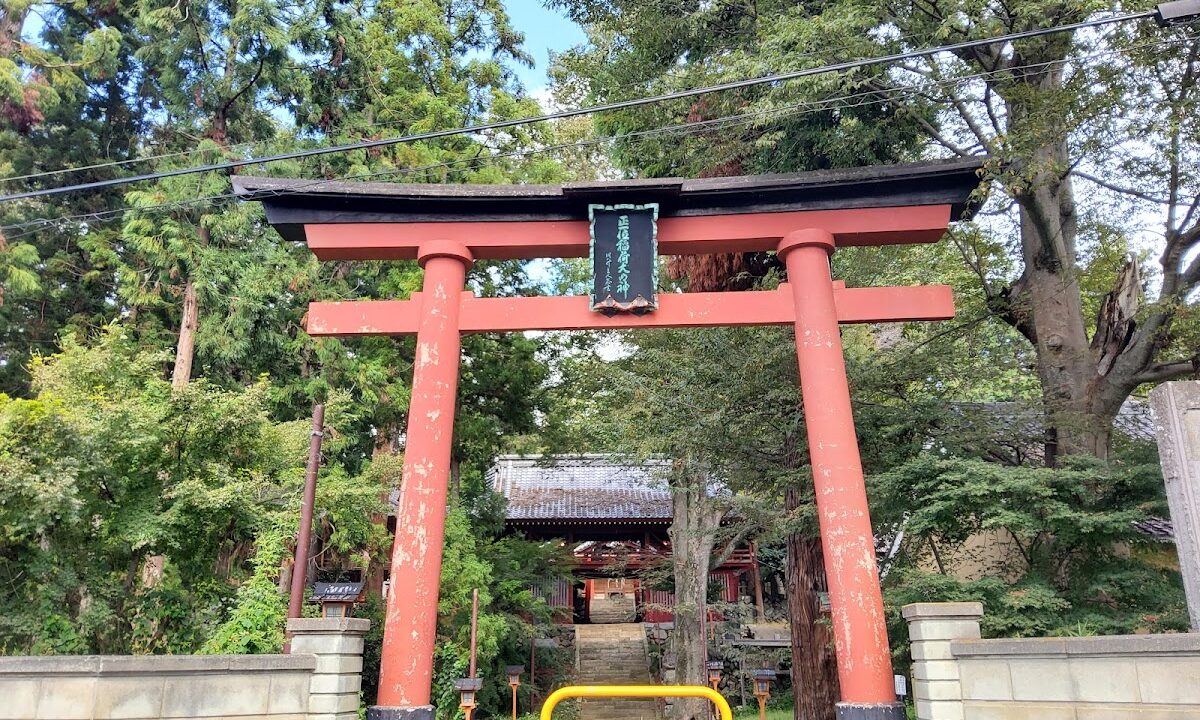
After passing through the torii gate and climbing the stone steps, you reach the shrine grounds, which utilize the elevation of the burial mound. This location allows you to overlook the surrounding rural landscape from the shrine grounds, giving you a real sense that this area has been an important location with excellent views since ancient times.
Red Torii Gates and the Approach
Red torii gates, a symbol of Inari shrines, line the approach, creating a mystical atmosphere. The vermilion color of the torii gates is characteristic of Inari worship and is considered a color symbolizing protection against evil and abundant harvests.
When walking along the approach to the shrine, it’s important to approach the sacred area slowly, appreciating the tranquil atmosphere that harmonizes with the surrounding nature.
Split Worship Hall (Warihaiden)
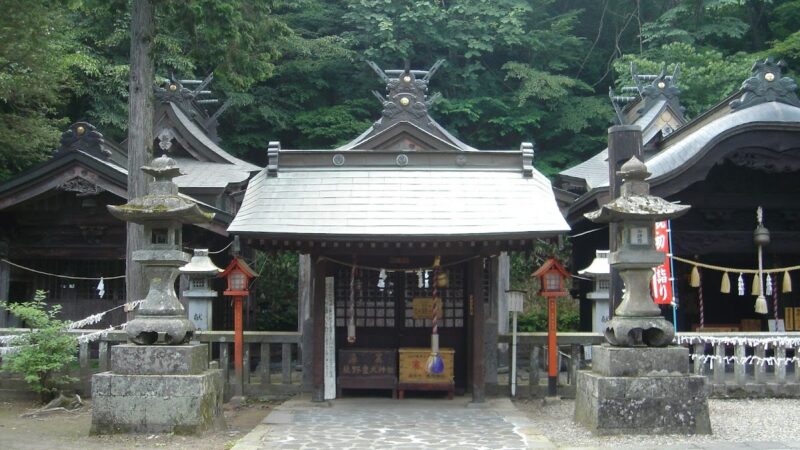
A particularly noteworthy feature of the Sasamori Inari Shrine’s architecture is the split worship hall. A split worship hall is a unique type of worship hall with a central section open as a passageway, allowing worshippers to approach the main sanctuary by passing through the center.
This architectural style is commonly found in the Kanto region, especially in Gunma and Saitama prefectures, and is said to be a remnant of the era of syncretism of Shinto and Buddhism. The split worship hall at Sasamori Inari Shrine is magnificently constructed, with impressive carvings and decorations.
Ceiling Paintings and Decorations
Beautiful ceiling paintings adorn the interior of the shrine. These ceiling paintings are believed to have been donated between the Edo and Meiji periods, depicting scenes of flowers, birds, and mythology.
When visiting, paying attention not only to the exterior of the shrine but also to these detailed decorations allows you to feel the faith and artistry of our ancestors. ### Shrine Precincts and Stone Structures
Several shrine precincts and stone structures are arranged around the main shrine building. The old stone lanterns, guardian lion-dogs, and donated stone monuments are evidence of the many people who have worshipped at this shrine throughout its long history.
In particular, the stone structures from the Edo and Meiji periods bear the names and prayers of the donors, making them valuable historical materials that convey the state of faith at that time.
Spring Grand Festival and Hatsuumasai Festival
Spring Grand Festival (Second Sunday of March)
The most important annual event at Sasamori Inari Shrine is the Spring Grand Festival, held every year on the second Sunday of March. This festival is known for its large-scale open-air market, said to be the largest in northern Kanto, attracting many worshippers and tourists from within and outside the prefecture.
On the day of the festival, hundreds of stalls line the shrine grounds and surrounding areas, selling a variety of goods including plants, farming tools, daily necessities, and food. This open-air market is a traditional event dating back to the Edo period and is a beloved local event that heralds the arrival of spring.
During the Shinto rituals, ancient Kagura (sacred dance) and Miko-mai (shrine maiden dances) are performed, and prayers for a bountiful harvest and peace in the community are offered in a solemn atmosphere. The Kitsune-mai (fox dance) is a particularly unique ritual of Inari shrines, featuring a dance mimicking the fox, the messenger of the Inari god.
Hatsuumasai (First Horse Day Festival)
As an important festival of Inari shrines, a festival is also held on Hatsuumasai in February. Hatsuumasai is considered the day the Inari god descended, and festivals are held at Inari shrines throughout Japan on this day.
The Hatsuumasai at Sasamori Inari Shrine attracts many worshippers praying for business prosperity and family safety, and is particularly known for its strong devotion from local shop owners and businesspeople.
About Goshuin (Shrine Seals)
Issuance of Goshuin
Sasamori Inari Shrine offers Goshuin. Goshuin are given by shrines as proof of worship, and in recent years, the number of worshippers who collect Goshuin as a hobby has increased.
Sasamori Inari Shrine’s Goshuin features the shrine’s name and the date of visit written in ink, and stamped with a red seal. Its simple yet dignified design makes it a cherished memento of the visit.
Manners for Receiving a Goshuin (Shrine/Temple Stamp)
When receiving a Goshuin, it is important to observe the following manners:
- Complete your prayers first: A Goshuin is proof of your visit, so please complete your prayers at the main hall first.
- Prepare your Goshuincho (stamp book): Prepare a dedicated Goshuincho and present it open.
- Prepare the offering: Generally, 300 to 500 yen is appropriate; please prepare the exact amount so that no change is given.
- Use polite language: Please politely request, “May I have a Goshuin?”
- Don’t forget to express gratitude: When you receive it, say “Thank you.”
A Goshuin is not a stamp rally; it is an important way to forge a connection with the shrine. A shrine is not a shop, so it is important to visit with respect, valuing manners and morals.
Hours of Operation at the Shrine Office
Goshuin are only available during the hours when the shrine office is open. Since the temple may be unattended at times, if you want to be sure to receive a Goshuin (temple/shrine stamp), we recommend visiting on festival days such as the annual grand festival or after contacting them in advance.
Etiquette and Points for Visiting a Shrine
Basic Etiquette for Visiting a Shrine
Visiting Sasamori Inari Shrine follows the general etiquette for visiting a shrine:
- Bow at the Torii Gate: Bow before passing through the torii gate to prepare yourself to enter the sacred area.
- Walk along the Edge of the Path: The center of the path is considered the path of the gods, so walk along the edge.
- Purify at the Water Basin: If there is a water basin, purify your hands and mouth.
- Two Bows, Two Claps, and One Bow in Front of the Main Hall: Place your offering, bow twice, clap twice, and bow once with your wish in mind.
- Bow Upon Exiting: Turn around and bow once as you leave the torii gate.
Attire for Visiting a Shrine
There are no specific dress code requirements, but clean clothing that reflects the sacred nature of the place is desirable. If visiting on a special day such as the annual festival, slightly more formal attire is considered more respectful.
Regarding Photography
Photography is generally permitted on the shrine grounds, but please note the following:
- Please abide by any restrictions on photography, such as inside the main hall.
- Please be considerate of other visitors.
- Please refrain from taking photos during religious ceremonies, or obtain permission beforehand.
- When posting on social media, please accurately state the location and name of the shrine, and strive for respectful posting.
Access and Basic Information
Location
Address: 1350 Fukushima, Kanra-machi, Kanra-gun, Gunma Prefecture 370-2212
Access by Train
Nearest Station: Joshu-Fukushima Station (Joshin Electric Railway)
- Approximately 15 minutes on foot from Joshu-Fukushima Station (approx. 1.2 km)
- Approximately 40 minutes by Joshin Electric Railway from Takasaki Station
The Joshin Electric Railway is a local line connecting Takasaki Station and Shimonita Station, running through scenic rural landscapes. Joshu-Fukushima Station is an unmanned station, but the route from the station to the shrine is relatively easy to follow.
Access by Car
- Approximately 15 minutes (approx. 8km) from the Tomioka IC on the Joshinetsu Expressway
- Approximately 15 minutes (approx. 9km) from the Shimonita IC on the Joshinetsu Expressway
Access is possible via a prefectural road from National Route 254 (Shimonita Highway). Entering the shrine name or address into your car navigation system is recommended.
Parking
There is parking space for visitors within or around the shrine grounds. However, temporary parking may be provided during busy periods such as the Spring Grand Festival. During major festivals, consider using public transportation.
Visiting Hours
Entry to the shrine grounds is generally free, but the shrine office has limited operating hours. If you wish to obtain a Goshuin (shrine stamp) or amulet, it is recommended to visit during daytime hours (around 9:00 AM to 4:00 PM).
Nearby Tourist Attractions
Historical Sites in Kanra Town
Kanra Town, where Sasamori Inari Shrine is located, is known as a castle town associated with the Oda family and boasts numerous historical sights:
Rakuzan-en Garden: The garden of the Oda family of the Obata Domain, designated as a National Place of Scenic Beauty. It is a valuable cultural asset that preserves the appearance of a daimyo garden from the early Edo period.
Obata Samurai Residences: A townscape where samurai residences from the Edo period remain, preserving a historical landscape.
Ogawa Weir: An agricultural irrigation canal built during the Edo period, still in use today. It is also known for its beautiful cherry blossom trees.
Tomioka Silk Mill
Located about 20 minutes by car from Sasamori Inari Shrine, the Tomioka Silk Mill is a World Heritage Site and a part of Japan’s modern industrial heritage. The buildings of the Meiji-era silk reeling factory are preserved in almost perfect condition, allowing visitors to learn about the history of Japan’s industrial revolution.
Konnyaku Park
Konnyaku Park, a theme park dedicated to konnyaku (konjac), a specialty product of Gunma Prefecture, is located about 15 minutes by car from Kanra Town. It’s a popular spot where you can enjoy factory tours and a free konnyaku buffet.
The Four Seasons of Sasamori Inari Shrine
Spring (March-May)
Spring is the busiest season at Sasamori Inari Shrine. During the Spring Grand Festival in March, the shrine grounds are filled with stalls and bustle with many worshippers. Also, when the cherry blossoms bloom in the shrine grounds and surrounding area, the contrast between the shrine on the burial mound and the cherry blossoms creates a beautiful landscape.
Summer (June-August)
Summer is beautiful with fresh greenery, and the shrine grounds are enveloped in deep green. Because it’s located on a hill on top of a burial mound, it’s well-ventilated and relatively cool for worshippers. It’s a suitable season for a leisurely visit to the shrine, where the sound of cicadas fills the quiet grounds.
Autumn (September-November)
Autumn is a beautiful season for viewing autumn foliage. The trees in the shrine grounds change color, and the contrast between the red torii gate and the autumn leaves is magnificent. The view of the rural landscape from atop the burial mound in the crisp autumn air is exceptionally beautiful.
Winter (December-February)
In winter, there are fewer visitors, allowing for a peaceful and tranquil visit to the shrine grounds. The Hatsuumasai festival in February is an important winter event, where you can feel a warm atmosphere of faith even in the cold. The shrine grounds on a snowy day are breathtakingly beautiful.
Summary: A Recommendation for Visiting Sasamori Inari Shrine
Sasamori Inari Shrine is a shrine with many attractions, including its unique location atop a burial mound, its history connected to the Oda family, and its grand festival, considered the largest in northern Kanto.
This shrine is known not only for its divine blessings of abundant harvests and business prosperity, but also for its miraculous powers in warding off skin diseases and healing serious illnesses, attracting worshippers with a variety of wishes. Located in a quiet rural area, it is a shrine that embodies both tranquility and dynamism, becoming bustling with activity during its spring festival.
This shrine can be enjoyed from various perspectives, whether you want to experience Gunma Prefecture’s history and culture, are interested in Inari worship, or are curious about the relationship between ancient burial mounds and shrines. Visiting it in conjunction with nearby tourist spots such as Tomioka Silk Mill and Rakuzan-en Garden will make for a more fulfilling trip to Gunma Prefecture.
When visiting, please be mindful of manners and morals, and show respect for this historic shrine. We hope your visit to Sasamori Inari Shrine will be a memorable experience.