Complete Guide to Sakamoto Hachimangu Shrine (Sakamoto, Matsuida-cho, Annaka City, Gunma Prefecture)
Sakamoto Hachimangu Shrine, located in Sakamoto, Matsuida-cho, Annaka City, Gunma Prefecture, is a historic shrine said to have been established by Yamato Takeru during the reign of Emperor Keiko. It has long been cherished by the local people as the tutelary shrine of Sakamoto-juku, a post town that flourished on the Nakasendo highway. This article provides a detailed explanation of Sakamoto Hachimangu Shrine’s history, enshrined deities, highlights, and access methods.
Overview of Sakamoto Hachimangu Shrine
Sakamoto Hachimangu Shrine is located in Sakamoto, Matsuida-cho, Annaka City, Gunma Prefecture, at the foot of Usui Pass, along the old Nakasendo highway. Its postal code is 379-0307, and it is situated in an area that flourished as the center of Sakamoto-juku, one of the 69 post towns on the Nakasendo highway during the Edo period.
Even today, parts of the historical townscape of Sakamoto-juku remain, and Sakamoto Hachimangu Shrine is a central part of this cultural landscape, attracting the faith of local residents.
Location and Basic Information
- Location: Sakamoto, Matsuida-machi, Annaka City, Gunma Prefecture
- Former Place Name: Sakamoto, Matsuida-machi, Usui-gun
- Founding: Said to be in the 40th year of Emperor Keiko’s reign (110 AD)
- Deities Enshrined: Homudawake-no-Mikoto (Emperor Ojin) and other Hachiman deities
- Shrine Rank: Former Village Shrine
History of Sakamoto Hachimangu Shrine
Ancient History
The founding of Sakamoto Hachimangu Shrine is said to date back to the 40th year of Emperor Keiko’s reign (110 AD). It is believed to have begun when Yamato Takeru visited this area during his eastern expedition and enshrined Hachiman deities.
Legend says that Yamato Takeru stopped in Sakamoto while crossing the Usui Pass and prayed for the success of his pacification of eastern Japan. This story is considered the origin of Sakamoto Hachimangu Shrine. It is believed that the shrine already functioned as a center of local faith during the Heian period.
Development from the Medieval to the Early Modern Period
Even in the medieval period, Sakamoto Hachimangu Shrine was revered as the local tutelary deity. During the Sengoku period, various forces, such as the Takeda and Hojo clans, fought over the area around the Usui Pass, but Sakamoto Hachimangu Shrine survived as a spiritual pillar for the local residents.
In the Edo period, with the development of the Nakasendo road by the Tokugawa shogunate, Sakamoto-juku was officially established as a post town. Sakamoto-juku occupied an important position as a base for crossing the Usui Pass, and many travelers and daimyo processions on their sankin-kotai (alternate attendance) journeys passed through. Sakamoto Hachimangu Shrine, as the guardian deity of the post town, was bustling with worshippers praying for safe travels.
Changes Since the Modern Era
Following the Meiji-era decree separating Shinto and Buddhism, Sakamoto Hachimangu Shrine also took on the form of a Shinto shrine. Under the modern shrine ranking system, it was designated a village shrine, and its importance in the local community was officially recognized.
From the Taisho era to the early Showa era, the development of railways led to a decline in its function as a post town on the Nakasendo road, but Sakamoto Hachimangu Shrine continued to maintain its faith as the local tutelary deity. Even today, annual festivals and various Shinto rituals are held throughout the year, playing a central role in the local community.
Deities and Benefits
Main Deity
The main deity of Sakamoto Hachimangu Shrine is Hon-da-wake-no-mikoto, also known as Emperor Ojin. He is a deity revered nationwide as Hachiman-shin, and is known as the god of military fortune and national protection.
Hachiman worship was particularly devout in samurai society, and he is also famous as the tutelary deity of the Minamoto clan. At Sakamoto Hachimangu Shrine, it is believed to bring benefits such as military fortune, success in competitions, and business prosperity.
Divine Blessings
The main blessings expected at Sakamoto Hachimangu Shrine are as follows:
- Long-lasting military fortune and good luck in competitions: The inherent divine virtue of Hachiman-sama
- Traffic safety: The shrine’s role as a guardian deity of the old highway
- Safe travel: The tradition of praying for safety when crossing the Usui Pass
- Family safety: The shrine’s role as a local guardian deity
- Protection from evil and good fortune: The daily faith of local residents
- Business prosperity: The shrine’s role as a guardian deity of a post town
Highlights of the Shrine Grounds
Shrine Architecture
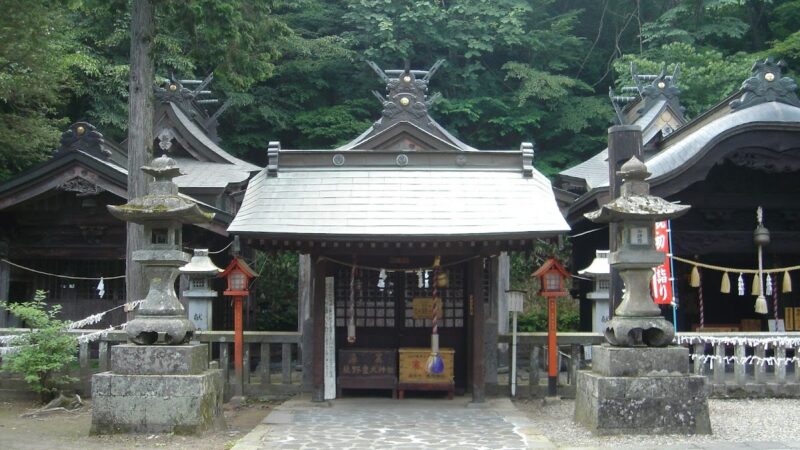
The shrine buildings of Sakamoto Hachimangu Shrine maintain a traditional style of shrine architecture. The main hall is thought to be in the Nagare-zukuri or Shinmei-zukuri style, adapted to the local climate and environment. The worship hall presents a dignified appearance to welcome worshippers.
Ancient trees grow around the shrine, creating a tranquil atmosphere. The large trees, such as cedars and zelkova trees, within the shrine grounds are particularly striking to visitors, as they tell the story of the shrine’s long history.
Stone Structures and Cultural Heritage
Within the shrine grounds remain stone structures, including stone lanterns and guardian lion-dogs, donated from the Edo period to the Meiji period. These are valuable cultural heritage items that demonstrate the prosperity of Sakamoto-juku and the deep faith of the local residents.
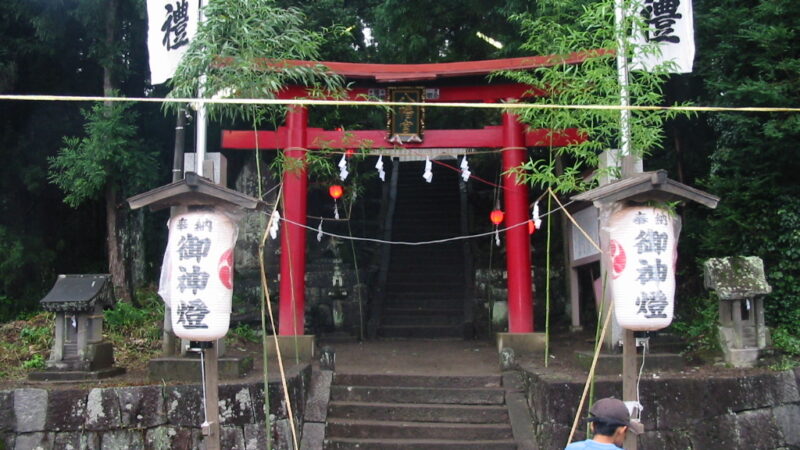
The purification fountain and torii gate also have a historical feel, allowing visitors to experience the continuity of faith across generations.
Integrated Landscape with Sakamoto-juku
Sakamoto Hachimangu Shrine forms a cultural landscape integrated with the historical townscape of Sakamoto-juku. The townscape along the highway, characteristic of a post town, harmonizes with the shrine’s forest, conveying the atmosphere of the Edo period to the present day.
Remains of the post town, such as the site of the honjin (main inn) and other lodgings, also remain in the surrounding area. Visiting these sites together with Sakamoto Hachimangu Shrine allows for a deeper understanding of the region’s history.
The Relationship Between Sakamoto-juku and Hachiman Shrine
As the Guardian Deity of a Post Town
During the Edo period, Sakamoto-juku was the 17th post town on the Nakasendo highway, a crucial hub for crossing the Usui Pass. Sakamoto Hachiman Shrine served as the guardian deity of the post town, a place where travelers prayed for safety and the town’s prosperity.
It is said that daimyo (feudal lords), merchants, and ordinary travelers on their sankin-kotai (alternate attendance) journeys visited Sakamoto Hachiman Shrine before and after crossing the notoriously difficult Usui Pass, praying for a safe journey.
The Center of the Local Community
Sakamoto Hachiman Shrine was more than just a place of worship; it also functioned as a social gathering place and a hub for information exchange among local residents. Annual festivals and ceremonies held a significant position as part of the post town’s annual events, strengthening community bonds.
Even today, traditional local events and festivals are preserved, and Sakamoto Hachiman Shrine continues to function as the core of the local identity.
Annual Events and Festivals
Annual Festival
Sakamoto Hachimangu Shrine holds its annual festival every year. The festival includes traditional Shinto rituals such as a portable shrine procession and the dedication of Kagura (sacred dance), with local residents participating to preserve the shrine’s history and traditions.
Other Annual Events
- New Year’s Day Festival: Praying for happiness in the new year and peace in the community
- Setsubun Festival: Praying for protection from evil and good fortune
- Summer Purification Ceremony: Cleansing away the impurities accumulated over the past six months
- Autumn Grand Festival: Expressing gratitude for the harvest and praying for a bountiful harvest in the following year
These events are supported by the participation of local residents, ensuring the continuation of faith across generations.
Access and Transportation Information
Access by Train
The nearest station to Sakamoto Hachimangu Shrine is Yokokawa Station on the JR Shin’etsu Main Line (now a defunct section). Access from Yokokawa Station is possible via the following methods:
- Taxi: Approximately 10 minutes from Yokokawa Station
- Bus: Use JR Bus Kanto’s route buses (prior confirmation is necessary as the number of buses is limited)
- Walking: Approximately 3-4 km, about 40-50 minutes on foot (a popular hiking course along the old Nakasendo road)
Access by Car
- Joshinetsu Expressway: Approximately 15 minutes from Matsuida Myogi IC
- National Route 18: Via Usui Bypass to Sakamoto area
- Parking: Some parking spaces are available around the shrine (Sakamoto-juku parking lot is also available)
Combining with Nearby Sightseeing
When visiting Sakamoto Hachimangu Shrine, it is recommended to visit the following nearby tourist spots in combination:
- Usui Pass Railway Culture Village: A railway museum near Yokokawa Station
- Meganebashi Bridge (Usui Third Bridge): Brick arch bridge designated as a National Important Cultural Property
- Usui Checkpoint Ruins: Remains of an important checkpoint from the Edo period
- Former Usui Pass Observation Deck: An observation spot where you can enjoy the spectacular view from Usui Pass
- Sakamoto Post Townscape: Historical buildings of the post town, including the site of the main inn
Regional Information for Sakamoto, Matsuida Town
Geography and Environment
Sakamoto, Matsuida Town, is located at the foot of Usui Pass, near the western edge of Gunma Prefecture and close to the border with Nagano Prefecture. The elevation is approximately 500-600 meters, exhibiting a climate typical of mountainous regions. Snowfall occurs in winter, and the area has distinct seasonal changes.
The Usui River flows through the area, and it is surrounded by a rich natural environment of mountains and forests. It has played an important role as a transportation hub connecting east and west since ancient times.
Historical Background
The place name Sakamoto appears in documents from the Heian period, indicating that people have lived there since ancient times. Even before the Nakasendo Road was developed, it was used as a transportation route since the time of the Tosan-do Road.
During the Edo period, Sakamoto-juku was officially established as a post town, and it was a bustling place with a main inn, secondary inns, and other lodgings lining the streets. After the Meiji Restoration, its function as a post town declined due to the development of railways, but efforts are being made to preserve the historical townscape.
Current Sakamoto Area
Present-day Sakamoto in Matsuida Town is a quiet mountain village that is part of Annaka City. Although the population is declining, efforts are being made to promote tourism by utilizing the historical townscape and to use it as a base for walking the Nakasendo Road.
Local residents are also actively engaged in preserving traditional culture, continuing festivals and events centered around Sakamoto Hachimangu Shrine, and efforts to convey the history of the post town.
Points and Manners for Visiting a Shrine
Etiquette for Visiting a Shrine
When visiting Sakamoto Hachimangu Shrine, please observe the following basic etiquette:
- Bow before passing through the torii gate: This shows respect for entering the sacred area.
- Purify yourself at the water basin: Purify your left hand, then your right hand, then your mouth.
- Avoid walking in the center of the path: The center is considered the path of the gods.
- Worship at the main hall: The basic procedure is two bows, two claps, and one bow.
Photography
Photography is generally permitted within the shrine grounds, but it is considered good manners to refrain from taking pictures inside the shrine buildings or during religious ceremonies. Please also be considerate of other visitors.
Best Time to Visit
Sakamoto Hachimangu Shrine can be visited throughout the year, but the best times are:
- Spring (April-May): Beautiful fresh greenery and mild weather
- Autumn (October-November): Peak autumn foliage, ideal for walking along the Nakasendo Road
- During the Annual Festival: Experience traditional local events
In winter, snowfall and icy roads are possible, so adequate equipment and caution are necessary.
Sakamoto Hachimangu Shrine and Local Culture
Connection to Nakasendo Culture
Sakamoto Hachimangu Shrine is deeply connected to Nakasendo culture. During the Edo period, Sakamoto-juku was an important resting place for travelers crossing the Usui Pass, and Sakamoto Hachimangu Shrine was a place to pray for safe travels.
Even today, history enthusiasts and hikers walking the Nakasendo Road visit Sakamoto Hachimangu Shrine, reflecting on the travelers of yesteryear.
Local Traditional Events
In the Sakamoto district, traditional events centered around Sakamoto Hachimangu Shrine are being passed down through generations. Cultural traditions dating back to the Edo period, such as the portable shrine procession and lion dance at the annual festival, continue to be preserved today.
These events are important elements in shaping the identity of the local residents and also serve as a place for intergenerational exchange.
Nearby Attractions
Historical Buildings of Sakamoto-juku
Around Sakamoto Hachimangu Shrine, there are several historical buildings from the Sakamoto-juku era:
- Honjin Site: The site of a prestigious facility where daimyo (feudal lords) stayed
- Hatago Architecture: A building that retains some of its Edo period appearance
- Toiyaba Site: The site of the post town’s operational base
- Kousatsuba Site: The place where the shogunate’s laws were posted
Usui Pass Related Spots
- Usui Pass: An important mountain pass connecting east and west since ancient times
- Usui Checkpoint Site: An important checkpoint during the Edo period
- Kumano Shrine: An ancient shrine near the summit of Usui Pass
- Old Usui Pass Scenic Walking Trail: Developed as a hiking course
Railway Heritage
- Meganebashi Bridge (Usui Third Bridge): A brick arch bridge from the Meiji era
- Apt Trail: A walking trail utilizing the abandoned railway line
- Usui Pass Railway Culture Village: A facility where you can learn about the history of railways
The Charm of Sakamoto Hachimangu Shrine
The greatest charm of Sakamoto Hachimangu Shrine lies in its status as an ancient shrine with a history of approximately 1900 years, and its historical value in conveying the culture of Sakamoto-juku on the Nakasendo road.
Beginning with the legend of Yamato Takeru, functioning as the guardian deity of the post town during the Edo period, and still attracting worshippers as the local tutelary deity, Sakamoto Hachimangu Shrine embodies the continuity of Japanese religious culture.
The shrine buildings nestled in a quiet mountain village, the grounds surrounded by ancient trees, and the lingering traces of the post town in the surrounding area give visitors a sense of historical romance and peace of mind.
For travelers walking the Nakasendo road, history enthusiasts, and those who enjoy visiting shrines and temples, Sakamoto Hachimangu Shrine is a must-see spot. Why not experience the breath of ancient faith in Sakamoto, a place where the rich nature of Usui Pass and its history and culture blend together?
Summary
Sakamoto Hachimangu Shrine (Sakamoto, Matsuida-machi, Annaka City, Gunma Prefecture) is a historic shrine said to have been established by Yamato Takeru in the 40th year of Emperor Keiko’s reign (110 AD). As the guardian deity of Sakamoto-juku, a post town on the Nakasendo road, it attracted the faith of many travelers during the Edo period.
Even today, it is cherished as the local tutelary deity, and traditional events, including the annual festival, are passed down. Due to its location at the foot of Usui Pass, it is believed to offer blessings for safe travel and safe journeys, attracting travelers walking the Nakasendo and tourists.
The surrounding area boasts numerous attractions, including the historic townscape of Sakamoto-juku, the natural beauty of Usui Pass, and railway heritage sites, making it an ideal base for a trip enjoying history and nature. When you visit western Gunma Prefecture, be sure to pay your respects at Sakamoto Hachimangu Shrine and experience its long history and culture.