Usui Shrine (Gunma Prefecture) Complete Guide | Thorough Explanation from History and Origin to Visiting Information
Usui Shrine, located in Goryo, Matsuida-machi, Annaka City, Gunma Prefecture, is a historic shrine that has long been a center of local faith as the lower shrine of Kumano Shrine on Usui Pass. It is also known as a place associated with Minamoto no Yoritomo and boasts a history of flourishing as the Ichinomiya (first-ranked shrine) of Usui-go. This article provides a thorough explanation of Usui Shrine’s detailed history, origin, visiting information, and surrounding tourist spots.
Basic Information on Usui Shrine
Usui Shrine is located in the Goryo district of Matsuida-machi, Annaka City, Gunma Prefecture, near Goryo-juku, a post town that flourished on the Nakasendo road. Due to its location near the Usui Pass, a key transportation hub, it has long attracted the faith of travelers and local residents.
Location: 2131 Goryo, Matsuida-machi, Annaka City, Gunma Prefecture
Main Deity: Izanami-no-Mikoto
Former Shrine Rank: Gosha (Village Shrine)
Annual Festival Date: Mid-October every year
Usui Shrine has functioned as a village shrine, having been established by inviting a divided spirit from Kumano Shrine (Kumano Kōtaijinja), which is located at the summit of Usui Pass. While Kumano Shrine on the pass is located at an altitude of 1,200 meters on the prefectural border, Usui Shrine is located in an easily accessible place and serves as a place of daily worship for the local people.
History and Origins of Usui Shrine
Origin of Founding
The founding date of Usui Shrine is unknown, but it is said to have begun with the invitation of a divided spirit from Kumano Shrine, which is located at Usui Pass. The Kumano Shrine at Usui Pass is an ancient shrine said to have been founded when Yamato Takeru, on his return from pacifying the eastern provinces, was guided by a Yatagarasu (three-legged crow) to safely cross the pass after getting lost in a dense fog. It is believed that the Usui Shrine was built out of a desire for the villagers to also revere this divine power.
Minamoto no Yoritomo and Usui Shrine
It is said that during the Kenkyu era (1190-1199), Minamoto no Yoritomo prayed at this shrine while conducting a hunting expedition on Mount Asama. Furthermore, Yoritomo established his palace within the shrine grounds, leading to the area being called “Goshodaira” (御所平). This place name remains today, indicating that Usui Shrine was an important place of worship from the Kamakura period onward.
The fact that a warrior who founded the Kamakura Shogunate prayed here demonstrates the high status of Usui Shrine. At that time, Usui Pass was an important transportation route connecting eastern Japan and Kyoto, and it can be seen that the shrine was highly valued as a guardian of this strategic point.
From the Nanboku-cho Period to the Edo Period
During the Nanboku-cho period, Usui Shrine became the Ichinomiya (first-ranked shrine) of Usui-go (Usui region) and attracted widespread devotion. As the guardian deity of Usui-go, it became the protector of the entire region, and many worshippers visited.
During the Keian era (1648-1652), its position as the lower shrine of Kumano Shrine at Usui Pass was clarified, and the shrine building was renovated. It was during this period that the shrine was officially renamed “Usui Shrine,” and the current name became established. During the Edo period, Goryo-juku, a post town on the Nakasendo road, flourished, and Usui Shrine also attracted the faith of travelers as the guardian deity of the post town.
Relationship with Kumano Shrine at Usui Pass
Relationship between the Main Shrine and the Village Shrine
Understanding Usui Shrine requires understanding its relationship with Kumano Shrine (Kumano Kōtaijinja) at Usui Pass. Usui Shrine is a rare shrine situated on the border between Gunma and Nagano prefectures, with the prefectural border running through the center of the shrine grounds. Therefore, the Gunma side is called “Kumano Shrine,” and the Nagano side is called “Kumano Kōtaijinja,” resulting in a unique situation nationwide where two religious corporations exist within a single shrine.
Usui Shrine is located at the summit of a pass at an altitude of 1,200 meters, and deep snow in winter makes visits difficult. Therefore, Usui Shrine has functioned as a village shrine, allowing year-round worship. This relationship between the main shrine and the village shrine is a common form in mountain worship, and Usui Shrine has played a crucial role in establishing Kumano faith in the region.
Connection to the Kumano Sanzan Shrines
The Kumano Shrine at Usui Pass is said to be one of the “Three Great Kumano Shrines of Japan,” alongside the Kumano Sanzan Shrines in Kishu and the Kumano Taisha Shrine in Nanyo City, Yamagata Prefecture. Kumano faith spread throughout Japan from the Heian period onward through pilgrimages by the imperial family and nobility to Kumano, and Kumano shrines were established in various locations. The Kumano Shrine at Usui Pass was founded within this tradition, and Usui Shrine became a center for spreading this faith in the region.
Highlights of the Shrine Grounds
Shrine Architecture
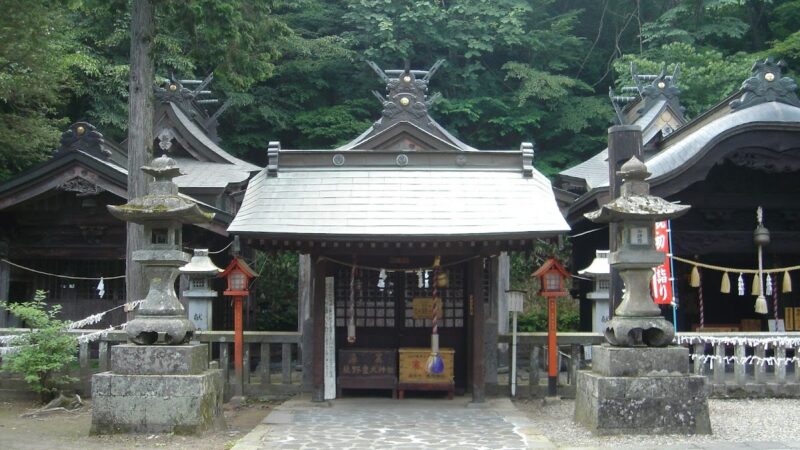
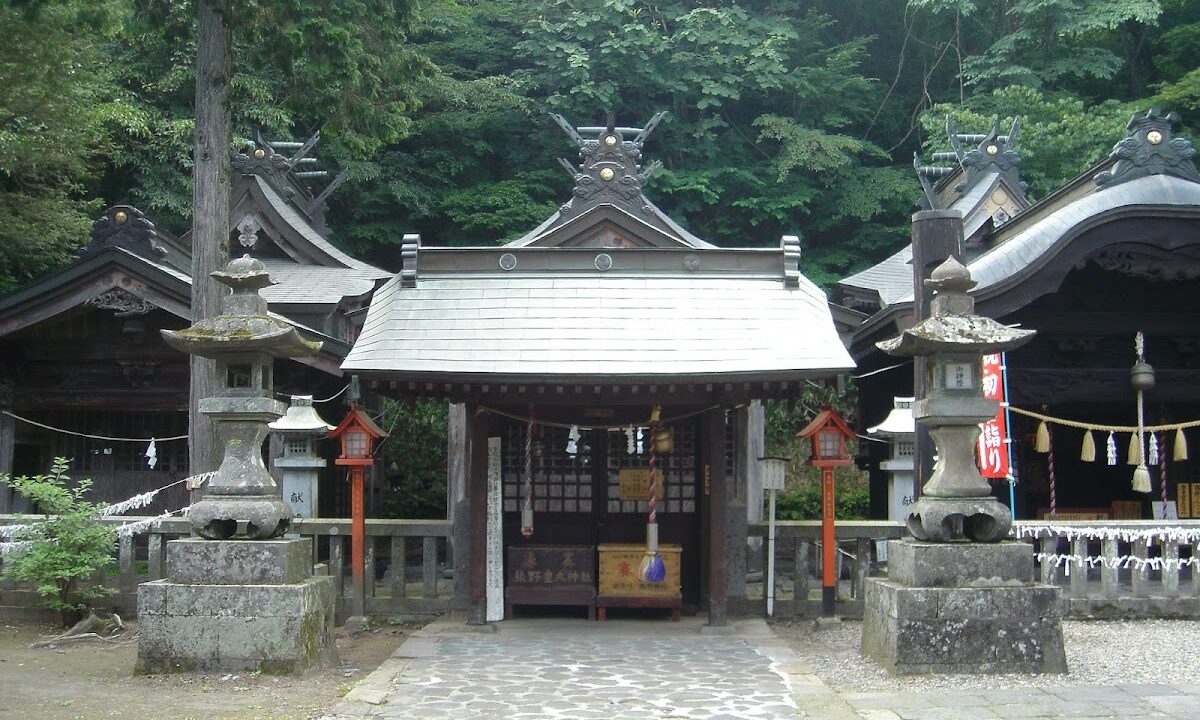
The shrine buildings of Usui Shrine are based on the style from the Keian era (1648-1650), and have undergone subsequent restorations to reach their current form. The worship hall is a traditional wooden shrine building, possessing the dignity befitting a center of local faith. The shrine grounds are enveloped in a tranquil atmosphere, allowing visitors to offer their prayers in peace.
Origin of the Place Name Goshodaira
The area surrounding the shrine grounds is called “Goshodaira,” a name that still preserves the legend that Minamoto no Yoritomo established his palace here. This place name is not merely a legend; historical evidence, including the discovery of Kamakura period remains and artifacts in the surrounding area, provides historical backing. One of the charms of visiting Usui Shrine is the opportunity to reflect on the footsteps of a warrior from over 800 years ago while walking through the grounds.
How to Access Usui Shrine
Access by Car
Usui Shrine is most easily accessible by car. It is approximately 15 minutes from the Matsuida-Myogi Interchange on the Joshinetsu Expressway, or approximately 20 minutes from the Usui-Karuizawa Interchange. It can be accessed via a prefectural road from National Route 18. There is parking space for visitors on the shrine grounds, but it can get crowded during events such as festivals.
Access by Public Transportation
The nearest station is Matsuida Station on the JR Shin’etsu Main Line. The shrine is about a 40-minute walk from the station, but it can be reached in about 10 minutes by taxi. Also, there may be a community bus service in Annaka City, so it’s recommended to check in advance.
For those enjoying a walk along the Nakasendo route, accessing the shrine on foot from Goryo-shuku is also a charming option. The route to Usui Shrine, while strolling through the streets that retain the atmosphere of an Edo-period post town, is a course that evokes a sense of historical romance.
Points and Etiquette for Worship
Basic Etiquette for Worship
Worship at Usui Shrine follows the general etiquette for visiting a shrine. Bow before passing through the torii gate, and walk avoiding the center of the path. Cleanse your hands and mouth at the water basin before proceeding to the main hall, and pray using the two bows, two claps, and one bow ritual.
Recommended Time to Visit
Usui Shrine is beautiful in every season, but the most recommended times are May with its fresh greenery and October with its autumn leaves. In mid-October, the annual festival is held, with local people gathering to perform Shinto rituals. During the festival, the shrine grounds become even more lively, and visitors can witness traditional festival ceremonies.
In winter, there may be snowfall, but a quiet visit amidst the snowy scenery is particularly special. However, caution is necessary due to icy roads.
Nearby Tourist Attractions
Kumano Shrine at Usui Pass (Kumano Kōtaijinja Shrine)
If you visit Usui Shrine, be sure to extend your trip to the main shrine, Kumano Shrine at Usui Pass. This is a rare shrine situated on the prefectural border, with a marker indicating the border in the center of the shrine building. The experience of stepping across Gunma and Nagano prefectures is a unique and precious one.
Kumano Shrine at Usui Pass preserves numerous valuable cultural assets, including the oldest bell in Gunma Prefecture from the Kamakura period (a prefectural important cultural property), a stone windmill, a multi-tiered pagoda from the Nanboku-chō period, and a mathematical tablet considered one of the most difficult to solve. It is also known as the birthplace of marathon running in Japan and served as the finish line for the Ansei Toashi (Ansei Long-Distance Marathon).
Usui Pass Observation Deck
Located about a 5-minute walk from Kumano Shrine at Usui Pass, this observation deck offers breathtaking views of Mount Asama, Mount Myogi, and, on clear days, even Mount Fuji. The panoramic view from an altitude of 1,200 meters is spectacular, and the scenery changes with each season.
Old Nakasendo Road and Usui Checkpoint Ruins
The area around Usui Shrine retains strong traces of the old Nakasendo Road. Goryo-shuku features buildings that preserve the atmosphere of an Edo-period post town, making it ideal for historical walks. The Usui Checkpoint Ruins were one of the important checkpoints of the Edo period, and you can learn about its history at the reconstructed buildings and museum.
Meganebashi Bridge (Usui Third Bridge)
Located about 15 minutes by car from Usui Shrine, the Meganebashi Bridge is a brick arch bridge built during the Meiji era and designated as a National Important Cultural Property. This magnificent bridge, 91 meters long and 31 meters high, is known as one of the largest brick arch bridges in Japan. A walking path is maintained around the bridge, allowing visitors to enjoy both the natural beauty of Usui Pass and its modern heritage.
Mount Myogi
Located southwest of Usui Shrine, Mount Myogi is a scenic spot considered one of Japan’s three great wonders. Its unique landscape of strangely shaped rocks and boulders is breathtaking, and it’s a great place for hiking and climbing. Visiting Myogi Shrine in conjunction with your climb will make for a fulfilling day.
Local Gourmet Information
Touge no Chikara Mochi (Mountain Pass Power Rice Cake)
Served at a teahouse near Kumano Shrine on Usui Pass, “Touge no Chikara Mochi” has long been a popular specialty of Usui Pass. This simple yet exquisite dish features freshly made, soft mochi rice cakes topped with a sweet and savory sauce. Enjoying this mochi while gazing at the magnificent view from the mountain pass is a truly special experience.
Goryo Soba Noodles
Around Goryo-shuku, there are restaurants serving handmade soba noodles made with locally produced buckwheat flour. The rich flavor of the buckwheat, grown in the clear streams, is perfect for a meal after visiting the shrine.
Matsuida Local Products
Matsuida Town is a region rich in mountain produce, including konjac and wild vegetables. You can also purchase fresh local agricultural products and processed goods at roadside stations and other locations.
Usui Shrine’s Annual Events
Annual Festival (Mid-October)
The most important event at Usui Shrine is the annual festival. Held annually in mid-October, it brings together local people for religious ceremonies. This traditional festival prays for a bountiful harvest and the safety of the community, and sometimes includes the performance of Kagura (sacred dance).
First Shrine Visit of the Year
Many worshippers visit Usui Shrine for their first shrine visit of the year. For the local people, Usui Shrine is a familiar place of worship, an important place to pray for safety and prosperity in the new year.
Usui Shrine and Local Faith
Usui Shrine is not merely a tourist spot; it is a place of worship deeply rooted in the lives of the local residents. Its history as the Ichinomiya (first shrine) of Usui-go, dating back to the Nanboku-cho period, is an integral part of the region’s identity.
Local people visit Usui Shrine at important life events, praying for safe childbirth, Shichi-Go-San (a traditional rite of passage for children), and protection from evil. Furthermore, the shrine plays a central role in local festivals and events, strengthening community bonds.
The Charm of Visiting Usui Shrine
The charm of Usui Shrine lies in its deep history and tranquil atmosphere. As a place associated with Minamoto no Yoritomo and as the lower shrine of the Kumano Shrine at Usui Pass, you can feel the weight of history, having attracted the faith of people for over 800 years.
Its unpretentious atmosphere, untouched by commercialization, is also one of its charms. While there are no flashy decorations or bustling crowds, this allows you to experience the true tranquility and sacredness of a shrine. Escape the hustle and bustle of everyday life and find peace of mind in your worship, Usui Shrine offers solace to visitors.
History of Usui Pass and the Nakasendo Road
When visiting Usui Shrine, knowing the historical background of Usui Pass and the Nakasendo Road will deepen your understanding. Usui Pass has been an important transportation route connecting eastern Japan and Kyoto since ancient times, and it is a historical pass that also appears in the legend of Yamato Takeru’s eastern expedition.
During the Edo period, it was known as a difficult section of the Nakasendo Road, and many travelers crossed this pass. The towns of Goryo and Sakamoto, which flourished as post towns, still retain traces of their past. Usui Shrine was a place where travelers prayed for safe journeys.
In the Meiji era, a railway was laid across Usui Pass, employing the Abt rack railway system, a technique known for overcoming steep gradients. Railway heritage sites such as the Meganebashi Bridge convey the pinnacle of technology from that era.
Precautions When Visiting Usui Shrine
When visiting Usui Shrine, there are several points to keep in mind. First, as it is a religious facility, please dress and behave respectfully. Please remain quiet on the shrine grounds and be considerate of other visitors.
Photography is generally permitted, but it may be best to refrain from taking pictures inside the main hall or during religious ceremonies. If you have any questions, it is recommended to check with the shrine office.
In winter, there is a possibility of snow and icy roads, so appropriate equipment and caution are necessary. Also, even in summer, temperatures can be low due to the mountainous location, so it is a good idea to bring a jacket. ## Summary
Usui Shrine is a historic shrine located in Annaka City, Gunma Prefecture. It boasts a history of over 800 years, as a village shrine that enshrined a divided spirit from Kumano Shrine at Usui Pass, and as a place associated with Minamoto no Yoritomo. During the Nanboku-cho period, it became the Ichinomiya (first-ranked shrine) of Usui-go and flourished as a center of local faith.
Located at the strategically important Usui Pass, near Goryo-shuku, a post town on the Nakasendo road, Usui Shrine was also a place where travelers prayed for safety. Even today, it attracts the faith of local residents and is a precious shrine where visitors can worship in a tranquil atmosphere.
The surrounding area is dotted with attractive tourist spots such as Kumano Shrine at Usui Pass, Meganebashi Bridge, and Mount Myogi, making it an area where you can enjoy history and nature. Start your journey by visiting Usui Shrine and deeply experience the history, culture, and nature of Usui Pass.