Azuma Shrine (Nakanojo-machi, Agatsuma-gun, Gunma Prefecture) Complete Guide | History, Goshuin (Shrine Seal), and Access Information
Azuma Shrine, located in Yokoo, Nakanojo-machi, Agatsuma-gun, Gunma Prefecture, is a venerable shrine with a history of approximately 1300 years, also known as “Warinomiya.” It is deeply revered by the local people as the “guardian shrine of Agatsuma” and is known for its divine blessings of healing from illness, matchmaking, and family safety. This article provides detailed information useful for visiting Azuma Shrine, including its history, enshrined deities, goshuin (shrine seal), access methods, and highlights.
Azuma Shrine, also known as “Warinomiya,” is a venerable shrine with a history of approximately 1300 years. ## Basic Information about Agatsuma Shrine
Location
Address: 1354 Yokoo, Nakanojo-machi, Agatsuma-gun, Gunma Prefecture 377-0415
Phone Number: 0279-75-1498
Located on the banks of the Nakuta River, the shrine sits amidst a tranquil atmosphere surrounded by cedar trees. The grounds are rich in nature, and visitors appreciate the changing seasons.
Former Shrine Rank and Official Name
- Official Name: Warinomiya Agatsuma Shrine
- Former Shrine Rank: Gosha (Village Shrine)
- Alternative Name: Warinomiya
As a central shrine within Agatsuma-gun, it has long been a center of local faith.
About the Deity
Main Deity
Ōnamuchi-no-Mikoto
Ōnamuchi-no-Mikoto is another name for Ōkuninushi-no-Mikoto and is a god of nation-building, also known as the main deity of Izumo Taisha Shrine. He is believed to possess the following divine virtues:
- Healing from Illness: As seen in the myth of the White Rabbit of Inaba, this deity is associated with medicine and healing.
- Matchmaking: Having forged connections with many gods, this deity is also associated with finding good partners.
- Family Safety: This deity developed the land and stabilized people’s lives.
- Business Prosperity: This deity brings about industrial development.
Enshrined Deities
- Homusubi-no-Mikoto: Known as the god of fire, this deity protects against fires and is the guardian deity of blacksmiths.
- Susanoo-no-Mikoto: Revered as the god of protection against misfortune and disaster.
By enshrining these deities, one can receive a variety of divine blessings.
History and Origins of Azuma Shrine
Origin of Founding
The founding date of Azuma Shrine is unknown, but according to tradition, it is believed to have originated in ancient times (from the Yamato period to around the Taika Reforms, approximately 1300 years ago) when it was established.
Initially, it was called “Warimiya” and is said to have been located near the summit of Mt. Mitarai (present-day Ise-cho). Later, over time, it was moved to its current location in Yokoo.
The Legend of Warimiya and Komochi-gozen
Azuma Shrine has a deep connection with Komochi Shrine, located at the southern foot of Mt. Komochi in Shibukawa City.
According to the “Komochiyama no Koto” section of the Shinto Collection, Komochi Gozen, the daughter of Ano Gon-no-kami Yasumasa, the local lord of Anotsu in Ise Province, married Kawakajiro Wari and lived happily together.
This historical story is widely known in Agatsuma County as the “Warimiya Engi” (Origin of Wari Shrine) and is the origin of the shrine’s reputation for matchmaking. Komochi Gozen is enshrined at Komochi Shrine, and both shrines are worshipped as a married couple’s shrine.
History as the Guardian Shrine of Agatsuma
Throughout its long history, Agatsuma Shrine has been revered as the “Guardian Shrine of Agatsuma,” attracting widespread devotion not only from Agatsuma County but also from within and outside Gunma Prefecture. It has played a central role in local festivals and annual events, and has been deeply intertwined with the lives of the people.
Highlights of the Shrine Grounds
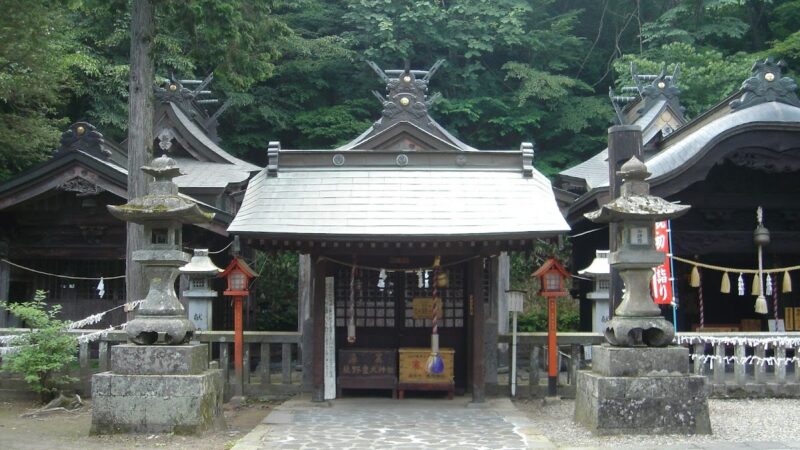
Colored Carvings on the Main Hall
The main hall of Azuma Shrine is a beautiful structure adorned with colored carvings. Standing amidst a majestic cedar grove, the main hall possesses valuable cultural significance, preserving the architectural style of the Edo period.
The meticulous carving techniques and vibrant colors speak to the high skill of the craftsmen of that time.
Cedar Grove and Natural Environment
The cedar grove covering the shrine grounds creates a majestic atmosphere that reflects the long history of the shrine. Giant cedar trees, some hundreds of years old, stand in rows, creating a sacred atmosphere befitting a divine site.
The gentle murmur of the Nakuta River is nearby, and the tranquil environment, integrated with nature, soothes the hearts of visitors.
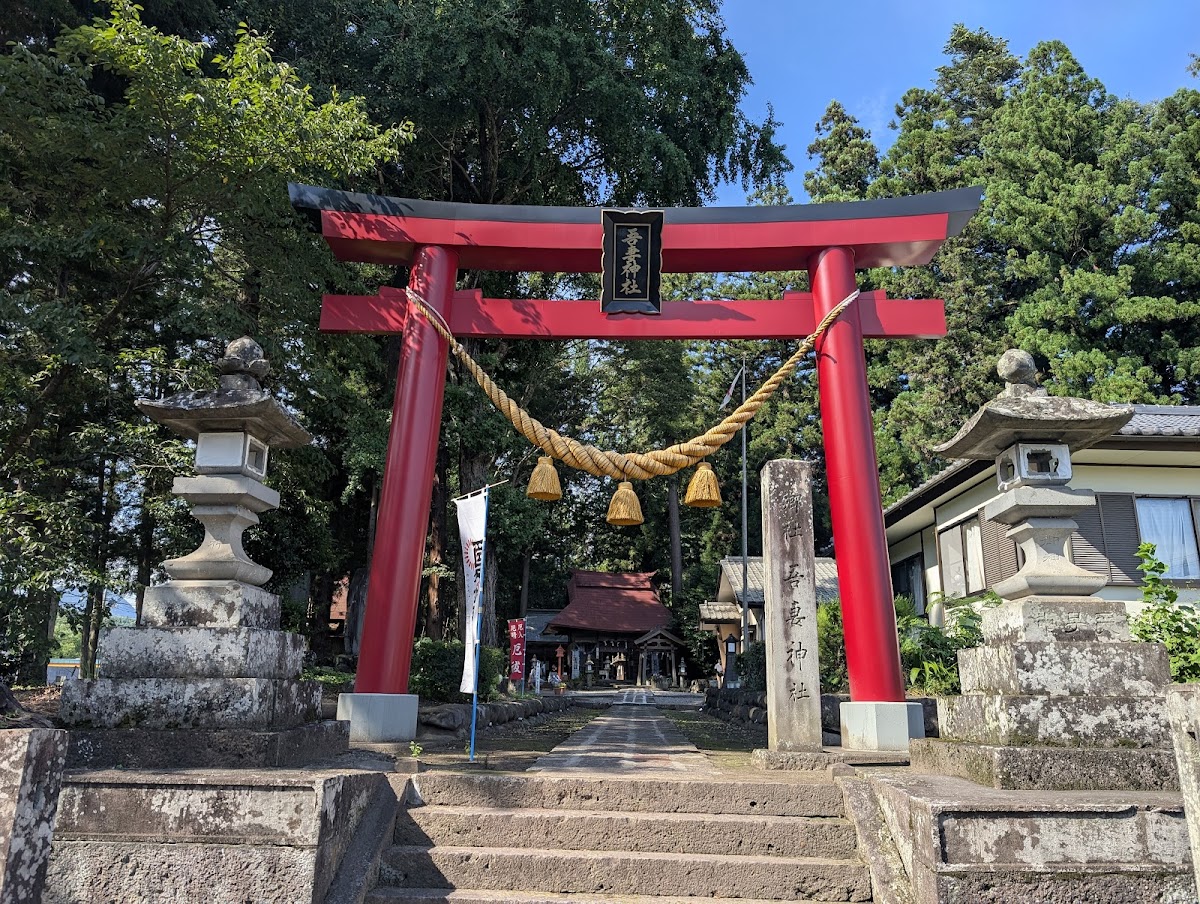
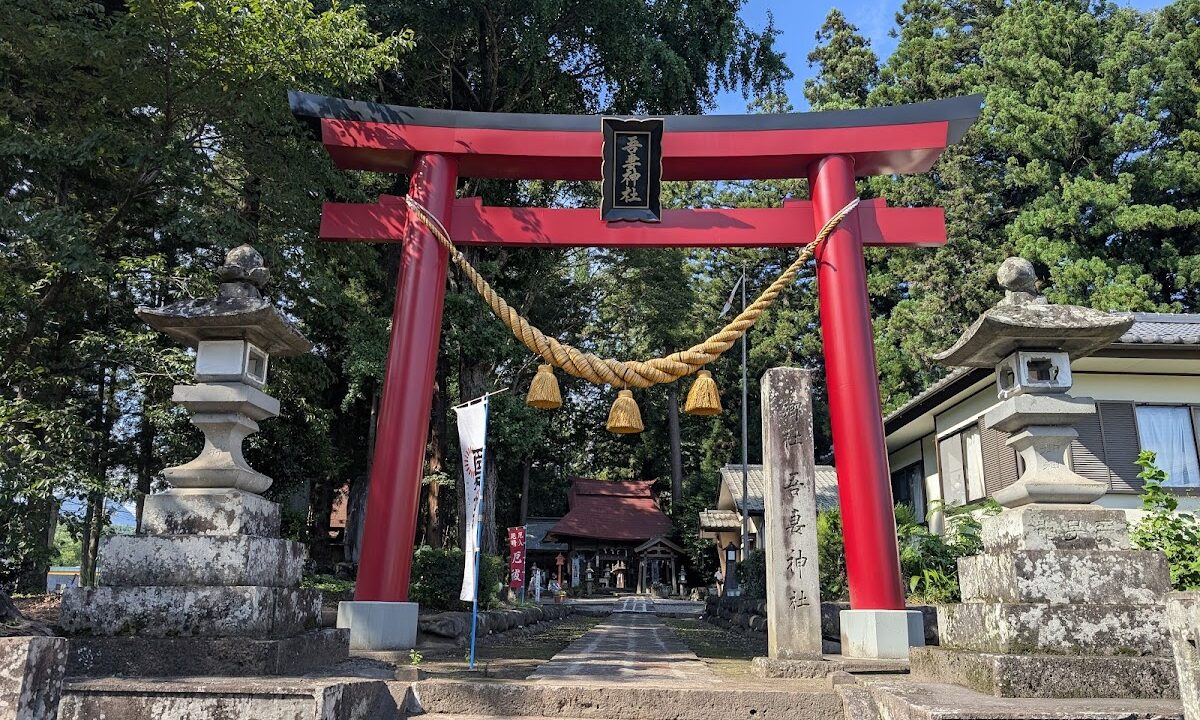
Approach and Torii Gate
The approach leading to the shrine grounds is a charming path surrounded by trees. Passing through the torii gate invites you into a sacred space, far removed from the hustle and bustle of everyday life.
Goshuin Information
Types and Characteristics of Goshuin
At Azuma Shrine, in addition to regular goshuin, seasonal limited-edition goshuin and special goshuin are sometimes offered, making them popular among goshuin collectors.
The goshuin features the calligraphy “Warinomiya Azuma Shrine” and the shrine’s seal. The carefully written calligraphy gives each one a warm, handcrafted feel.
Latest Goshuin Information
Azuma Shrine sometimes offers goshuin with different designs depending on the season. For the latest goshuin information, we recommend checking the official website (https://www.warinomiya.org/) or various social media platforms.
Issuance Time and Location
Goshuin are issued at the shrine office. When visiting, it is customary to first pay respects at the main hall before receiving a goshuin.
Granting Hours: Usually from 9:00 AM to around 5:00 PM (may vary depending on the season).
Since staff may be absent, it is recommended to call in advance to confirm if you wish to receive a Goshuin (temple stamp).
Access Method
Access by Train
Nearest Station and Line
Nakanojo Station on the JR Agatsuma Line is the nearest station.
- Walking from Nakanojo Station: Approximately 18 minutes (approximately 1.4 km)
- Driving from Nakanojo Station: Approximately 5 minutes
Nakanojo Station is a major station on the Agatsuma Line, and the limited express “Kusatsu” also stops there. There is a taxi stand in front of the station.
Travel Time from Major Stations
- From Tokyo Station: Take the JR Joetsu Shinkansen to Takasaki Station (approx. 50 minutes), transfer to the JR Agatsuma Line to Nakanojo Station (approx. 1 hour), total approx. 2 hours.
- From Ueno Station: Take the JR Takasaki Line/Joetsu Line to Shibukawa Station, transfer to the JR Agatsuma Line to Nakanojo Station, total approx. 2.5 hours.
- From Takasaki Station: Take the JR Agatsuma Line to Nakanojo Station (approx. 1 hour).
Access by Bus
Nearest Bus Stops and Routes
When using the bus from Nakanojo Station, the following bus stops are available:
- Toriihara Bus Stop: A few minutes’ walk
- Tadashi Bus Stop: A few minutes’ walk
Please note that bus timetables may vary depending on the season and day of the week. It is recommended to check the latest information on the bus company’s website (such as Kanetsu Kotsu) beforehand.
Access by Car
Routes from Major Roads
- From Shibukawa-Ikaho IC on the Kan-Etsu Expressway: Approximately 40 minutes via National Routes 353 and 145
- From Usui-Karuizawa IC on the Joshin-Etsu Expressway: Approximately 1 hour via National Routes 146 and 145
Parking Information
Parking is available on the temple grounds or nearby. Please follow the on-site signs for details. Parking for visitors is free, but spaces may be limited, so please be aware of potential congestion.
Important Notes Regarding Access
- Winter: Northern Gunma Prefecture experiences snowfall, so snow tires or chains are necessary if visiting by car during winter.
- Using Map Apps: We recommend using navigation apps such as Google Maps to confirm the exact location.
- Public Transportation Schedules: The number of trains on the Agatsuma Line and buses is limited, so please check the timetable in advance.
Annual Events and Festivals
Main Festivals
Agatsuma Shrine holds various festivals throughout the year.
- Annual Grand Festival: An important local festival, attracting many worshippers.
- New Year’s Visit: Many worshippers visit in the new year to pray for good health and protection from illness throughout the year.
- Setsubun Festival: A ceremony to pray for protection from evil and good fortune.
We recommend checking the official website or calling for detailed dates.
Prayers and Sacred Blessings
Agatsuma Shrine accepts the following types of prayers.
- Recovery from illness
- Matchmaking
- Family safety
- Business prosperity
- Traffic safety
- Protection from evil
- Prayer for safe childbirth
- First shrine visit for a newborn
- Shichi-Go-San (7-5-3) ceremony
If you wish to have a prayer performed, we recommend making a reservation by phone in advance.
Nearby Tourist Attractions
Highlights of Nakanojo Town
Nakanojo Town, where Azuma Shrine is located, has many other attractive tourist spots.
Shima Onsen
This is a representative hot spring resort in Nakanojo Town, located about 20 minutes by car from Azuma Shrine. Known as a famous hot spring said to heal 40,000 ailments, it is also designated as a national health resort.
Nakanojo Biennale
This international art festival is held every two years, and the entire town is adorned with art. Many tourists from both Japan and abroad visit during the festival years.
Sawado Onsen
This hot spring resort is known for its skin-beautifying properties, often described as “one bath for flawless skin.” It’s also famous as a finishing bath after visiting Kusatsu Onsen.
Recommended Shrines in Gunma Prefecture
Here are some shrines in Gunma Prefecture that you might want to visit along with Azuma Shrine.
Komochi Shrine (Shibukawa City)
As mentioned above, this shrine has a deep connection to Azuma Shrine. It enshrines Komochi Gozen and is worshipped as a shrine dedicated to a married couple.
Haruna Shrine (Takasaki City)
One of Gunma Prefecture’s representative shrines, it’s also popular as a power spot. It’s famous for its sacred rock, which is integrated with a giant boulder.
Ichinomiya Nukisaki Shrine (Tomioka City)
This shrine has been revered since ancient times as the Ichinomiya (first-ranked shrine) of Kōzuke Province. It features an unusual layout known as a “descending shrine.”
Manners and Points for Visiting a Shrine
Basic Worship Etiquette
- Bow Before the Torii Gate: Before entering the sacred area, bow before the torii gate.
- Purify at the Water Basin: Purify your left hand, right hand, and mouth in that order, and finally your left hand.
- Walking Along the Path: The center of the path is considered the path of the gods, so walk along the sides.
- Etiquette at the Main Hall: The basic procedure is two bows, two claps, and one bow.
- Bow deeply twice.
- Clap your hands twice.
- Pray sincerely.
- Bow deeply once.
Photography
Photography is generally permitted on the shrine grounds, but please note the following points.
- Do not take photos in areas where photography is prohibited, such as inside the main hall.
- Be considerate of other worshippers.
- When posting on social media, remember to show respect to the shrine.
Attire
For regular visits, no special attire is required. However, if you are receiving a prayer, the following attire is recommended:
- Men: Suit or collared shirt and slacks
- Women: Suit, dress, or subdued attire
- Clothing to avoid: Sandals, shorts, tank tops, and other revealing clothing
Practical Information for Visiting Azuma Shrine
Estimated Time Required for Visiting
- Regular Visit: Approximately 20-30 minutes
- Including Receiving a Goshuin (Shrine Stamp): Approximately 30-40 minutes
- A Relaxing Stroll Through the Grounds: Approximately 40-60 minutes
Recommended Time to Visit
Spring (March-May)
The fresh greenery is beautiful, and the weather is pleasant. During cherry blossom season, the shrine grounds and surrounding area are beautifully colored.
Summer (June-August)
The cedar groves are lush and green, creating a cool and refreshing atmosphere. However, insect repellent is recommended.
Autumn (September-November)
The autumn foliage is beautiful, making this the most suitable season for visiting the shrine. The surrounding Shima Onsen area is also known for its beautiful autumn leaves.
Winter (December-February)
The shrine, surrounded by snow, has a magical atmosphere. It gets very crowded with visitors during the New Year’s pilgrimage season. Be sure to dress warmly.
Nearby Restaurants and Rest Facilities
There are restaurants using local ingredients around Nakanojo Station and within the town.
- Soba/Udon Restaurants: Noodles made with wheat from Gunma Prefecture
- Day Trip Hot Spring Baths: Enjoy day trips to hot springs at Shima Onsen and Sawado Onsen
- Roadside Stations: Purchase local specialties at roadside stations in Nakanojo Town
Accommodation Information
If you are staying near Agatsuma Shrine, the following areas are recommended:
- Shima Onsen: A variety of accommodations, from long-established inns to modern hotels
- Sawado Onsen: Relax in a quiet hot spring town
- Nakanojo Town: Business hotels, guesthouses, etc.
Frequently Asked Questions (FAQ)
Q1: How many types of Goshuin (temple/shrine stamps) are there at Agatsuma Shrine?
A1: In addition to the regular Goshuin, seasonal and special Goshuin commemorating events may be offered. We recommend checking the official website or social media for the latest Goshuin information. Since the types of Goshuin vary depending on the season, it is best to inquire in advance.
Q2: What is the most convenient way to access Azuma Shrine?
A2: It’s about an 18-minute walk or a 5-minute drive from Nakanojo Station on the JR Azuma Line. If using public transport, taking a taxi from Nakanojo Station is convenient. By car, it’s about a 40-minute drive from the Shibukawa-Ikaho Interchange on the Kan-Etsu Expressway, and parking is available. Due to snow in winter, winter tires are necessary if visiting by car.
Q3: I would like to receive prayers at Azuma Shrine. Do I need a reservation?
A3: If you wish to receive prayers, we recommend making a reservation in advance by phone (0279-75-1498). While same-day registration may be possible in some cases, it may not be possible depending on the priest’s schedule, so making a reservation is recommended to ensure you receive prayers.
Q4: What are the divine virtues of Ōanamuchi-no-Mikoto, the deity enshrined at Azuma Shrine?
A4: Ōnamuchi-no-Mikoto (Ōkuninushi-no-Mikoto) is believed to bestow blessings such as healing from illness, matchmaking, family safety, and business prosperity. In particular, at Azuma Shrine, he is worshipped as the god of healing from illness, matchmaking, and family safety, and many worshippers visit with these wishes.
Q5: Please tell me about the relationship between Azuma Shrine and Komochi Shrine.
A5: Azuma Shrine (Warimiya) and Komochi Shrine in Shibukawa City are connected by a story of a married couple told in the “Warimiya Engi” (Chronicle of Warimiya). Kawajirō Wari, enshrined at Azuma Shrine, and Komochi Gozen, enshrined at Komochi Shrine, are said to have been a married couple, and both shrines are worshipped as a married couple’s shrine. Those wishing for matchmaking sometimes visit both shrines.
Q6: When is the annual festival of Azuma Shrine held?
A6: The specific date of the annual festival may vary from year to year. For the latest information, we recommend checking the official website (https://www.warinomiya.org/) or calling the shrine. During the annual festival, traditional events such as portable shrine processions and Kagura (sacred dance) are held, attracting many worshippers.
Q7: Are there hot springs near Azuma Shrine?
A7: Yes, Shima Onsen is about a 20-minute drive from Azuma Shrine, and there are many facilities offering day-trip bathing. Sawado Onsen is also nearby, allowing you to enjoy sightseeing that combines shrine visits with hot springs. Both are known as famous hot springs and are representative hot spring resorts of Gunma Prefecture.
Q8: Is Azuma Shrine accessible by wheelchair?
A8: There may be steps in some parts of the shrine grounds. If you wish to visit in a wheelchair, we recommend calling the shrine in advance to confirm the accessible areas and whether assistance is needed. The shrine may be able to accommodate you as much as possible.
Q9: How old is the history of Azuma Shrine?
A9: The founding date of Azuma Shrine is unknown, but according to tradition, it was established approximately 1300 years ago during the ancient period (from the Yamato period to the time of the Taika Reforms). Initially called Wari-no-miya, it was located near the summit of Mt. Mitarai, but was later moved to its current location in Yokoo. It is revered as the “guardian shrine of Azuma,” boasting a long history.
Q10: Can I obtain amulets and other items at Azuma Shrine?
A10: Yes, various amulets and other items are available at Azuma Shrine. Amulets are available for various purposes, such as healing from illness, matchmaking, and family safety, according to the divine virtues of the enshrined deity. For details on the types available and distribution times, we recommend checking with the shrine office or calling in advance.
Summary
Azuma Shrine (Warimiya), located in Nakanojo Town, Agatsuma District, Gunma Prefecture, boasts a history of approximately 1300 years and has been deeply revered by the local people as the “guardian shrine of Agatsuma.” Its main deity is Ōanamuchi-no-Mikoto, the god of nation-building, and it is known for its divine blessings of healing from illness, matchmaking, and family safety.
With its majestic grounds surrounded by cedar groves, its beautifully carved main hall, and the story of the “Warimiya Engi” (Warimiya Legend), which tells of its deep connection with Komochi Shrine, it is a fascinating shrine where you can feel history and culture.
It is easily accessible, about an 18-minute walk from Nakanojo Station on the JR Agatsuma Line, and there are many tourist attractions nearby, such as Shima Onsen and Sawado Onsen. Its goshuin (shrine stamps) are also popular, and seasonal designs are sometimes offered, making it recommended for goshuin collectors.
When visiting Gunma Prefecture, be sure to visit Azuma Shrine and experience the sacred atmosphere and divine blessings nurtured by its long history. For accurate and up-to-date information, please check the official website (https://www.warinomiya.org/) or inquire by phone, and enjoy a peaceful visit while observing proper etiquette.