Complete Guide to Omiwa Shrine (Okayama City, Naka Ward, Okayama Prefecture) | History, Deities, and Access Information for a Thousand-Year-Old Shrine
Omiwa Shrine, located in Shigami, Naka Ward, Okayama City, is a historic shrine listed in the Engishiki Jinmyocho (a list of shrines compiled during the Heian period). It enshrines deities invited from Omiwa Shrine in Sakurai City, Nara Prefecture, and has been a center of local faith for over a thousand years. This article comprehensively explains everything you need to know before visiting Omiwa Shrine, including its history, enshrined deities, annual events, and access methods.
Basic Information about Omiwa Shrine
Shrine Overview
Official Name: Omiwa Shrine
Former Shrine Rank: Gosha (Village Shrine)
Location: 381 Shigoze, Naka-ku, Okayama City, Okayama Prefecture 703-8201
Phone Number: 086-279-3139
Fax Number: 086-279-1145
Parking: Available (Parking space for visitors within the shrine grounds)
Omiwa Shrine belongs to the Okayama Prefectural Shrine Association and is an ancient shrine identified as one of the “Four Omiwa Shrines” listed in the Engishiki Jinmyocho (Register of Shrines in the Engi Era) as “Four of the 26 Shrines in Bizen Province, in Kamimichi District.” The place name “Shigoze” is also said to originate from the four deities enshrined at this shrine.
Deities Enshrined
Omiwa Shrine enshrines four deities:
- Ōmononushi-no-kami: God of Mount Miwa in Yamato Province, god of nation-building
- Ōnamuchi-no-kami: Another name for Ōkuninushi-no-Mikoto, god of matchmaking and medicine
- Sukunahikona-no-kami: God who worked with Ōkuninushi-no-Mikoto in nation-building
- Mihotsuhime-no-kami: Consort of Ōkuninushi-no-Mikoto, goddess of abundant harvests
These four deities all possess divine virtues related to nation-building, agriculture, medicine, and matchmaking, and are revered as guardians of regional prosperity and the happiness of the people.
The History and Origins of Omiwa Shrine
Circumstances of its Founding
The exact founding date of Omiwa Shrine is unknown, but it has been known as a historically significant shrine in Bizen Province since ancient times. According to the “Tokusen Jinmyocho,” a commentary on the Engishiki Jinmyocho compiled in 1925 (Taisho 14), it states that the three deities of Omiwa Shrine in Miwa, Sakurai City, Nara Prefecture, were transferred and enshrined together with Mihotsuhime-no-kami, the consort of Okuninushi-no-Mikoto, to form “Omiwa Shrine.”
Another theory suggests that it began when a person named Omiwa-no-Ason (a descendant of Ota-Taneko-no-Mikoto) invited a divided spirit from Omiwa Shrine in Yamato Province during the late Nara period.
Listing in the Engishiki Jinmyocho
The Engishiki Jinmyocho, compiled in the early Heian period (927 AD), lists “Omiwa Shrine (four shrines)” as one of the four shrines in Kamimichi District, among the 26 shrines in Bizen Province. The Engishiki Jinmyocho is a set of detailed regulations for the implementation of the Ritsuryo legal system, compiled by order of Emperor Daigo. Its shrine register lists influential shrines throughout the country. Shrines listed here are called “Shikinai-sha,” indicating their high status and recognition by the imperial court since ancient times.
The fact that Omiwa Shrine is listed as a Shikinai-sha is evidence that it has been an important shrine in Bizen Province for over a thousand years.
“Haji-no-mori” and “Haji-no-miya”
The shrine’s location was formerly called “Haji-no-mori,” and Omiwa Shrine was also known as “Haji-no-miya.” In ancient times, it is said that the shrine was not located at its current site, but rather on the mountaintop of Sodoyama (the eastern ridge of Tatsunokuchiyama, approximately 138m above sea level) behind the present location.
This suggests that the shrine was associated with mountain worship, and it is believed that it was later moved to its current location at the southern foot of Tatsunokuchiyama.
History from the Medieval to Early Modern Periods
According to records from the Keicho era (1596-1615), the shrine’s land holdings were 1 cho, 7 tan, 8 se, and 9 bu. Throughout the Edo period, it was revered as the local tutelary deity, and under the Meiji era’s shrine ranking system, it was classified as a Gosha (village shrine).
Although only the shrine grounds remain today, in recent years, with the development of residential areas and housing complexes around the Shigokami district, the number of parishioners has rapidly increased, and it plays a central role in the local community.
Highlights of the Shrine Grounds
Main Hall and Worship Hall
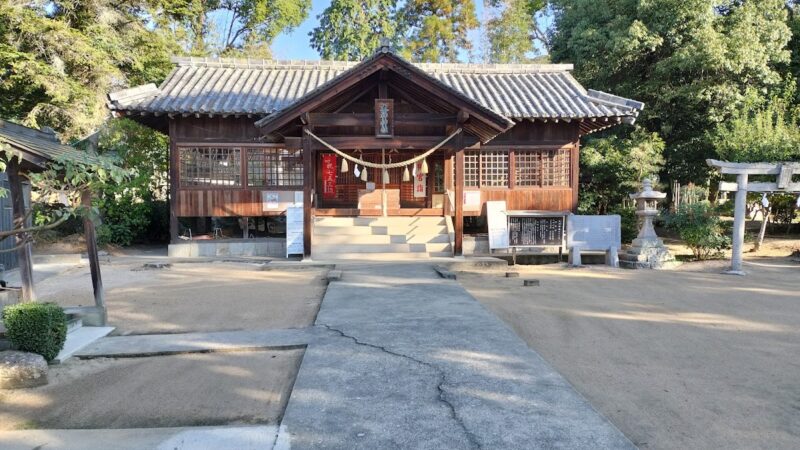
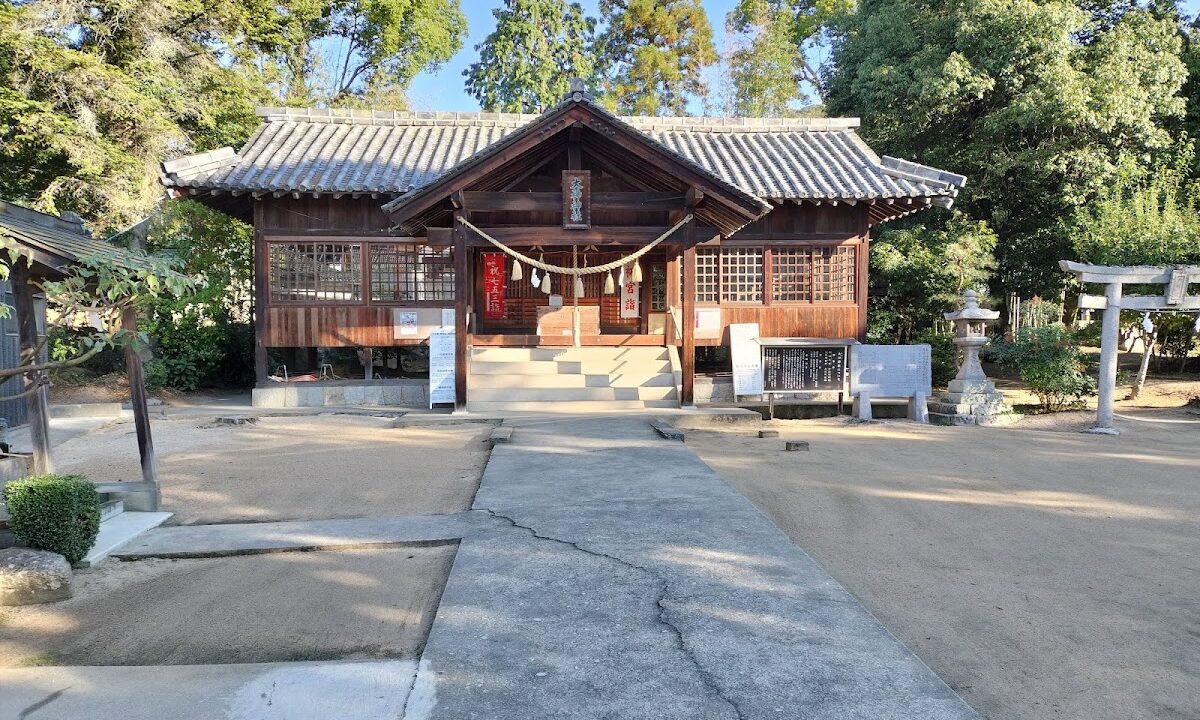
The main hall of Omiwa Shrine is located at the southern foot of Tatsunokuchiyama, within the lush green grounds. From the worship hall, you can look down on the townscape of Shigoshin, and worship in a tranquil atmosphere.
The architectural style of the main shrine retains the characteristics of traditional shrine architecture, conveying a sense of historical weight.
Shrines and Monuments
Besides the main shrine, several smaller shrines and monuments are scattered throughout the grounds. Various offerings and monuments remain as evidence of the faith the shrine has attracted from the local people over its long history.
Natural Environment
Located at the foot of Mt. Tatsunokuchi, the shrine grounds are surrounded by abundant nature. You can enjoy the scenery of each season, and the views are particularly beautiful during the seasons of fresh greenery and autumn leaves.
List of Annual Events and Rituals
Omiwa Shrine holds various rituals throughout the year. Here are some of the main annual events.
Main Festivals
New Year’s Day Festival (January 1st): A festival celebrating the New Year and praying for peace and prosperity throughout the year.
Setsubun Festival (around February 3rd): A traditional event praying for protection from evil and good fortune.
Spring Grand Festival: A festival celebrating the arrival of spring and praying for a bountiful harvest.
Summer Purification Ceremony (June 30th): A Shinto ritual to cleanse away the sins and impurities accumulated over the past six months.
Autumn Grand Festival: The most important festival, expressing gratitude for the autumn harvest and praying for the prosperity of the community.
Shichi-Go-San Festival (November): A celebration of children’s growth and prayers for their healthy development.
Year-End Purification Ceremony (December 31st): A Shinto ritual to cleanse away the sins and impurities accumulated over the past year and welcome the new year with purity.
Monthly Festival
A monthly festival is held on a specific day each month, where prayers are offered for the safety of the parishioners and the peace of the community. For detailed dates, please contact the shrine directly.
Goshuin (Shrine Seals) and Offerings
Goshuin (Shrine Seals)
Goshuin are available at Omiwa Shrine. Many visitors receive a goshuin as a memento of their visit and as proof of their connection to the shrine.
To receive a goshuin, please inquire at the shrine office during reception hours. Those without a goshuin book may be given a pre-printed goshuin.
Offerings
The shrine offers various offerings such as amulets, talismans, and votive tablets. These items cater to various wishes, including traffic safety, family safety, academic success, and matchmaking.
Access Information
Detailed directions to Omiwa Shrine are provided below.
Access by Train
Nearest Station: JR Sanyo Main Line “Higashi-Okayama Station”
It’s approximately an 18-25 minute walk (about 1.4 km) from Higashi-Okayama Station. Exit the station and head south, passing through the residential area towards Tatsunokuchi-yama. There are signs along the way, but for first-time visitors, we recommend using a smartphone map app.
Access by Bus
Nearest Bus Stops:
- Approximately 2 minute walk (143m) from “Higashigaoka Danchi-naka” bus stop
- Approximately 2 minute walk (155m) from “Shigoshin-nishi” bus stop
- Approximately 3 minute walk (203m) from “Shigoshin-kami” bus stop
If using a local bus from Okayama Station or Higashi-Okayama Station, the above bus stops are the closest. Please check the Okayama City bus information for bus frequency and timetables. From the bus stop, head towards the shrine through the residential area.
Access by Car
From central Okayama City: Approximately 20-30 minutes via National Route 2 or Okayama Blue Line.
From Okayama Expressway: Approximately 15 minutes from Okayama Interchange.
If using a car navigation system, please search using the address “381 Shigami, Naka-ku, Okayama City, Okayama Prefecture” or the phone number “086-279-3139”.
There is parking space for visitors on the shrine grounds, but congestion is expected during events such as the annual festival, so please consider using public transportation.
Landmarks in the Surrounding Area
Omiwa Shrine is located almost in the center of the Shigami district in Naka-ku, Okayama City, at the southern foot of Mt. Tatsunokuchi. The surrounding area is residential, with housing complexes such as Higashigaoka Housing Complex nearby.
Manners and Points for Visiting a Shrine
Etiquette for Visiting a Shrine
Here are the basic manners for visiting a shrine:
- Bow before passing through the torii gate: Bow before entering the sacred area, in front of the torii gate.
- Purify yourself at the water basin: Purify your hands and mouth at the water basin.
- Walking along the approach: The center of the approach is considered the path of the gods, so walk along the sides.
- Worship at the main hall: The basic method is two bows, two claps, one bow (two bows, two claps, one bow).
- When leaving: After leaving the torii gate, turn around and bow.
Recommended Time to Visit
Omiwa Shrine is located in a quiet residential area, so visiting early in the morning or on weekdays offers a particularly peaceful atmosphere. While it gets crowded with many worshippers during events such as the annual festival, this is also a good opportunity to experience the vibrant energy of the shrine.
Regarding Photography
Photography is generally permitted within the shrine grounds, but there may be restrictions, such as inside the main hall or during religious ceremonies. Please observe proper etiquette and be considerate of other visitors.
Origin of the Place Name “Shinogoze” and Omiwa Shrine
The place name “Shinogoze” is said to originate from the four deities enshrined at Omiwa Shrine. According to “Place Names of Okayama City,” it states that “Shinogoze is said to originate from Omiwa Shrine in Haji no Mori.”
The Shinogoze area is located in the eastern part of Naka Ward, Okayama City, and has long developed as a religious community centered around Omiwa Shrine. Currently, it is a residential area where new and old residents coexist, but Omiwa Shrine continues to play an important role as a symbol of the region and a spiritual center.
Omiwa Shrine and Omiwa Shrine in Nara
Okayama’s Omiwa Shrine is a shrine that was established by inviting deities from Omiwa Shrine, located in Miwa, Sakurai City, Nara Prefecture. Nara’s Omiwa Shrine is considered one of the oldest shrines in Japan, and it preserves a primitive form of Shintoism, with Mount Miwa itself as the sacred object of worship.
Okayama’s Omiwa Shrine has inherited this divine power and developed as a center of Omiwa worship in Bizen Province. The fact that it enshrines four deities—Omononushi-no-kami, Onamuchi-no-kami, and Sukunahikona-no-kami—in addition to the three deities of Nara’s Omiwa Shrine, reflects the characteristics of the local faith.
Nearby Attractions and Tourist Spots
Tatsunokuchi Mountain
Tatsunokuchi Mountain, towering behind Omiwa Shrine, is a popular hiking destination. From the mountaintop, you can enjoy a panoramic view of Okayama city and the Seto Inland Sea, especially on a clear day.
Okayama City Center
Omiwa Shrine is about a 20-30 minute drive from Okayama city center. You can visit Okayama’s representative tourist spots such as Okayama Castle, Korakuen Garden, and Okayama Prefectural Museum.
Bizen-no-Kuni Soja-gu Shrine
Bizen-no-Kuni Soja-gu Shrine, also a Shikinaisha (a shrine listed in the Engishiki) of Bizen Province, is known as a historical shrine. Visiting shrines within Okayama City is also recommended.
Frequently Asked Questions
Q1: Is Omiwa Shrine pronounced “Oogami Jinja”?
A1: No, the correct pronunciation is “Ooga Jinja.” While Omiwa Shrine in Nara Prefecture is pronounced “Oomiwa Jinja,” Okayama’s Omiwa Shrine is pronounced “Ooga Jinja.”
Q2: Is there parking available? **
A2: Yes, there is parking space for visitors on the shrine grounds. However, congestion is expected during events such as the annual festival, so please consider using public transportation.
Q3: Can I get a Goshuin (shrine stamp)?
A3: Yes, you can get a Goshuin at the shrine office. However, the office may be unattended, so if you want to be sure to get a Goshuin, please call in advance to confirm.
Q4: Do you accept wedding ceremonies and prayers?
A4: We accept Shinto wedding ceremonies and various prayers (first shrine visit for a newborn, Shichi-Go-San, exorcism, traffic safety, etc.). For details, please contact the shrine directly (Tel: 086-279-3139).
Q5: How crowded is it during the New Year’s visit?
A5: It gets crowded with many visitors from New Year’s Day to the third day, but it’s not as crowded as large shrines. It’s a relatively peaceful environment for worship.
Q6: Is it possible to visit the shrine with a pet?
A6: Policies vary from shrine to shrine, so if you wish to visit with a pet, please contact the shrine in advance.
Summary
Omiwa Shrine, located in Shigami, Naka-ku, Okayama City, is a Shikinaisha (a shrine listed in the Engishiki Jinmyocho, an ancient Japanese legal code) with a history of over a thousand years. It enshrines four deities invited from Omiwa Shrine in Nara, and has been revered as an important shrine in Bizen Province since ancient times.
It is the shrine from which the place name “Shigami” originates, and even today it plays an important role as the local guardian deity and a spiritual center. Located in a naturally rich environment at the southern foot of Mt. Tatsunokuchi, it is a shrine where you can pray in peace.
When you visit Okayama, why not visit Omiwa Shrine and experience its thousand-year history, tradition, and the divine power of the gods?
Shrine Information
- Address: 381 Shigami, Naka-ku, Okayama City, Okayama Prefecture 703-8201
- Phone: 086-279-3139
- Access: Approximately 18 minutes on foot from JR Higashi-Okayama Station, or 2-3 minutes on foot from various bus stops
- Parking: Available
- Visiting Hours: Open all day (Please check the shrine office’s reception hours)
Understanding the history and origins of Omiwa Shrine will lead to a deeper sense of awe and a more fulfilling experience. Please enjoy a peaceful moment at Omiwa Shrine, which conveys the history and culture of the region to the present day.