Complete Guide to Kashihara Shrine (Hitachinaka City, Ibaraki Prefecture) | History, Deities, Goshuin (Shrine Seals), and Access Information
Kashihara Shrine, located in Hitachinaka City, Ibaraki Prefecture, shares the same name as the Kashihara Shrine in Nara Prefecture, but possesses its own unique history and traditions. Situated on a hill in Nakaminato, it has long been revered by the local people as “Kashiwara Daimyojin.” This article comprehensively introduces all the information you need to know before visiting, including the detailed history of the shrine, its enshrined deities, highlights within the grounds, information on goshuin (shrine seals), and access methods.
Basic Information on Kashihara Shrine (Ibaraki)
Official Name: Kashihara Shrine
Location: Minatomoto-cho, Hitachinaka City, Ibaraki Prefecture (formerly Nakaminato City)
Deities Enshrined: Emperor Jimmu, Emperor Kanmu, Emperor Sudo
Founding: During the Wado era (708-715) or the 2nd year of the Daido era (807)
Former Shrine Rank: Village Shrine
Alternate Name: Kashihara Daimyojin
Located on a hill about a 10-minute walk from Nakaminato Station, this shrine maintains a quiet atmosphere despite its proximity to the sea.
History and Founding Origins of Kashihara Shrine
Founding History
Multiple records remain regarding the founding of Kashihara Shrine. According to records preserved within the shrine, it is believed to have been founded during the Wado era (708-715) of Empress Genmei’s reign. However, a sign within the shrine grounds states that in 807 (Daido 2), Ide no Omi, the governor of Hitachi Province, founded the shrine at the behest of Emperor Heizei to enshrine the previous emperor, Emperor Kashiwabara (Emperor Kanmu).
The original location was Masuhara, Ishizaki Village (present-day Nakaishizaki, Ibaraki Town), on the shores of Lake Hinuma. This area was a key point for water transport and has been an important region since ancient times.
History of Relocation
Kashihara Shrine has experienced several relocations throughout its long history.
First Relocation: During the Ninju era (851-854, or possibly 1511-1513), it was relocated to Miyayama-cho (Myojin-cho) in Minato Village. This relocation made it the center of local religious belief in Nakaminato, a town close to the sea.
Amalgamation and Renaming: In 1587 (Tensho 15), Emperor Kanmu and Emperor Sudō were enshrined together by Hitachi Daijō Taira no Kunika, and from this time onward, it came to be called “Kashiwabara Daimyōjin.” This name became widely known in the region, and even today, it is sometimes referred to as “Kashiwabara-sama” among the elders.
Second Relocation: During the Tokugawa period, the shrine was destroyed by fire, and in 1672 (Kanbun 12), it was relocated to its current location. The elevated location was less susceptible to fire damage and is thought to have been chosen for its position overlooking the town of Nakaminato.
History Since the Modern Era
During the Meiji era, it was ranked as a village shrine due to the reform of the shrine system. After the war, it continued to attract worshippers as a religious corporation and the local guardian deity. In recent years, improvements have been made to the shrine buildings and approach, and the stone steps of the approach, in particular, were recently rebuilt, designed with the convenience of worshippers in mind.
About the Deities Enshrined
Three emperors are enshrined as deities at Kashihara Shrine.
Emperor Jimmu
According to the Nihon Shoki (Chronicles of Japan), Emperor Jimmu, considered the first emperor of Japan, founded the Kashihara Palace in “Unebi no Kashihara” (present-day Kashihara City, Nara Prefecture) in 660 BC and ascended to the throne. Emperor Jimmu’s divine name was also “Kashihara,” which is the origin of the shrine’s name. He is revered as the founder of the nation, and his enthronement date, January 1st of the first year of the lunar calendar (the year of the Metal Rooster), corresponds to February 11th, 660 BC in the modern Western calendar, which is the origin of National Foundation Day (formerly Kigensetsu).
Emperor Kanmu
The 50th Emperor of Japan, also known as Emperor Kashiwabara. He moved the capital to Heian-kyo, bringing about a major turning point in Japanese history. The shrine’s name, “Kashiwabara Daimyojin,” originates from this alternative name of Emperor Kanmu. Records indicate that the shrine was founded in 806 (Enryaku 25) and the following year, 806 (Daido 2), in remembrance of this emperor.
Emperor Sudo
This is a posthumous title bestowed upon Prince Sawara, Emperor Kanmu’s younger brother. He was deposed as Crown Prince for his involvement in the assassination of Fujiwara no Tanetsugu and died of anger on his way to exile in Awaji Province. Afterwards, natural disasters and epidemics continued, so the title of Emperor Sudo was bestowed upon him to appease his vengeful spirit, and he began to be worshipped in various places. This shrine was also established in 1587 (Tensho 15).
Highlights of the Shrine Grounds
The Grand Torii Gate and Approach
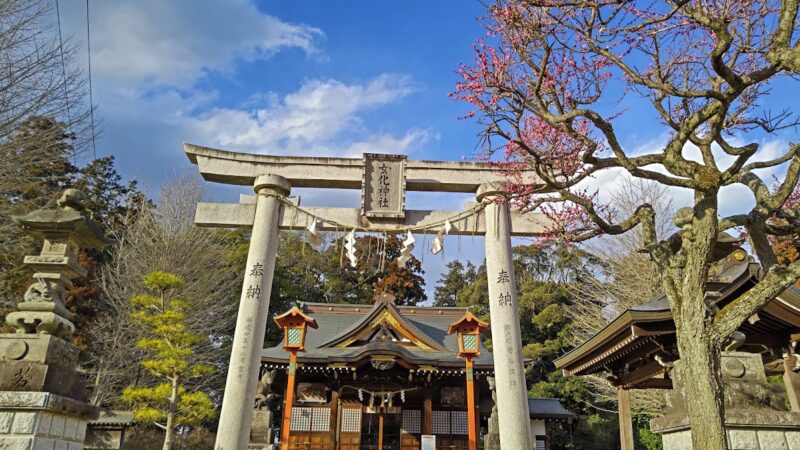
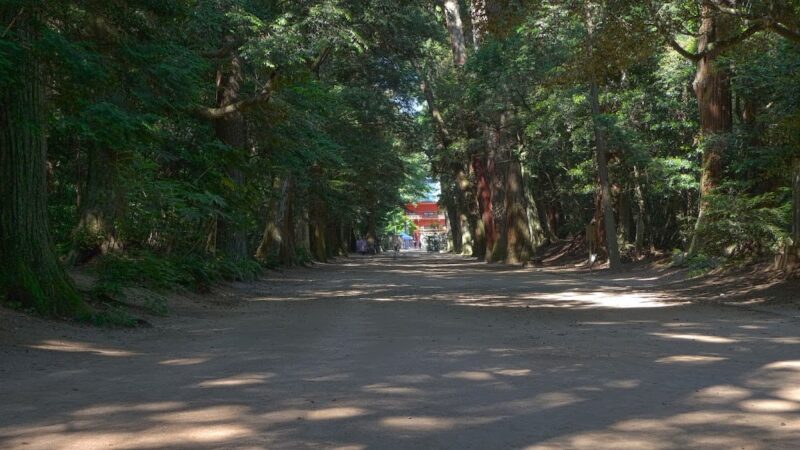
The grand torii gate, facing the road, was recently rebuilt and boasts a magnificent structure with a vibrant vermilion color. Passing through the gate, a stone staircase leading up to the hilltop appears. While the staircase is somewhat steep, there are landings and benches along the way, allowing for rests.
As you ascend the path, looking back, you can enjoy views of the town of Nakaminato and the sea in the distance—a view unique to a shrine situated on a hilltop.
Shrine Building
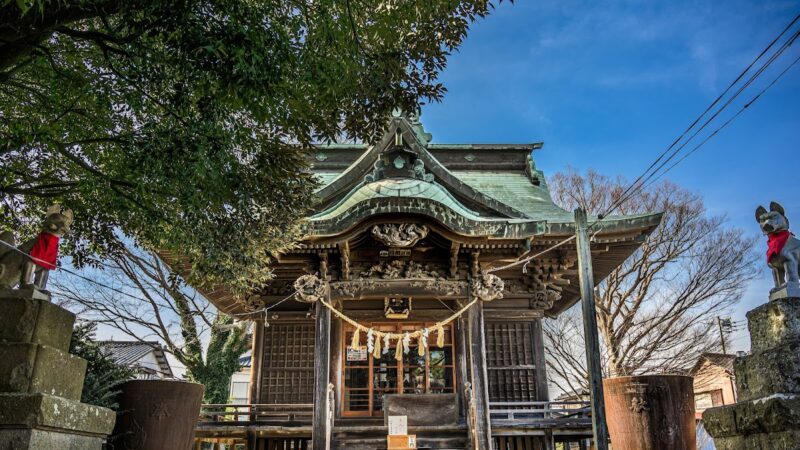
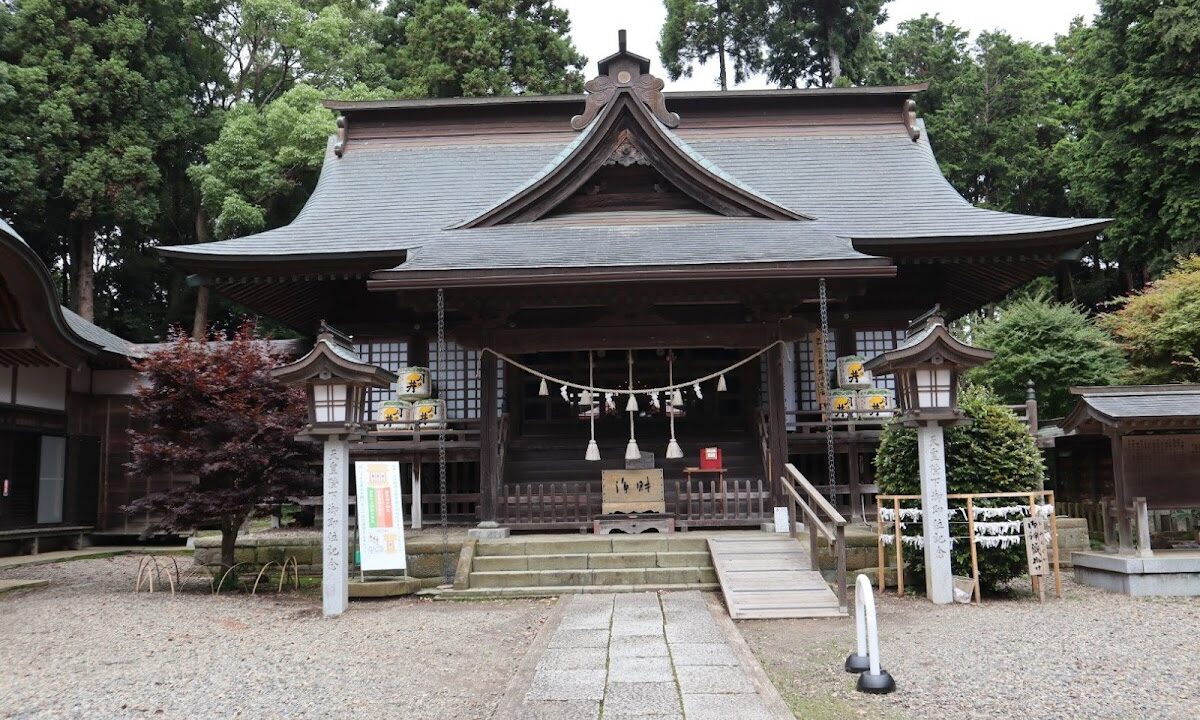
The current shrine building was constructed after the relocation in 1672 (Kanbun 12) and maintains a traditional shrine architectural style. Although not large in scale, it is meticulously maintained and exudes the dignity of a center of local faith.
View from the Shrine Grounds
Located on a hill, the shrine grounds offer a panoramic view of the town of Nakaminato. On clear days, you can even see the Pacific Ocean, allowing you to appreciate the geographical features of Nakaminato, which once flourished as a port town. This view speaks to the importance of the shrine’s location, as it also serves as a guardian deity for maritime safety and fishing.
Goshuin (Shrine Seal) Information
Kashihara Shrine offers Goshuin.
Features of the Goshuin
The Goshuin is characterized by its unique calligraphy style. The powerful and distinctive brushstrokes make it a popular memento of your visit. The words “Kashihara Shrine” are written in ink in the center, followed by a red seal.
How to Obtain a Goshuin
Goshuin are available at the shrine office, but availability may not be constant. To ensure you receive a Goshuin, it is recommended to call ahead or visit during the daytime on a holiday, avoiding weekdays and festival days. The offering fee is usually around 300 to 500 yen.
Bringing your own goshuincho (stamp book) is recommended, but sometimes only pre-written stamps are available.
Annual Events and Festivals
Kashihara Shrine holds various festivals throughout the year.
Grand Festival
The Grand Festival, held every autumn, is the most important festival at this shrine. Local parishioners and devotees gather for the procession of the portable shrine and dedication ceremonies. It is a valuable opportunity to see the traditions of Nakaminato preserved.
New Year’s Visit
At the start of the new year, local people visit for their first shrine visit of the year. It’s also a great place to pray for the new year, as you can witness the first sunrise from the hilltop.
Other Events
On National Foundation Day (February 11th), a ceremony commemorating the enthronement of Emperor Jimmu, the enshrined deity, is sometimes held. Monthly festivals are also held regularly.
Access Information
Access by Train
Hitachinaka Seaside Railway Minato Line
- Get off at Nakaminato Station, approximately 10 minutes on foot
- Head towards the hill from the station, and after passing through the residential area, you will see the shrine’s torii gate.
JR Joban Line
- Get off at Katsuta Station and transfer to the Hitachinaka Seaside Railway Minato Line
- Or take an Ibaraki Kotsu bus from Katsuta Station towards Nakaminato.
Access by Car
Joban Expressway
- Approximately 10 minutes from Hitachi Seaside Park IC
- Approximately 15 minutes from Naka IC
Parking
- There are some parking spaces on the shrine grounds or nearby, but the number is limited.
- During busy times such as New Year’s visits and the annual festival, we recommend using public transportation.
Nearby Tourist Attractions
Around Kashihara Shrine, there are many attractive tourist spots in Nakaminato.
Nakaminato Fish Market: A seafood market within walking distance where you can buy fresh seafood or enjoy a seafood bowl.
Sakatsura Isozaki Shrine: An ancient shrine located about 10 minutes away by car, and a counterpart to Oarai Isozaki Shrine.
Oarai Isozaki Shrine: A shrine famous for its Kamiiso Torii gate facing the Pacific Ocean, located about 15 minutes away by car.
Hitachi Seaside Park: A national park where you can enjoy flowers throughout the seasons, especially famous for its nemophila and kochia.
Manners and Points for Visiting a Shrine
Proper Way to Visit a Shrine
- Bow before passing through the torii gate.
- Avoid walking in the center of the path (the center is considered the path of the gods).
- Cleanse your hands and mouth at the purification fountain.
- At the main hall, perform the “two bows, two claps, one bow” ritual.
Points to Note When Visiting a Shrine
- The stone steps are numerous and steep, so watch your step.
- Be especially careful of slippery footwear during rainy weather and winter.
- Elderly people and those with mobility issues are advised to climb slowly, taking breaks as needed.
- Please be mindful of maintaining a quiet environment within the shrine grounds.
Photography
Photography is generally permitted within the shrine grounds, but please refrain from taking photos inside the shrine buildings or during religious ceremonies. Also, please be considerate of other visitors.
Differences between Kashihara Shrine and Kashihara Shrine in Nara
Many people might associate the name “Kashihara Shrine” with the Kashihara Shrine in Kashihara City, Nara Prefecture. However, the Kashihara Shrine in Ibaraki Prefecture is a different shrine from the one in Nara.
Kashihara Shrine, Nara
- Founded: 1890 (Meiji 23)
- Deities Enshrined: Emperor Jimmu, Himetataraisuzuhime-no-Mikoto
- Features: A shrine built in modern times on the site of the Kashihara Palace where Emperor Jimmu ascended the throne.
- Scale: A large shrine with vast grounds.
Kashihara Shrine, Ibaraki
- Founded: During the Wado era or Daido 2 (ancient times)
- Deities Enshrined: Emperor Jimmu, Emperor Kanmu, Emperor Sudo
- Features: A central figure in local faith that has continued since ancient times, affectionately known as “Kashiwabara Daimyojin.”
- Scale: A shrine of local size.
As you can see, although they share the same name, their founding dates, scales, and historical backgrounds differ significantly. Kashihara Shrine in Ibaraki has a longer history than the one in Nara and has cultivated its own unique faith rooted in the region.
Connection to the Community
Kashihara Shrine is deeply intertwined with the history of the Nakaminato region.
Guardian Deity of the Port Town of Nakaminato
Nakaminato has been a port town since the Edo period, thriving on fishing and shipping. Located on a hill, Kashihara Shrine overlooks the sea and has attracted the faith of local people praying for maritime safety and abundant catches.
Center of the Local Community
Through festivals and annual events, Kashihara Shrine has played a role in strengthening the bonds of the local community. The annual grand festival, in particular, is a valuable opportunity for local people to gather and pass on traditions to future generations.
Preservation of Historical Landscape
Within the historical townscape of Nakaminato, Kashihara Shrine is an important landscape element. Its location on a hilltop makes it a valuable presence that conveys the town’s historical structure to the present day.
Summary
Kashihara Shrine in Hitachinaka City, Ibaraki Prefecture, is a shrine with its own unique history and charm, distinct from the shrine of the same name in Nara. Founded in the ancient Wadō era or Daidō 2 (1026 AD), it has undergone several relocations before settling in its current location, and has been cherished by the local people as “Kashiwabara Daimyōjin.”
It enshrines three emperors—Emperor Jimmu, Emperor Kanmu, and Emperor Sūdō—and continues to watch over the town and the sea from its elevated position in Nakaminato. The unique calligraphy of the shrine’s seal, the tranquil grounds reached by climbing stone steps, and the views from there offer visitors a special experience.
When visiting Nakaminato, we highly recommend visiting this historic shrine along with enjoying the seafood at the fish market. Adding a visit to Kashihara Shrine to a short trip on the Hitachinaka Seaside Railway Minato Line will allow you to experience the history and culture of Nakaminato more deeply.
As a place of worship deeply rooted in the community and a valuable cultural heritage site that conveys the history of Nakaminato, Kashihara Shrine is a shrine well worth visiting. The time spent praying in its tranquil grounds and reflecting on its long history will surely be a precious moment that allows you to forget the hustle and bustle of everyday life.