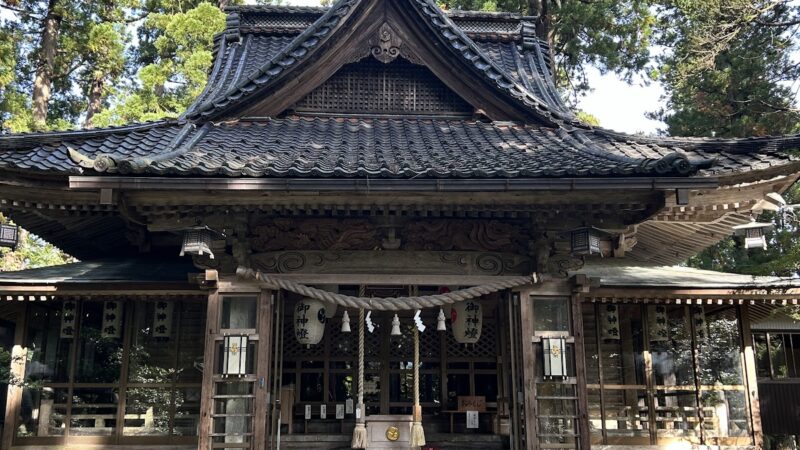
Johana Shinmei-gu Shrine (Toyama Prefecture) Complete Guide | The History and Charm of the Float Festival Registered as a UNESCO Intangible Cultural Heritage
Johana Shinmei-gu Shrine, located in the Johana area of Nanto City, Toyama Prefecture, is a shrine nationally known for its magnificent float festival held every May. This festival, designated as an Important Intangible Folk Cultural Property as the “Float Procession of the Johana Shinmei-gu Shrine Festival,” was registered as one of the UNESCO Intangible Cultural Heritage “Mountain, Float, and Procession Events” in 2016. This article provides a detailed explanation of the history of Johana Shinmei-gu Shrine, the highlights of the float festival, and its cultural value.
What is Johana Shinmei-gu Shrine?
Johana Shinmei-gu Shrine is a shrine located in Johana, Nanto City, Toyama Prefecture, and enshrines Amaterasu Omikami as its main deity. The town of Johana prospered during the Edo period through its silk weaving industry, and the Genroku culture flourished there through economic exchange with Kyoto. Against this backdrop of economic prosperity, the festival of Shinmei-gu Shrine, which began during the Kyoho era (1716-1736), developed as a symbol of the townspeople’s wealth and cultural sophistication.
The shrine itself is located in the heart of Johana, and the surrounding area retains its historical streetscape. Johana is also known as a temple town for Zentoku-ji Temple of the Shinshu Otani sect, and is a region with a rich religious and cultural history.
History of the Johana Shinmei-gu Shrine Festival’s Float Procession
Origin and Development of the Festival
The Johana Float Festival is believed to have begun at the beginning of the Kyoho era as the spring festival of Johana Shinmei-gu Shrine. In 1717 (Kyoho 2), a portable shrine was constructed, and processions of lion dances and umbrella floats also began. This forms the foundation of the festival that continues to this day.
The floats were first introduced in 1719 (Kyoho 4), and by 1724 (Kyoho 9), the tradition of the floats accompanying the portable shrine procession was established. At that time, Johana was economically prosperous due to the flourishing silk weaving industry, and the townspeople actively adopted Kyoto culture. This cultural background provided the fertile ground for the elaborate decorations of the floats and portable shrines, and the refined tradition of the accompanying songs.
Transmission from the Edo Period to the Present
The Johana Float Festival, which developed throughout the Edo period, has continued to be held annually in May as a spring festival since the Meiji era. Even after a period of interruption during wartime, the tradition was preserved thanks to the enthusiasm of the local residents, and currently, the Johana Float Festival Preservation Society plays a central role in continuing the festival.
On February 12, 2002, it was designated as an Important Intangible Folk Cultural Property (Customs and Practices: Festivals (Beliefs)), and in 2016, it was registered as a UNESCO Intangible Cultural Heritage as one of the “Mountain, Float, and Procession Events.” This means that the float procession of the Johana Shinmei Shrine Festival has gained international recognition for its cultural value.
Characteristics and Highlights of the Johana Float Festival
Festival Structure and Procession Welcoming the Gods
The Johana Float Festival consists of the eve festival on May 4th and the main festival on May 5th each year. During the main festival, a traditional procession welcoming the gods takes the form of a god-welcoming procession, with lion dances and sword floats appeasing evil spirits and driving away demons, and umbrella floats welcoming the divine spirits. This form is a precious tradition that remains only in Johana within Toyama Prefecture.
The festival procession consists of the following in order:
- Lion Dance – Role: to appease evil spirits and ward off evil demons
- Sword-Shaped Float – Purifying the sacred area
- Umbrella-Shaped Float – Welcoming the divine spirits
- Portable Shrine – Carrying the sacred object in procession
- Hillside Float – Young men perform the Hillside Song
- Float – A magnificent float carrying the sacred image
Artistry of the Floats and Hillside Floats
The greatest highlight of the Johana Hikiyama Festival is the six floats and hillside floats. The floats carry sacred images and are adorned with intricate carvings and lacquer work. The decorations, which embody the pinnacle of traditional lacquerware known as Johana-nuri, are works of art that represent the culmination of the craftsmen’s skills.
The floats owned by each neighborhood are as follows:
- Higashijomachi – Float carrying a statue of Guan Yu
- Nishijomachi – Float carrying a statue of Empress Jingu
- Higashishitamachi – Float carrying a statue of Emperor Shun
- Nishishitamachi – Float carrying a statue of children at play
- Daikumachi – Float carrying a statue of the Crane’s Repayment of Kindness
- Noshitamachi – Float carrying a statue of Benzaiten from Chikubu Island
The Iori-yatai is a mobile stage that moves in front of the floats, adorned with delicate carvings and painting. Inside, young men perform evocative Iori-uta songs, rooted in Edo-style folk songs, adding a unique atmosphere to the festival.
Iori-uta and the Tradition of Young Men
Iori-uta is an important intangible element of the Johana Float Festival. Influenced by Edo-style folk songs, these refined songs are performed by young men from each neighborhood, known as Wakarenchu, inside portable shrines. Accompanied by the shamisen, the Iori-uta (songs) strongly reflect the influence of Kyoto culture and symbolize the cultural sophistication of Johana.
The Wakarenchu undergo rigorous training for several months before the festival, mastering the traditional singing style. This transmission system has preserved the Iori-uta tradition for over 300 years. The Iori-uta, performed inside the portable shrines, are also sung as the shrines parade through the streets and at the Yamajuku (rest stops in each neighborhood), bringing an elegant atmosphere to the entire festival.
The Illusory Beauty of the Evening Festival and Lantern Floats
On the evening of May 4th, the festival floats transform into lantern floats. Hundreds of lanterns adorn the floats as they parade through the town at night, creating a fantastical beauty completely different from that of the daytime. The sight of the floats and portable shrines illuminated by lanterns moving through the quiet night streets of Johana continues to captivate many tourists.
During the evening festival, the floats and portable shrines are displayed at the float lodgings in each neighborhood, allowing visitors to admire their elaborate decorations up close. During this time, traditional folk songs are also performed, and the sound of the shamisen and singing under the lantern light creates a particularly charming atmosphere.
Cultural Value of the Johana Shinmei-gu Festival
Significance as an Important Intangible Folk Cultural Property
The float procession of the Johana Shinmei-gu Festival was designated as an Important Intangible Folk Cultural Property in 2002. This designation was based on the following evaluations:
- Preservation of the ancient style of welcoming the gods procession – The only remaining form in Toyama Prefecture
- Inheritance of Edo period townspeople’s culture – Evidence of prosperity and cultural sophistication brought about by the silk weaving industry
- Exquisite craftsmanship – The culmination of traditional crafts, including Johana lacquerware
- Inheritance of intangible performing arts – Preservation of the unique musical culture known as Iori-uta
- Community solidarity – A system in which each neighborhood cooperates to preserve the festival
These elements were comprehensively evaluated, and the festival was recognized as a representative festival of Japanese folk culture.
Registration as a UNESCO Intangible Cultural Heritage
In 2016, the float procession of the Johana Shinmei-gu Festival was registered as one of the components of “Mountain, Float, and Festival Cart Events” on the “Representative List of the Intangible Cultural Heritage of Humanity” under the UNESCO Convention for the Safeguarding of the Intangible Cultural Heritage. The Johana Hikiyama Festival is one of the most internationally recognized examples of the 33 nationwide mountain, float, and portable shrine festivals that were registered collectively.
With its registration as a UNESCO Intangible Cultural Heritage, the Johana Hikiyama Festival’s value as a global cultural heritage was recognized in the following respects:
- A symbol of the identity and continuity of the local community
- Preservation and transmission of traditional craft techniques
- A system for the transmission of culture across generations
- A role in strengthening the social cohesion of the region
Johana Town and Cultural Heritage
History as a Temple Town of Zentoku-ji Temple
Johana has a history of developing as a temple town of Zentoku-ji Temple, a branch temple of the Shinshu Otani sect. Zentoku-ji Temple is an ancient temple founded during the Muromachi period and played a major role in the formation of Johana town. The unique religious culture, where Shinto beliefs of Shinmei-gu Shrine and Buddhist beliefs of Zentoku-ji Temple coexist, is a characteristic feature of Johana town.
Silk Weaving Industry and Cultural Prosperity
During the Edo period, Johana flourished as a center of the silk weaving industry, producing high-quality silk products known as “Johana silk.” Through economic exchange with Kyoto, the townspeople actively adopted Kyoto culture, fostering a sophisticated townspeople’s culture influenced by the Genroku era.
This economic prosperity formed the foundation for the creation of magnificent floats and portable shrines, the development of exquisite Johana lacquerware, and the refined tradition of traditional folk songs. Even today, Johana retains historical buildings and streetscapes that evoke the town’s past prosperity.
Gateway to Gokayama and Shirakawa-go
Modern Johana also serves as a gateway for tourists visiting the World Heritage sites of Gokayama and Shirakawa-go. Access to the World Heritage sites is possible from Johana Station, the terminal station of the JR Johana Line. During the float festival season, many tourists visit Johana in conjunction with World Heritage sightseeing, making it a hub for regional cultural tourism.
Access and Tourist Information for the Johana Hikiyama Festival
Event Dates
The Johana Hikiyama Festival is held annually on fixed dates:
- Eve Festival: May 4th (Evening)
- Main Festival: May 5th (All Day)
The festival will be held regardless of weather, but some events may be changed in case of severe weather.
Access Methods
Public Transportation
- Get off at Johana Station on the JR Johana Line, then walk approximately 10 minutes to the area around Johana Shinmei Shrine.
- Transfer to the JR Johana Line from Shin-Takaoka Station on the Hokuriku Shinkansen.
By Car
- Approximately 15 minutes from Fukumitsu IC on the Tokai-Hokuriku Expressway
- Approximately 20 minutes from Tonami IC on the Hokuriku Expressway
Traffic restrictions will be in place during the festival period, limiting vehicle access to the town. It is recommended to use the temporary parking lots in the surrounding area and view the festival on foot.
Viewing Tips
Tips for enjoying the Johana Hikiyama Festival to the fullest:
- Arrive early – The festival day is crowded with many tourists, so arrive early to secure a good viewing spot.
- Visit the floats – The floats and portable shrines are open to the public at the floats in each town, allowing you to admire the elaborate decorations up close.
- Listen to the portable shrine songs – The performance of portable shrine songs on the portable shrines is an important element of the festival, so be sure to listen.
- The evening festival is also a must-see – The fantastical beauty of the lantern floats has a completely different charm than during the day.
- Stroll through the townscape – Strolling through the historic townscape of Johana in conjunction with the festival will allow you to understand the culture more deeply.
Activities of the Johana Hikiyama Festival Preservation Society
The Johana Hikiyama Festival Preservation Society engages in various activities to pass on the traditions of the festival to future generations. Through a wide range of activities, including the restoration and preservation of the floats and portable shrines, instruction of traditional festival songs (An-uta) to young people, and coordination of festival operations, they are preserving a tradition that has lasted for over 300 years.
In recent years, following its registration as a UNESCO Intangible Cultural Heritage, information dissemination both domestically and internationally has been strengthened. By widely conveying the cultural value of the festival, it is enhancing local pride and promoting its use as a tourist resource.
Johana Shinmei Shrine and Surrounding Cultural Facilities
Johana-za (Johana Traditional Performing Arts Center)
This facility introduces the traditional culture of Johana, and displays exhibits and video materials related to the float festival year-round. Parts of the actual floats and portable shrines are also on display, allowing visitors to experience their charm even outside of the festival period. An-uta experience programs are also offered, making it a base for a deeper understanding of Johana’s culture.
Johana Betsuin Zentoku-ji Temple
Located in the heart of Johana town, this temple of the Shinshu Otani sect boasts numerous historical buildings, including its main hall, designated as an Important Cultural Property. It is an important facility for understanding Johana’s unique religious culture, where the Shinto culture of Shinmei-gu Shrine and the Buddhist culture of Zentoku-ji Temple coexist.
Johana Kurakairo (Warehouse Corridor)
This tourist facility, housed in renovated Meiji-era warehouses, features shops selling local specialties, restaurants, and galleries. It forms a corner of Johana’s historic townscape and is a popular resting spot for tourists.
Summary
Johana Shinmei-gu Shrine (Nanto City, Toyama Prefecture) is known for the Johana Hikiyama Festival, which has a history of over 300 years. The festival, which began during the Kyoho era, developed against the backdrop of Johana’s prosperous town culture, fostering a unique culture characterized by magnificent floats, portable shrines, and refined folk songs.
The float procession of the Johana Shinmei-gu Festival, designated as an Important Intangible Folk Cultural Property and registered as one of the UNESCO Intangible Cultural Heritage “Mountain, Float, and Procession Festivals,” is internationally recognized as a representative example of Japanese festival culture. With its ancient style of welcoming the gods, exquisite craftsmanship, and the transmission of intangible performing arts, the festival possesses multifaceted cultural value and continues to be carefully preserved by the local community.
Every year, on May 4th (the eve of the festival) and May 5th (the main festival day), many tourists from all over Japan visit to experience Johana’s traditional culture. As a gateway to the World Heritage sites of Gokayama and Shirakawa-go, Johana will undoubtedly continue to showcase its charm as a leading cultural and tourism hub in Toyama Prefecture.