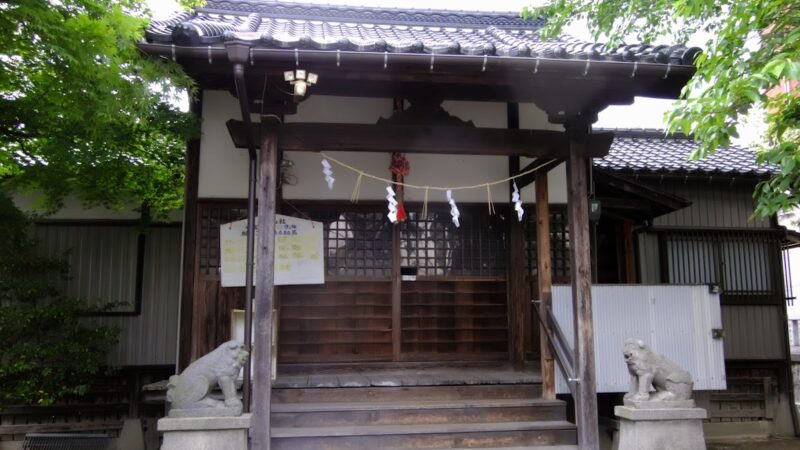
Complete Guide to Hakusan Shrine (Nishinakano Honmachi, Toyama City, Toyama Prefecture)
Located in Nishinakano Honmachi, a short distance south of Toyama City’s central business district, Hakusan Shrine is a historic shrine cherished by local residents. Facing a main street served by the city tram, it continues to provide a quiet place of worship amidst the increasing urbanization of Toyama City. This article provides a detailed explanation of Hakusan Shrine’s history, enshrined deities, blessings, access methods, and differences from the nearby Hakusan Shrine.
Basic Information on Hakusan Shrine
Hakusan Shrine is a shrine located in Nishinakano Honmachi, Toyama City, Toyama Prefecture, and has long been a village shrine, attracting the faith of the local community. It is conveniently located within walking distance of Nishinakano Station on the city tram line, making it easily accessible from central Toyama City.
Location and Access
Address: Nishinakano Honmachi, Toyama City, Toyama Prefecture
Nearest Station:
- Approximately 3 minutes on foot from Nishinakano Station on the Toyama Chihō Railway city tram
- Within walking distance from Koizumimachi Station on the Toyama Chihō Railway city tram
Located along a main street where the city tram runs, it is also easily accessible by car. It takes about 15 minutes to reach the shrine from Toyama Station by city tram.
History and Origins of Hakusan Shrine
While detailed records of the founding date of Hakusan Shrine are not available, it is believed to have been established along with the spread of Hakusan worship in the Toyama region.
Spread of Hakusan Worship
Hakusan worship is a mountain worship practice that venerates Mount Hakusan (elevation 2,702m), a sacred mountain straddling Ishikawa and Gifu prefectures, as its deity. With Hakusan Hime Shrine (Hakusan City, Ishikawa Prefecture), the Ichinomiya (first-ranked shrine) of Kaga Province, as its head shrine, there are approximately 3,000 Hakusan shrines and Hakusan sha shrines throughout Japan, primarily in the Hokuriku region.
Numerous Hakusan sha shrines have also been established within Toyama Prefecture, each attracting worship as a local tutelary deity or guardian deity of the village. The Hakusan sha shrine in Nishinakano Honmachi is one such shrine founded within this tradition of Hakusan worship.
History as a Village Shrine
Under the Meiji era’s shrine ranking system, Hakusan shrines were classified as “village shrines.” A village shrine is a shrine worshipped as the guardian deity of a village, closely intertwined with the lives of the local residents. It is believed that prayers for abundant harvests, family safety, and protection from evil were offered there, serving as a spiritual pillar for the Nishinakano Honmachi area.
Deities and Blessings
Main Deity: Shirayama-hime no Okami
The deity enshrined at Shirayama Shrine is Shirayama-hime no Okami (also known as Kukuri-hime no Kami). This deity is an ancient goddess who appears in the *Nihon Shoki* (Chronicles of Japan) and is said to possess the following divine attributes:
Divine Attributes:
- Goddess of Matchmaking
- Goddess of Harmony
- Goddess of Binding
- Ancestor of Life
In the myths of the *Nihon Shoki*, she is depicted as the goddess who mediated a quarrel between Izanagi and Izanami. Because of this, she is believed to possess the divine power to “create relationships” and “resolve disputes.”
Expected Benefits
The following are some of the benefits you can expect from visiting Hakusan Shrine:
- Matchmaking and Successful Relationships: Forging good relationships not only between men and women, but also between people, in business, and in all kinds of relationships.
- Marital Harmony and Family Harmony: Deepening family bonds and bringing harmony within the home.
- Protection from Misfortune and Disaster: Protection from various calamities.
- Business Prosperity: Development of businesses and success in trade.
- Abundant Harvest: Bountiful agricultural harvests and the blessings of nature.
- Health and Longevity: Health and longevity of mind and body.
Especially due to the name “Kukurihime,” the shrine is believed to have the power to bring things together and guide them in a positive direction, and it is said that many people at crossroads in their lives visit the shrine.
Differences between Hakusan-sha and Hakusan Shrine (Nakano-shinmachi)
In the city center of Toyama, in addition to Hakusan-sha in Nishinakano-honmachi, there is also Hakusan Shrine in nearby Nakano-shinmachi. These two shrines are close together, separated only by the tram line, but they are separate shrines.
Comparison with Hakusan Shrine (Nakano-shinmachi)
Hakusan Shrine (Nakano-shinmachi):
- Shrine Rank: Gosha (higher rank than Murasha)
- Official Name: Gosha Hakusan Shrine
- Scale: Has a relatively large precinct
- Alternate Name: Sometimes called Hakusan Sōsha (however, this is different from Etchū Hakusan Sōsha in Nunoi)
Hakusan-sha (Nishinakano-honmachi):
- Shrine Rank: Murasha
- Location: Along the city tram line
- Characteristics: A friendly atmosphere blended into an urban residential area
Both shrines are Hakusan worship shrines dedicated to Hakusan Hime Ōkami, but they differ in shrine rank and scale. When visiting, it is recommended to confirm in advance which shrine you will be visiting.
Shrine Grounds and Highlights
Characteristics of the Shrine Grounds
Despite facing a main street where the city tram runs, the grounds of Hakusan Shrine maintain a quiet and peaceful atmosphere. In Toyama City, which is undergoing urbanization, the existence of such a shrine serves as a spiritual anchor for local residents.
Besides the main hall and worship hall, the grounds are arranged with stone monuments and lanterns that tell the story of local faith. Although not large in scale, the carefully maintained grounds convey how much the shrine is cherished by the local people.
Points to Note When Visiting
Visiting Hours: The shrine grounds are generally open for free visits.
Worship Etiquette:
- Bow before passing through the torii gate.
- Cleanse your hands and mouth at the water basin.
- Bow twice, clap twice, and bow once in front of the main hall.
- When leaving, turn back and bow once after passing through the torii gate.
The quiet environment allows for a peaceful and calm visit.
Annual Events and Festivals
As a local shrine, Hakusan Shrine likely holds various festivals throughout the year. Typical Hakusan Shrine events include:
- New Year’s Day Festival: A festival celebrating the New Year.
- Spring Grand Festival: Celebrating the arrival of spring and praying for a bountiful harvest.
- Autumn Grand Festival: Giving thanks for the harvest and praying for the prosperity of the region.
- Monthly Festival: A regular monthly festival.
Specific dates and details can be found on local bulletin boards or by inquiring with nearby residents.
Nearby Attractions and Access Information
Nearby Shrines and Temples
Near Hakusan Shrine, there are several other historical shrines and temples:
- Hakusan Shrine (Nakano Shinmachi): A local shrine located a few minutes’ walk away.
- Etchu Hakusan Soja (Nunoichi, Toyama City): A central shrine of Hakusan worship, about a 15-minute drive away.
For those interested in Hakusan worship, a “Hakusan Shrine Pilgrimage” visiting these shrines is highly recommended.
Access from Toyama City Center
By Tram:
- Take the tram bound for Minami-Toyama Station or Daigaku-mae from Toyama Station.
- Get off at Nishinakano Station or Koizumi-cho Station.
- Approximately 3 minutes on foot.
- Travel time: Approximately 15 minutes.
- Fare: 210 yen for adults (as of 2024)
By Car:
- Approximately 10 minutes from Toyama Station.
- Approximately 15 minutes from Toyama IC on the Hokuriku Expressway.
- Parking: Parking may be available on the temple grounds or nearby (please check).
By Bus:
- Toyama Chihō Railway buses are also available.
- A few minutes’ walk from the nearest bus stop.
Historical Background of Hakusan Faith
What is Hakusan Faith?
Hakusan faith is an ancient Japanese mountain worship tradition that worships the sacred Mount Hakusan as its object of deity. Mount Hakusan is counted as one of the “Three Famous Mountains of Japan” and has long been known as a sacred site for Shugendō (mountain asceticism).
Mount Hakusan is said to have been opened in 717 AD by Taichō Daishi. Since then, Mount Hakusan has been revered as “Echizen’s Great Peak” by the people of the Hokuriku region, and pilgrimage routes were opened from three directions: Kaga, Echizen, and Mino.
Hakusan Faith in Toyama Prefecture
Toyama Prefecture is adjacent to Mount Hakusan, and Hakusan faith has flourished there since ancient times. Hakusan shrines and Hakusan temples were established throughout the prefecture, and each region developed its own unique form of worship.
In particular, there are several Hakusan shrines within Toyama City, including the Hakusan shrine in Nishinakano Honmachi. These shrines enshrine divided spirits from Hakusan Hime Shrine and have functioned as guardian deities of the region.
Visitor Feedback and Reviews
The following are some comments from people who have visited Hakusan Shrine:
- “Despite being located along the city tram line, the shrine grounds are quiet and peaceful, making for a peaceful visit.”
- “It’s a shrine deeply rooted in the community, with a friendly atmosphere.”
- “It’s easy to confuse it with the nearby Hakusan Shrine (Nakano Shinmachi), so be careful.”
- “Although small, it gives the impression of being carefully maintained.”
It’s clear that despite being in an urban area, it’s cherished as a place of worship for the local community.
Guidelines for Visiting Hakusan Shrine
Manners During Worship
When visiting a shrine, please observe the following manners:
- Attire: Clean and subdued clothing is preferred.
- Photography: Please refrain from taking photographs inside the main hall, etc.
- Noise: Please be quiet on the shrine grounds.
- Garbage: Please take your trash with you or dispose of it in the designated area.
- Offerings: Please place your offerings gently, without throwing them.
About Goshuin (Shrine Seals)
The issuance of Goshuin varies depending on the size and system of the shrine. If you wish to receive a Goshuin at Hakusan Shrine, it is recommended that you check in advance.
Toyama’s Hakusan Faith Network
There are many Hakusan shrines and Hakusan Shinto shrines in Toyama Prefecture, forming a network of Hakusan faith. The main Hakusan shrines include the following:
- Etchu Hakusan Sōsha (Nunoichi, Toyama City): The central shrine of Hakusan worship in Toyama
- Hakusan Shrine (Nakano Shinmachi, Toyama City): A local shrine that attracts the faith of the region
- Hakusan Shrine (Nishinakano Honmachi, Toyama City): The shrine introduced in this article
- Ōki Hakusan Shrine (within Toyama Prefecture): An ancient shrine with traditions dating back to the age of the gods
- Other Hakusan shrines throughout the prefecture
By visiting these shrines, you can experience the depth and breadth of Hakusan worship in Toyama.
Summary: The Significance of Visiting Hakusan Shrines
The Hakusan Shrine in Nishinakano Honmachi, Toyama City, is a valuable presence that continues to preserve local faith and traditions in the increasingly urbanized city of Toyama. Many people visit seeking the blessings of Hakusan Hime Ōkami, such as matchmaking, harmony, and protection from evil.
Located in a convenient location easily accessible by city tram, it’s a great place to stop by during your Toyama sightseeing. Visiting it along with the nearby Hakusan Shrine (Nakano Shinmachi) and Etchu Hakusan Soja will give you a deeper understanding of Toyama’s Hakusan faith.
Spending time in the tranquil grounds, calming your mind and offering prayers to Hakusan Hime Okami, will be a precious moment away from the hustle and bustle of everyday life. When you visit Toyama, be sure to stop by Hakusan Shrine.
Checkpoints Before Visiting
- Location: Nishinakano Honmachi, Toyama City, Toyama Prefecture
- Access: Approximately 3 minutes on foot from Nishinakano Station on the city tram
- Deity: Hakusan Hime Okami (Kukuri Hime no Kami)
- Main Blessings: Matchmaking, family harmony, protection from evil, business prosperity
- Visiting Hours: Generally open for worship at any time
- Nearby Shrines: Hakusan Shrine (Nakano Shinmachi), Etchu Hakusan Soja (Nunoichi)
Although Hakusan Shrine is not large in scale, it is a warm and welcoming shrine deeply rooted in the community. Please consider visiting as a valuable opportunity to experience Toyama’s history and faith.