
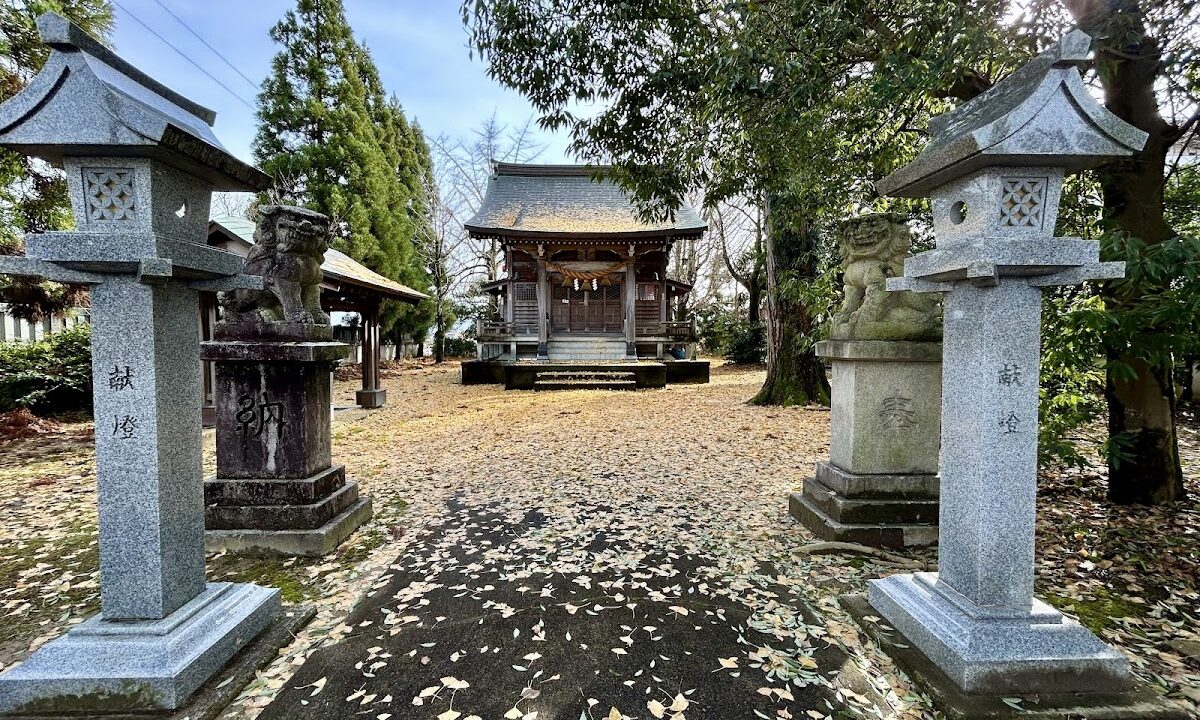
Shiratori Shrine (Teramachi, Toyama City, Toyama Prefecture) Complete Guide
Shiratori Shrine, located in Teramachi, Toyama City, Toyama Prefecture, is a shrine formerly known as a village shrine. It is said to have a deep connection with the Shiratori Shrine in Yao-machi, also in Toyama City, which is listed in the Engishiki (an ancient Japanese legal code). It is known as a historically significant shrine linked to the legend of Yamato Takeru no Mikoto. This article comprehensively introduces information you should know before visiting Shiratori Shrine, including its history, enshrined deities, features of the grounds, and access methods.
Basic Information about Shiratori Shrine
Shiratori Shrine is located in Teramachi, Toyama City, approximately 500 meters southwest of Nishi-Toyama Station along the prefectural road. It sits next to the Teramachi Community Center, and about 1 kilometer to the northwest is Shiroyama (elevation 146 meters), formerly known as Shiratori-mine. The Furukawa River, formerly the Jinzu River, flows behind it. Although now a fully urbanized area, it was once a thriving hub for water transport. ### Location and Shrine Rank
- Location: Teramachi, Toyama City, Toyama Prefecture
- Former Shrine Rank: Village Shrine
- Related Shrine: Shiratori Shrine (Mita, Yao-machi, Toyama City) – Engishiki-listed Shrine, Former Village Shrine
There are two Shiratori Shrines in Toyama City. The Shiratori Shrine in Yao-machi is an Engishiki-listed shrine and former village shrine, while the Shiratori Shrine in Teramachi is a former village shrine. However, the two shrines are said to have a deep relationship.
Deity Enshrined
The deity enshrined at Shiratori Shrine is Yamato Takeru no Mikoto. Yamato Takeru no Mikoto was a prince of Emperor Keiko, the 12th emperor, and a legendary hero appearing in the Kojiki and Nihon Shoki. He achieved numerous military feats in his eastern and western campaigns, and legends remain in various places that after his death, his soul transformed into a white swan and flew away.
The Legend of Yamato Takeru and the White Swan
It is said that Yamato Takeru, on his return from conquering the eastern provinces, was cursed by the god of Mount Ibuki and died in Nobono, Ise Province. According to the *Nihon Shoki*, his soul transformed into a white swan and flew away, passing through Kotohikihara in Yamato Province and Furuichi in Kawachi Province before finally ascending to heaven. In connection with this legend, white swan shrines were established throughout Japan.
In Etchu Province (present-day Toyama Prefecture), there is a legend that Yamato Takeru visited the area during his travels through various provinces, and it is believed that a white swan shrine was established as a result. In particular, the white swan shrine in Yao Town is an ancient shrine listed in the *Engishiki Jinmyocho* (a list of shrines compiled in the Heian period) as “Shiratori Shrine, Nei District, Etchu Province,” and was a center of Yamato Takeru worship in this region.
History
Founding and Relationship with Shiratori Shrine in Yao Town
The founding date of Shiratori Shrine in Teramachi is unclear, but it is said to have a deep connection with Shiratori Shrine in Yao Town. There is a theory that Shiratori Shrine in Yao Town was originally located in a low-lying area east of its current location, but was moved to its present site due to flooding of the Idagawa River.
A legend remains that the sacred object that was washed away during this relocation was recovered and enshrined at Shiratori Shrine in Teramachi. If this legend is true, then Shiratori Shrine in Teramachi is a shrine that enshrines a divided spirit of Shiratori Shrine in Yao Town.
Connection with Engishiki Shrines
The Engishiki Jinmyocho (compiled in 927) lists one shrine as “Shiratori Shrine in Nei District, Etchu Province.” This shrine is identified as the Shiratori Shrine located in present-day Mita, Yao Town. Shikinaisha shrines are high-ranking shrines that receive offerings (heihaku) from the imperial court, indicating their importance in this region since ancient times.
While the Shiratori Shrine in Teramachi is not a Shikinaisha, its connection to the Shikinaisha Shiratori Shrine in Yao-machi means it indirectly inherits its history.
Changes in the Early Modern and Modern Periods
During the Edo period, it was located within the territory of the Toyama Domain and was revered as the local tutelary deity. Under the Meiji era’s shrine ranking system, it was ranked as a village shrine and has been maintained as the center of faith for the local residents.
Even today, it serves as the tutelary deity of the Teramachi district, conducting local festivals and events, and acting as a spiritual pillar for the residents.
Shrine Emblem
The shrine emblem of Shiratori Shrine is generally the white swan emblem or bird emblem, derived from Yamato Takeru. Since the white swan is considered an incarnation of Yamato Takeru’s soul, it is adopted as the shrine emblem as a symbol of Shiratori Shrine.
The shrine’s crest visually represents the shrine’s history and enshrined deity, providing visitors with a clue to understanding its character. Seeing the swan crest, one can immediately understand that this shrine enshrines Yamato Takeru.
Highlights of the Shrine Grounds
Shrine Buildings
The Shiratori Shrine’s buildings consist of a main hall and a worship hall, a typical example of shrine architecture. While not large in scale, it is carefully maintained as the local guardian shrine.
Location and Surrounding Environment
The shrine is located next to the Teramachi Community Center, in a convenient location along the prefectural road. The Furukawa River, formerly the Jinzu River, flows behind it, a remnant of past water transport.
Approximately 1 kilometer to the northwest lies Shiroyama (elevation 146 meters), formerly known as Shiratori-mine. This mountain is believed to have been a sacred site associated with the worship of Shiratori Shrine. Although the area is now urbanized, old maps and topography reveal that the shrine was originally situated in a sacred place surrounded by water and mountains.
Shrines and Monuments
Within the shrine grounds, there are small subsidiary shrines and monuments. These are valuable historical materials that tell the story of the region’s history and the changes in its beliefs.
Annual Events and Festivals
At Shiratori Shrine, various festivals are held throughout the year as the local guardian shrine.
Annual Festival
The annual festival (reisai) is held at a fixed time each year, with local residents gathering for the Shinto rituals. The annual festival is the most important festival for the shrine, and is attended by the head of the parishioners and representatives of the community.
New Year’s Visit and Seasonal Events
The shrine is bustling with worshippers for the first shrine visit of the New Year. Seasonal rituals such as the Setsubun Festival and the Summer Purification Ceremony are also held and have become established annual events in the region.
Comparison with Other Shiratori Shrines in Toyama City
Besides the Shiratori Shrine in Teramachi, Toyama City, there is also a Shiratori Shrine listed in the Engishiki (an ancient Japanese legal code) located in Mita, Yao-machi. Let’s summarize the differences between the two shrines.
Shiratori Shrine in Yao-machi (Shikinaisha)
- Location: 1894 Mita, Yao-machi, Toyama City
- Shrine Rank: Engishiki-listed shrine, former village shrine
- Characteristics: An ancient shrine listed in the Engishiki Jinmyocho (Register of Shrines in the Engi Era), the center of Yamato Takeru worship in Etchu Province
- Goshuin (Shrine Seal): Available at Sugihara Shrine (pre-printed)
Shiratori Shrine in Teramachi
- Location: Teramachi, Toyama City
- Shrine Rank: Former village shrine
- Characteristics: Said to be related to Shiratori Shrine in Yao-machi, with a legend of the sacred object being carried away.
- Location: Close to the city center, easily accessible
While the two shrines differ in shrine rank and size, they both enshrine Yamato Takeru and attract local devotion. While the Shiratori Shrine in Yao-machi holds a “main shrine” status, the Shiratori Shrine in Teramachi is thought to have the character of a “branch shrine” enshrining a divided spirit.
Surrounding Shrines and Shikinaisha Shrines of Etchu Province
Numerous Shikinaisha shrines and ancient shrines of Etchu Province exist around Shiratori Shrine.
Sugihara Shrine
Sugihara Shrine, which manages the goshuin (seal impression) of Shiratori Shrine in Yao-machi, is also one of the important shrines of Etchu Province. Several Sugihara Shrines are located in Yao-machi and Fuchu-machi in Toyama City.
Shinmei Shrine (Sugita, Yao-machi)
Shinmei Shrine, located in Sugita, Yao-machi, is also a shrine included in the faith sphere of this region.
Etchu Hakusan Soja Shrine
Etchu Hakusan Soja Shrine is also located in Toyama City, serving as a center of Hakusan worship. These shrines have interconnected and formed a network of shrines in Etchu Province.
Access
Here’s how to access Shiratori Shrine.
Access by Train
- Nearest Station: JR Takayama Line, Nishi-Toyama Station
- Distance from Station: Approximately 500 meters southwest
- Walking Time: Approximately 7-10 minutes
From Nishi-Toyama Station, proceed southwest along the prefectural road. Shiratori Shrine is located next to the Teramachi Community Center.
Access by Car
- Hokuriku Expressway: Approximately 15 minutes from Toyama IC
- Parking: Parking available on the shrine grounds or nearby (details require on-site confirmation)
It is also accessible from central Toyama City in about 10-15 minutes by car.
Access by Bus
You can also use the Toyama Chihō Railway bus. Take a bus bound for Teramachi and get off at the nearest bus stop.
Points to Note When Visiting a Shrine
Visiting Hours
While shrines are generally open 24 hours a day, it is recommended to visit during daytime hours if you wish to receive assistance at the shrine office or obtain a Goshuin (shrine stamp).
Attire and Manners
When visiting a shrine, please dress neatly. Basic manners include bowing before passing through the torii gate and purifying your hands and mouth at the temizuya (water basin) before praying.
Photography
Photography is generally permitted within the shrine grounds, but it is considered good manners to refrain from taking pictures inside the main hall or during Shinto rituals.
About Goshuin
Information regarding Goshuin for Shiratori Shrine in Teramachi is limited, but it is known that Goshuin for Shiratori Shrine in Yao-machi can be obtained as pre-printed stamps at Sugihara Shrine. When visiting Shiratori Shrine in Teramachi, it is recommended to check in advance whether Goshuin are available and how to obtain them.
Shiratori Shrine and the History and Culture of Toyama
Etchu Province and the Legend of Yamato Takeru
Etchu Province (present-day Toyama Prefecture) was under the influence of the Yamato court from ancient times and is believed to be related to the legend of Yamato Takeru’s eastern expedition. While the *Nihon Shoki* (Chronicles of Japan) records Yamato Takeru’s pacification of the eastern provinces, mentions of the Hokuriku region are limited. However, local legends suggest that Yamato Takeru visited Etchu Province (Echizen, Etchu, and Echigo) during his travels through various provinces, and it is thought that Shiratori Shrine was established as a result of this connection.
Jinzu River and Water Transport
The Furukawa River (formerly the Jinzu River), which flows behind Shiratori Shrine, was once an important waterway supporting Toyama’s logistics. It is speculated that the shrine’s location by the water’s edge also served to pray for the safety of water transport and express gratitude for the blessings of water.
Regional Characteristics of Teramachi
The place name Teramachi literally indicates an area with many temples. Toyama City’s Teramachi district is known as an area with a concentration of temples, including those of the Jodo Shinshu sect, forming a unique religious landscape where shrines and temples coexist.
How to Enjoy Visiting Shiratori Shrine
Visiting Shiratori Shrine in Yao Town
After visiting Shiratori Shrine in Teramachi, be sure to also visit Shiratori Shrine in Yao Town, a shrine listed in the Engishiki (an ancient Japanese legal code). Visiting both shrines will give you a deeper understanding of the spread of the Yamato Takeru faith and the history of the region.
Visiting Nearby Temples
Many temples are scattered throughout Teramachi. Enjoying a temple tour before or after visiting the shrine is highly recommended. You’ll be able to experience Toyama’s religious culture firsthand.
Exploring Toyama’s History
Starting from Shiratori Shrine, it’s a good idea to visit spots where you can learn about Toyama’s history, such as the Toyama Castle ruins and the Toyama City Local History Museum. This will give you a deeper understanding of the shrine’s historical background.
Summary
Located in Teramachi, Toyama City, Shiratori Shrine is a former village shrine dedicated to Yamato Takeru and has long been a center of local faith. It has a deep connection to the Shiratori Shrine in Yao Town, a shrine listed in the Engishiki (an ancient Japanese legal code), and boasts an intriguing history involving the legend of the sacred object being swept away.
Its convenient location, within walking distance of Nishi-Toyama Station, makes it easily accessible. When visiting Toyama, be sure to pay your respects at Shiratori Shrine and reflect on the legend of Yamato Takeru and the history of Etchu Province.
Although not large in scale, Shiratori Shrine remains a deeply rooted local guardian shrine, a spiritual anchor for residents. Praying in its tranquil grounds, you can feel the spirit of ancient faith.
Visiting Shiratori Shrine along with other shrines and temples in Toyama City will provide a more comprehensive understanding of the religious culture of Etchu Province. For history buffs and those who enjoy visiting shrines and temples, Shiratori Shrine is a must-see.
References and Related Information
For those who wish to learn more about Shiratori Shrine, please refer to the following materials and information on related shrines:
- Engishiki Jinmyocho (Entry for Nei District, Etchu Province)
- Materials from the Toyama Prefectural Shrine Association
- Exhibits at the Toyama City Local History Museum
- Historical records of Shiratori Shrine in Yao Town
- Sugihara Shrine (Location for receiving Goshuin stamps)
Local libraries and local history museums may hold detailed records about Shiratori Shrine. For those who wish to learn more, we recommend visiting these facilities.
Shiratori Shrine (Teramachi, Toyama City, Toyama Prefecture) is a small but charming shrine rich in history and legend. If you have the opportunity to visit Toyama, please be sure to pay your respects and experience its tranquil atmosphere and the weight of its history.


