Hachiman Shrine (4-93 Kamigahara Yamada-cho, Nishinomiya City, Hyogo Prefecture) Complete Guide
Hachiman Shrine, located at 4-93 Kamigahara Yamada-cho, Nishinomiya City, Hyogo Prefecture, is a historic shrine long cherished by local residents. This article provides detailed information you should know before visiting, including the shrine’s history, enshrined deities, blessings, highlights of the grounds, how to worship, and access information.
Basic Information about Hachiman Shrine
Location and Access
Address: 4-93 Kamigahara Yamada-cho, Nishinomiya City, Hyogo Prefecture 663-8135
Located in Kamigahara Yamada-cho, this Hachiman Shrine is situated in a quiet residential area in northern Nishinomiya City. It is also close to the Kwansei Gakuin University campus and is a popular gathering place for students and local residents.
Access
Access by Train:
- Approximately 20 minutes on foot from Hankyu Imazu Line “Kotoen Station”
- Approximately 25 minutes on foot from Hankyu Imazu Line “Nigawa Station”
Access by Bus:
- Approximately 10 minutes on foot from Hankyu Bus “Kwansei Gakuin-mae” bus stop
- Approximately 12 minutes on foot from Hankyu Bus “Kamigahara” bus stop
Access by Car:
- Approximately 15 minutes from Chugoku Expressway “Nishinomiya Kita IC”
- Approximately 20 minutes from Hanshin Expressway “Nishinomiya IC”
We recommend checking parking availability in advance.
History and Origins of Hachiman Shrine
Origins of Hachiman Shrine
Hachiman Shrine is one of the approximately 44,000 Hachiman shrines nationwide, with Emperor Ojin as its main deity. The Hachiman Shrine in Kamigahara Yamada-cho, Nishinomiya City, has long been revered as a guardian deity of the region.
The Kamigahara area has historically developed as an agricultural region, and it is believed that this Hachiman Shrine was founded as a place to pray for a bountiful harvest and family safety in the area.
Deep Ties to the Community
The area around Kamigahara Yamada-cho was once a rural landscape, but it transformed into a residential area due to housing development since the Showa era. Even amidst this transformation, the Hachiman Shrine has been carefully preserved as a symbol of the community and a spiritual anchor.
Even today, it is maintained and managed by local parishioners and used as a venue for seasonal festivals, New Year’s visits, and life-changing rituals such as Shichi-Go-San (a traditional Japanese rite of passage for children).
Deities and Benefits
Main Deity: Emperor Ojin (Homudawake-no-Mikoto)
The main deity of the Hachiman Shrine is Emperor Ojin. He is also known as Hondawake-no-Mikoto and is known as the 15th Emperor of Japan. He was deified as Hachiman-Ōkami and is revered throughout Japan as the god of military fortune and the god of national protection.
Deities Enshrined
In many Hachiman shrines, the following deities are commonly enshrined alongside Emperor Ōjin:
- Hime-no-Ōkami: Considered one of the Munakata Three Goddesses, she grants blessings for maritime safety and traffic safety.
- Empress Jingū: The mother of Emperor Ōjin, she is worshipped as the guardian deity of safe childbirth and child-rearing.
Blessings
The main blessings you can receive at a Hachiman shrine are as follows:
- Protection from Misfortune and Good Fortune: Wards off misfortune and improves luck.
- Family Safety: Protects the health and peaceful life of the family.
- Traffic Safety: Protects against traffic accidents.
- Prayer for Safe Childbirth: Prays for a safe delivery.
- Protection for Child-Rearing: Watches over the healthy growth of children.
- Academic Success: Prays for academic improvement and passing examinations.
- Business Prosperity: Praying for the development and prosperity of one’s business.
- Long-lasting Military Fortune: Praying for victory in sports and competitions.
Especially in recent years, due to its proximity to Kwansei Gakuin University, many students visit the shrine to pray for academic success.
Highlights of the Shrine Grounds
Main Hall and Worship Hall
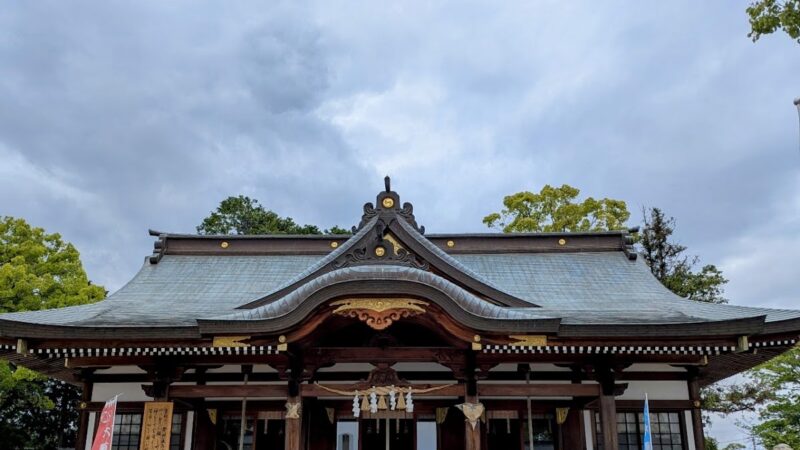
The main hall of Hachiman Shrine follows traditional shrine architectural styles. In the worship hall, worshippers offer their prayers and wishes daily.
Subsidiary Shrines
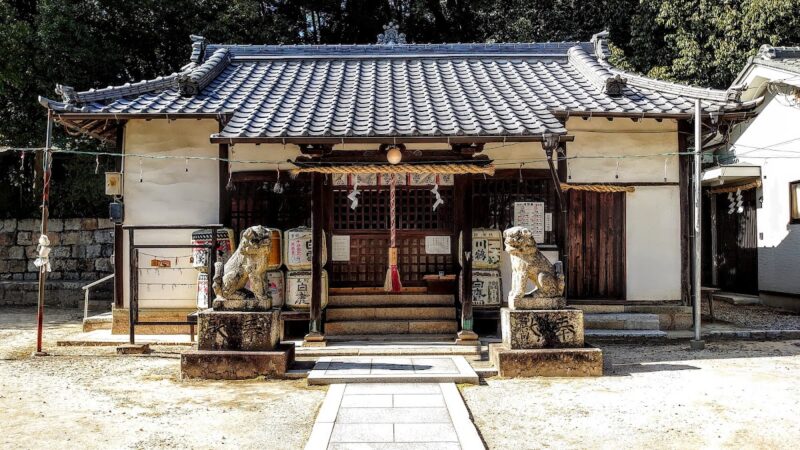
Around the main hall, there are sometimes subsidiary shrines that attract local devotion. These small shrines each have their own history and blessings, and are objects of worship for visitors.
Sacred Trees and Natural Environment
The shrine grounds feature ancient sacred trees and seasonal flowers, displaying different expressions throughout the seasons. The scenery is particularly beautiful during the cherry blossom season in spring and the autumn foliage season.
Located in a quiet residential area, the temple grounds are enveloped in a tranquil atmosphere, providing a peaceful environment for worship.
Annual Events and Festivals
Main Annual Events
At Hachiman Shrine, various Shinto rituals and festivals are held throughout the year:
January
- New Year’s Day Festival: Praying for peace and prosperity in the new year
- First Shrine Visit of the Year: Many worshippers visit the shrine
February
- Setsubun Festival: Scattering beans to ward off evil and invite good fortune
Spring
- Spring Grand Festival: Praying for a bountiful harvest and peace in the community
July
- Summer Purification Ceremony: Cleansing away sins and impurities accumulated over the past six months
Autumn
- Autumn Grand Festival: Expressing gratitude for the harvest and praying for the prosperity of the community
November
- Shichi-Go-San Festival: Giving thanks for children’s growth and praying for their continued healthy development
December
- Great Purification Ceremony: A ceremony to cleanse away the sins and impurities of the past year and prepare for a pure welcome of the new year.
The date of the festival may change from year to year, so it is recommended to check before visiting.
Etiquette and Manners for Visiting a Shrine
Basic Etiquette for Visiting a Shrine
There are traditional manners for visiting a shrine. When visiting Hachiman Shrine, please follow these steps:
1. Bow Before Passing Through the Torii Gate
The torii gate is the entrance to the sacred area. Bow before entering the shrine grounds.
2. Purifying at the Water Basin
- Hold the ladle in your right hand and purify your left hand.
- Switch the ladle to your left hand and purify your right hand.
- Switch the ladle back to your right hand, receive water in your left hand, and rinse your mouth.
- Purify your left hand again.
- Hold the ladle upright, purify the handle, and return it to its original position.
3. Worship at the Main Hall
- Place your offering in the offering box.
- Ring the bell if there is one.
- Bow using the two bows, two claps, and one bow method.
- Bow deeply twice.
- Clap your hands twice.
- Pray with sincerity.
- Bow deeply once.
4. When Leaving
After exiting the torii gate, turn around and bow once.
Attire for Worship
For a normal visit, clean and understated clothing is acceptable. However, when receiving a prayer, please note the following:
- Men: Suit or collared shirt with slacks
- Women: Suit, dress, or neat attire
- Clothing to avoid: Sandals, shorts, or overly flashy clothing
Prayers and Gifts
About Prayers
At Hachiman Shrine, you can receive prayers for various life milestones and wishes:
- First shrine visit (Omiyamairi)
- Shichi-Go-San (7-5-3) ceremony
- Exorcism prayer
- Safe childbirth prayer
- Traffic safety prayer
- Family safety prayer
- Business prosperity prayer
- Passing exam prayer
If you wish to receive a prayer, it is recommended that you contact the shrine in advance to confirm the date and time.
Items Offered
At shrines, you can receive the following items (availability varies by shrine):
- Amulets: Various types, such as protection from evil, traffic safety, and academic success.
- Talismans: For family safety, business prosperity, etc.
- Goshuin (Shrine Seal): As a memento of your visit (please check availability).
- Ema (Votive Tablet): For writing your wish and offering it.
Other Hachiman Shrines in Nishinomiya City
Besides the Hachiman Shrine in Kamigahara Yamada-cho, Nishinomiya City, there are several other Hachiman Shrines:
Koshien Hachiman Shrine
Location: 4-4-11 Kamikoshien, Nishinomiya City, Hyogo Prefecture
This shrine is worshipped as the guardian deity of the Koshien area and is particularly known for its many visitors, especially those involved in baseball. Due to its proximity to Koshien Stadium, high school baseball players and professional baseball players also visit.
Oichi Hachiman Shrine
Location: 3-31 Wakayama-cho, Nishinomiya City, Hyogo Prefecture
Known as the “Forest of the Great Camphor Tree,” the shrine grounds feature a large camphor tree said to be several hundred years old. Traditional festival events, such as the pulling of taiko drum floats, are still carried on here.
Naruo Hachiman Shrine
This shrine is revered by local residents as the guardian deity of the Naruo district. It is known as a historically significant shrine deeply intertwined with the region’s history.
Shinmei Hachiman Shrine
Location: 3-21 Shinmei-cho, Nishinomiya City, Hyogo Prefecture
This shrine is revered for prayers for family safety, protection from evil, good fortune, and victory. It is a combined Shinmei Shrine and Hachiman Shrine.
Each Hachiman Shrine has its own unique history and characteristics, playing a central role in the local community.
Nearby Tourist Attractions
Kwansei Gakuin University
Kwansei Gakuin University, located within walking distance of Hachiman Shrine, is known for its beautiful campus. The Spanish Mission-style architecture is designated as an Important Cultural Property and is open to visitors (with some restrictions).
Kōyama Forest Park
This park is rich in nature, located at the foot of Mt. Kōyama, a symbol of Nishinomiya City. It features hiking trails and observation decks, allowing visitors to enjoy the changing seasons.
Kitayama Greenery Botanical Garden
This botanical garden covers approximately 6 hectares and features a variety of plants. Visitors can enjoy beautiful scenery throughout the seasons, including a rose garden and a Japanese garden.
Nishinomiya City Local History Museum
This museum provides a glimpse into the history and culture of Nishinomiya. It exhibits the city’s development from ancient times to the present day.
History and Culture of the Kamigahara Area
Origin of the Place Name
The place name “Kamigahara” is believed to originate from the fact that this area is located on a plateau-like high ground. It is thought to have been named after “Upper Plain,” meaning a wilderness located on a high place.
Regional Development
The Kamigahara area was a rural area until the Meiji era, but it underwent a major transformation when Kwansei Gakuin University relocated there during the Taisho era. During the high economic growth period of the Showa era, it was developed as a residential area, forming the quiet residential neighborhood it is today.
Characteristics as an Educational District
Kamigahara, which has developed as an educational district centered around Kwansei Gakuin University, is known for its calm atmosphere and good living environment. A unique community has been formed where students and local residents coexist.
About Hachiman Worship
What is Hachiman-sama?
Hachiman-sama is a deity unique to Japan, with Emperor Ojin as its principal deity. It spread throughout Japan from Usa Shrine in Kyushu during the Nara period, and became widely worshipped, especially from the Kamakura period onward, as the guardian deity of samurai.
Hachiman Worship Nationwide
There are said to be approximately 44,000 Hachiman shrines throughout Japan, making them the second most numerous type of shrine after Inari shrines. The head shrine is Usa Shrine in Oita Prefecture, and it is known as one of the three great Hachiman shrines, along with Tsurugaoka Hachimangu Shrine in Kamakura and Iwashimizu Hachimangu Shrine in Kyoto.
Hachiman as a Popular Deity
Hachiman worship began as a guardian deity for samurai, but over time it spread among common people and came to be worshipped as a guardian deity for all aspects of life, including abundant harvests, family safety, and protection from evil and bringing good fortune.
Precautions for Visiting
Visiting Hours
Visiting the shrine grounds is generally recommended during daylight hours. Please take safety precautions when visiting early in the morning or after sunset.
Photography
Photography is generally permitted on the shrine grounds, but please note the following:
- Photography inside the main hall may be prohibited.
- Please refrain from taking photos during festivals or prayers.
- Please be considerate of other worshippers.
- Avoid using flash photography.
Pets
Regulations regarding pets vary by shrine. It is recommended to check in advance.
Parking and Access
As the shrine is located in a residential area, some surrounding roads are narrow. Please drive safely when visiting by car. Parking space may be limited, so please consider using public transportation.
Connection with the Local Community
Parishioner Organization
Hachiman Shrine is supported by local parishioners. The parishioner organization plays an important role in the maintenance and management of the shrine, the operation of festivals, and the revitalization of the local community.
Local Events
Local events centered around the shrine serve as a place for residents to interact. Through festivals, cleaning activities, and other events, community bonds are strengthened. ### Interaction with Children
Through events related to children’s growth, such as Shichi-Go-San (a traditional rite of passage for children) and Hatsumiyamairi (a first shrine visit for newborns), the shrine plays a watchful role in the development of local children. It is also sometimes used as a venue for local children’s club activities.
Summary
The Hachiman Shrine, located at 4-93 Kamigahara Yamada-cho, Nishinomiya City, Hyogo Prefecture, is a historical shrine deeply rooted in the community. It enshrines Emperor Ojin as its main deity and is believed to offer various blessings, including protection from misfortune, good fortune, family safety, and academic success.
Located in an educational district near Kwansei Gakuin University, it is popular with a wide range of people, from students to local residents. Situated in a quiet residential area, it provides a peaceful environment for worship.
Nishinomiya City also has several other Hachiman Shrines, including Koshien Hachiman Shrine, Oichi Hachiman Shrine, and Naruo Hachiman Shrine, each attracting worshippers as guardian deities of their respective regions. You can experience the diversity and regional characteristics of Hachiman worship.
When visiting a shrine, it is important to observe basic shrine etiquette and approach the visit with reverence. Seasonal festivals and annual events offer excellent opportunities to experience local traditional culture.
When visiting the Kamigahara area, we highly recommend visiting Hachiman Shrine to experience the region’s history, culture, and tranquil atmosphere.