Kumano Shrine (Takagi-Higashi-cho, Nishinomiya City, Hyogo Prefecture) Complete Guide: Visiting the Shrine of Mathematics and its History
Located at 16-37 Takagi-Higashi-cho, Nishinomiya City, Hyogo Prefecture, Kumano Shrine is a historic shrine dating back to before the Onin War. It is a unique place, housing Japan’s only “Sangaku-jinja” (Mathematics Shrine) within its grounds. This article comprehensively covers everything you need to know before visiting Kumano Shrine, from its detailed history and highlights to access information and visiting tips.
Overview and Basic Information of Kumano Shrine
Location and Basic Data
Location: 16-37 Takagi-Higashi-cho, Nishinomiya City, Hyogo Prefecture (Postal Code: 663-8153)
Former Shrine Rank: Village Shrine
Deities Enshrined: Izanami-no-Mikoto, Kumano-Musubi-no-Okami (Nachi-no-Okami)
Subsidiary Shrines: Sangaku Shrine, Atago Shrine, Inari Shrine
Kumano Shrine is a shrine quietly nestled in a residential area of Nishinomiya City, and has been cherished by local residents for many years. It is registered with the Hyogo Prefectural Shrine Association and is also a valuable green space designated as a scenic forest protection area by Nishinomiya City.
Characteristics of Kumano Shrine
The most distinctive feature of Kumano Shrine is the presence of Japan’s only “Sangaku Shrine” (Mathematics Shrine) within its grounds. Worshippers from all over Japan visit to pray for academic success in mathematics and arithmetic, making it a special place of worship for students and those involved in mathematics. Furthermore, the torii gate, rebuilt after the Great Hanshin-Awaji Earthquake, holds significant meaning as a symbol of the region’s recovery.
History and Origins of Kumano Shrine
Founding and the Wakaoji Shrine Era
Kumano Shrine is believed to have been founded during the Einin era (1293-1299), and is said to have existed before the Onin War (1467-1477) of the Muromachi period. Initially, it was called “Wakaoji Shrine (Nyakuoji-no-miya)” or “Wakaoji-no-miya,” and enshrined Wakaoji.
Wakaoji refers to Wakaoji Gongen in Kumano faith, a deity deeply connected to Kumano Nachi Taisha, one of the three Kumano shrines. This is important historical evidence showing that medieval Kumano faith spread to the Nishinomiya area.
Invitation from Kumano Nachi Taisha
In 1624 (Kanei 1), a significant change occurred in the early Edo period. In this year, the shrine officially welcomed “Kumano Musubi-no-Okami (Nachi-no-Okami)” from Kumano Nachi Taisha, further clarifying its character as a shrine of Kumano faith. Kumano Musubi-no-Okami is a deity identified with Izanami-no-Mikoto and is believed to bestow blessings such as matchmaking, family safety, and protection against evil.
Renaming and Ranking as a Village Shrine in the Meiji Era
Following the Meiji Restoration’s separation of Shinto and Buddhism, shrines throughout Japan were forced to undergo significant changes. Kumano Shrine was no exception, and in the Meiji era, its name was changed from “Wakaoji Shrine” to the current “Kumano Shrine.” Then, in August 1873 (Meiji 6), it was ranked as a village shrine under the old shrine ranking system.
A village shrine, under the shrine ranking system at the time, refers to a local shrine that serves as the tutelary deity of the community and is central to the faith of local residents. This ranking officially recognized Kumano Shrine’s role as a guardian deity of the region.
Modern and Contemporary History
From the Showa to the Heisei era, Kumano Shrine has grown alongside the local community. In particular, the shrine grounds suffered damage in the 1995 Great Hanshin-Awaji Earthquake, but thanks to the efforts of local residents, the torii gate and other structures were rebuilt. The current torii gate serves as a symbol of post-earthquake recovery, welcoming visitors.
Shrine Grounds Highlights and Cultural Assets
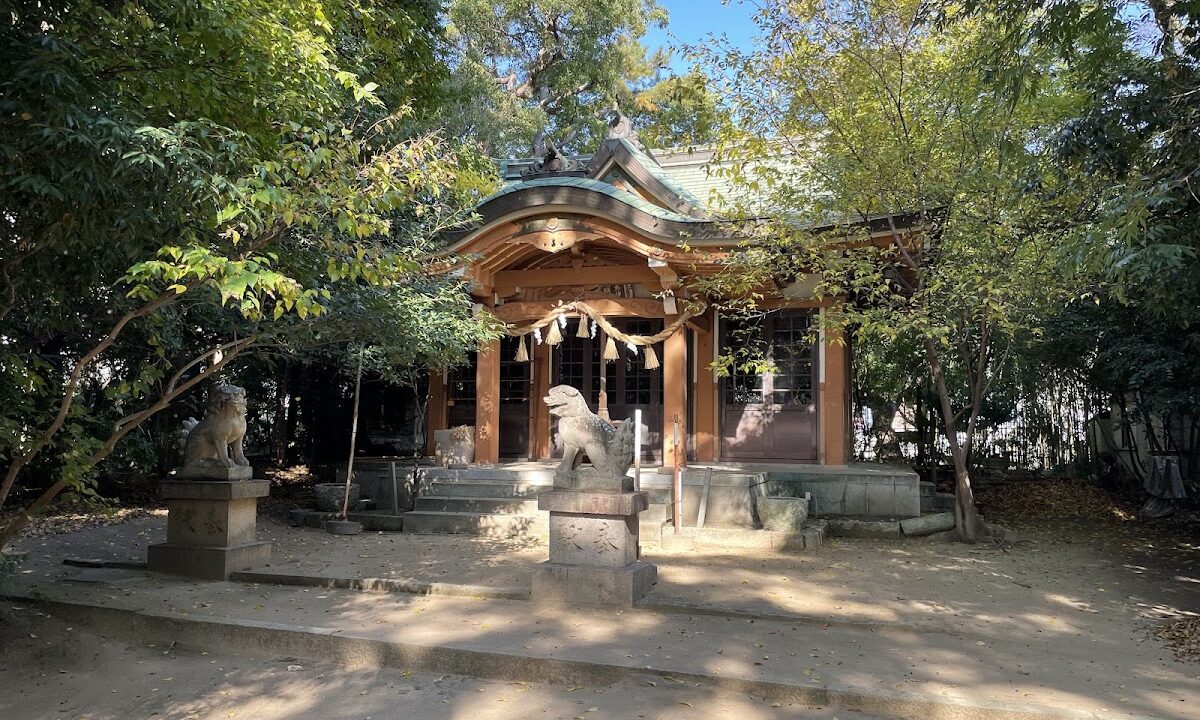
Sangaku Shrine: Japan’s Only Mathematics Shrine
Located within the grounds of Kumano Shrine, Sangaku Shrine is known as a unique “mathematics shrine” in Japan. This shrine has deep ties to the development of Wasan (traditional Japanese mathematics) during the Edo period.
During the Edo period, there was a custom of dedicating ema (votive tablets) called “Sangaku” to shrines as proof of solving mathematical problems. Sangaku Shrine is a valuable place that preserves this Wasan culture. Students praying for improved math and arithmetic skills, success in entrance exams, and people working in mathematics-related fields visit the shrine.
During exam season, many worshippers visit the shrine to pray for success in mathematics exams. It also attracts worshippers from professions that deal with numbers, such as IT professionals, engineers, and accountants.
Shrines within the Precincts: Atago Shrine and Inari Shrine
Besides the Mathematics Shrine, several other shrines are enshrined within the grounds of Kumano Shrine.
Atago Shrine is known as the god of fire prevention, offering blessings for household safety and protection from fire. Due to the fear of fire that has persisted since the Edo period, Atago worship spread to many regions, and it was later enshrined together with Kumano Shrine.
Inari Shrine is worshipped nationwide as the god of business prosperity and abundant harvests. Because Nishinomiya City also has aspects of a commercial city, it has attracted the faith of people praying for the prosperity of local businesses.
Shrine Building and Torii Gate
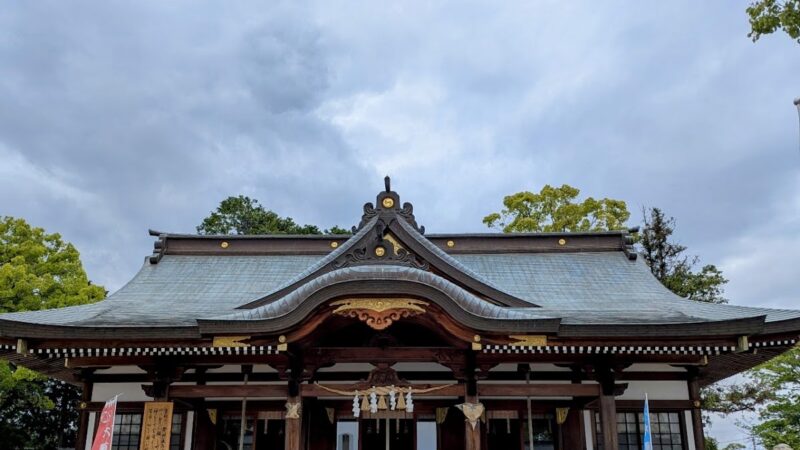
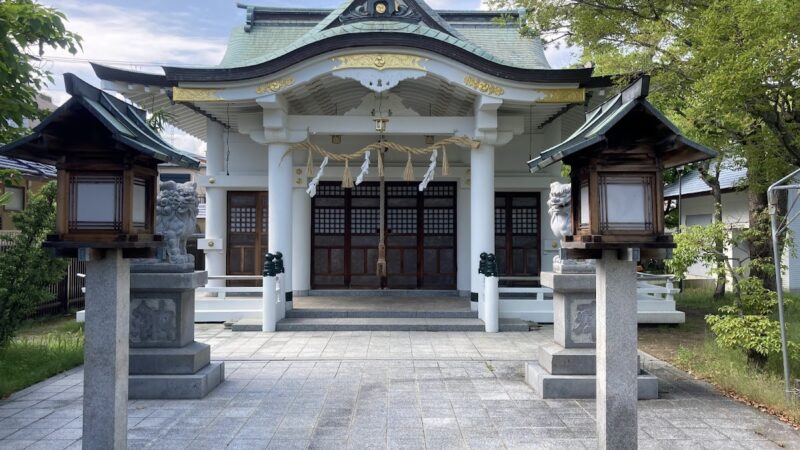
The shrine building of Kumano Shrine maintains traditional shrine architectural styles while being built to suit the local climate and environment. Both the main shrine and the worship hall are wooden structures, and are kept in excellent condition through regular maintenance.
As mentioned earlier, the torii gate was rebuilt after the Great Hanshin-Awaji Earthquake. As a symbol of recovery from the earthquake, it holds special significance for local residents. Because it is located slightly set back from the street, first-time visitors may have some difficulty finding the entrance.
Natural Environment of the Shrine Grounds
Kumano Shrine is designated as a scenic forest protection area by Nishinomiya City, and the grounds are lush with trees. In the increasingly urbanized city of Nishinomiya, it contributes to the preservation of the local environment as a valuable green space.
The forest within the shrine grounds is visible from along the Nakatsuhama Line as a “lush grove,” serving as a landmark indicating the shrine’s presence. The nature of the shrine grounds, which shows different expressions with each season, provides peace and tranquility to visitors.
Access and Transportation Information
Access by Train
Kumano Shrine is accessible from several train lines.
From JR Kobe Line Koshien-guchi Station
The nearest station is JR Koshien-guchi Station, approximately an 8-minute walk (about 530m-600m). Exit from the north exit of the station and head northwest through the residential area.
From Hankyu Imazu Line/Kobe Main Line Nishinomiya-Kitaguchi Station
From Nishinomiya-Kitaguchi Station, approximately a 15-21 minute walk (about 1.5-1.7km). Walk south from the station and head towards Nakatsuhama Line.
Access by Bus
Takagi-Higashi-machi Bus Stop: Approximately 1 minute walk (60m)
Kawagi Junior High School Bus Stop: Approximately 5 minutes walk (385m)
Kaminomachi Bus Stop: Approximately 5 minutes walk (400m)
When using the bus, Hankyu Bus or Hanshin Bus routes are convenient. The nearest bus stops are very close, making it easily accessible for the elderly and those with small children.
Access by Car and Parking
If you are visiting by car, aiming for the Nakatsuhama Line will make it easier to find. However, the shrine grounds are located in a residential area, and information regarding dedicated parking is limited. We recommend using nearby coin-operated parking lots or public transportation.
Landmarks in the Area
A useful landmark when looking for Kumano Shrine is the “lush forest” along the Nakatsuhama Line. Also, Kawaragi Junior High School is nearby, which can be helpful when asking locals for directions.
Visiting Information: Goshuin (Shrine Seals) and Shrine Office
About Goshuin (Shrine Seals)
One question when visiting Kumano Shrine is whether or not they offer goshuin. According to multiple visitor records, Kumano Shrine currently does not issue goshuin. While there is a shrine office, it does not appear to be open all the time.
This may be disappointing for those collecting goshuin, but the unique subsidiary shrine, Sangaku Shrine, and the peaceful environment make it well worth a visit.
Visiting Hours and Precautions
Kumano Shrine is generally open for worship 24 hours a day, but as it is located in a residential area, consideration for neighbors is necessary when visiting early in the morning or late at night. Daytime visits are recommended.
The shrine office’s opening hours appear to be irregular, so it is recommended to check in advance if you have any inquiries or special matters to attend to.
Divine Virtues and Faith of Kumano Shrine
Main Divine Virtues
Izanami-no-Mikoto, the enshrined deity of Kumano Shrine, is the goddess of creation in Japanese mythology. She is believed to bestow the following divine virtues:
- Matchmaking and Successful Relationships: As a goddess of marital harmony
- Safe Childbirth and Fertility: As a goddess of giving birth to life
- Family Safety: As a guardian deity of the home
- Protection from Evil and Disaster: As a goddess of protection from various calamities
Divine Virtues of Sangaku Shrine
The following blessings are expected at Sangaku Shrine.
- Academic Achievement: Especially improvement in mathematics and arithmetic skills
- Exam Success: Prayers for success in exams requiring mathematics
- Business Prosperity: Success in jobs involving calculations and accounting
- Skill Improvement: Skill improvement for engineers and IT professionals
Annual Events and Festivals
Kumano Shrine, as the local guardian shrine, holds various annual events. Specific festival dates may vary from year to year, so it is recommended to check local bulletin boards or the Hyogo Prefectural Shrine Association website for details.
General annual events at shrines include New Year’s Day visits, Setsubun festivals, and spring and autumn grand festivals. The shrine continues to weave history together with parishioners and visitors while preserving local traditions.
Nearby Shrines and Temples
There are several other shrines and temples worth visiting scattered around Kumano Shrine.
Hachiman Shrine: A shrine dedicated to Hachiman, known as the god of military fortune.
Itsukushima Shrine: Dedicated to Benzaiten, the goddess of water and performing arts.
Hino Shrine: A shrine beloved as the guardian deity of the region.
Visiting these shrines on a “shrine pilgrimage” would be a great opportunity to learn more about the history and culture of Nishinomiya City.
History of Nishinomiya City and Kumano Shrines
Origins of Nishinomiya City
Nishinomiya City is located in the southeastern part of Hyogo Prefecture, a transportation hub situated between Osaka and Kobe. It has flourished as a transportation hub since ancient times and has developed into a commercial city. It is also a region with deep religious significance, home to many shrines and temples, including Nishinomiya Shrine (the head shrine of Ebisu).
Spread of Kumano Faith
Kumano faith is a belief centered around the Kumano Sanzan (Kumano Hongu Taisha, Kumano Hayatama Taisha, and Kumano Nachi Taisha) in Wakayama Prefecture, and spread throughout Japan from the Heian period to the Kamakura period. So many people made the pilgrimage to Kumano that it was called “Ants on the Kumano Pilgrimage,” and for the sake of those who couldn’t make it, shrines were built in various places to enshrine the deities of Kumano.
The Kumano Shrine in Nishinomiya City was founded as part of this movement and has since attracted the faith of the local people.
Cultural Value of the Mathematical Shrine
History of Wasan and Sangaku
During the Edo period, a unique form of mathematics called “Wasan” developed in Japan. Wasan mathematicians solved mathematical problems and dedicated votive tablets called “Sangaku” to shrines as proof of their solutions. These Sangaku featured beautiful geometric figures, problems, and solutions, possessing not only mathematical value but also high artistic value.
Significance of the Mathematical Shrine in Modern Times
Even today, mathematics remains extremely important as the foundation of science and technology. Many technologies supporting modern society, such as AI, data science, and cryptography, are based on advanced mathematics.
The Mathematical Shrine, recognizing this importance of mathematics, continues to have modern significance as a place to respect mathematics as an academic discipline. In today’s world, where STEM education (Science, Technology, Engineering, and Mathematics) is highly valued, the existence of a shrine dedicated to mathematics (Sangaku) can be said to have cultural and educational value.
Manners and Etiquette for Visiting a Shrine
Basic Etiquette for Visiting a Shrine
By observing basic etiquette for visiting a shrine, you can offer a more heartfelt prayer.
- Bow before passing through the torii gate: This shows respect for entering the sacred area.
- Walk along the edge of the path: The center is considered the path of the gods.
- Purify yourself at the water basin: Purify your left hand, right hand, and mouth in that order.
- Etiquette at the main hall: Two bows, two claps, and one bow are the basic rituals.
Special Prayers at a Shrine Dedicated to Mathematics
At a shrine dedicated to mathematics, when praying for improved mathematical ability or success in exams, it is important to clearly define your specific goals. Pray with specific wishes in mind, such as “I want to get good grades on my math test” or “I want to improve my mathematical abilities.”
Points to Note When Visiting Kumano Shrine
Recommended Time to Visit
Kumano Shrine is open for worship throughout the year, but there are particularly recommended times to visit.
- Spring (March-May): The fresh greenery is beautiful, making it ideal for praying for academic success in the new academic year.
- Autumn (September-November): The autumn leaves are beautiful, making it ideal for praying for success before exam season.
- First Three Days of the New Year: Praying for a safe and peaceful year with your first shrine visit of the year.
Regarding Photography
Photography is generally permitted on the shrine grounds, but please be considerate of other worshippers. Especially refrain from taking photos inside the shrine buildings or in sacred areas.
Time Required
A visit to Kumano Shrine usually takes about 15-30 minutes. If you plan to visit the Sangaku Shrine and other subsidiary shrines, it’s best to allow 30 minutes to an hour.
Summary: The Charm of Kumano Shrine
Located in Takagi-Higashi-cho, Nishinomiya City, Hyogo Prefecture, Kumano Shrine boasts a history of over 700 years and is a unique shrine, being the only one in Japan dedicated to mathematics. Its long history, dating back to before the Onin War, the tradition of Kumano faith, and the cultural value of preserving Japanese mathematics culture deeply impress visitors.
In the increasingly urbanized city of Nishinomiya, the tranquil shrine grounds offer a precious space for peace of mind. It’s a shrine that students hoping to improve their mathematical abilities, those preparing for exams, those working in mathematics-related fields, and anyone interested in history and culture should definitely visit.
Access is relatively convenient, within walking distance of JR Koshien-guchi Station. It’s also within walking distance from Nishinomiya-Kitaguchi Station. While they don’t offer Goshuin (shrine stamps), its unique existence as a mathematics shrine and its warm, community-rooted atmosphere make it well worth a visit.
When you visit Nishinomiya City, why not stop by Kumano Shrine and experience Japanese traditional culture and the god of mathematics?