
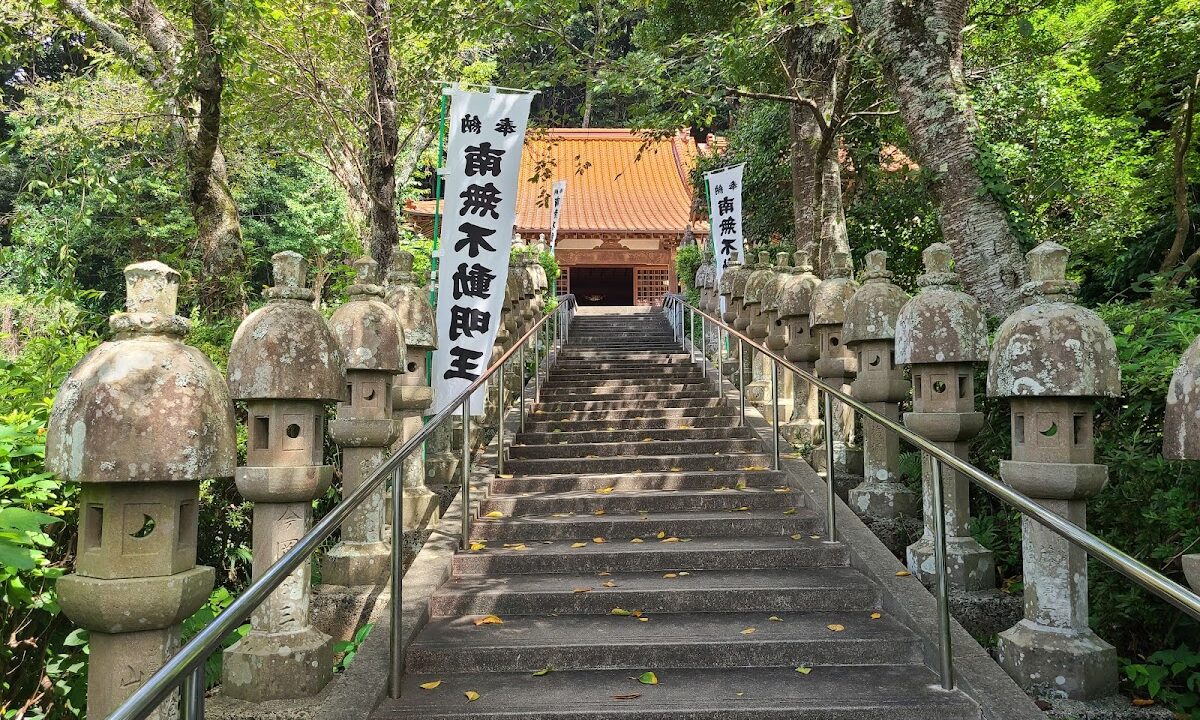
Complete Guide to Komyoji Temple (Maki Fudo-son) | A Thorough Explanation of the Three Great Fudo Myoo of Japan in Izumo City, Shimane Prefecture
Komyoji Temple (Maki Fudo-son), located in Maki-cho, Izumo City, Shimane Prefecture, is a Nichiren Buddhist temple affectionately known as “Maki no Ofudo-san” by the local people. It enshrines a Fudo Myoo known as one of the three great Fudo Myoo of Japan, alongside those at Naritasan Temple in Chiba Prefecture and Meguro Fudo-son in Tokyo, renowned for its miraculous powers. This article provides a detailed explanation of everything you need to know before visiting, from the history of Komyoji Temple and its highlights to how to worship and its annual events.
What is Komyoji Temple (Maki Fudo-son)?
Temple Overview and History
Komyoji Temple’s official name is “Myokyozan Komyoji,” and it belongs to the Nichiren sect. It is said that the temple converted to the Nichiren sect in 1631, but its origins are even older; some theories suggest that this Komyoji Temple is the Shinzoin temple in Asayama-go mentioned in the *Izumo no Kuni Fudoki* (a regional gazetteer of Izumo Province).
The *Un’yo-shi* (a historical record) states that the principal image, a statue of Fudo Myoo (Acala), was carved by the renowned Nara period monk, Gyoki Bodhisattva. There is a legend that Gyoki Bodhisattva carved three statues of Fudo Myoo from a single tree; one is enshrined at Umaki Fudo-son, and the other two are enshrined at Naritasan Shinsho-ji Temple in Chiba Prefecture and Takisen-ji Temple (Meguro Fudo-son) in Meguro, Tokyo. This is the origin of the “Three Fudo Myoo of Japan.”
The reason why it is affectionately known as “Umaki no Ofudo-san”
Locally, it is affectionately called “Umaki no Ofudo-san” and has long been a place of deep devotion. Fudo Myoo is one of the Myoo deities in Esoteric Buddhism, considered an incarnation of Dainichi Nyorai, and is believed to possess the power to sever worldly desires and crush delusion. Therefore, worshippers visit with various wishes, such as business prosperity, family safety, recovery from illness, and protection from evil.
Due to its location in Izumo City, it is also a popular place for those seeking matchmaking, and many people visit in conjunction with a visit to Izumo Taisha Shrine. As one of Shimane Prefecture’s leading power spots, it is attracting an increasing number of worshippers not only from the local area but also from outside the prefecture.
Characteristics of the Umaki Fudo-son (Fudo Myoo Statue)
Details and Sculptural Beauty of the Statue
The Fudo Myoo statue, the principal image of Umaki Fudo-son, is a magnificent wooden Buddha statue carved from a single piece of wood, measuring 157cm in height and 295cm in total height. This statue depicts Fudo Myoo in the typical form, with a flaming halo on its back, holding a demon-subduing sword in its right hand and a lasso (kensaku/net) in its left.
The most striking features of this Fudo Myoo statue are its powerful expression and exquisite sculpting. While displaying a wrathful countenance, the expression also conveys a sense of compassion, leaving a deep impression on the viewer. The flaming halo represents the flame of wisdom that burns away worldly desires, the sword symbolizes the power to sever delusions, and the lasso symbolizes compassion that saves all sentient beings.
Value as one of the Three Great Fudo Myoo of Japan
The Three Great Fudo Myoo of Japan refer to three statues of Fudo Myoo said to have been carved from a single tree by Gyoki Bodhisattva. These include the Fudo Myoo at Maki Fudo-son, the Fudo Myoo at Naritasan Shinsho-ji Temple in Narita City, Chiba Prefecture, and the Fudo Myoo at Takisen-ji Temple (Meguro Fudo-son) in Meguro Ward, Tokyo.
While there are various theories regarding the veracity of this legend, they all agree that Fudo Myoo has been worshipped as a highly efficacious deity since ancient times. Umaki Fudo-son holds a particularly important position as a center of Fudo worship in the Chugoku region.
Benefits and Beliefs of Fudo Myoo
Fudo Myoo, affectionately known as “O-Fudo-san,” is believed to offer the following benefits:
- Protection from Misfortune and Disaster: Burns away worldly desires and calamities
- Business Prosperity: Protects the success and prosperity of businesses
- Family Safety: Protects the health and happiness of family members
- Healing from Illness: Heals physical and mental illnesses
- Academic Success: Dispels doubts and guides one to the right path
- Fulfillment of Wishes: Grants the power to fulfill wishes with strong will
Fudo Myoo’s energy is powerful, and it is said that worshippers can feel its spiritual presence the moment they enter the temple grounds.
Highlights and Cultural Assets of the Temple Grounds
The Vermilion Gate
The first thing that catches the eye upon visiting Komyoji Temple is its vibrant vermilion gate. This gate stands out even from afar and is a symbol of Komyoji Temple. Vermilion is considered a color that wards off evil, and in Buddhist temples, it also signifies a boundary. Passing through the magnificent gate, you are immediately enveloped in the tranquil atmosphere of the temple grounds.
The Main Hall and Fudo Hall
Within the temple grounds are the Main Hall and the Fudo Hall. The Fudo Hall houses the Umaki Fudo Myoo statue. The hall is filled with a solemn atmosphere, and praying before Fudo Myoo evokes a feeling of purification.
Nichiren Buddhist services are held in the Main Hall, and a special service is held on the 28th of each month. A statue of Nichiren Shonin and a mandala are also enshrined inside, allowing one to feel the depth of Nichiren Buddhist faith.
Komyoji Temple Tomb No. 3 (Prefectural Designated Historic Site)
Komyoji Temple houses “Komyoji Temple Tomb No. 3,” a Shimane Prefecture designated historic site. This is believed to be a tomb dating from the Kofun period to the Nara period, and is a valuable historical site for understanding the ancient history of this region. It is rare to find Kofun period ruins within temple grounds, making it a must-see for history enthusiasts.
Nature and Seasonal Scenery on the Temple Grounds
The grounds of Komyoji Temple offer beautiful natural scenery throughout the seasons. Cherry blossoms bloom in spring, the greenery deepens in summer, the autumn leaves are stunning, and a serene snowscape unfolds in winter. Located slightly south of the center of Izumo City, it offers a peaceful environment for a leisurely visit.
Annual Events and Special Days
Monthly Special Day Service on the 28th
At Komyoji Temple, the 28th of each month is designated as the special day for Fudo Myoo (Acala), and a special service is held from 10:00 AM. On this day, many worshippers visit not only from the local area but also from far away.
On the festival day, stalls selling Japanese sweets and seafood line the temple grounds, and after the memorial service, worshippers interact with each other. It also serves as a community hub, offering a valuable opportunity to experience traditional temple culture.
Fudo Myoo Festival on the Day of the Ox
The biggest annual event at Komyoji Temple is the “Fudo Myoo Festival,” held every year on the Day of the Ox during the summer. This day sees a particularly large number of worshippers, and the temple grounds become very lively.
During the Fudo Myoo Festival, a special Goma (fire ritual) is performed, and the worshippers’ wishes are offered to Fudo Myoo. The flames of the Goma are believed to burn away worldly desires and deliver wishes to heaven. Furthermore, there are many stalls selling festival goods on this day, creating a festive atmosphere that families can enjoy.
Other Annual Events
- New Year’s Day First Shrine Visit: The temple is bustling with worshippers praying for good health and protection from illness in the new year.
- Setsubun Festival: Events such as bean-throwing are held.
- Obon Memorial Service: Memorial services for ancestors are held.
- New Year’s Eve Bell Ringing: The bell is rung to dispel the worldly desires of the year.
Visiting Information and Access
Basic Information
- Official Name: Myōkyōzan Kōmyōji Temple
- Common Name: Maki Fudo-son, Maki no Ofudo-san
- Sect: Nichiren Buddhism
- Principal Image: Fudo Myoo
- Address: 1123 Maki-cho, Izumo City, Shimane Prefecture 693-0212
- Phone Number: 0853-48-0600
- Visiting Hours: Grounds are freely accessible (please check for service times)
- Admission Fee: Free
- Parking: Available (accommodates approximately 100 passenger cars)
Access Methods
Access by Train
- Approximately 2.9km from JR San’in Main Line “Izumo-shi Station”
- Approximately 35 minutes on foot from Izumo-shi Station
- Approximately 10 minutes by taxi from Izumo-shi Station
Access by Car
- Approximately 15 minutes from San’in Expressway “Izumo IC”
- Approximately 10 minutes from the center of Izumo City via National Route 9
- Parking available (free, accommodates 100 cars)
Access by Bus
- Ichibata Bus available (please check routes and timetables)
Manners and Attire for Visiting
When visiting Komyoji Temple, please observe the following manners:
- Bow at the Temple Gate: Bow before passing through the temple gate
- Proper Hand-Washing Etiquette: Cleanse your hands and mouth at the hand-washing basin
- Please be quiet: Please behave quietly within the temple grounds.
- Photography: Permission may be required to take photographs inside the main hall.
- Dress Code: There are no specific rules, but please avoid revealing clothing.
About Goshuin (Temple Seals)
You can receive a Goshuin at Komyoji Temple. Goshuin are popular as proof of worship and as a memento of your trip. You can bring your own Goshuincho (stamp book) or purchase one on the spot (we recommend checking in advance as policies vary by temple).
The Goshuin of Maki Fudōson features the seal of Fudō Myōō and is characterized by its powerful calligraphy. As one of the three most famous Fudō Myōō in Japan, it is popular among Goshuin collectors.
Places to Visit Along with Nearby Tourist Spots
Izumo Taisha Shrine
Located about 20 minutes by car from Komyoji Temple, Izumo Taisha Shrine is a nationally renowned shrine dedicated to the god of matchmaking. Many people visit Komyoji Temple and Izumo City together, making it a popular destination for those exploring two major power spots in the Izumo area.
Izumo City Center
The area around Izumo City Station boasts numerous restaurants and souvenir shops where you can enjoy local cuisine such as Izumo soba noodles. Cultural facilities such as the Izumo Science Museum and the Izumo Yayoi Forest Museum are also scattered throughout the area.
Ichibata Yakushi Temple
Ichibata Yakushi Temple, known as the “Yakushi of the Eyes,” is also located about 30 minutes by car from Komyoji Temple. Famous for its efficacy in healing eye diseases, it’s an ideal stop on a temple tour of Shimane Prefecture.
Lake Shinji
Lake Shinji, located north of Izumo City, is known as a famous spot for sunsets. After visiting Komyoji Temple, watching the sunset over Lake Shinji is a highly recommended activity.
The Experience and Depth of Faith at Komyoji Temple
Feeling the Energy of Fudo Myoo
Many visitors report feeling a special energy upon entering the grounds of Komyoji Temple. They say that the powerful spiritual energy of Fudo Myoo permeates the entire grounds, giving them a sense of purification of mind and body.
Especially standing before the Fudo Hall, many experience being enveloped by Fudo Myoo’s stern yet compassionate gaze, revealing their own worldly desires and doubts. It’s not a frightening feeling, but rather a warmth that guides them to the right path.
A Faith Rooted in the Community
Komyoji Temple is not merely a tourist spot; it’s a place of faith deeply rooted in the lives of the local people. On the 28th of each month, local devotees who have been visiting for decades gather to share updates on their lives.
This role as a community hub is another major attraction of Komyoji Temple. Visitors are warmly welcomed, experiencing the profound embrace of “Maki’s Fudo-san.”
Experiencing the Goma Prayer Ceremony
At Komyoji Temple, you can receive a Goma prayer ceremony for those with wishes (advance reservation and donation required). During the Goma prayer ceremony, your wish is written on a wooden stick and burned in the flames, conveying your prayer to Fudo Myoo (Acala).
The sight of the flames rising is powerful, and you can feel as if your worldly desires are being burned away. This is a ceremony that we highly recommend for anyone with a sincere wish they wish to pray for.
Guidelines and Preparations for Visiting Komyoji Temple
Preparations Before Visiting
To make your visit to Komyoji Temple more fulfilling, please prepare the following beforehand:
- Clearly define your purpose of visit: Think about what you wish to pray for.
- Learn about history: Learning about Komyoji Temple and Fudo Myoo beforehand will deepen the meaning of your visit.
- Allow ample time: Take your time to stroll around the temple grounds and allow yourself time to contemplate Fudo Myoo.
- Prepare your Goshuincho (stamp book): If you wish to receive a Goshuin (stamp), bring your Goshuincho.
Flow of Visiting
- Park your car in the parking lot (or arrive on foot).
- Bow at the temple gate and enter the temple grounds.
- Purify your hands and mouth at the water basin.
- Visit the main hall and Fudo Hall, offer a donation, and bow in prayer.
- Stroll through the temple grounds and enjoy the historical sites and nature.
- Receive a Goshuin (temple stamp) (optional).
- Bow at the temple gate and depart.
Mindset for Visiting
Fudo Myoo, as the “Unmoving Venerable One,” symbolizes unwavering belief and strong will. When visiting, it is important to clarify your wishes and solidify your resolve to achieve them.
Fudo Myoo does not coddle you, but rather guides you strictly to the right path. Through your visit, confront yourself and renew your resolve to sever your worldly desires.
Delving Deeper into the History of Komyoji Temple
Connection to the Izumo Fudoki
The “Izumo Fudoki” is a geographical record compiled in 733 during the Nara period, describing the geography, products, and traditions of Izumo Province. There is a theory that the “Shinzoin of Asayama-go” mentioned in this record is Komyoji Temple.
If this is true, then Komyoji Temple’s history would span over 1300 years, making it one of the oldest temples in the Izumo region. While there is no definitive proof, this episode illustrates the long history of Buddhist faith in this area.
Conversion to the Nichiren Sect during the Kan’ei Era
Komyoji Temple is believed to have converted to the Nichiren sect in Kan’ei 8 (1631). During this early Edo period, a nationwide reorganization of temple sects took place, and it is thought that Komyoji Temple converted to the Nichiren sect as part of this trend.
The Nichiren sect emphasizes the chanting of the mantra “Namu Myoho Renge Kyo” and is based on the teachings of the Lotus Sutra. Komyoji Temple still conducts religious services in accordance with the traditions of the Nichiren sect.
The Meaning of the Gyoki Bodhisattva Legend
The legend that the Umaki Fudō-son statue was created by Gyoki Bodhisattva demonstrates the miraculous power and high value of this Buddha statue. Gyōki Bodhisattva was a high-ranking Buddhist monk of the Nara period, known for his travels throughout Japan, dedicating himself to temple construction and social welfare projects.
While it’s uncertain whether Gyōki actually visited Umaki, the very fact that this legend has been passed down speaks to the deep faith people have in Umaki Fudōson.
Summary: The Charm of Kōmyōji Temple (Umaki Fudōson)
Kōmyōji Temple (Umaki Fudōson) in Izumo City, Shimane Prefecture, is a temple supported by a long history and deep faith, as one of Japan’s three most important Fudō Myōō statues. The Fudō Myōō statue, said to have been created by Gyōki Bodhisattva, is a majestic figure, 157cm tall and 295cm tall overall, imbuing visitors with powerful energy.
Throughout the year, a variety of events are held, including the monthly auspicious day on the 28th and the Fudōson Festival on the Day of the Ox during the summer, making it a cornerstone of faith for the local people. Its convenient location, just a 10-minute drive from Izumo City Station, is a major draw, making it an ideal place to visit in conjunction with a visit to Izumo Taisha Shrine.
Experiencing the powerful spiritual energy of Fudo Myoo, having your worldly desires burned away and being guided to the right path, will surely bring new insights to your life. When visiting Shimane Prefecture, be sure to pay your respects at “Maki no Ofudo-san.”
Frequently Asked Questions (FAQ)
Q1: What are the visiting hours for Komyoji Temple (Maki Fudo-son)?
A1: While you can generally visit the grounds of Komyoji Temple freely, if you wish to request a memorial service or prayer, it is recommended to confirm in advance by phone (0853-48-0600). The memorial service held on the 28th of each month begins at 10:00 AM.
Q2: Is there parking available? Is there a fee?
A2: Komyoji Temple has a free parking lot that can accommodate approximately 100 cars. On special days such as temple festivals and the Fudo Myoo Festival, it may get crowded, so we recommend arriving early.
Q3: Can I get a Goshuin (temple stamp)?
A3: Yes, you can get a Goshuin at Komyoji Temple. Bring your own Goshuincho (stamp book), or you may be able to purchase one on the spot. Please inquire at the temple office for details.
Q4: What are the Three Great Fudo Myoo of Japan?
A4: The Three Great Fudo Myoo of Japan refer to three statues of Fudo Myoo said to have been carved from a single tree by Gyoki Bodhisattva. These are the Fudo Myoo of Maki Fudo-son (Shimane Prefecture), the Fudo Myoo of Naritasan Shinshoji Temple (Chiba Prefecture), and the Fudo Myoo of Takisenji Temple (Meguro Ward, Tokyo).
Q5: What kind of blessings can I expect at Komyoji Temple?
A5: Fudo Myoo is believed to offer blessings for protection against misfortune, disaster, business prosperity, family safety, recovery from illness, academic success, and the fulfillment of wishes. He is a powerful Buddha who burns away worldly desires and guides you to the right path.
Q6: How long does it take to get from Izumo Taisha Shrine to Komyoji Temple?
A6: It takes about 20 minutes by car from Izumo Taisha Shrine to Komyoji Temple. Many people visit both when sightseeing in the Izumo area.
Q7: Can I receive a Goma prayer?
A7: Yes, you can receive a Goma prayer at Komyoji Temple. We recommend making a reservation by phone in advance and confirming details such as the donation.
Q8: When is the Fudo Myoo Festival held on the Day of the Ox during the summer?
A8: The Fudo Myoo Festival is held every year on the Day of the Ox during the summer. The date of the Day of the Ox during the summer varies each year, so please check with the temple or consult a calendar before visiting. It usually falls around late July.
Q9: What is Komyoji No. 3 Tomb?
A9: Komyoji No. 3 Tomb is a Shimane Prefecture designated historical site, believed to be a burial site dating from the Kofun period to the Nara period. It is a valuable historical site for understanding the ancient history of this region.
Q10: Are there any points to keep in mind when visiting for the first time?
A10: There are no specific rules, but please observe basic temple etiquette such as bowing at the temple gate, purifying your hands and mouth at the water basin, and praying quietly. We recommend avoiding revealing clothing and dressing modestly.


