Complete Guide to Shogonji Temple (Izumo City, Shimane Prefecture) | History, Access, and Visiting Information
About Shogonji Temple
Shogonji Temple is a Rinzai Zen temple of the Myoshinji school located in Kamishohara, Hikawa-cho, Izumo City, Shimane Prefecture. Situated in a tranquil environment surrounded by the rich nature of the Izumo Plain, it has a long history as a center of faith for the local people.
The Rinzai Zen Myoshinji school is a branch of Zen Buddhism with Myoshinji Temple in Kyoto as its head temple, and is the largest Zen religious organization in Japan with approximately 3,400 branch temples nationwide. Shogonji Temple is one of them, playing a role in spreading the teachings of Zen in the region.
Basic Information on Shōgonji Temple
Location: 659-660 Kamishōbara, Hikawa-cho, Izumo City, Shimane Prefecture (Address varies between 659 and 660 depending on the source)
Sect: Rinzai Zen, Myōshinji School
Phone Number: 0853-72-1284
Nearest Stations:
- JR San’in Main Line “Shōbara Station” (approx. 2.5km, approx. 30-minute walk)
- JR San’in Main Line “Naoe Station”
- Ichibata Electric Railway Kita-Matsue Line “Tabushi Station”
History and Origins of Shōgonji Temple
Background of Founding
While the exact founding date and founder of Shōgonji Temple are unclear due to limited existing documents, it is believed to have been established with the support of influential local figures and devout believers.
The Izumo region has a long history of syncretism between Shinto and Buddhism. Alongside the Shinto culture centered around Izumo Taisha Shrine, numerous Buddhist temples were also established. Shōgonji Temple, within this historical context, has functioned as a spiritual pillar within the local community.
Relationship with the Myoshinji School of Rinzai Zen Buddhism
The Rinzai school was introduced to Japan during the Kamakura period by Zen Master Eisai. Later, the Myoshinji school began in the Muromachi period with the founding of Myoshinji Temple in Kyoto by Zen Master Kanzan Egen.
It is presumed that the history of religious reforms and temple consolidations from the medieval to early modern periods is involved in how Shōgonji Temple came to belong to the Myoshinji school. The practice of Zen koans, such as “Shōbōgenzō” and “Mumonkan,” which are part of the Myoshinji school’s teachings, has been passed down at this temple as well.
Connection with the Community
The Kamishohara district of Hikawa Town has long been a region centered on agriculture, and Shogonji Temple has played an important role as a venue for funerals, memorial services, and annual events for the local residents.
In particular, many parishioners and local residents gather for the Obon (Buddhist festival) memorial service and the spring and autumn equinox memorial services, continuing the tradition of honoring ancestors.
Highlights of the Temple Grounds
Main Hall
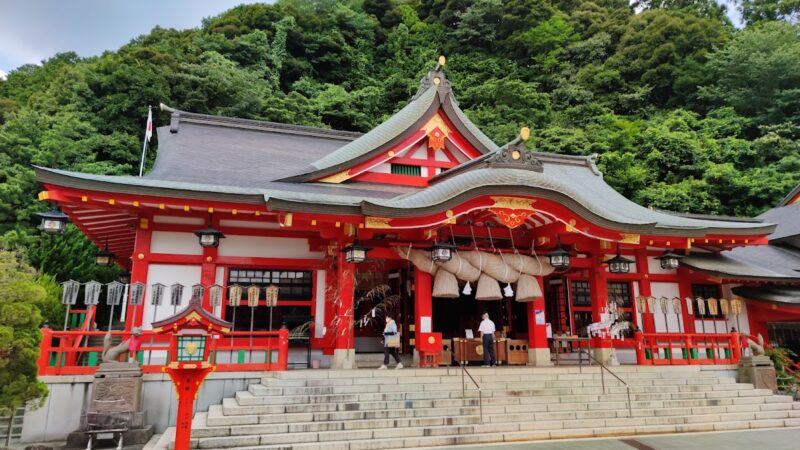
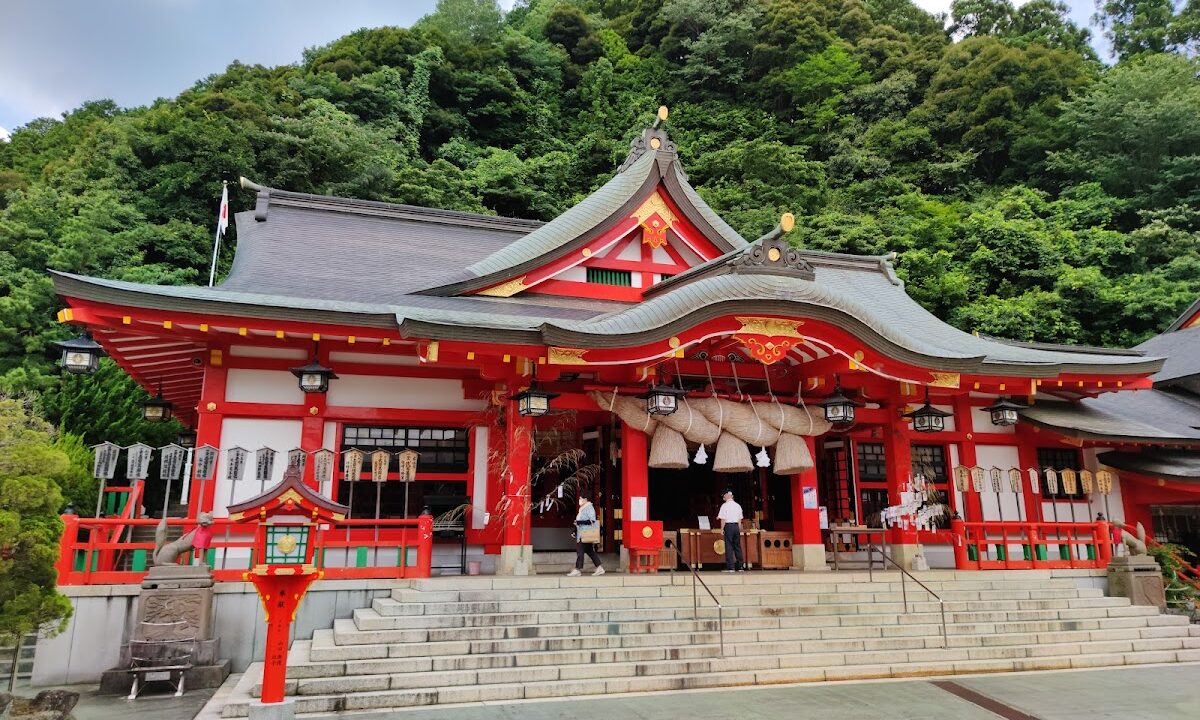
Shogonji Temple’s main hall exhibits the typical architectural style of a Rinzai Zen temple, creating a simple yet solemn atmosphere. The principal image is a statue of Shakyamuni Buddha, and the space, while simple, evokes a profound spirituality, as is characteristic of Zen temples.
Gardens and Natural Environment
The area surrounding the temple is a rural landscape of the Izumo Plain, where you can enjoy the changing seasons. Cherry blossoms in spring, fresh greenery in summer, autumn leaves in fall, and snowscapes in winter—each season offers a different face.
Cemetery
Shogenji Temple has an attached family cemetery, where generations of parishioners rest. The quiet and peaceful environment is a fitting space for remembering the deceased.
Access
Access by Public Transportation
Using the JR San’in Main Line:
The nearest station is “Shohara Station,” approximately 2.5 km away, about a 30-minute walk. There are no taxis stationed at the station, so we recommend booking in advance using a ride-hailing app or by phone with a taxi company.
Access is also possible from “Naoe Station,” but the distance is somewhat longer.
Using the Ichibata Electric Railway Kita-Matsue Line:
Access is also possible from “Tabushi Station,” but this is also a long walk, so taking a taxi is recommended.
Access by Car
If using the San’in Expressway:
- Approximately 10 minutes from “Hikawa IC”
- Approximately 15 minutes from “Izumo IC”
If using National Route 9:
From Izumo city center, take National Route 9 towards Matsue, then head towards Hikawa town. Setting “Shogonji Temple” or the address “659 Kamishohara, Hikawa-cho, Izumo City, Shimane Prefecture” in your map app or car navigation system is convenient.
Parking Information
The temple has parking spaces for visitors, but it may be crowded during religious services. It is recommended to call ahead to confirm.
Visiting Hours and Admission Fees
Shogonji Temple is a temple for temple parishioners and differs from typical tourist temples. While entry to the temple grounds is generally free, permission to view the interior of the main hall or attend a Dharma talk must be obtained by contacting the temple in advance.
There is no entrance fee, but offerings or donations are welcome and optional.
Etiquette for Visiting Temples
When visiting a Zen Buddhist temple, please observe the following etiquette:
- Maintain silence: Zen temples are places of spiritual training, so please visit quietly.
- Photography: Permission is required to photograph the interior of the main hall or Buddha statues.
- Attire: Avoid revealing clothing and visit in clean attire.
- Pray and bow: Pray and bow in front of the main hall.
Annual Events
Shogonji Temple holds the following annual events (please contact the temple for details):
- First three days of the New Year: First temple visit of the year, Shusho-e (New Year’s ceremony)
- Spring equinox: Higan memorial service
- Obon (Buddhist festival): Segaki memorial service, Urabon-e (Buddhist festival)
- Autumn equinox: Higan memorial service
- End of year: New Year’s Eve bell ringing
Cemetery and burial information around Shogonji Temple
About the Cemetery at Shogenji Temple
Shogenji Temple has a cemetery for its parishioners. Becoming a parishioner allows you to use the cemetery plot. Please contact the temple directly regarding plot availability and fees.
About Perpetual Memorial Services and Columbariums
In recent years, due to a shortage of successors and an increase in the demand for closing family graves, interest in perpetual memorial services and columbariums has grown. Please contact the temple directly regarding perpetual memorial services at Shogenji Temple.
Information on Nearby Cemeteries
The following cemeteries and burial grounds are located around Hikawa-cho, Izumo City:
Public Cemeteries:
- Izumo City-run cemeteries offer relatively low costs for acquiring a burial plot.
- Please contact Izumo City Hall for eligibility requirements and fees.
Private Cemeteries:
- Several cemeteries accept all religions, offering a wider range of choices.
- An increasing number of cemeteries feature modern facilities such as barrier-free design and ample parking.
Temple Cemeteries:
- Several temple cemeteries of denominations other than Rinzai Zen are located around Hikawa-cho.
- It is important to check the denomination and atmosphere of each temple before making a choice.
For Those Considering a Burial Plot
Points to Consider When Choosing a Burial Plot
1. Location and Access:
Consider the distance from your home and transportation options. It is important to choose a location that is easy to visit even in old age. Areas along the San’in Main Line or the Ichibata Electric Railway Kita-Matsue Line offer access via public transportation.
2. Costs:
The cost of a grave consists of the following elements:
- Perpetual use fee (land fee for the cemetery plot)
- Gravestone cost
- Annual maintenance fee
- Offering for memorial services
The average cost of a grave in Shimane Prefecture is said to be around 300,000 to 800,000 yen for the perpetual use fee and 800,000 to 1,500,000 yen for the gravestone.
3. Sect:
Shōgonji Temple belongs to the Myoshinji branch of the Rinzai school of Zen Buddhism, so becoming a parishioner generally requires belonging to the same sect. However, in recent years, the number of cemeteries that do not require a specific sect has increased.
4. Management System:
Check whether the cemetery is properly cleaned and the facilities are well maintained.
About Grave Closure
Increasingly, people are considering grave closure (grave dismantling) if they live far away and visiting the grave is difficult, or if they have no successor.
Procedure for Closing a Grave:
- Consultation and Agreement with Relatives
- Consultation with the Temple or Cemetery
- Application for Reburial Permit (City/Town/Village Office)
- Removal of Remains (Closing Ceremony)
- Removal of Gravestone and Return of Plot
- Interment at New Burial Site (Opening Ceremony)
If you are considering closing a grave at Shogonji Temple, it is important to first consult with the temple and proceed with the procedures carefully.
Rinzai Zen Temple in Izumo City, Shimane Prefecture
Characteristics of Rinzai Zen
Rinzai Zen is a branch of Zen Buddhism that focuses on zazen (seated meditation) and koan (Zen dialogue). It emphasizes the teaching of “No Reliance on Words, Separate Transmission Outside the Scriptures” (transmitting truth directly from mind to mind without relying on words or writing).
The Myoshinji branch particularly emphasizes “Kanwa Zen” (Zen using koan) and values its practice in daily life.
Rinzai Zen Temples in Izumo City
Besides Shogonji Temple, there are other Rinzai Zen temples in Izumo City, Shimane Prefecture. Each temple is deeply intertwined with the local history and culture, while preserving the teachings of Zen.
The Izumo region is a place with a strong Shinto culture, exemplified by Izumo Taisha Shrine, but Buddhist temples have also coexisted there since ancient times, continuing the tradition of syncretism between Shinto and Buddhism.
History and Culture of Hikawa Town
About Hikawa Town
Until its merger with Izumo City in 2011, Hikawa Town was an independent town belonging to Hikawa District. Known as a granary blessed with the abundant waters of the Hii River, it developed primarily through agriculture.
Main Local Products:
- Izumo Soba (buckwheat noodles)
- Rice (a producer of high-quality rice such as Nita rice)
- Vegetables
Nearby Tourist Attractions
When visiting Shogonji Temple, why not also visit the following nearby spots?
Izumo Taisha Shrine: One of Japan’s leading shrines, famous as a god of matchmaking
Kojindani Ruins: A national historical site where 358 bronze swords from the Yayoi period were unearthed
Izumo Yayoi Forest Museum: Exhibits artifacts unearthed from the Kojindani Ruins and Kamo-Iwakura Ruins
Hii River Embankment Cherry Blossom Avenue: A beautiful cherry blossom avenue stretching approximately 2 km in spring
Lake Shinji: A brackish lake known as a famous spot for sunsets
How to Contact Shogonji Temple
Telephone Inquiries
Telephone Number: 0853-72-1284
Examples of Inquiries:
- Availability and cost of cemetery plots
- Request for Memorial Services
- About Perpetual Memorial Services
- About Visiting and Worshiping
- Schedule of Annual Events
When calling, the appropriate time is between 9:00 AM and 5:00 PM. Please avoid early mornings, late nights, and meal times.
Preparation Before Visiting
If this is your first visit, preparing the following will make things smoother:
- Map/Navigation: Register the address in your smartphone’s map app or car navigation system.
- Offering: Have some small change ready.
- Attire: Choose clean and modest clothing.
- Advance Contact: If there are any scheduled memorial services, please call in advance to confirm.
About Shogonji Temples Nationwide
Existence of Temples with the Same Name
It is known that there are 13 temples named “Shogonji” throughout Japan. Within Shimane Prefecture alone, in addition to the Shōgonji Temple in Hikawa-cho, Izumo City, there is also a Shōgonji Temple in Kawamoto-cho, Ōchi-gun (address: 227 Mihara, Kawamoto-cho, Ōchi-gun, Shimane Prefecture).
“Shōgon” is a Buddhist term meaning “to adorn solemnly” or “a pure and magnificent appearance,” and is used to praise the virtues of Buddhas and Bodhisattvas. For this reason, many temples adopt this name.
Shōgonji Temples in Other Regions
Shōgonji Temples throughout Japan each belong to different sects and have different histories:
- Shōgonji Temples of the Shingon sect
- Shōgonji Temples of the Jōdo sect
- Shōgonji Temples of the Sōtō sect
Even with the same name, the sect and history differ. When visiting or inquiring, it is important to confirm the location and sect.
Summary
Shogonji Temple (Hikawa-cho, Izumo City, Shimane Prefecture) is a Rinzai Zen temple of the Myoshinji school, deeply rooted in the local community as a place of worship. Accessible from JR San’in Main Line Shohara Station and Ichibata Electric Railway Kita-Matsue Line, it offers a tranquil setting for ancestral worship and prayer in the peaceful environment of the Izumo Plain.
For inquiries regarding graves, perpetual memorial services, and Buddhist ceremonies, please contact the temple directly by phone (0853-72-1284). For those seeking a cemetery or memorial park in Shimane Prefecture, or those wishing to have memorial services at a Rinzai Zen temple, Shogonji Temple is a viable option.
Visiting Shogonji Temple in conjunction with nearby tourist attractions such as Izumo Taisha Shrine and the Kojindani Ruins will allow for a deeper understanding of the history and culture of the Izumo region. Why not experience a peaceful visit amidst the serene rural landscape?