Bandenji Temple (Nagara Town, Chiba Prefecture) Complete Guide | History, Highlights, and Access Information
Bandenji Temple, nestled in a quiet mountain village in Nagara Town, Chosei District, Chiba Prefecture, is an ancient Nichiren Buddhist temple that has long been a center of local faith. With Yakushizan as its mountain name, this temple belongs to the Nichijū school and remains cherished by local residents. This article provides a detailed explanation of Bandenji Temple’s history, cultural assets, highlights within the temple grounds, and access information.
Basic Information on Bandenji Temple
Bandenji Temple is a Nichiren Buddhist temple located in Rikimaru, Nagara Town, Chosei District, Chiba Prefecture. Its official name is “Yakushizan Bandenji,” and it is known as a temple belonging to the Nichijū school within the Nichiren sect.
Location and Contact Information
- Address: 534 Rikimaru, Nagara-machi, Chosei-gun, Chiba Prefecture 297-0204
- Sect: Nichiren Buddhism (Nichijū School)
- Mountain Name: Yakushizan
- Principal Image: Statue of Nichiren Daishonin (estimated)
Currently, Banda-ji Temple is managed by the head priest of Taisho-ji Temple as acting administrator, and daily temple operations are maintained through cooperation with neighboring temples. This is a common operational model for small temples in rural areas and can be considered an example of how a regional temple network continues to protect places of worship.
History and Origin of Banda-ji Temple
Background of Founding
While there are currently no clear records of Banda-ji Temple’s founding date, it is presumed to have been established sometime between the Muromachi and Edo periods as a temple of the Nichijū School. The Nichijū school is known as a branch of the Nichiren sect that places particular emphasis on scholarship and ascetic practice, and has established many temples in the Kanto region.
Meaning of the Mountain Name “Yakushi-yama”
The mountain name “Yakushi-yama” suggests a connection to the worship of Yakushi Nyorai (Medicine Buddha). Having a mountain name related to Yakushi Nyorai, despite being a Nichiren sect temple, indicates a possible integration with local folk beliefs or the inheritance of a tradition of Yakushi worship that existed in this area before its founding. Yakushi Nyorai is a Buddha who has attracted the faith of ordinary people who pray for healing from illness and good health and longevity, and it is thought that in this region, he has been revered as a guardian deity protecting people’s health since ancient times.
Characteristics of the Nichijū School
The Nichijū school is a branch of the Nichiren sect that particularly emphasizes rigorous doctrinal study and ascetic practice. Its founder, Nichijū Shōnin, faithfully followed the teachings of Nichiren Shōnin and advocated the balance between academic research and practical ascetic practice. Bandaji Temple has inherited this tradition and has functioned as a center for the teachings of Nichiren Buddhism in the region.
Cultural Assets and Highlights of Bandaji Temple
Main Hall and Temple Grounds Architecture
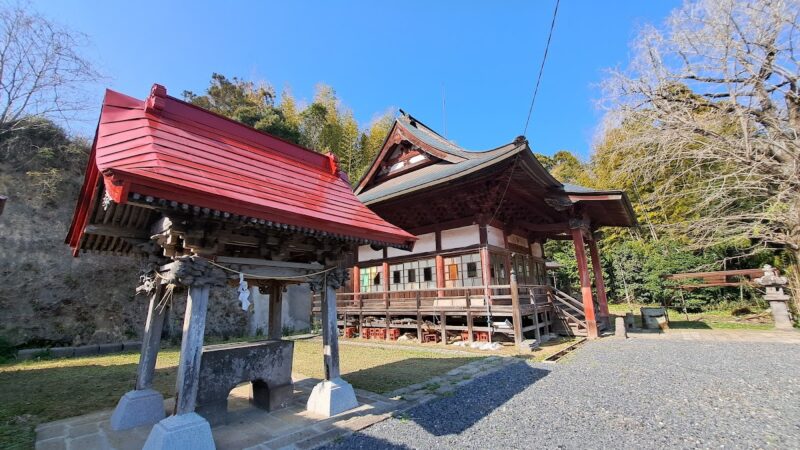
The main hall of Bandaji Temple is a wooden building that follows the traditional architectural style of Nichiren Buddhist temples. The temple grounds are surrounded by the quiet nature of a mountain village, and the scenery changes with the seasons, welcoming visitors. Especially during the cherry blossom season in spring and the autumn foliage season, the temple grounds are enveloped in beautiful colors.
The carvings and decorations on the transoms of the main hall showcase the craftsmanship of artisans from the Edo period to the Meiji period, and are considered to have value as a regional cultural asset. Further historical value may be revealed if a detailed investigation is conducted.
Principal Image and Object of Worship
As a Nichiren Buddhist temple, the principal image of Bandaji Temple is presumed to be a statue of Nichiren Daishonin. In the Nichiren sect, it is common to enshrine Nichiren Shonin, the founder of the sect, as the principal deity, and the teachings advocate achieving Buddhahood in this lifetime by chanting the title “Namu Myoho Renge Kyo.”
Within the temple grounds, there are believed to be statues of various Buddhas and Bodhisattvas enshrined as guardian deities of the region, reflecting a history of responding to the diverse religious needs of local residents.
The Relationship Between the Cemetery and the Community
The cemetery of Banda-ji Temple is the resting place of people who have lived in this region for generations. Tombstones of parishioners dating back to the Edo period remain, providing valuable resources for studying local history. The posthumous names and dates of death inscribed on the tombstones offer insights into the history of the region and the lives of its people.
The Temple Culture of Nagara Town and the Position of Banda-ji Temple
Historical Background of Nagara Town
Nagara Town is located almost in the center of Chiba Prefecture, in the central part of the Boso Peninsula, and has long been a community centered on agriculture. During the Kamakura period, this region was under the control of samurai clans, and temples functioned not only as religious facilities but also as centers of the local community.
Cultural Properties and Temples of Nagara Town
Besides Banda-ji Temple, Nagara Town has several other temples and shrines, each conveying the history and culture of the region. The town also has designated cultural properties by the prefecture and town, and detailed information about these cultural properties can be viewed in the digital archive of the Nagara Town History.
Banda-ji Temple, as part of this regional cultural property network, is an important presence that tells the history of Nagara Town.
How to Access Banda-ji Temple
Access by Car
The most convenient way to access Banda-ji Temple is by car.
From Tokyo:
- Take the Keiyo Expressway and Tateyama Expressway and exit at “Mobara-Chonan IC”.
- Approximately 20 minutes from the IC via the prefectural road.
From Chiba City:
- Approximately 40 minutes from National Route 16 via the prefectural road.
Regarding parking, there is likely a space for visitors on the temple grounds or nearby, but it is recommended to check in advance.
Access by Public Transportation
If using public transportation:
- Get off at “Mobara Station” on the JR Sotobo Line.
- Take a local bus or taxi from Mobara Station (approximately 30 minutes).
Since public transportation in Nagara Town is limited, it is important to check the number of buses and operating times in advance. Considering using a taxi is also a good idea.
Nearby Tourist Attractions
When visiting Bandaji Temple, we recommend also visiting other tourist attractions in Nagara Town.
- Nagara Dam: Enjoy beautiful lakeside scenery.
- Nagara Town Local History Museum: Learn about the history and culture of the region.
- Nearby Nature Trails: Experience the rich nature of Boso Peninsula.
Etiquette for Worshiping at Banda-ji Temple
Nichiren Buddhism Worship Methods
There are unique etiquette rules for worshipping at Nichiren Buddhist temples.
- A Bow at the Temple Gate: Before entering the temple grounds, bow at the temple gate.
- Purifying at the Water Basin: Purify your hands and mouth before proceeding to the main hall.
- Worship at the Main Hall: Offer your donation, clasp your hands together, and chant “Namu Myoho Renge Kyo.”
- How to Chant the Title: In Nichiren Buddhism, the basic practice is to chant “Namu Myoho Renge Kyo” three times.
Manners for Visiting the Temple
- Be quiet on the temple grounds and be considerate of other visitors.
- Refrain from taking photographs in prohibited areas such as inside the main hall.
- When entering the cemetery, remember to show respect to the deceased.
- Always take your trash with you.
Bandaji Temple and the Teachings of Nichiren Buddhism
Basic Doctrines of the Nichiren Sect
The Nichiren sect is a Buddhist sect founded by the Kamakura period monk Nichiren Shonin. It considers the Lotus Sutra (Myoho Renge Kyo) to be the one and only supreme scripture, and teaches that all people can attain Buddhahood by chanting the mantra “Namu Myoho Renge Kyo.”
Teachings of the Lotus Sutra
The Lotus Sutra teaches that all people possess Buddha-nature (the potential to become a Buddha). The idea that all people can equally attain Buddhahood, regardless of social status, gender, or past actions, was revolutionary at the time and garnered widespread popular support.
Nichiren Sect in Modern Times
Modern Nichiren Buddhism has approximately 5,000 temples nationwide and a large number of followers. Local temples like Bandaji Temple are also part of this large religious network, serving as spiritual centers in their communities.
Annual Events at Banda-ji Temple
Main Ceremonies and Events
Nichiren Buddhist temples hold various ceremonies and events throughout the year. It is believed that Banda-ji Temple also holds the following events:
Spring:
- Spring Equinox Service (March)
- Founding Ceremony (April 28th): A memorial service commemorating the day Nichiren Shonin founded the Nichiren sect.
Summer:
- Obon Memorial Service (August)
- Urabon Segaki Ceremony: An important event for ancestor worship.
Autumn:
- Autumn Equinox Service (September)
- Oeshiki Ceremony (October 13th): The most important memorial service commemorating the anniversary of Nichiren Shonin’s death.
Winter:
- New Year’s Eve Bell Ringing (December 31st)
- New Year’s Prayer Service (January)
Community Interaction Events
Banda-ji Temple, a small temple, is maintained through close ties with local residents. Activities such as cleaning by parishioners and local residents, and cooperation in local traditional events, demonstrate the temple’s integrated relationship with the community.
Preservation and Future of Banda-ji Temple
Current Situation and Challenges of Local Temples
Currently, local temples in Japan face serious challenges such as depopulation and a decline in parishioners. Banda-ji Temple is no exception, and the current situation, where the head priest of Taisho-ji Temple is acting as interim priest, reflects the reality of local temples.
Efforts to Maintain the Temple
The following efforts are important for maintaining local temples:
- Utilization of Temple Networks: Strengthening cooperation with neighboring temples
- Collaboration with Local Communities: Utilizing the temple as a local cultural hub
- Protection of Cultural Properties: Re-evaluating and preserving the historical and cultural value of the temple
- Information Dissemination: Disseminating temple information using digital technology
Value as a Cultural Property
Banda-ji Temple possesses significant value not only as tangible cultural properties such as buildings and Buddhist statues, but also as intangible cultural properties that convey the history of the region and the faith of its people. As an indispensable part of telling the history of Nagara Town, its preservation and transmission are essential.
Chiba Prefecture Nichiren Buddhist Temple Network
Role of the Chiba Prefecture Western Nichiren Buddhist Office
Banda-ji Temple is under the jurisdiction of the Chiba Prefecture Western Nichiren Buddhist Office. The office oversees the temples within its jurisdiction, providing operational support, training for monks, and promoting religious activities.
Nearby Nichiren Buddhist Temples
There are several other Nichiren Buddhist temples in the Nagara-machi area, and they cooperate with each other to support local faith. The network with neighboring temples, including Taisho-ji Temple, is essential for the maintenance of Banda-ji Temple.
Advice for Visitors
Best Time to Visit
Banda-ji Temple is open for visits throughout the year, but the best times to visit are:
- Spring (late March to April): Cherry blossom season, mild weather
- Autumn (October to November): Beautiful autumn foliage, time for the Oeshiki festival
- New Year’s Visit (January): For New Year’s prayers
Clothing and Items to Bring
- Clothing: Clean clothing suitable for visiting a temple (avoid overly casual attire)
- Items to Bring: Offering money, prayer beads (if you have them), camera, drinking water
- Summer: Hat, sunscreen, insect repellent
- Winter: Warm clothing (the temple grounds are in a mountainous area and can get cold)
Contact Information
Inquiries about Banda-ji Temple can be made through the Nagara Town Hall or the Nichiren-shu Chiba Prefecture Western District Office. Before visiting, it is recommended to check the schedule of memorial services and the condition of the temple grounds.
Summary: The Charm of Banda-ji Temple
Banda-ji Temple is an ancient Nichiren Buddhist temple nestled in a quiet mountain village in Nagara-machi, Chiba Prefecture. While not a glamorous tourist temple, it has played a vital role in supporting the faith of the local people and preserving history and culture.
As its mountain name, Yakushi-zan, suggests, this temple has long been cherished as a place where local residents pray for health and well-being. Currently, the head priest of Taisho-ji Temple serves as acting head priest, which is an example of the modern challenges faced by local temples and the regional temple network that helps overcome them.
Visiting Banda-ji Temple is not merely sightseeing; it will be an opportunity to rediscover the forms of faith that rural Japan has preserved, the bonds of local community, and the value of the temple as a cultural asset. Banda-ji Temple quietly continues to engrave its history amidst the rich nature of Nagara-machi. Perhaps its simple and unpretentious appearance is its greatest charm.
If you have the opportunity to visit the central part of the Boso Peninsula, be sure to stop by Bandaji Temple and experience the local history and faith. The time spent in quiet worship away from the hustle and bustle of the city will surely be a precious moment of spiritual healing for modern people.