
Complete Guide to Hanibe Gankutsuin | A Thorough Explanation of a Unique Spot in Komatsu City, Ishikawa Prefecture
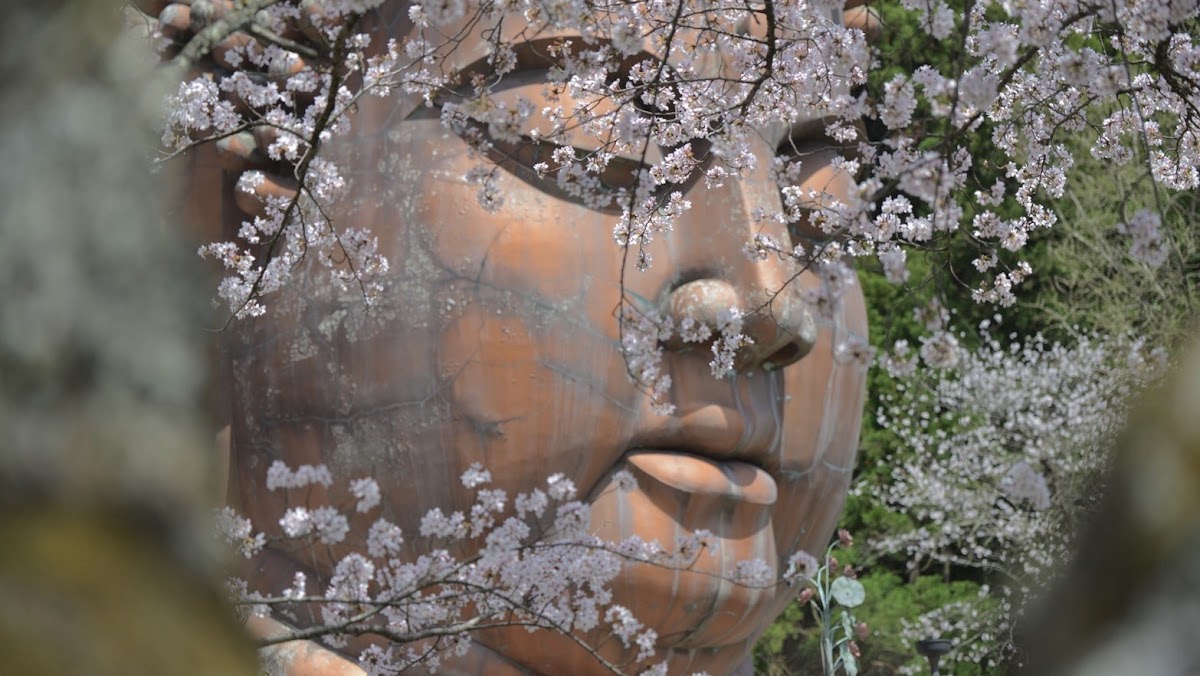
Hanibe Gankutsuin, located in Komatsu City, Ishikawa Prefecture, is a one-of-a-kind tourist attraction that enjoys immense popularity among unique spot enthusiasts throughout Japan. The overwhelming giant Buddha head that appears in the parking lot, the dimly lit cave’s “Hell Tour,” and the mysterious space woven from its unique worldview will create an unforgettable experience.
This article comprehensively introduces everything you need to know before visiting Hanibe Gankutsuin, from its history and highlights to access methods, admission fees, and information on Goshuin (temple stamps).
What is Hanibe Gankutsuin? Its History and Origins
A Sacred Site Born from a Stone Quarry
Hanibe Gankutsuin is a temple that was opened in 1951 (Showa 26). “Hanibe” means sculptor, and “Gankutsuin” means temple in a cave. This facility was founded by Yuma Tsugata, a renowned sculptor with a track record of winning awards at exhibitions such as the Nitten (Japan Fine Arts Exhibition).
It began with the enshrinement of a Buddhist statue as a prayer for world peace, utilizing a long cave approximately 150 meters long that had been used as a quarry since the Edo period. During the chaotic post-war period, Mr. Tsugata created this unique sacred site as a place of prayer for peace that transcended religion and sect.
The Concept of “Even Demons Play, in the Village of Buddha”
Hanibe Gankutsuin is known for its catchphrase, “Even Demons Play, in the Village of Buddha.” This concept expresses a unique worldview where opposing elements such as hell and paradise, fear and peace, darkness and light coexist.
As a fascinating spot that Komatsu City is proud of, it is so famous among local Ishikawa Prefecture residents that they say, “When you think of Ishikawa Prefecture, you think of Hanibe,” and it has established itself as the prefecture’s premier mystery spot.
Hanibe Gankutsuin: Overall Structure and Visiting Route
Overview of the Facility
Hanibe Gankutsuin is broadly composed of the following areas:
- Parking Area: A giant Buddha head, “Hanibe Shakyamuni Buddha,” welcomes visitors.
- Cave Area: The main spot for the Hell Tour
- Nirvana Statue Nature Park: A group of outdoor Buddha statues
- Reception/Shop Area: Sales of Goshuin (temple stamps) and souvenirs
After paying the entrance fee at the reception, visitors can freely explore each area. There is no specific route, but many visitors choose to see the giant Buddha head in the parking lot, proceed to the Hell Tour inside the cave, and finally stroll through the outdoor nature park.
Estimated Visiting Time
The standard visiting time is approximately 40 minutes to 1 hour. If you want to take photos carefully or observe the details, it is recommended to allow about 1.5 hours. The cave has some slippery areas, so we recommend taking your time and exploring safely.
Overwhelming Highlight ①: The Giant Buddha Head “Hanibe Shakyamuni Buddha”
A Giant Buddha Head Dominating the Parking Lot
The first thing visitors to Hanibe Gankutsuin see is the giant Buddha head, “Hanibe Shakyamuni Buddha,” which sits in front of the parking lot. Its size is overwhelming, standing over 5 meters tall. This Buddha head, welcoming visitors, is a symbol of Hanibe Gankutsuin and a popular photo spot.
It is a sculpture by Yuma Tsugata, and its powerful expression and presence heighten anticipation for the mysterious experience that awaits. The Buddha head against the blue sky is a truly Instagrammable sight.
Buddhist Statues Around the Parking Lot
Besides the giant Buddha head, various Buddhist statues and sculptures are scattered around the parking lot. Each has a unique expression, inviting visitors into another world. These works were also created by Mr. Tsugata and his disciples, and each one embodies a prayer for world peace.
Mysterious Highlight ②: A Tour of Hell in the Cave
The World of the Cave Hell Tour
The greatest highlight of Hanibe Gankutsuin is the “Hell Tour” inside the cave. Inside the approximately 150-meter-long cave, which utilizes the site of an Edo-period quarry, are numerous Buddhist statues and sculptures depicting scenes of hell, all created by Mr. Tsugata himself.
Stepping into the dimly lit cave, you enter a different world, distinct from the present. Illuminated Buddhist statues, demon figures, and the figure of King Enma appear one after another, leading visitors into the Buddhist worlds of hell and paradise.
King Enma and the Inhabitants of Hell
Particularly striking inside the cave is the statue of King Enma. In Buddhism, King Yama is known as the judge of the dead, and his stern expression and dignified appearance leave a powerful impression on visitors.
Furthermore, the cave contains a collection of works that concretely depict the Buddhist view of hell, such as statues of people suffering torment and figures of demons. These are not merely horror exhibits, but works of art imbued with a profound message that prompts reflection on the meaning of life and the preciousness of peace.
Paradise within the Cave
Beyond the scenes of hell, the cave also contains an area representing paradise. Statues of Buddha and Bodhisattvas are enshrined here, creating a peaceful space in stark contrast to hell. This contrast between hell and paradise embodies the concept of “Buddha’s village where even demons play.”
The cave, utilizing the natural rock face, remains cool even in summer, creating a unique atmosphere. Caution is needed when stepping, but this only enhances the mystical experience.
Highlight ③: Nirvana Statue Nature Park and Outdoor Area
Buddhist Statues Integrated with Nature
Upon exiting the cave, you’ll find yourself in the outdoor “Nirvana Statue Nature Park.” Here, various Buddhist statues and sculptures, including the reclining Buddha statue, are placed amidst nature.
In contrast to the dimly lit space inside the cave, this area, where you can appreciate the Buddhist statues in an open outdoor setting, offers visitors a sense of peace and tranquility. The collaboration of the Buddhist statues with the ever-changing natural scenery throughout the seasons is also a highlight.
Religious Motifs from Around the World
A distinctive feature of Hanibe Gankutsuin is that, in addition to Buddhism, works based on religions and myths from around the world can also be seen. This reflects the founder Yuma Tsugata’s philosophy of “world peace,” and is the result of aiming for a universal place of prayer that transcends religion and sect.
The outdoor area also has benches where visitors can rest, allowing them to spend time leisurely appreciating the artwork.
Admission Fees, Opening Hours, and Closing Days
Admission Fees
Regular Fees:
- Adults: 800 yen
- Children (Elementary, Junior High, and High School Students): 500 yen
Group Discounts:
Group discounts may apply for groups of 20 or more. We recommend checking by phone in advance.
Discounts for Persons with Disabilities:
Visitors with a physical disability certificate, intellectual disability certificate, or mental disability health and welfare certificate are eligible for a discount upon presentation of the certificate. Accompanying persons may also be eligible for a discount; please check at the reception.
Opening Hours
Opening hours vary by season:
April to September:
- Opening Hours: 9:00 AM to 5:00 PM
October to March:
- Opening Hours: 9:00 AM to 4:00 PM
Last entry is 30 minutes before closing, so please allow ample time for your visit.
Closed Days
Hanibe Gankutsuin is open all year round. However, it may be temporarily closed due to bad weather or facility maintenance. If you are visiting from a distance, we recommend calling ahead to confirm.
Access | By Car, Bus, or Airport
Access by Car
From JR Komatsu Station:
- Travel time: Approximately 15 minutes
- Head south via National Route 8
From Hokuriku Expressway Komatsu IC:
- Travel time: Approximately 20 minutes
- Head towards National Route 8
From Komatsu Airport:
- Travel time: Approximately 25 minutes
- Via Prefectural Road 22
Parking:
Free parking is available. Approximately 50 regular cars can be parked. Large buses can also arrive, but it is recommended to contact us in advance for smoother service.
Access by Public Transportation
From JR Komatsu Station by Bus:
Take the Hokuriku Kaga Bus “Hanibe Line” and get off at the “Hanibe-mae” bus stop. It’s a short walk from there. However, since the number of buses is limited, it is recommended to check the timetable in advance.
Due to the limited number of buses, if you are short on time, you may want to consider taking a taxi. A taxi from Komatsu Station takes approximately 15 minutes and costs around 2,500 to 3,000 yen.
Address and Contact Information
Address:
1-I, Tateji-cho, Komatsu City, Ishikawa Prefecture 923-0065
Phone Number:
0761-47-3188
FAX:
0761-47-0059
Goshuin (Temple Stamp) and Souvenir Information
About Goshuin
You can receive a Goshuin at Hanibe Gankutsuin. If you leave your goshuincho (stamp book) at the reception, you can have it stamped after your visit. The offering fee for a goshuin is usually around 300 to 500 yen.
The Hanibe Gankutsuin original goshuin is a rare item that cannot be obtained anywhere else. If you are collecting goshuin, be sure to get one as a memento. Even if you don’t have your own goshuincho, you may be able to purchase a pre-written goshuin.
Souvenirs and Goods
The shops around the reception area sell original souvenirs and goods from Hanibe Gankutsuin:
- Postcards: Photos of the cave interior and the giant Buddha head, etc.
- Amulets: Amulets for world peace and family safety
- Keychains: Featuring the Hanibe Gankutsuin logo
- T-shirts: Featuring the giant Buddha head design, etc.
These goods are rare items that can only be obtained at Hanibe Gankutsuin. They are popular as souvenirs and mementos of your visit.
Notes and Advice for Visitors
Clothing and Items to Bring
Recommended Clothing:
- Comfortable walking shoes (there are slippery areas inside the cave)
- Comfortable clothing
- Even in summer, the cave is cool, so a light jacket or cardigan is useful.
- In winter, be sure to dress warmly.
Useful Items to Bring:
- Camera (many areas allow photography)
- Flashlight (some areas inside the cave are dimly lit)
- Drinks (especially in summer)
Photography
Photography is generally permitted inside the facility. Posting on social media is also welcome. However, please be considerate of other visitors when using flash photography or tripods.
The giant Buddha head is a particularly popular photo spot, and many visitors can be seen taking pictures from various angles. Searching for “#HanibeGankutsuin” on social media such as Instagram will show you many visitors’ photos.
Estimated Time Required
As mentioned above, the standard visit time is approximately 40 minutes to 1 hour. However, we recommend allocating more time for the following:
- Those prioritizing photography: 1.5 to 2 hours
- Those wishing to appreciate it as a work of art: 1.5 to 2 hours
- Families with small children: 1 to 1.5 hours
Nearby Tourist Spots and Model Itineraries
Tourist Spots in Komatsu City
When visiting Hanibe Gankutsuin, we recommend also visiting other tourist spots in Komatsu City:
Komatsu City Museum:
A museum where you can learn about the history and culture of Komatsu City. Approximately 15 minutes by car from Hanibe Gankutsuin.
Kibagata Park:
A nature park centered around a beautiful lake. Enjoy strolling and cycling. Approximately 10 minutes by car from Hanibe Gankutsuin.
Natadera Temple:
An ancient Shingon Buddhist temple, known for its beautiful gardens and unique rock formations. Approximately 20 minutes by car from Hanibe Gankutsuin.
Ataka Barrier:
A historical spot steeped in the legend of Minamoto no Yoshitsune and Benkei. It’s also a scenic spot facing the Sea of Japan. Approximately 20 minutes by car from Hanibe Gankutsuin.
Recommended Model Course
Komatsu City Full Day Course:
- Morning: Visit Hanibe Gankutsuin (1 hour)
- Lunch: Seafood lunch in Komatsu City
- Afternoon: Visit Natadera Temple (1.5 hours)
- Evening: Enjoy the sunset over the Sea of Japan at Ataka Barrier
This course allows you to experience the diverse attractions of Komatsu City, from unique spots and historical sites to natural beauty, all in one day.
The Charm of Hanibe Gankutsuin
A Unique Worldview
The greatest charm of Hanibe Gankutsuin is its unique worldview, unlike anywhere else. The unique atmosphere that sets it apart from typical temples and tourist facilities attracts not only fans of offbeat spots but also many who highly appreciate it as a work of art.
The space, a manifestation of the passion and prayers for world peace of one sculptor, Yuma Tsugata, evokes a variety of emotions in viewers. Fear, surprise, laughter, and emotion—the fact that each visitor has a different impression is a characteristic of Hanibe Gankutsuin.
Value as Art
In recent years, Hanibe Gankutsuin has attracted attention in the context of outsider art and Art Brut. It is praised by art critics as a space that embodies the artist’s pure desire for expression, unconstrained by existing artistic frameworks.
The exhibition method that utilizes the unique space of a cave, the combination of natural and artificial light, and the comprehensive themes that incorporate religious elements from around the world while being based on Buddhism—these are all interesting elements from the perspective of contemporary art.
Popularity Across Generations
Hanibe Gankutsuin is supported by a wide range of generations, from children to adults. For children, it’s a mysterious cave that sparks their sense of adventure; for young people, it’s a unique spot perfect for social media photos; and for adults, it’s a facility with artistic and historical value—each person can enjoy it in their own way.
Families, couples, friends, solo travelers—the versatility to enjoy it in any style of visit is one of the reasons why Hanibe Gankutsuin has been loved for so many years.
Reviews and Reputation
Visitor Voices
Visitors to Hanibe Gankutsuin have shared a variety of impressions:
“It was more impactful than I imagined! I was overwhelmed by the sheer power of the giant Buddha head.”
“The inside of the cave is truly another world. The concept of a tour of hell was well-expressed and it was fascinating.”
“I was expecting a B-grade tourist spot, but it was actually a worthwhile work of art.”
“The children were thrilled. They enjoyed it as an adventure.”
“A must-visit spot if you come to Ishikawa Prefecture. You absolutely cannot experience anything like it anywhere else.”
Media Coverage
Hanibe Gankutsuin has been featured in numerous television programs, magazines, and online media. Featured in various contexts such as “Unusual Spots,” “Ishikawa Prefecture Tourism,” and “B-Grade Spot Tours,” its popularity is increasing year by year.
In the age of social media, photos posted by visitors on Instagram and Twitter are spreading, attracting attention from younger generations. In particular, photos of the giant Buddha head are popular on social media for their impactful visuals.
Frequently Asked Questions (FAQ)
Q1: Can I visit on a rainy day?
A: Yes, you can visit. The cave has a roof, so you can enjoy the Hell Tour even in rainy weather. However, the outdoor Nihanzo Natural Park area will get wet in the rain, so please bring an umbrella or raincoat. The ground may be slippery, so please walk with extra care on rainy days.
Q2: Is it okay to bring small children?
A: Generally, it’s fine. However, the Hell Tour inside the cave is dimly lit, and there are exhibits such as statues of King Enma and demons that may scare small children. Please use your child’s personality as a guide. Many families visit, and many children enjoy the adventurous atmosphere.
Q3: Are pets allowed?
A: Please contact the facility directly regarding pets. Generally, religious sites often restrict pet entry, so we recommend checking in advance.
Q4: Is it accessible for wheelchair users?
A: Due to steps and narrow passages within the cave, some areas may be difficult to access by wheelchair. Outdoor areas and the giant Buddha head near the parking lot are accessible. Please contact us by phone (0761-47-3188) for details.
Q5: How long does it take?
A: The standard visit takes about 40 minutes to 1 hour. Those who want to explore thoroughly or prioritize photography should allow 1.5 to 2 hours.
Q6: Are there guides for foreign tourists?
A: While some signs within the facility are in English, detailed explanations are primarily in Japanese. If you are a foreigner visiting, we recommend researching basic information beforehand or visiting with someone who understands Japanese.
Q7: Is photography allowed?
A: Yes, photography is generally permitted. Posting on social media is also welcome. However, please be considerate of other visitors and observe proper etiquette.
Q8: Are there any places to eat nearby?
A: The area around Hanibe Gankutsuin is residential, and there are few restaurants within walking distance. We recommend dining in Komatsu city center or along National Route 8. There are various restaurants within a 10-15 minute drive.
Summary: Hanibe Gankutsuin is a hidden gem in Ishikawa Prefecture that you should visit at least once.
Hanibe Gankutsuin is a unique tourist spot that Komatsu City, Ishikawa Prefecture, is proud of. The giant Buddha head, the cave’s hellish tour, and the outdoor Buddha statues—all leave a strong impression on visitors.
While often described as a B-grade tourist spot, it is actually an artistic space imbued with the sculptor Yuma Tsugata’s prayers for world peace, carrying a profound message. It also holds significant value as outsider art, offering a depth that allows for various interpretations and impressions depending on the viewer.
When visiting Ishikawa Prefecture, don’t limit yourself to Kanazawa’s main attractions; take a short detour and visit Hanibe Gankutsuin. A mysterious and captivating world awaits you, an experience unlike any other.
Basic Information Summary:
- Address: 1-1 I, Tateji-cho, Komatsu City, Ishikawa Prefecture 923-0065
- Phone: 0761-47-3188
- Opening Hours: April-September 9:00-17:00, October-March 9:00-16:00
- Closed: Open all year round
- Admission Fee: Adults 800 yen, Children 500 yen
- Parking: Free (approx. 50 spaces)
- Access: Approximately 15 minutes by car from JR Komatsu Station, approximately 20 minutes by car from Komatsu IC
Why not experience something extraordinary and feel a prayer for world peace at Hanibe Gankutsuin?


