Complete Guide to Samonzan Joganji Temple (Izumi City, Kagoshima Prefecture) | History, Goshuin (Temple Seals), Annual Events, and Access Information
About Samonzan Joganji Temple
Samonzan Joganji Temple is a Shingon Buddhist temple of the Koyasan sect located in Shimosaba-cho, Izumi City, Kagoshima Prefecture. Known as the “gateway to Satsuma Province,” it has long attracted the faith of the local community and is a historical temple that performs various prayers, memorial services, and Buddhist ceremonies.
The main hall enshrines Yakushi Nyorai (Medicine Buddha) as its principal deity, and it serves as a center of faith, attracting many worshippers not only from the local area but also from far away. The temple also caters to the needs of modern worshippers by offering services such as sutra copying experiences, goshuin (temple seals), and the distribution of various items.
Origin and Meaning of Samonzan
The mountain name “Samonzan” means a temple located at the gateway to Satsuma Province (present-day western Kagoshima Prefecture). Izumi City is located at the northernmost tip of Satsuma Province, close to the border with Higo Province (present-day Kumamoto Prefecture), and has historically held a crucial geographical position as a gateway to Satsuma. This geographical characteristic is reflected in the temple’s mountain name, telling the story of Izumi’s history as a thriving transportation hub since ancient times.
History of Satsumonzan Jōganji Temple
History of its Founding and Construction
Satsumonzan Jōganji Temple is said to have been founded by Zenshō Oshō. Zenshō Oshō established the temple in this area to spread the teachings of Shingon Esoteric Buddhism, and it has served as a spiritual center for the local people.
Since its founding, the temple has endured numerous historical changes, but has continued to uphold the teachings of Shingon Buddhism. During the Edo period, it received patronage from the Satsuma Domain and developed into an important religious institution in the region.
The Story of Abbot Madarame Nichibutsu and the Temple’s Development
A key figure in the history of Satsumonzan Jōganji Temple was Abbot Madarame Nichibutsu. Known as the temple’s restorer, he dedicated himself to its development and missionary work. During his time, the main hall and other buildings were significantly improved, laying the foundation for the temple’s present state.
His teachings took deep root in the community, and many of the annual events and ceremonies that continue to this day were established during this period. The temple’s widespread recognition as the “gateway of Satsuma Province” is largely attributed to Abbot Madarame Nichibutsu’s energetic missionary work.
Modern and Contemporary History
Even amidst the turmoil of anti-Buddhist movements following the Meiji Restoration, Satsumonzan Jōganji Temple was supported by the fervent faith of the local people, ensuring the continuation of its Buddhist teachings. Even as times have changed from the Showa to the Heisei and Reiwa eras, our temple continues to operate in a way that meets modern needs while preserving tradition.
Principal Image and Temple Buildings
Yakushi Nyorai (Medicine Buddha)
The principal image enshrined in the main hall of Satsumonzan Jōganji Temple is Yakushi Nyorai (Medicine Buddha). Yakushi Nyorai is the principal deity of the Eastern Pure Land of Lapis Lazuli, and has been deeply revered since ancient times as a Buddha who heals the suffering of sentient beings and brings physical and mental health.
Yakushi Nyorai is typically depicted holding a medicine jar in his left hand and forming the Abhaya Mudra (gesture of fearlessness) with his right hand. Our temple’s Yakushi Nyorai is also a statue built in the traditional style, receiving the wishes of worshippers for health, longevity, and recovery from illness. Many worshippers visit specifically for healing and health prayers, and the temple attracts the faith of the local community.
Features of the Main Hall
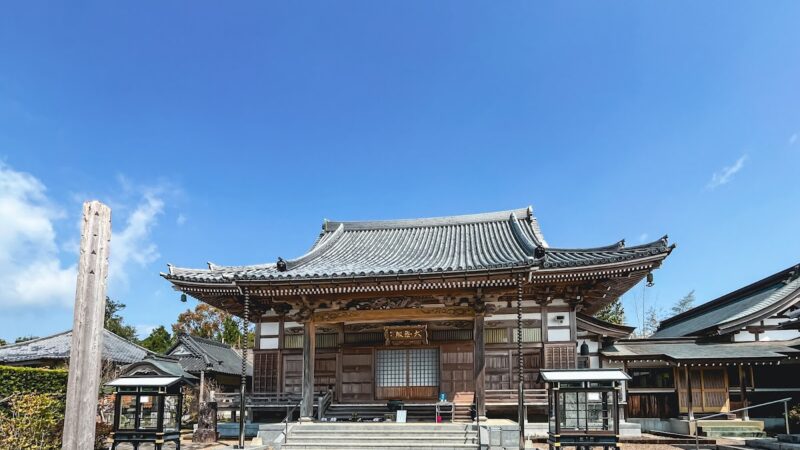
The main hall follows the traditional architectural style of Shingon Buddhist temples, while being adapted to the local climate and environment. Inside, Yakushi Nyorai (Medicine Buddha) is enshrined at the center, surrounded by attendant deities and other figures, creating a solemn atmosphere.
Visitors can chant sutras and offer prayers in the main hall, receiving courteous service from the monks. Buddhist services and prayers in the main hall are conducted with high formality, based on the traditions of Shingon Esoteric Buddhism.
Other Halls
In addition to the main hall, this temple has other halls, including the Daishi-do (Great Master Hall) dedicated to Kobo Daishi (Kukai). These halls are specially opened once a year during the Hoonko (memorial service) to allow visitors to view Buddhist statues and temple treasures that are not normally on public display.
Annual Events and Ceremonies
At Satsumonzan Joganji Temple, various annual events and ceremonies are held based on the traditions of Shingon Buddhism. These events have become established annual events for the local people and are bustling with many worshippers.
Setsubun Exorcism Grand Ceremony (Star Festival)
Every year on Setsubun in February, the Setsubun Exorcism Grand Ceremony is held with great fanfare. This ceremony, commonly known as the “Star Festival,” is an important event for warding off evil and inviting good fortune throughout the year.
At the Star Festival, prayers are offered for each worshipper’s birth star and the star of the current year, and prayers are offered for good health and safety for the family throughout the year. A Goma fire ritual is performed, and worshippers write their wishes on wooden sticks and throw them into the flames, praying to burn away worldly desires and for their wishes to be fulfilled.
After the ceremony, bean-throwing takes place, and the temple grounds are filled with the lively energy of worshippers as they chant “Good fortune in, demons out!” This event has become an important annual event in the region, attracting many families every year.
Kobo Daishi Memorial Service
On the 21st of each month, which is the anniversary of the death of Kobo Daishi Kukai, the founder of the Shingon sect, the Miekū (memorial service) is held. The Spring Grand Service on March 21st is particularly grand, commemorating the day Kobo Daishi entered eternal meditation at Okunoin on Mount Koya.
The Miekū is a memorial service to express gratitude to Kobo Daishi, providing worshippers with an opportunity to remember his virtues and learn from his teachings. This temple also offers Dharma talks by monks, providing a valuable opportunity to learn about the teachings of Shingon Esoteric Buddhism.
Opening of Temple Halls and Memorial Service
Once a year, the Opening of Temple Halls and Memorial Service is held. During this service, the temple halls, normally closed to the public, are specially opened, allowing visitors to view hidden Buddha statues and temple treasures.
The Hoonko service is a Buddhist ceremony expressing gratitude to the Buddha and successive head priests, and is an important event that allows one to feel the history and traditions of this temple. The various halls that are opened to the public house precious Buddhist statues and implements that have been preserved and passed down through a long history, allowing one to feel the history of faith firsthand.
Other Annual Events
Traditional Buddhist annual events such as the Spring Equinox service, the Autumn Equinox service, and the Obon Segaki service are also held. These services accept various memorial services, including ancestral memorial services and memorial services for stillborn children, and are attended by many parishioners and believers.
Goshuin (Temple Seals) and Gifts
About Goshuin (Temple Seals)
At Satsumonzan Joganji Temple, Goshuin are given as proof of worship. Goshuin are not merely stamps or signatures, but important proof of the connection between worshippers and Buddha.
The temple’s goshuin (temple stamp) features the name of the principal deity, Yakushi Nyorai (Medicine Buddha), written in ink, and stamped with the temple’s vermilion seal. Goshuin are available during the temple office’s reception hours, and each one is carefully written by a monk.
We recommend bringing your goshuincho (stamp book) when receiving a goshuin. For those who do not have a goshuincho, we also distribute them at the temple, so you can obtain one on this occasion.
Various Types of Goshuin
At Satsumonzan Jōganji Temple, in addition to the regular goshuin, we sometimes offer special goshuin according to the season and events. During major ceremonies such as Setsubun (bean-throwing festival) and Kōbō Daishi Mikage-ku (a memorial service for Kōbō Daishi), limited-edition goshuin are sometimes offered, making them popular among goshuin collectors.
Items Offered
Besides goshuin, the temple offers a variety of items. We have amulets, talismans, prayer beads, incense, and other items useful for religious life.
Particularly popular are the health amulets associated with Yakushi Nyorai (the Medicine Buddha). These are widely sought after by worshippers praying for recovery from illness and longevity. Amulets for various other wishes, such as traffic safety, academic success, and family safety, are also available.
Sutra Copying Experience
What is Sutra Copying?
Satsumonzan Jōganji Temple offers sutra copying experiences. Sutra copying is a form of spiritual practice where one carefully copies Buddhist scriptures character by character. By calming the mind and copying the scriptures, one can achieve mental focus and inner peace.
Details of the Sutra Copying Experience
At our temple, you can copy short sutras such as the Heart Sutra. Monks provide careful guidance, ensuring that even beginners can participate with confidence.
Sutra copying takes place in a quiet environment, allowing you to enjoy the scent of ink and the feel of the brush, providing a precious time to reflect on yourself. It is a popular experience for many as a way to escape the hustle and bustle of modern society and calm the mind.
Those wishing to experience sutra copying are advised to contact the temple office in advance to make a reservation. You can also confirm the required time and cost at that time.
Various Prayers and Memorial Services
Various Prayers
Satsumonzan Jōganji Temple accepts various prayers. Based on the traditions of Shingon Esoteric Buddhism, the prayers are solemn and centered around the Goma fire ritual.
Main prayers include family safety, business prosperity, traffic safety, recovery from illness, protection from evil, success in examinations, and safe childbirth. Appropriate prayers will be performed according to each wish.
Those wishing to make a prayer can apply during the temple office’s reception hours. The content and date of the prayer will be decided in consultation with the monk.
Various Memorial Services
Regarding memorial services, various services are also accepted, including ancestral memorial services, memorial services for stillborn babies, and memorial services for pets. A memorial service, imbued with gratitude and prayers for the deceased and ancestors, provides emotional support to the bereaved family.
Annual memorial services and monthly memorial services are accepted at any time, and requests for services can be made even by those who are not temple parishioners. The format and content of the service can be flexibly adapted to individual circumstances.
Visiting and Worship Information
Opening Hours and Temple Office Hours
Satsumonzan Jōganji Temple is open from 8:00 AM to 5:00 PM. You can freely visit the temple grounds during these hours.
The temple office is open from 9:00 AM to 11:30 AM and from 1:30 PM to 4:00 PM. Please use these hours for receiving temple stamps, purchasing items, applying for prayers and memorial services, and making reservations for sutra copying experiences.
Please note that the office is closed during lunchtime (11:30 AM to 1:30 PM). Please note that reception hours may change during memorial services and other events. If you require guaranteed service, we recommend confirming by phone in advance.
Etiquette for Worship
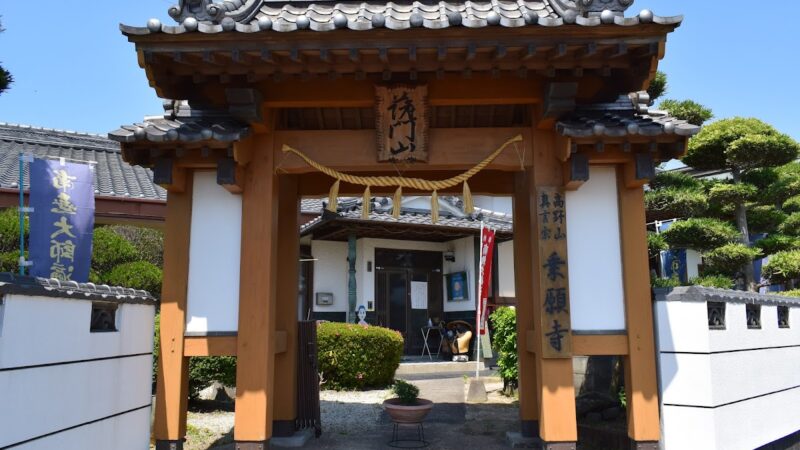
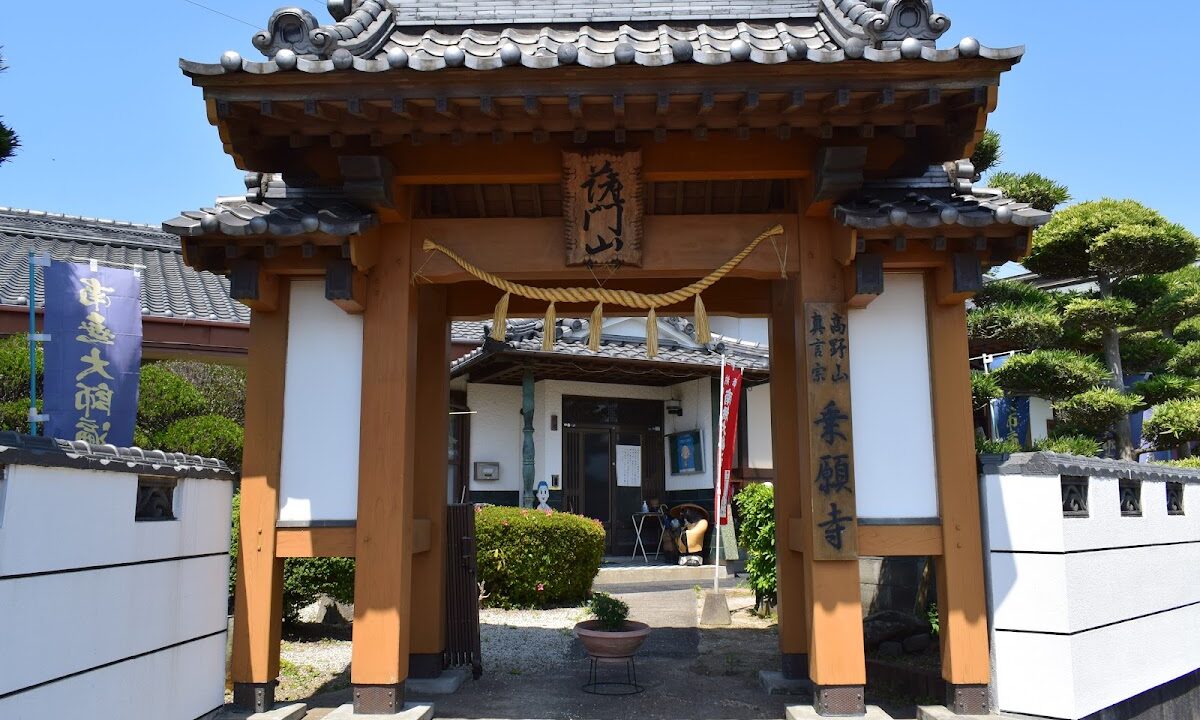
Worship etiquette at Shingon Buddhist temples differs slightly from that of other sects. Upon entering the temple gate, bow once, and purify your hands and mouth at the water basin. In front of the main hall, clasp your hands together, bow once, offer your donation, ring the bell, and then clasp your hands together in prayer.
In Shingon Buddhism, it is common to chant “Namu Daishi Henjo Kongo,” but if the principal deity is Yakushi Nyorai, you may also chant “Namu Yakushi Rurikō Nyorai.”
Access Information
Location
Satsumonzan Jōganji Temple is located at 399 Shimosaba-cho, Izumi City, Kagoshima Prefecture. It is conveniently located near the center of Izumi City.
Address: 399 Shimosaba-cho, Izumi City, Kagoshima Prefecture 899-0131
Phone Number: 0996-67-1694
Access by Public Transportation
By Train
The nearest station is Nishi-Izumi Station on the Hisatsu Orange Railway. The temple is within walking distance from the station. The walking time is approximately 15 to 20 minutes.
Alternatively, it can be accessed from Izumi Station on the JR Kyushu Shinkansen/Kagoshima Main Line. From Izumi Station, you can take a taxi or a local bus.
By Bus
You can also use local buses operating within Izumi City. It is a few minutes’ walk from the nearest bus stop. We recommend checking the Izumi City public transportation information in advance for bus timetables and routes.
Access by Car
By Expressway
The nearest interchange is Izumi IC on the Minami-Kyushu West Bypass Expressway. From the interchange, it takes approximately 10 to 15 minutes via local roads to reach the temple.
Parking This temple has a parking lot for visitors. While parking is usually not a problem for regular visits, it can get crowded during Setsubun (bean-throwing festival) and major religious ceremonies, so we recommend visiting with plenty of time to spare.
Map and Navigation
When using a car navigation system or smartphone map app, searching for the address “399 Shimosaba-cho, Izumi City, Kagoshima Prefecture” or the phone number “0996-67-1694” will display the exact location.
Attractions in Izumi City and Surrounding Areas
About Izumi City
Izumi City is located in the northwestern part of Kagoshima Prefecture, near the border with Kumamoto Prefecture. It has flourished as a transportation hub since ancient times and is known as a historical town with samurai residences and the historic streetscape of Izumi Fumoto.
Particularly famous is the tens of thousands of paper cranes that migrate here every winter. Over 10,000 cranes visit the Izumi Plain to overwinter, and it is designated as a special natural monument of Japan. Many tourists visit during this time, and the crane observation center is bustling with activity.
Nearby Tourist Attractions
When visiting Satsumonzan Joganji Temple, we recommend also visiting other tourist attractions in Izumi City.
Izumi Fumoto Samurai Residences
This group of samurai residences, which preserves the remnants of the Satsuma Domain’s outer castle system, has been designated a nationally important traditional building preservation district. The streets lined with stone walls and hedges retain a strong atmosphere of an Edo-period samurai town.
Izumi City Crane Observation Center
During the winter (November to March), you can enjoy crane observation in the Izumi Plain, famous as a crane migration site. You can observe various types of cranes, including Hooded Cranes and White-naped Cranes, up close.
Hakozaki Hachiman Shrine
This historic shrine in Izumi City is a center of local faith. Many visitors also visit Satsumonzan Jōganji Temple.
How to Spend Your Time at Satsumonzan Jōganji Temple
A Peaceful Visit
The greatest charm of this temple is the peaceful environment, far removed from the hustle and bustle of the city, where you can visit with a calm mind. The time spent praying to Yakushi Nyorai (Medicine Buddha) in the main hall will make you forget the busyness of everyday life.
You can also feel the changing seasons while strolling through the temple grounds. In spring, cherry blossoms and fresh greenery adorn the grounds, and in autumn, the autumn leaves color the grounds, allowing you to enjoy the beauty of each season.
Dialogue with Monks
During the temple office’s reception hours, you may have the opportunity to speak directly with a monk. You can consult them about Buddhist teachings or life’s worries, and your heart will be healed by their warm words.
Creating Memories with Sutra Copying and Goshuin (Temple Seals)
Sutra copying and receiving Goshuin are good ways to preserve memories of your visit. The sutras you write yourself can be taken home and displayed, becoming a source of spiritual support in your daily life.
Goshuin (temple stamps) are proof of your visit, and collecting them in a goshuincho (stamp book) allows you to record your journey of faith.
The Charm of Satsumonzan Jōganji Temple
A Temple Rooted in the Community
The greatest charm of Satsumonzan Jōganji Temple is that it is a temple deeply rooted in the community. Since its founding, it has gathered the faith of local people throughout its long history, functioning as a spiritual anchor.
Many local people participate in annual events and memorial services, making it a place for intergenerational exchange. This role as a center of the local community continues unchanged even today.
The Tradition of Shingon Esoteric Buddhism
As a temple of the Koyasan Shingon sect, its continued preservation of the tradition of Shingon Esoteric Buddhism is also a major attraction. Esoteric Buddhist rituals, including the Goma ritual, are enveloped in a solemn and mystical atmosphere, leaving a deep impression on participants.
The teachings of Shingon Buddhism, founded by Kobo Daishi Kukai, have a history of over 1200 years and represent an important branch of Japanese Buddhism. Experiencing this tradition at our temple is a valuable opportunity to experience Japanese spiritual culture.
Responding to Modern Needs
While preserving tradition, the temple also flexibly responds to the needs of modern visitors. We offer services that modern visitors desire, such as the issuance of Goshuin (temple stamps), sutra copying experiences, and the distribution of various commemorative items.
The temple office has clearly defined reception hours, creating an environment that is easy to visit. Telephone inquiries are also handled courteously, making it reassuring even for first-time visitors.
Precautions When Visiting
Clothing and Belongings
When visiting a temple, please avoid overly flashy or revealing clothing and aim for modest attire. Especially when entering the main hall or participating in religious services, respectful attire is desirable.
Regarding what to bring, those wishing to receive a Goshuin (temple stamp) should bring a Goshuincho (stamp book). Those participating in the sutra copying experience don’t need anything specific, but it’s a good idea to prepare yourself mentally to concentrate.
Manners and Mindset
Temples are places of worship and spiritual practice. Please refrain from speaking loudly or running around. Regarding photography, taking pictures inside the main hall or of Buddha statues is often prohibited, so it’s recommended to check beforehand or keep it to a minimum.
The temple grounds are kept clean, so please be sure to take your trash with you or dispose of it in the designated area.
Inquiries
If you have any questions before visiting or wish to make a reservation for a memorial service or prayer, you can inquire by phone. The monks will be happy to assist you, so please feel free to ask any questions.
Phone Number: 0996-67-1694
Reception Hours: 9:00 AM – 11:30 AM, 1:30 PM – 4:00 PM
Summary
Satsumonzan Jōganji Temple is a historic temple of the Koyasan Shingon sect located in Izumi City, Kagoshima Prefecture. With Yakushi Nyorai (Medicine Buddha) as its principal deity, it has long been a center of local faith as the “gateway to Satsuma Province.”
Founded by Zensho Osho and restored by Madarame Nichibutsu Shonin, it has continued to uphold the teachings of Shingon Esoteric Buddhism to this day. Annual events such as the Setsubun Exorcism Grand Ceremony (Star Festival), the Kobo Daishi Image Ceremony, and the Opening of the Temple Halls and the Thanksgiving Ceremony are well-established as important local events.
The temple also caters to the needs of modern visitors, offering services such as the issuance of temple seals, sutra copying experiences, and various prayers and memorial services, demonstrating a harmonious blend of tradition and innovation in its temple management. The temple is open from 8:00 AM to 5:00 PM, with the temple office open from 9:00 AM to 11:30 AM and from 1:30 PM to 4:00 PM.
Access is convenient, within walking distance of Nishi-Izumi Station on the Hisatsu Orange Railway, and about 10 to 15 minutes by car from the Izumi Interchange on the Minami-Kyushu West Bypass Expressway. Visiting in conjunction with sightseeing in Izumi City will make for a more fulfilling experience.
Satsumonzan Jōganji Temple is a temple where you can spend a rich and fulfilling time, quietly praying, experiencing the traditions of Shingon Esoteric Buddhism, and creating lasting memories through temple stamps and sutra copying. When you visit Izumi, be sure to stop by.