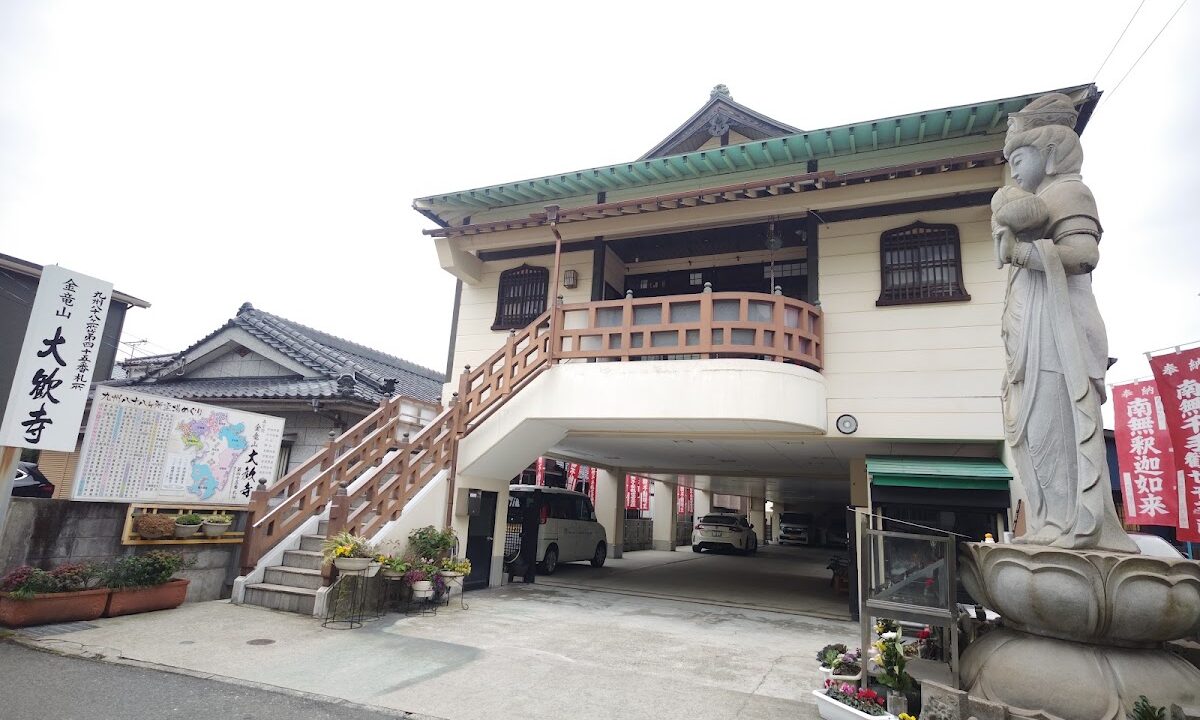
Daikanji Temple (Kagoshima Prefecture) Complete Guide | History, Goshuin (Temple Seal), and Access Information
Located in the Kusomuta district, slightly outside the city center of Kagoshima, Daikanji Temple is a Shingon sect temple belonging to the Omuro school and is a center of local faith. As the 45th temple of the Kyushu 88 Sacred Sites and 108 Temple Pilgrimage, it attracts many pilgrims. This guide provides detailed information about the temple, from its history to visitor information.
Basic Information about Daikanji Temple
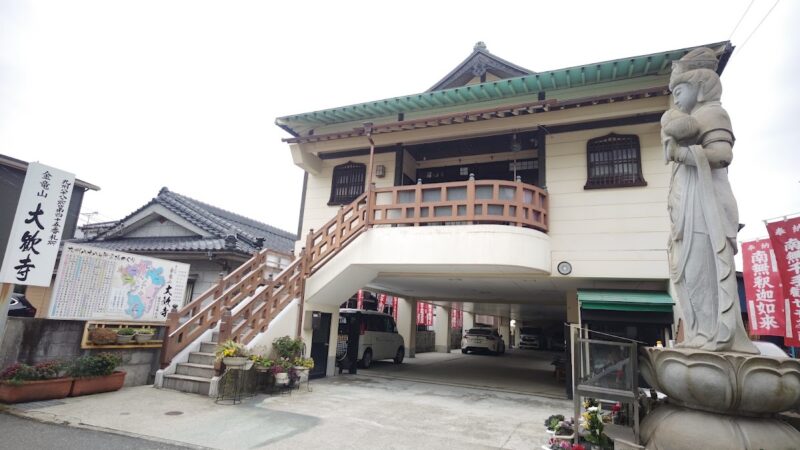
Daikanji Temple is a Shingon sect temple belonging to the Omuro school, located at 1-15-39 Kusomuta, Kagoshima City, Kagoshima Prefecture. Its mountain name is Kinryuzan, and it enshrines Ichigan Fudō Myōō as its principal image.
Location and Access
Address: 1-15-39 Kusomuta, Kagoshima City, Kagoshima Prefecture
Sect: Shingon-shu Omuro-ha
Mountain Name: Kinryuzan
Principal Image: Ichigan Fudōson
Pilgrimage Site: 45th Temple of the Kyushu Eighty-Eight Sacred Sites and 108 Pilgrimage Sites
The Kusomuta area is located northwest of central Kagoshima City, a harmonious blend of residential areas and nature. It boasts good access from the city center, making it easily accessible for visitors.
History and Founding of Daikanji Temple
Established in the Showa Period
Daikanji Temple is a relatively new temple, established in 1970 (Showa 45) by Chief Priest Toshiaki Nozaki. For over half a century, it has been deeply rooted in the community, serving as a center for the propagation of Shingon Buddhism in Kagoshima and a local religious center.
Relationship with the Omuro School of Shingon Buddhism
The Omuro School of Shingon Buddhism is a branch of the Shingon sect, with Ninna-ji Temple in Kyoto as its head temple. It is known as a sect that inherits the teachings of Kobo Daishi Kukai and emphasizes the practice of esoteric Buddhism. Daikan-ji Temple carries on this tradition in Kagoshima and plays a role in spreading the teachings of Shingon esoteric Buddhism.
A characteristic of the Omuro School of Shingon Buddhism is the Omuro-style Buddhist chanting (shomyo) and ritual practices, and these traditions are preserved at Daikan-ji Temple.
About the Principal Image, Ichigan Fudo Myoo
Belief in Ichigan Fudo Myoo
The principal image of Daikan-ji Temple, Ichigan Fudo Myoo, is Fudo Myoo, who is believed to grant wishes if one prays with sincere devotion. Fudo Myoo is one of the most important deities in esoteric Buddhism, considered an incarnation of Dainichi Nyorai, and plays a role in cutting off worldly desires and saving all sentient beings.
The name “Ichigan” (One Wish) is based on the belief that if one prays with sincerity for a single wish, it will surely be fulfilled. Many worshippers offer prayers to Ichigan Fudo Myoo, each with their own various wishes.
Characteristics of Fudo Myoo
Fudo Myoo is typically depicted holding a sword (the sword of subduing demons) in his right hand and a lasso (the rope that binds worldly desires) in his left, with flames behind him. His wrathful expression is seen as a manifestation of compassion, intimidating worldly desires and evil, and guiding sentient beings to the right path.
The Ichigan Fudo Myoo at Daikanji Temple is also built based on this traditional iconography and is solemnly enshrined within the main hall.
Main Hall and Deities
Structure of the Main Hall
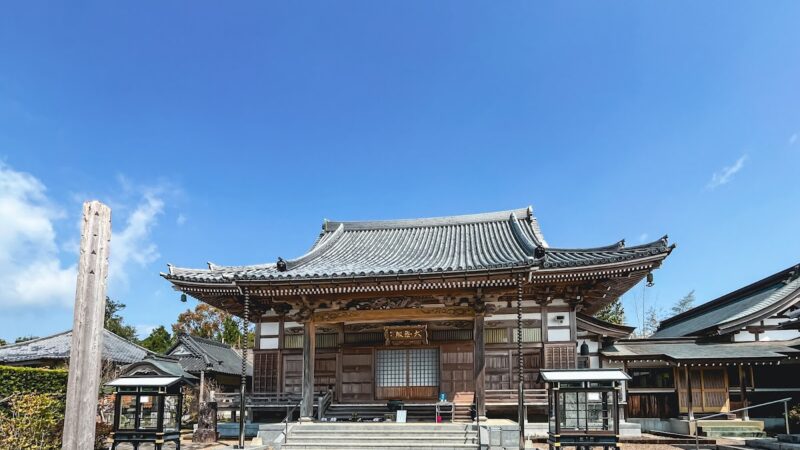
The main hall of Daikanji Temple incorporates the traditional style of Shingon Buddhist temples while utilizing modern architectural techniques. The interior of the main hall is enveloped in a solemn atmosphere, quietly welcoming worshippers.
Deities Enshrined
Inside the main hall, numerous Buddhist statues and mandalas are solemnly enshrined, including the principal deity, Ichigan Fudō Myōō. Deities representing the worldview of Shingon Esoteric Buddhism are arranged, allowing visitors to experience the profound teachings of Esoteric Buddhism.
In Shingon Buddhist temples, the worldviews of the Vajradhatu Mandala and the Garbhadhatu Mandala, centered on Dainichi Nyorai, are highly valued, and these teachings are visually expressed at Daikanji Temple.
45th Temple of the Kyushu Eighty-Eight Sacred Sites and 108 Temples Pilgrimage
What is the Kyushu Eighty-Eight Sacred Sites and 108 Temples Pilgrimage?
The Kyushu Eighty-Eight Sacred Sites and 108 Temples Pilgrimage is a pilgrimage route in the Kyushu region, modeled after the Shikoku Eighty-Eight Sacred Sites Pilgrimage. Temples associated with Kūkai Kōbō Daishi, as well as temples of various Buddhist sects including Shingon Buddhism, are selected as pilgrimage sites.
Daikanji Temple, as the 45th temple on the Shikoku Pilgrimage, welcomes many pilgrims. Pilgrimage is not merely sightseeing; it is positioned as a spiritual journey of self-reflection and the pursuit of inner peace.
Role as a Pilgrimage Temple
Pilgrimage temples fulfill various roles for pilgrims, including granting temple seals (Goshuin), guiding visitors, and providing accommodation and rest. At Daikanji Temple, careful service is provided to ensure pilgrims can visit with peace of mind.
During a pilgrimage, it is customary to wear white robes, straw hats, and walking sticks, and to receive temple seals in a pilgrimage notebook or hanging scroll.
About Temple Seals
Temple Seals at Daikanji Temple
Daikanji Temple grants temple seals to visitors. These seals are not merely commemorative stamps, but are considered important as proof of worship and as a way to forge a connection with Buddha.
A Goshuin (temple stamp) typically includes the temple name, the name of the principal deity, the date of visit, and the pilgrimage number, all written in ink and stamped with a red seal. The Goshuin of Daikanji Temple includes the words “Number 45,” “Ichigan Fudōson,” and “Kinryūzan.”
Manners for Receiving a Goshuin
When receiving a Goshuin, it is important to observe the following manners:
- Complete your visit first: The Goshuin is proof of your visit, so always visit the main hall first before receiving it.
- Prepare the offering fee: The general amount is around 300 to 500 yen. It’s best to prepare the exact amount to avoid needing change.
- Open and hand over your pilgrimage book: Open the book to the page to be stamped and hand it over carefully with both hands.
- Wait quietly: Wait quietly while the stamp is being written, and when it’s finished, receive it with both hands and express your gratitude.
- Please be considerate when taking photos: When posting photos of your temple stamp (Goshuin) on social media, please check the temple’s policy.
How to Visit and Etiquette
Basic Flow of Visiting a Temple
There are certain manners to follow when visiting a Buddhist temple. Here is a basic guide to visiting Daikanji Temple.
- Bow at the Temple Gate: Before entering the temple grounds, bow at the temple gate. This shows respect for entering the realm of the Buddha.
- Purify at the Water Basin: If there is a water basin, purify your hands and mouth.
- Proceed to the Main Hall: Avoid the center of the path and walk along the side.
- Offer an Offering: Quietly offer your offering in front of the main hall.
- Pray with Clasped Hands: Clasp your hands together in front of your chest and offer a prayer to Ichigan Fudōson. Unlike Shinto shrines, clapping is not practiced.
- Chanting Mantras: In Shingon Buddhism, the mantra of Fudo Myoo, “Noumaku Sanmanda Bazara Dan Senda Makaroshada Sowataya Untarata Kanman,” is sometimes chanted.
How to Offer Incense and Candles
In temples, you can offer incense and candles. These are offerings to Buddha and symbolize burning away one’s own worldly desires.
Incense sticks should not be lit in a bundle, but one stick at a time. Extinguish the flame by fanning it with your hand, not by blowing it out with your mouth. Then, place them upright or horizontally in the incense burner.
Candles should be placed in a candlestick and lit. It is generally customary to leave the flame burning.
Annual Events and Memorial Services
Major Events of the Shingon Sect
At Daikanji Temple, various annual events and memorial services are held based on the traditions of the Shingon sect.
Hatsumode (January 1st-3rd): Many worshippers visit to pray for happiness in the new year.
Setsubun-e (around February 3rd): Bean-throwing and goma-taki (fire ritual) are performed to pray for protection from evil and good fortune.
Spring Equinox Service (around the spring equinox in March): Memorial services for ancestors are held.
Kobo Daishi Memorial Service (April 21st): A memorial service is held on the anniversary of the death of Kobo Daishi, the founder of the Shingon sect.
Obon Festival (August 13th-15th): Memorial services are held during the Obon festival to honor the spirits of ancestors.
Autumn Equinox Service (around the Autumnal Equinox in September): Similar to the spring service, memorial services for ancestors are held.
New Year’s Eve Bell Ringing (December 31st): The bell is rung at the end of the year to dispel the 108 worldly desires.
Goma Fire Ritual
The Goma fire ritual (Goma-ku), an important practice in Shingon Esoteric Buddhism, may also be performed at Daikanji Temple. Goma is a ritual in which worldly desires are burned away by the power of fire, and wishes are fulfilled.
It is believed that by writing a wish on a Goma stick and throwing it into the flames, the wish will be granted by the power of Fudo Myoo (Acala).
Access Information
Access by Public Transportation
Using the Tram and Bus:
You can access the Kusomuta area using the Kagoshima City Tram, city buses, or private buses. The temple is located a few minutes’ walk from the nearest bus stop.
It takes approximately 15-20 minutes by bus from Kagoshima-Chuo Station. Bus routes and timetables can be found on the websites of the Kagoshima City Transportation Bureau and individual bus companies.
Access by Car
Using the Kyushu Expressway:
Approximately 20 minutes from Kagoshima IC via National Route 3. Head towards the city center and then towards Kusomuta.
Parking:
There may be parking spaces at the temple, but it is recommended to check with the temple in advance for details. There may also be coin-operated parking lots nearby.
Nearby Tourist Attractions
The Kusomuta area is located in the northern part of Kagoshima City, and nearby tourist attractions include:
Iso Garden (Sengan-en): A former villa of the Shimazu family and a component of the World Cultural Heritage site “Sites of Japan’s Meiji Industrial Revolution.” It is a beautiful garden with Sakurajima as a borrowed landscape.
Kagoshima City Museum of Art: Exhibits Impressionist paintings and works by local artists.
Shiroyama Observatory: A spectacular viewpoint offering panoramic views of Kagoshima city and Sakurajima volcano.
Saigo Takamori Cave: The cave where Saigo Takamori spent his last five days during the Satsuma Rebellion.
Kagoshima City’s Temple Culture and Daikanji Temple
History of Buddhism in Kagoshima
Kagoshima has long been a region where Buddhist culture flourished. During the Middle Ages, many temples were built under the patronage of the Shimazu clan. In particular, there were many Rinzai Zen temples, and Zen Buddhism developed in conjunction with samurai culture.
Shingon Buddhism also spread to Kagoshima from ancient times, and its esoteric Buddhist rituals and prayers have attracted the faith of the people. Daikanji Temple is a relatively new temple, but it plays a role in carrying on this tradition into the modern age.
The Role of Temples in Modern Times
In modern society, temples play a role beyond that of mere religious facilities. An increasing number of temples are developing various activities as centers of local communities.
Daikanji Temple also functions as a place that provides peace of mind to visitors and local residents. It likely offers opportunities to engage with Buddhist teachings through Dharma talks, sutra copying sessions, and Zen meditation sessions.
Precautions When Visiting
Dress Code and Manners
When visiting a temple, please observe the following points:
Dress Code: Avoid revealing clothing and aim for clean, understated attire.
Photography: Photography inside the main hall and of Buddha statues is generally prohibited. Always obtain permission if you wish to take photographs.
Quietness: Please refrain from speaking loudly or making noise on the temple grounds.
Smoking: Smoking is prohibited on the temple grounds. Smoking is strictly prohibited except in designated areas.
Pets: Bringing pets to the temple is generally discouraged.
Visiting Hours
Temples have designated visiting hours. Generally, visiting hours are from morning to evening, but specific times vary by temple. When receiving a Goshuin (temple stamp), special attention should be paid to the time.
It is recommended to check by phone in advance or to check the information on the temple’s website or social media.
Teachings and Practices of Shingon Buddhism
Teachings of Kobo Daishi Kukai
Shingon Buddhism is a sect based on esoteric Buddhism brought back from Tang China by Kobo Daishi Kukai (774-835) in the early Heian period. Kukai systematized the teachings of Shingon esoteric Buddhism and spread them throughout Japan.
The fundamental scriptures of Shingon Buddhism are the *Mahavairocana Sutra* and the *Vajrasekhara Sutra*, and the principal deity is Mahavairocana Buddha. A characteristic feature is the teaching of “instantaneous attainment of Buddhahood,” that is, the belief that one can become a Buddha in this life.
Practice of Mantras
“Mantra” is a translation of the Sanskrit word “mantra,” meaning the true words of the Buddha. It is believed that by chanting mantras, one can become one with the Buddha, extinguish worldly desires, and attain enlightenment. Chanting the mantra of Fudo Myoo is an important practice during a visit to Daikanji Temple. The mantra is not merely a spell, but a phonetic expression with deep meaning; it is crucial to chant it with correct pronunciation and mindset.
Three Mysteries Empowerment
The core of Shingon Esoteric Buddhism practice is the “Three Mysteries Empowerment.” This is a ritual of becoming one with the Buddha by aligning the three aspects—body (physical actions), speech (chanting the mantra), and mind (mental concentration)—with those of the Buddha.
Visitors can also practice these Three Mysteries Empowerment through joining hands in prayer and bowing (body secret), chanting the mantra (speech secret), and contemplating the Buddha (mind secret).
Prayers and Memorial Services at Daikanji Temple
Various Prayers
Daikanji Temple may accept various prayers:
Family Safety: Prayers for the health and happiness of all family members.
Business Prosperity: Prayers for the development and prosperity of your business.
Academic Success: Prayers for success in exams and academic studies.
Protection from Misfortune: Prayers for protection from misfortune during unlucky years and for peace.
Recovery from Illness: Prayers for recovery from illness and good health.
Traffic Safety: Prayers for protection from traffic accidents.
About Memorial Services
Temples offer various memorial services, including ancestral memorial services, memorial services for stillborn babies, and pet memorial services.
Ancestral Memorial Service: Memorial services are held for the spirits of ancestors on their death anniversaries, equinoxes, and Obon.
Memorial Service for Stillborn Babies: Memorial services are held for the spirits of children who died due to miscarriage or stillbirth.
Perpetual Memorial Service: Even if there are no successors, the temple will continue to perform memorial services perpetually.
For more information about these memorial services, please contact the temple directly.
Summary
Daikanji Temple, located in Kusomuta, Kagoshima City, is a Shingon sect Omuro school temple that has been a center of local faith since its establishment in 1970. With Ichigan Fudō Myōō as its principal deity, it attracts many worshippers based on the belief that wishes will be granted if one prays sincerely.
As the 45th temple of the Kyushu 88 Sacred Sites and 108 Pilgrimage, it is also an important base for pilgrims. It is a valuable place where one can receive a Goshuin (temple stamp) and experience the traditions of Shingon Esoteric Buddhism.
It is easily accessible from Kagoshima City, and there are many tourist attractions nearby, making it possible to combine worship with sightseeing. As a temple where one can pray in a peaceful environment, it is open not only to local residents but also to tourists and pilgrims.
When visiting, please observe basic manners, respect the traditions of Shingon Buddhism, and offer your heartfelt prayers to Ichigan Fudō Myōō. You will surely find peace of mind and the fulfillment of your wishes.
We hope that your visit to Daikanji Temple will allow you to experience Japanese Buddhist culture and the history of Kagoshima, and that you will have a truly enriching experience.