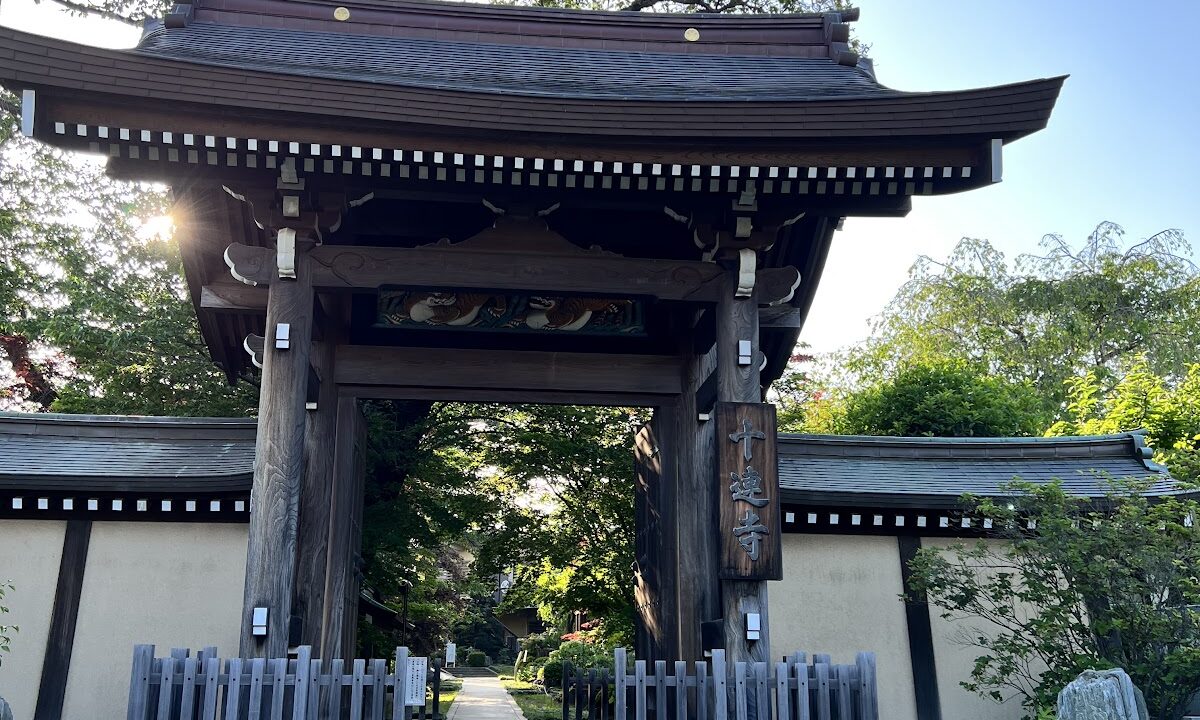
Jurenji Temple (Ageo City, Saitama Prefecture) | A Guide to the Charms and Pilgrimage of a Historic Jodo Sect Temple Associated with Tokugawa Ieyasu
Located in Imaizumi, Ageo City, Saitama Prefecture, Jurenji Temple is a Jodo sect temple with an intriguing origin, having been named by Tokugawa Ieyasu. Known as Hoshinasan Komyoin, this temple boasts a history of over 600 years and remains a beloved place of worship deeply rooted in the community.
This article comprehensively introduces information useful for those considering visiting or sightseeing at Jurenji Temple, including its historical background, deep connection with Tokugawa Ieyasu, highlights within the temple grounds, and access methods.
Basic Information about Jurenji Temple
Official Name: Hoshina-san Komyoin Jurenji
Sect: Jodo-shu (Pure Land Buddhism)
Mountain Name: Hoshina-san
Temple Name: Komyoin
Address: 156 Imaizumi, Ageo City, Saitama Prefecture 362-0047
Phone Number: 048-781-5003
FAX: 048-781-5003
Founding Year: Oei 3 (1396)
Founder: Nenyo Shonin
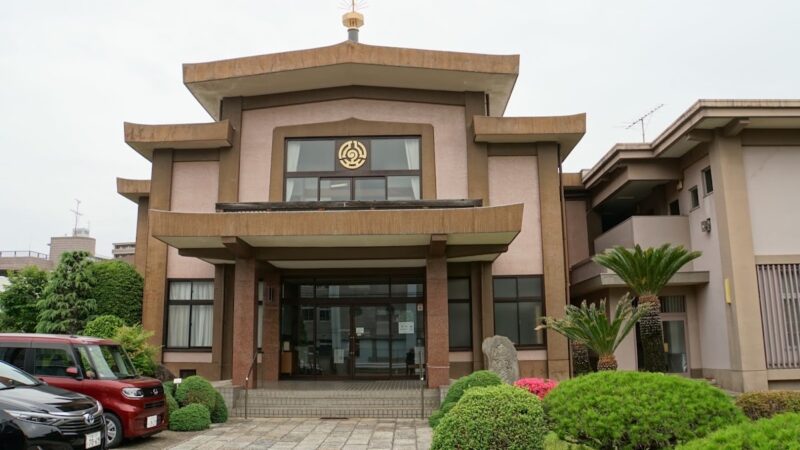
Temple Crest: Three-leaf Aoi (Crest granted by Tokugawa Ieyasu)
History of Jurenji Temple
Founding during the Oei Era
The history of Jurenji Temple dates back to the early Muromachi period, specifically Oei 3 (1396). Founded by Nenyo Shonin, this temple initially began as a small hermitage. Through the turbulent period from the late Kamakura to the Muromachi era, it functioned as a center for spreading the teachings of the Jodo sect in the region.
The Oei era was the golden age of the Muromachi shogunate under Ashikaga Yoshimitsu, a time when Buddhism flourished culturally. It is believed that Nenyo Shonin founded this temple to spread the Jodo sect’s Nembutsu faith within this historical context.
The Anecdote of Tokugawa Ieyasu’s Naming
The most famous historical episode concerning Jurenji Temple occurred in 1613. That year, Tokugawa Ieyasu, who was retired to Sunpu Castle as the retired shogun, stopped by the temple during a falconry trip.
When Ieyasu asked the head priest for the temple’s name, the priest humbly replied, “It is a small hermitage, so it has no name.” At that time, Ieyasu noticed ten bundles of vegetables drying on the eaves of the main hall. It is said that this sight inspired Ieyasu to name the temple “Hoshina-yama Juren-ji” (Dried Vegetable Temple).
This anecdote is recounted as an example of Ieyasu’s wit, observational skills, and deep interest in the lives of ordinary people. Hoshina refers to vegetables dried as a winter food, symbolizing the ingenuity of farmers at the time.
Status as a Temple Associated with the Divine Lord Ieyasu
After Ieyasu’s naming, Juren-ji gained a special status as a temple associated with the divine Lord Ieyasu. As proof of this, it was permitted to use the Tokugawa family crest, the “three-leaf hollyhock,” as its temple emblem. This was an extremely rare honor for an ordinary temple and demonstrates its deep connection with the Tokugawa shogunate.
This three-leaf hollyhock crest can still be seen on the main hall and temple treasures today, attesting to Juren-ji’s historical importance. Throughout the Edo period, this historical background enhanced the authority and credibility of Jurenji Temple, attracting many parishioners and visitors.
From the Edo Period to the Present
During the Edo period, Jurenji Temple continued to develop as a regional center of the Jodo sect. As the center of faith for the people of Ageo, it conducted funerals, memorial services, and annual events, becoming deeply rooted in the local community.
Despite the impact of the anti-Buddhist movement after the Meiji Restoration, Jurenji Temple survived through its strong ties with its parishioners, and has continued to uphold its religious traditions to this day. Even as times changed from Showa to Heisei and Reiwa, it has continued to function as a spiritual haven for the people of the region, inheriting the traditional practices and rituals of the Jodo sect.
Characteristics of a Jodo Sect Temple
What is the Jodo Sect?
The Jodo sect, to which Jurenji Temple belongs, is a sect of Japanese Buddhism founded by Honen Shonin (Genku) at the end of the Heian period. The Jodo sect teaches that by chanting the mantra “Namu Amida Butsu,” anyone can receive salvation from Amida Buddha and be reborn in the Pure Land.
The doctrines of the Jodo sect center on “exclusive recitation of the Buddha’s name,” which does not require complex training or study, but rather salvation is attained simply by wholeheartedly chanting the mantra. This easy-to-understand teaching was accepted by a wide range of people, from samurai to commoners, and spread throughout Japan.
Daily Chanting at Jurenji Temple
At Jurenji Temple, a Jodo sect temple, 19 different types of chanting are performed as part of daily religious services. These chantings include the following:
- Morning and Evening Service: Recitation of the Three Pure Land Sutras, such as the *Amitabha Sutra* and the *Contemplation Sutra*
- Nembutsu: Chanting of “Namu Amida Butsu”
- Dedication Prayer: A prayer directing merit and blessings
- Chanting during Memorial Services: Recitation of scriptures appropriate to various memorial services
These chantings are performed daily without fail for the repose of the ancestors of parishioners and the fulfillment of the prayers of worshippers, and form the core of the temple’s religious activities.
Annual Events and Memorial Services
Jūrenji Temple holds annual events based on the traditions of the Jōdo sect:
- Shūshōe: New Year’s memorial service
- Spring and Autumn Equinox Services: Memorial services for the equinoxes
- Obon Memorial Service: An important event for ancestor worship
- Jūya Memorial Service: An autumn memorial service unique to the Jōdo sect
- Gyokie: Memorial service for the anniversary of the death of Honen Shōnin
These events provide a valuable opportunity for parishioners and local residents to gather, remember their ancestors, and experience Buddhist teachings.
Highlights and Cultural Assets on the Temple Grounds
Main Hall
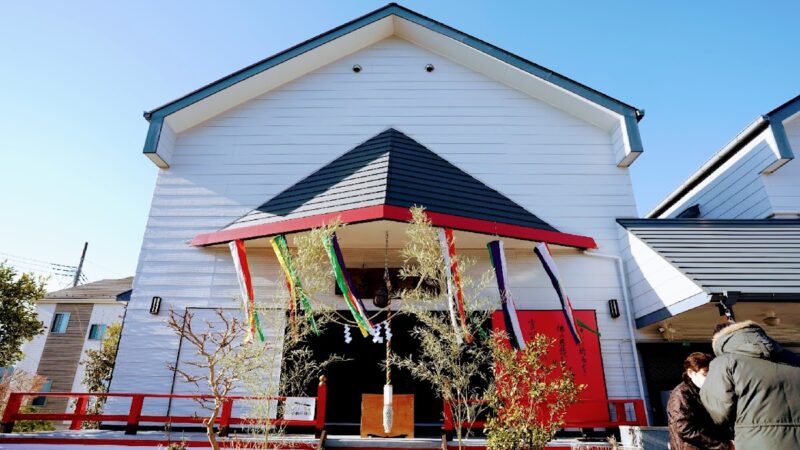
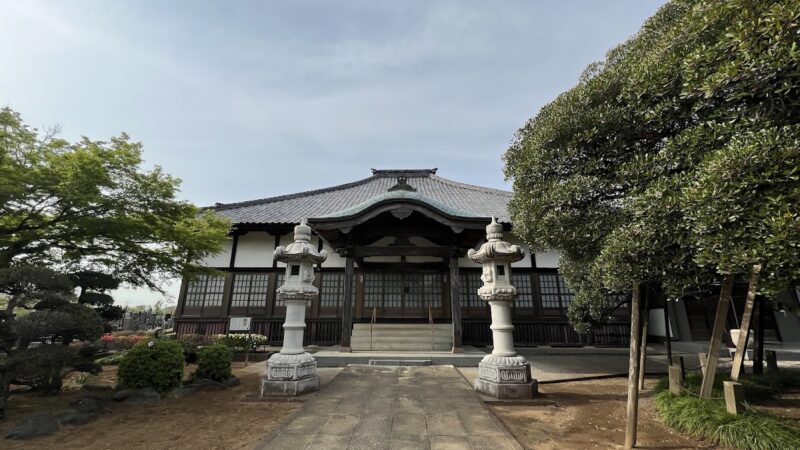
Jūrenji Temple’s main hall is a building in the traditional style of a Jōdo sect temple. The principal image, a statue of Amida Buddha, is enshrined inside, allowing visitors to worship in a solemn atmosphere. As befits a temple associated with Tokugawa Ieyasu, the three-leaf hollyhock crest can be seen throughout.
The eaves of the main hall hold historical significance as it is said to be the place where Ieyasu once saw vegetables being dried. While it’s rare to see vegetables drying there today, this anecdote is still mentioned on the temple’s information boards.
Cherry Blossoms on the Temple Grounds
Jūrenji Temple is known for its magnificent cherry trees. In spring, these large cherry trees bloom in full, captivating visitors. The contrast between the small temple nestled in a quiet residential area and the large cherry trees adorning its grounds makes it a beloved “hidden cherry blossom spot” among locals.
During the cherry blossom season, not only local residents but also visitors who have heard about it through word of mouth come to the temple, creating a quiet yet vibrant atmosphere. It’s a little-known spot for peaceful cherry blossom viewing, away from the hustle and bustle of the city.
A Collaboration with Rhododendrons
During cherry blossom season, rhododendrons also bloom profusely on the temple grounds. The contrast between the pale pink of the cherry blossoms and the vibrant purplish-red of the Rhododendron dilatatum deeply moves visitors.
This collaboration of cherry blossoms and Rhododendron dilatatum is a unique spring scene at Jurenji Temple, highly cherished by photography enthusiasts and nature lovers alike. Despite its small size, the temple grounds offer a beautiful space where one can feel the changing seasons.
Atmosphere of the Temple Grounds
Although located in a residential area, stepping into the grounds of Jurenji Temple reveals a surprisingly calming and tranquil space. In the increasingly urbanized city of Ageo, such a place of tranquility and historical significance is a precious find.
The temple grounds are well-maintained and clean. Visitors can escape the hustle and bustle of everyday life and offer their prayers in peaceful contemplation.
Transportation Access
Access by Train
Nearest Station: JR Takasaki Line “Ageo Station”
Access from Ageo Station West Exit
- Walking: Approximately 25 minutes on foot from Ageo Station West Exit (approx. 2 km)
- Bus:
- Take the Tobu Bus “Ageo Daini Danchi” bound bus from Ageo Station West Exit
- Get off at the “Shimin Taiikukan-mae” bus stop
- Approximately 5 minutes on foot from the bus stop
Other Nearest Stations
- JR Takasaki Line “Kita-Ageo Station”: Approximately 25 minutes on foot (approx. 1.9 km)
- JR Takasaki Line “Okegawa Station”: Approximately 30 minutes or more on foot
Access by Car
Ageo City is located in the southern part of Saitama Prefecture and has good access from central Tokyo.
- Approximately 5 minutes from National Route 17 (Nakasendo)
- Approximately 15 minutes from Okegawa-Kano IC on the Ken-O Expressway
Regarding parking, we recommend checking with the temple before your visit.
Address and Contact Information
Location: 156 Imaizumi, Ageo City, Saitama Prefecture 362-0047
Phone: 048-781-5003
FAX: 048-781-5003
We recommend checking visiting hours and memorial service schedules by phone in advance.
About Perpetual Memorial Services, Tree Burials, and Columbariums
In response to modern needs, Jurenji Temple offers various memorial service options, including perpetual memorial services and tree burials. Amidst the declining birthrate and aging population, these options are important for those without successors to their graves or those who wish for a memorial service that returns to nature.
What is Perpetual Memorial Service?
Perpetual memorial service is a form of memorial service where the temple takes responsibility for continuing memorial services in perpetuity. Since the management and memorial services of the grave can be entrusted to the temple, there is no need to worry about successors.
Visits and Consultations
Those considering perpetual memorial services or interment at Jurenji Temple can visit the temple for a tour. When visiting, it is recommended to check the following points:
- Method and frequency of memorial services
- Details of costs
- Contract details
- Atmosphere and maintenance of the temple grounds
For visit reservations and further details, please contact the temple directly.
Points and Manners for Visiting a Temple
Etiquette for Visiting a Temple
The basic etiquette for visiting a Jodo sect temple is as follows:
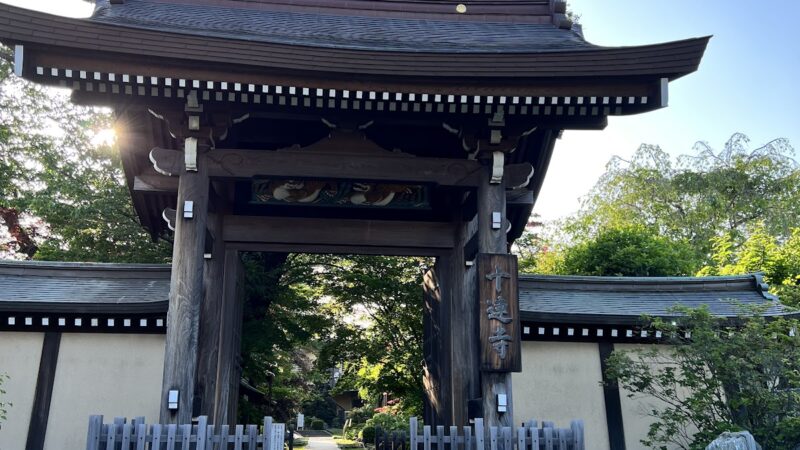
- Bow at the Temple Gate: Bow before entering the temple grounds.
- Purification at the Water Basin: Purify your hands and mouth (if there is a water basin).
- Worship at the Main Hall:
- Place your offering in the offering box.
- Join your hands in prayer and chant “Namu Amida Butsu.”
- Offer your prayers quietly.
- Bow upon Exit: Turn around and bow when leaving the temple grounds.
Regarding Photography
Many people photograph the natural scenery, such as cherry blossoms and azaleas, within the temple grounds. Please consider the following points:
- Permission may be required to photograph inside the main hall.
- Be considerate of other visitors.
- Maintain silence and remember that this is a religious facility.
Regarding Attire
For regular visits, no special attire is required, but clean and subdued clothing is preferred. For memorial services, mourning attire or semi-formal attire is appropriate.
Ageo City and Jurenji Temple
History and Culture of Ageo City
Ageo City is a city with a population of approximately 220,000 located in the central-eastern part of Saitama Prefecture. During the Edo period, it flourished as a post town on the Nakasendo road, and continues to develop as a transportation hub.
Jurenji Temple is a valuable cultural asset that has witnessed the history of Ageo City for over 600 years, and is an important presence for understanding the region’s history.
Role in the Community
Jurenji Temple is not merely a tourist spot; it functions as a place of worship and a spiritual anchor for local residents. Through the danka system (parishioner system), it is deeply connected to the local community and contributes to the maintenance of the community through weddings, funerals, and annual events.
Nestled in a quiet residential area, the Jūrenji Temple, which continues to preserve its history and traditions, plays an important role in providing spiritual stability and continuity in today’s rapidly changing society.
Nearby Attractions
When visiting Jūrenji Temple, we recommend also visiting other notable places in Ageo City:
Main Tourist Spots in Ageo City
- Ageo Maruyama Park: A vast nature park where you can enjoy the changing seasons.
- Ageo Municipal Baseball Stadium: A popular spot for baseball fans.
- Hikawa Kuwa Shrine: A shrine known as the guardian shrine of Ageo.
- Ageo City Nature Learning Center: A facility where you can learn about nature and the environment.
Nearby Temples and Shrines
There are many other historical temples and shrines scattered throughout Ageo City. Those who enjoy visiting temples and shrines can gain a deeper understanding of the region’s history and culture by visiting multiple locations.
Summary
Jūrenji Temple in Ageo City, Saitama Prefecture, is a Jōdo sect temple with a history of over 600 years since its founding in 1396. It is a prestigious temple said to have been named by Tokugawa Ieyasu in 1613, and is a special temple granted the use of the three-leaf hollyhock crest as a “temple associated with the divine Ieyasu.”
The temple grounds boast magnificent cherry blossoms and azaleas, attracting many visitors in spring. Located in a quiet residential area, it offers a tranquil space that soothes the soul, making it an ideal place to escape the hustle and bustle of everyday life and offer prayers.
It is accessible on foot or by bus from Ageo Station on the JR Takasaki Line. In addition to worship, consultations regarding perpetual memorial services and tree burials are also available. While preserving its history and traditions, Jūrenji Temple also meets modern needs, making it a valuable cultural asset of Ageo City and continuing to play an important role as a spiritual center for the local community.
When you visit Ageo City, be sure to stop by Jurenji Temple and experience its history and tranquil atmosphere. The temple grounds are especially beautifully adorned with cherry blossoms in the spring, making it even more worthwhile to visit.