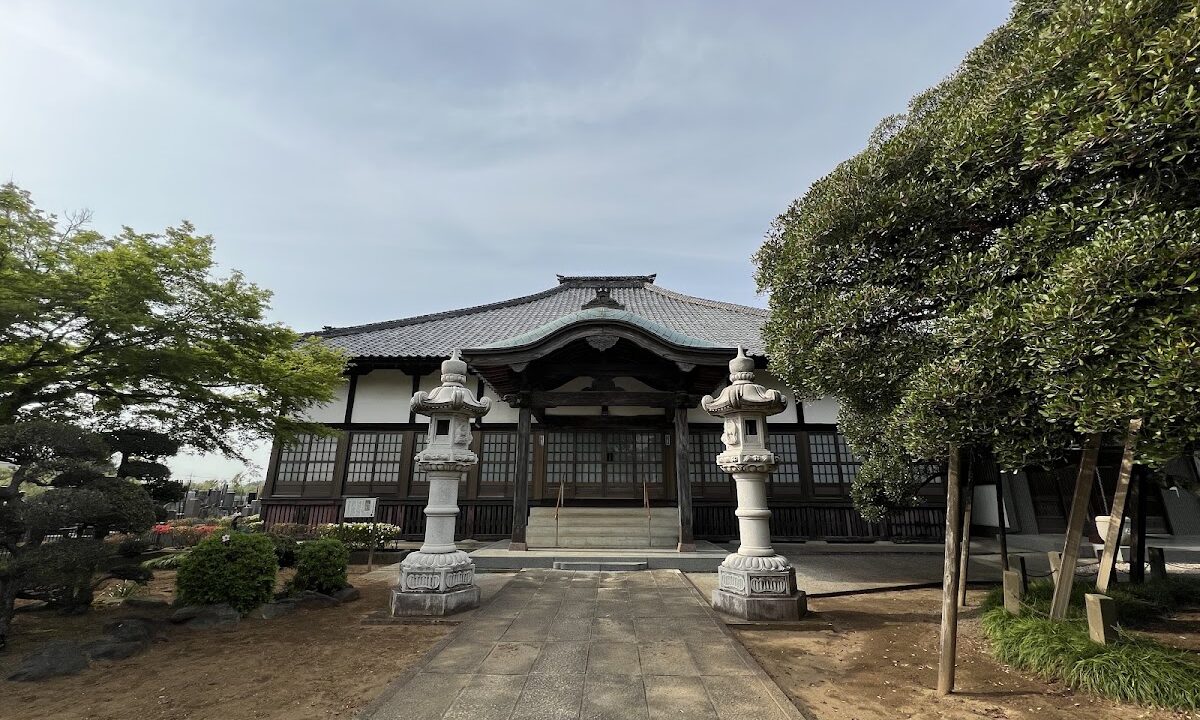
Hōchiin Bateiji Temple (Ageo City, Saitama Prefecture) | A Famous Jōdo Sect Temple with a History Dating Back to the Kamakura Period and the Charm of its Natural Monument, the Japanese Cypress (Mokukoku)
Located in Hirakata, Ageo City, Saitama Prefecture, Hōchiin Bateiji Temple is an ancient Jōdo sect temple with a history of approximately 800 years, dating back to the Kamakura period. Known for its giant Japanese Cypress tree, over 200 years old and designated a natural monument by Saitama Prefecture, it is a beloved center of local faith and culture. This article provides a detailed introduction to Bateiji Temple, including its history, cultural assets, highlights, and access information.
Basic Information about Batei-ji Temple
Official Name: Kohōzan Hōchiin Batei-ji
Sect: Jōdo-shū (Pure Land Buddhism)
Location: 2088 Hirakata, Ageo City, Saitama Prefecture
Postal Code: 362-0059
Telephone Number: 048-725-2052
Founded: Kamakura period (around the 13th century)
Founder: Azuma Saemon Koreyoshi
First Abbot: Chidō Shōnin
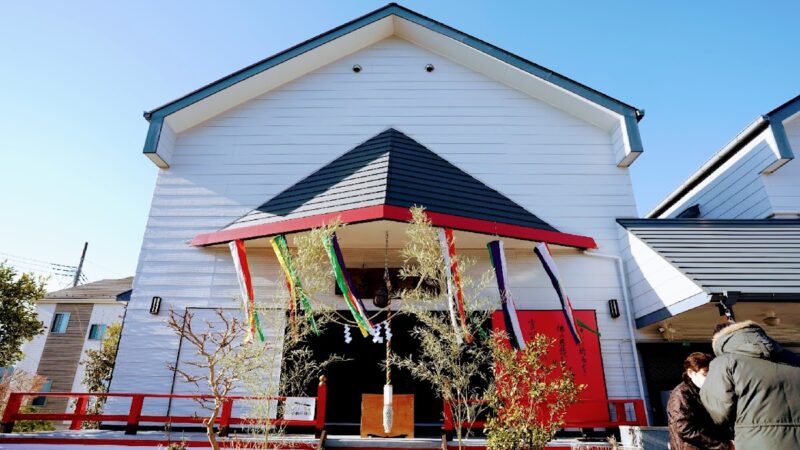
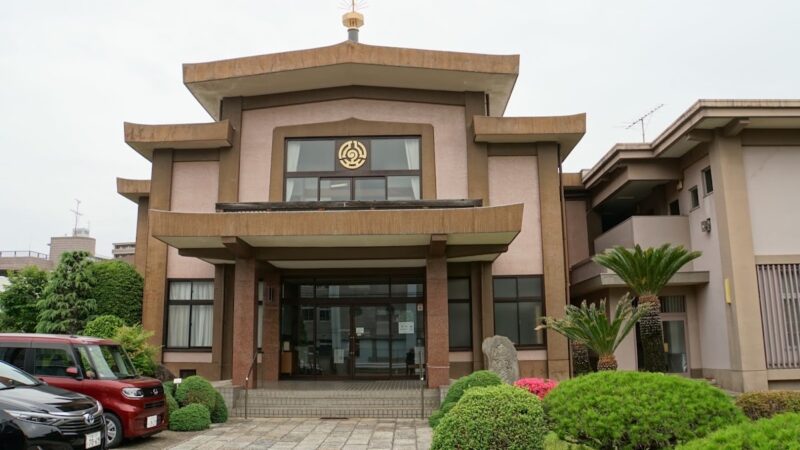
Batei-ji Temple is one of the largest temples in Ageo City. Its grounds, covering approximately 5,280 square meters, include the main hall, priest’s quarters, guest hall, Kannon hall, and a bell tower with a skirt-shaped base. The cemetery has approximately 700 plots and is supported by many parishioners as a local family temple.
History and Origins of Batei-ji Temple
Founded in the Kamakura Period
The founding of Batei-ji Temple dates back to the Kamakura period. According to the “Shinpen Musashi Fudoki-ko” (New Compilation of the Topography of Musashi Province), it is said that Azuma Saemon Koreyoshi of Hirakata Village built a hermitage called “Batei-an” in the small village of Daimon, with the monk Chido as the head priest, to pray for the repose of his uncle, Miwa Shoji Yoshimitsu.
Initially a small-scale Pure Land Buddhist training hall, it gradually developed into a center for spreading the teachings of the Jodo sect. Several origins are attributed to the temple’s name, “Batei-ji.”
Origin of the Name Batei-ji
According to the most widely known legend, when a monk was about to commit theft, a horse appeared and admonished him. The monk deeply repented, and after devoting himself to ascetic practice, he became the head priest. It is said that in gratitude for the horse’s teachings, the monk Kanyo later named this temple “Batei-ji” (Horseshoe Temple).
This story is still told today as a symbol of the Buddhist teachings of repentance and conversion. The unusual legend of a horse guiding people leaves a deep impression on visitors.
Development during the Edo Period
During the Edo period, the temple established a firm position as a powerful local temple, receiving patronage from the lord of the Kawagoe domain. Detailed records remain in the “Shinpen Musashi Fudoki-ko” (New Compilation of the Topography of Musashi Province), indicating its function as a central temple in Hirakata Village.
The main hall and other buildings were repeatedly constructed and rebuilt, forming the foundation of the temple complex seen today. Throughout the Edo period, it spread the doctrines of the Jodo sect and played an important role as a spiritual pillar for the local residents.
Progress in Modern Times
Having weathered the storm of anti-Buddhist movement after the Meiji Restoration, Batei-ji continued to be a center of faith in the region. In the Showa era, the temple began to attract attention from the perspective of cultural property preservation, with the Japanese cypress tree on its grounds being designated a natural monument of Saitama Prefecture.
Currently, as a Jodo sect temple, it continues to perform Buddhist services and annual events, manages the cemetery, and engages in community activities, fulfilling a diverse range of roles for a modern temple.
Cultural Properties and Highlights of Batei-ji Temple
Saitama Prefecture Designated Natural Monument: “The Japanese Cypress Tree of Batei-ji Temple”
One of the biggest reasons to visit Batei-ji Temple is the giant Japanese cypress tree towering over the temple grounds. This tree is a Saitama Prefecture designated natural monument and is known as one of the earliest designated cultural properties in Ageo City.
Basic Information on the Japanese Oak:
- Tree Species: Japanese Oak (Evergreen tree of the Camellia family)
- Trunk Circumference: Approximately 2.57 meters
- Tree Height: Approximately 12.5 meters
- Branch Spread: Radius of 7-8 meters
- Number of Large Branches: 17 branches spreading in all directions
- Estimated Age: Over 200 years old
The Japanese oak is a tree distributed in mountainous areas of warm regions, and it is considered extremely rare for it to grow into such a large tree in the inland Kanto region, such as Saitama Prefecture. The 17 large branches spreading in all directions from the thick trunk are breathtaking. From spring to summer, the dark green leaves are beautifully lush, and in autumn, it bears red berries.
Located in the center of the temple grounds, this Japanese oak has long been a symbol of Batei-ji Temple and cherished by the local people. Its vitality and timeless appearance deeply move visitors.
Suzuki Sōtan Haiku Monument
Within the temple grounds stands a haiku monument inscribed with a poem by Suzuki Sōtan, a haiku poet from the Edo period. Suzuki Sōtan was known as a local cultural figure, and his works are valuable historical documents that convey the scenery and lives of the people of Hirakata Village at that time.
This monument is an important historical site demonstrating that Batei-ji Temple functioned not merely as a religious facility, but also as a center of culture and art. It has been recognized as a cultural property by the Ageo City Board of Education and is being preserved.
Main Hall and Other Buildings
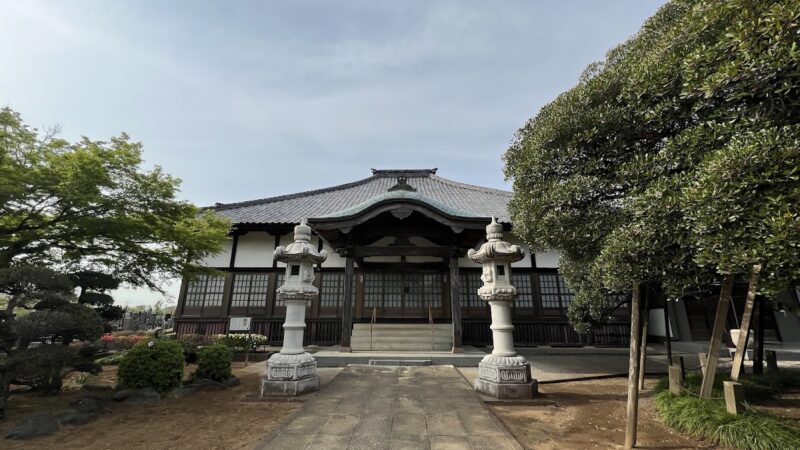
The main hall of Batei-ji Temple exhibits a solemn appearance typical of a Jōdo sect temple. Amida Buddha is enshrined as the principal image, and daily services and religious ceremonies are held there.
The temple grounds also include a Kannon Hall and a bell tower with a distinctive skirt-like base, allowing visitors to appreciate the beauty of traditional temple architecture. The bell tower, in particular, is a valuable structure that preserves the style of the Edo period.
Temple Gate
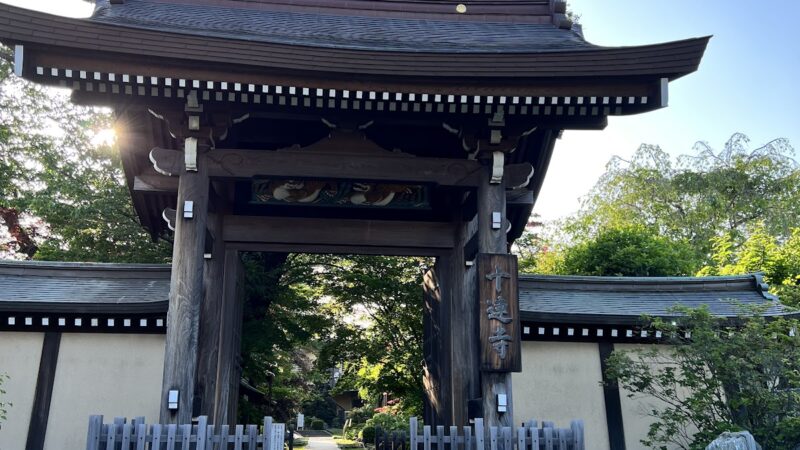
Upon alighting at the “Gurutto-kun” bus stop, “Shimoshuku Community Center West,” you will see the imposing temple gate on your right. This gate symbolizes the history and prestige of Batei-ji Temple, leading visitors into the tranquil temple grounds.
Access to Batei-ji Temple
Access by Public Transportation
Using Trains and Buses:
- Get off at “Ageo Station” on the JR Takasaki Line
- Take the Ageo City Loop Bus “Gurutto-kun”
- Get off at the “Shimoshuku Community Center West” bus stop and it’s a short walk.
It takes approximately 20-30 minutes by bus from Ageo Station. Since bus service is limited, it is recommended to check the timetable in advance.
Access by Car
Route from Major Roads:
- From National Route 17, take the prefectural road to the Hirakata area.
- Approximately 15 minutes from the Ken-O Expressway “Okegawa-Kitamoto IC”.
- Parking available (for visitors)
The temple grounds have a parking lot for visitors, making it possible to visit by private car. However, please note that it may be crowded during religious services and other events.
Surrounding Facilities
There are public facilities such as the Shimoshuku Community Center near Batei-ji Temple, making it a convenient base for exploring the history of the Hirakata area. It is also close to the Arakawa River and blessed with a rich natural environment.
Annual Events at Batei-ji Temple
As a Jodo sect temple, Batei-ji Temple holds various religious services and events throughout the year.
Main Annual Events
- New Year’s Day Service (January 1st): New Year’s memorial service
- Spring Equinox Service (March): Memorial service for ancestors
- Flower Festival (April 8th): Memorial service celebrating the birth of Buddha
- Obon Memorial Service (August): Obon Festival
- Autumn Equinox Service (September): Memorial service for ancestors
- Ten Nights Memorial Service (November): An important event of the Jodo sect
- New Year’s Eve Bell Ringing (December 31st): New Year’s Eve event
These events are important opportunities for parishioners and local residents to gather, and they also play a role in deepening community bonds.
About Batei-ji Temple Cemetery
Batei-ji Temple has a cemetery with approximately 700 plots, and accepts new burial plot users.
Features of the Cemetery
- Religious Affiliation: Primarily Jodo Buddhism (other denominations may be considered upon consultation)
- Total Number of Plots: Approximately 700 plots
- Facilities: Water facilities, outdoor toilets, and parking available
- Memorial Service Facilities: Memorial services can be held in the main hall and guest hall
- Management: Perpetual management by the temple
For those who wish to have memorial services at a historic temple dating back to the Kamakura period, Bateiji Cemetery is a place where you can respectfully honor your ancestors. For details, please contact the temple directly.
Visiting Temples and Shrines in Ageo City and Bateiji Temple
Bateiji Temple is one of the important spots on a temple and shrine tour in Ageo City. It is also listed on the cultural property map published by the Ageo City Board of Education, making it an indispensable place for learning about the local history.
Historical Background of the Hirakata Area
The Hirakata area is a historic area that developed along the Arakawa River, and in the Edo period, it was recorded in detail as Hirakata Village in the “Shinpen Musashi Fudoki-ko” (New Compilation of the Topography of Musashi Province). Batei-ji Temple, as the central temple of Hirakata Village, has supported the spiritual culture of the region.
Many other historical shrines and temples are scattered throughout the surrounding area, allowing visitors to enjoy a leisurely historical stroll for a full day.
Points to Note and Manners When Visiting
Basic Manners for Visiting
- Bow at the Temple Gate: Bow before entering the temple grounds.
- Respectful Attitude: Be quiet within the temple grounds and be considerate of other visitors and religious services.
- Photography: Photography of cultural assets such as the Mokukoku is permitted, but please refrain from taking photos inside the main hall or during religious services.
- Smoking and Eating: Please refrain from smoking and eating outside of designated areas.
- Garbage: Please take all your trash with you.
Visiting Hours
General visits are recommended during daylight hours. General visits may be restricted during religious services or other events, so it is recommended to check in advance.
Summary of the Charms of Batei-ji Temple
Hōchiin Batei-ji Temple is a renowned Jōdo sect temple that has attracted worshippers in Hirakata, Ageo City, for approximately 800 years since the Kamakura period. Its charm can be summarized in the following points:
- Deep History: Founded in the Kamakura period by Azuma Saemon Koreyoshi, it boasts a solid historical background.
- Valuable Cultural Assets: Includes the Saitama Prefecture-designated natural monument, the Japanese cypress (Mokukoku), and a haiku monument by Suzuki Shōtan.
- Beautiful Grounds: A space where traditional temple architecture and nature harmonize.
- Connection to the Community: Functioning as the local family temple for 800 years.
- Easy Access: Accessible by bus from Ageo Station, with ample parking.
This temple is worth visiting for a wide range of purposes, from those interested in history and cultural assets to those seeking quiet time and those looking for a place to honor their ancestors.
Combining with Nearby Sightseeing
When visiting Batei-ji Temple, you can have a more fulfilling day by combining it with other sightseeing spots in Ageo City and the surrounding area.
Recommended Nearby Spots
- Arakawa Riverbank: A nature-rich walking path and cycling course
- Other Temples and Shrines in Ageo City: Ageo City is home to many historical temples and shrines
- Kawagoe Area: Access to Koedo Kawagoe is possible in about 30 minutes by car
The Hirakata area is close to the Arakawa River and is an attractive area where nature and history coexist. You can enjoy a relaxing time while appreciating the scenery of the four seasons.
Inquiries about Batei-ji Temple
For inquiries regarding worship, cemeteries, memorial services, etc., please contact the temple directly.
Batei-ji Temple
2088 Hirakata, Ageo City, Saitama Prefecture 362-0059
TEL: 048-725-2052
Further details regarding cultural properties can be obtained by contacting the Ageo City Board of Education.
Summary
Hōchiin Batei-ji Temple is an ancient Jodo sect temple located in Hirakata, Ageo City, Saitama Prefecture. It boasts a deep history dating back to the Kamakura period and is a renowned temple possessing valuable cultural assets, including the Mokukoku tree, a prefecturally designated natural monument. It has an interesting history, including its founding by Azuma Saemon Koreyoshi, its establishment to commemorate Miwa Shōji Yoshimitsu, and the legend of a monk who converted through the teachings of horses.
It is also recorded in detail in the “Shinpen Musashi Fudoki Kō” (New Compilation of the Topography of Musashi Province), and developed as a central temple in Hirakata Village during the Edo period, receiving patronage from the lord of the Kawagoe Domain. Even today, it remains a beloved local temple and an important cultural asset of Ageo City, cherished by many.
The giant Japanese cypress tree, over 200 years old, continues to captivate visitors with its overwhelming presence. With a trunk circumference of approximately 2.57 meters and 17 large branches spreading in all directions, it is truly a masterpiece of natural beauty. The haiku monument of Suzuki Sotan is also a valuable historical site that conveys the culture of the Edo period.
Accessible by bus from Ageo Station and with ample parking, it is easily accessible by both public transport and private car. Why not spend some peaceful time in the tranquil temple grounds, reflecting on history and experiencing the vitality of the giant tree?
Based on the teachings of the Jodo sect, Batei-ji Temple has been a spiritual haven for the local people for 800 years. Its history and culture speak to us who live in the modern age with much to say. If you’re interested in exploring the history of Saitama Prefecture, visiting temples and shrines, or appreciating cultural properties, I highly recommend you visit at least once.