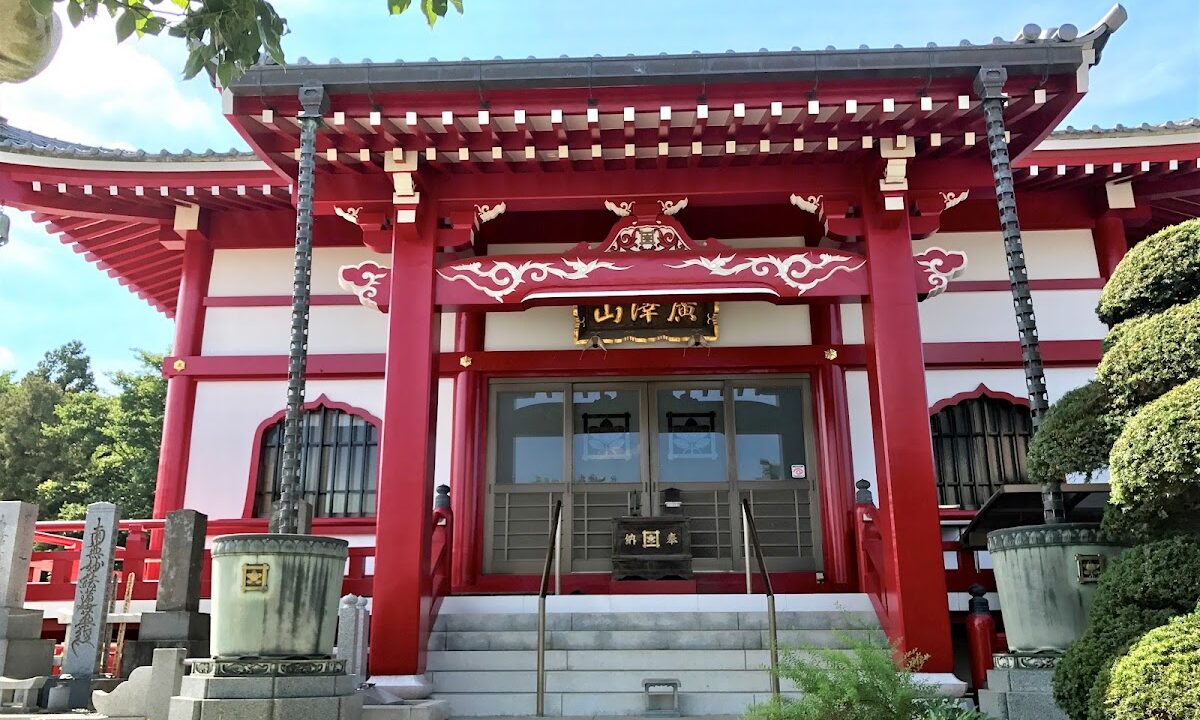
Honsenji Temple (Asaka City, Saitama Prefecture) Complete Guide | History, Access, and Tree Burial: A Thorough Explanation
Honsenji Temple, located in Oka, Asaka City, Saitama Prefecture, is a Nichiren Buddhist temple with a history of approximately 490 years. Situated on a hill in a quiet residential area, this temple has deep ties to Ikegami Honmonji Temple and has long been a center of local faith. In recent years, it has attracted attention as a temple offering a new form of memorial service with the opening of the “Asaka Reiwa no Mori” tree burial ground.
This article provides a detailed explanation of Honsenji Temple, from its historical background to its modern initiatives.
Overview of Honsenji Temple
Honsenji Temple is a Nichiren Buddhist temple located at 2-5-56 Oka, Asaka City, Saitama Prefecture. Its mountain name is “Kōtakusan,” and it conducts religious activities based on the teachings of Nichiren Buddhism.
Basic Information
Temple Name: Honsenji Temple
Mountain Name: Hirosawa-san
Sect: Nichiren Buddhism
Address: 2-5-56 Oka, Asaka City, Saitama Prefecture 351-0006
Phone Number: 048-462-2628
Founder: Ninth Abbot of Ikegami Honmonji Temple, Eigan-in Nichijun Shonin (Hoko-in Nichisen)
Year of Founding: Tenbun 1 (1532)
Honsenji Temple is one of the oldest temples in Asaka City and has played an important role in the development of local Buddhist culture. While located in a quiet residential area, the temple grounds maintain a lush, peaceful atmosphere.
History and Origins of Honsenji Temple
Honsenji Temple’s founding dates back to the late Muromachi period. Founded during the turbulent Sengoku period, this temple has played a crucial role as a center for spreading the teachings of Nichiren Buddhism throughout the region.
Founding History
Honsenji Temple was founded in 1532 (Tenbun 1) by the ninth abbot of Ikegami Honmonji Temple, Eigan-in Nichijun Shonin (also known as Hoko-in Nichisen). Nichijun Shonin was a high-ranking priest who held an important position at Ikegami Honmonji Temple, a major head temple of the Nichiren sect. It is said that he founded Honsenji Temple to spread his teachings throughout Musashi Province (the area encompassing present-day southern Saitama Prefecture and Tokyo).
Ikegami Honmonji Temple is one of the head temples of the Nichiren sect, located in Ota Ward, Tokyo, and is known as the sacred site where Nichiren Shonin passed away. Honsenji Temple has a deep connection with this historically significant head temple and has developed as a temple that inherits the orthodox teachings of Nichiren Buddhism.
The Origin of Honsenji Temple According to the Shinpen Musashi Fudoki-ko
The Shinpen Musashi Fudoki-ko, a local history compiled in the late Edo period, contains records of Honsenji Temple. This document is a detailed local history of Musashi Province, created by order of the Edo shogunate, and is a valuable resource for understanding the state of temples and shrines at the time.
According to the Shinpen Musashi Fudoki-ko, Honsenji Temple is described as “also known as Hirosawa-san, belonging to the Nichiren sect, and a branch temple of Ikegami Honmonji Temple.” This confirms that even during the Edo period, Honsenji Temple was a branch temple of Ikegami Honmonji Temple, forming part of the Nichiren sect’s temple network.
The document also describes the principal image and the temple grounds, suggesting that it was a temple that attracted local faith even at that time. During the Edo period, Honsenji Temple served as a central temple in Okamura (present-day Oka district of Asaka City), acting as a spiritual pillar for the villagers.
The Origin of Honsenji Temple According to the “Asaka City History”
The “Asaka City History,” compiled by Asaka City, also contains detailed descriptions of Honsenji Temple. According to the city history, Honsenji Temple played a crucial role in the formation of the local community as a center of Nichiren Buddhist faith in the Oka district.
Of particular note is that Honsenji Temple functioned not only as a religious facility but also as a community gathering place and educational center. Records indicate that from the Edo period to the Meiji period, it served as a kind of temple school, teaching reading and writing to local children.
The “Asaka City History” also touches upon how Honsenji Temple survived the turmoil of the anti-Buddhist movement after the Meiji Restoration, thanks to the support of the local people. Even during the turbulent early Meiji period, the temple was maintained by the strong faith of the local residents, and has continued to preserve its Buddhist traditions to this day.
The Relationship Between Honsenji Temple and Ikegami Honmonji Temple
Understanding Honsenji Temple is essential to understanding its deep relationship with Ikegami Honmonji Temple. Ikegami Honmonji Temple is a sacred site where Nichiren Shonin passed away on October 13, 1282 (Kōan 5), and is one of the most important holy sites in the Nichiren sect.
Nichijun Shonin, the founder of Honsenji Temple, was a high-ranking priest who served as the ninth head priest of Ikegami Honmonji Temple, and he established Honsenji Temple to spread his teachings in southern Musashi Province. Therefore, from its inception, Honsenji Temple has been positioned as a direct branch temple of Ikegami Honmonji Temple, maintaining a strong connection with the head temple.
Even today, Honsenji Temple, as a Nichiren sect temple with Ikegami Honmonji Temple as its head temple, participates in important religious services and events held at the head temple, faithfully upholding the teachings of the Nichiren sect. This relationship with the head temple is an important element that underpins Honsenji Temple’s religious authority and legitimacy.
Highlights of the Temple Grounds
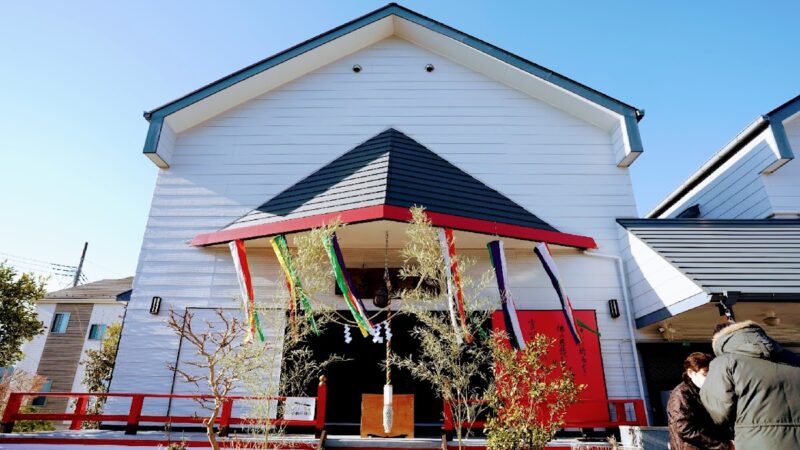
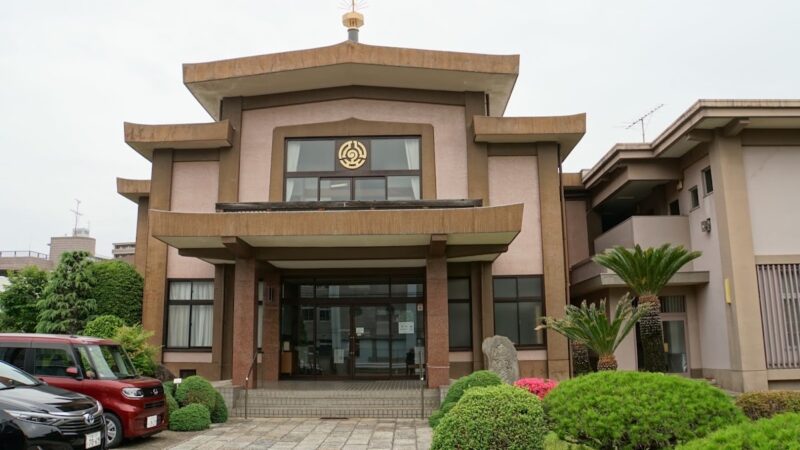
Despite being located in a residential area, the grounds of Honsenji Temple maintain a sense of tranquility and solemnity. Located on a hill, it offers excellent views and provides a peaceful space for visitors.
Main Hall
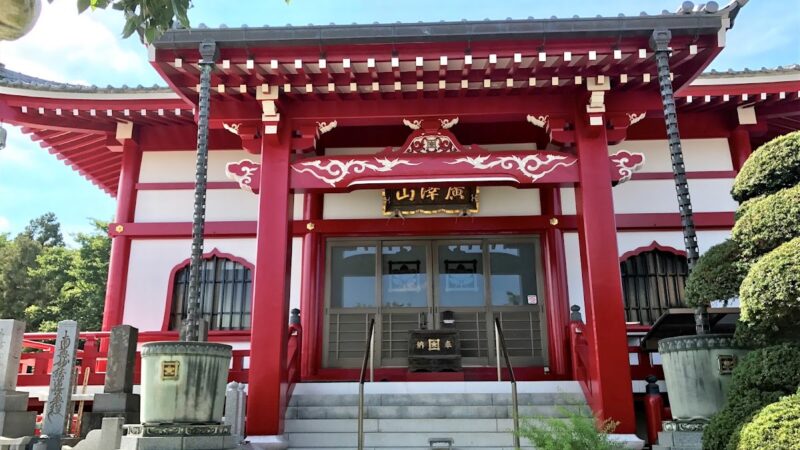
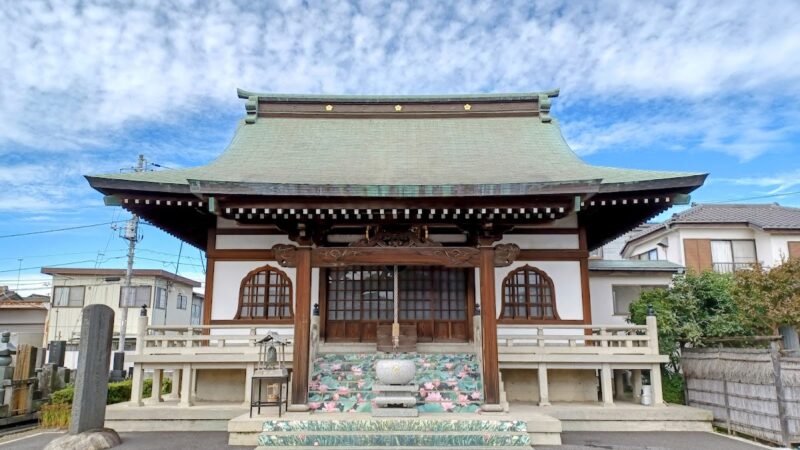
The main hall of Honsenji Temple features architectural styles characteristic of Nichiren Buddhist temples. The principal image is enshrined within, and daily services and memorial services are held there. The main hall is a central gathering place for local believers, and it becomes bustling with many visitors during important Buddhist events such as Obon and Higan.
Cemetery
In addition to its traditional cemetery, Honsenji Temple has recently developed a new type of cemetery to meet modern needs. Located on a hill, the cemetery offers views of the surrounding landscape, creating a suitable environment for remembering loved ones.
Asaka Reiwa no Mori (Tree Burial Cemetery)
In the 2020s, Honsenji Temple opened the “Asaka Reiwa no Mori” tree burial cemetery as a new initiative to meet the needs of the times. This is a modern form of memorial service that is attracting attention even within Saitama Prefecture.
Cemetery ### What is Tree Burial?
Tree burial is a new type of burial ground that differs from traditional cemeteries where gravestones are erected. It involves burying cremated remains beneath trees and flowers. Based on the idea of returning to nature, it has become increasingly popular in recent years as an environmentally conscious form of memorial service.
Features of Asaka Reiwa no Mori
Asaka Reiwa no Mori is a tree burial cemetery located on a hill within the grounds of Honsenji Temple. It is characterized by its open environment, bathed in gentle sunlight and breeze. The following advantages are available:
- No Successor Required: This is a perpetual memorial grave that can be used with peace of mind even by those without heirs.
- All Religious Affiliations Accepted: Available to those who do not belong to the Nichiren sect.
- Low Maintenance Burden: Compared to traditional cemeteries, the burden of maintenance is reduced.
- Natural Environment: A peaceful resting place surrounded by nature in a lush green environment.
- Easy Access: Conveniently located near the station, making it easy to visit.
Asaka Reiwa no Mori is attracting attention from many people as a memorial service option that responds to the diverse lifestyles and values of modern times.
Access Information
Honsenji Temple is located near the center of Asaka City, Saitama Prefecture, and is easily accessible by public transportation.
Access by Train
Nearest Stations:
- Tobu Tojo Line “Asakadai” Station
- JR Musashino Line “Kita-Asaka” Station
- Tobu Tojo Line “Asaka” Station
Asakadai Station and Kita-Asaka Station are adjacent to each other, and the temple is accessible from either station. The walking distance from the station is approximately 15-20 minutes. It’s also within walking distance from Asaka Station, but it’s a bit further.
Access by Bus
You can also take a bus from Asakadai Station or Kita-Asaka Station. Asaka City Loop Buses and Kokusai Kogyo Buses operate, and you can shorten your walking time by getting off at a bus stop near the temple.
Access by Car
Visiting by private car is also possible. It’s approximately 20-30 minutes from the Kan-Etsu Expressway “Tokorozawa Interchange” or the Gaikan Expressway “Wako-Kita Interchange”. There is parking space on the temple grounds, but the number of spaces is limited, so we recommend using public transportation for large memorial services.
Access from Major Surrounding Cities
- From Central Tokyo: Approximately 20 minutes from Ikebukuro Station on the Tobu Tojo Line, alight at Asakadai Station.
- From Kawagoe City: Approximately 15 minutes on the Tobu Tojo Line, alight at Asakadai Station.
- From Saitama City: Accessible via the JR Musashino Line to Kita-Asaka Station.
- From Tokorozawa City: Approximately 20 minutes by car.
Nearby Temples and Shrines
Near Honsenji Temple, there are numerous temples and shrines that tell the history of Asaka City.
Oka Hikawa Shrine
Located within walking distance of Honsenji Temple, Oka Hikawa Shrine has long been revered as the local guardian deity. It accepts prayers for occasions such as baby blessings, Shichi-Go-San (a traditional Japanese rite of passage for children), and protection against misfortune, and together with Honsenji Temple, forms the center of faith in the Oka district.
Location: 3-20-1 Oka, Asaka City, Saitama Prefecture
Tomizenji Temple
Like Honsenji Temple, also located in Asaka City, Tomizenji Temple has supported the local Buddhist culture. Each temple has its own distinct history and characteristics, contributing to the rich religious culture of Asaka City.
Memorial Services and Buddhist Rites Offered at Honsenji Temple
Honsenji Temple, as a Nichiren Buddhist temple, performs various Buddhist ceremonies and memorial services.
Funerals
Funerals can be conducted according to Nichiren Buddhist customs. We can assist not only temple parishioners but also those using the tree burial cemetery.
Memorial Services and Buddhist Rites
Annual memorial services such as the seventh day, forty-ninth day, first anniversary, and third anniversary are performed. In addition to services held in the main hall, we also offer consultations regarding services held at your home.
Memorial Services During Obon and Higan
Special memorial services are held during Obon and the spring and autumn equinoxes, attracting many parishioners and believers. Regular memorial services, such as the Segaki ceremony, are also held.
Memorial Services for Stillborn Children and Ancestors
We also accept memorial services for stillborn children and ancestors. Individual memorial services can also be discussed.
About the Nichiren Sect
This section introduces basic knowledge about the Nichiren Sect, to which Honsenji Temple belongs.
Founder of the Nichiren Sect
The Nichiren Sect is a Buddhist sect founded by the Kamakura period monk Nichiren Shonin (1222-1282). Nichiren Shonin considered the Lotus Sutra to be the highest scripture and taught that one could attain Buddhahood in this lifetime by chanting the title “Namu Myoho Renge Kyo.”
The Teachings of Nichiren Buddhism
The central teachings of Nichiren Buddhism are as follows:
- Supremacy of the Lotus Sutra: The Lotus Sutra is considered the true teaching of Shakyamuni Buddha.
- Practice of Chanting: Chanting “Nam Myoho Renge Kyo” is the most important practice.
- Worldly Benefits: Aiming for happiness and enlightenment in this world.
- Shakubuku: An attitude of actively spreading the teachings.
Nichiren Buddhism Temple Network
Nichiren Buddhism is a large sect with approximately 5,000 temples nationwide. Centered around its head temples such as Ikegami Honmonji and Minobu-san Kuonji, branch temples like Honsenji are spread throughout the country. There are many Nichiren Buddhist temples in Saitama Prefecture, scattered throughout the prefecture in cities such as Kawaguchi, Ageo, Okegawa, Kitamoto, Konosu, Kawagoe, Tokorozawa, Sayama, Hanno, Hidaka, Koshigaya, Kasukabe, Hasuda, Kuki, Kazo, Hanyu, Gyoda, Satte, and Kumagaya.
History of Asaka City and Honsenji Temple
Asaka City, where Honsenji Temple is located, is a city with a population of approximately 140,000 in the southern part of Saitama Prefecture. It is about 20 kilometers from central Tokyo and has developed as a commuter town.
History of Asaka City
Asaka City has a long history, with archaeological sites dating back to the Paleolithic period discovered there. In the Middle Ages, it was a stage for the activities of Musashi samurai, and in the Edo period, it flourished as a post town on the Kawagoe Road.
In the Meiji era, an army facility was established there, and after the war, it developed as a residential city. In 1967 (Showa 42), the area was incorporated as a city, becoming the present-day Asaka City.
Characteristics of the Oka District
The Oka district, where Honsenji Temple is located, is one of the historically significant areas within Asaka City. Originally a rural area, it developed into a residential area after post-war urbanization. However, historical buildings such as Honsenji Temple and Oka Hikawa Shrine remain, preserving the region’s history.
Manners and Precautions for Visiting
This section introduces basic manners for visiting Honsenji Temple.
Etiquette for Visiting a Temple
- Bow at the Temple Gate: Bow at the temple gate before entering the temple grounds.
- Ritual for Washing Hands: If there is a water basin, wash your hands and mouth.
- Worship at the Main Hall: Join your hands in prayer in front of the main hall and pray quietly.
- Offering a Coin: Offer a coin with gratitude.
- Bow Upon Departure: Bow at the temple gate before leaving the temple grounds.
Specific Etiquette at Nichiren Buddhist Temples
At Nichiren Buddhist temples, chanting the mantra “Namu Myoho Renge Kyo” is fundamental. It is recommended to chant this mantra silently or quietly during your visit.
Clothing and Belongings
For regular visits, no special clothing is required, but clean and modest attire is desirable. For memorial services, mourning attire or clothing in subdued colors such as black or navy is appropriate.
Bringing prayer beads is recommended, but not required. While Nichiren Buddhism has its own unique type of prayer beads, those from other sects are also acceptable.
Photography
Photography is generally permitted on the temple grounds, but photography inside the main hall or during religious services should be avoided. When taking photographs, please be considerate of other visitors. If you have any questions, it is recommended to check with the temple office.
Differences between the Danka System and Tree Burial
Honsenji Temple offers both the traditional Danka system and the newer form of tree burial.
Danka System
Danka is a system where a person financially supports a specific temple and, in return, receives religious services such as funerals and memorial services. Becoming a Danka allows you to:
- Use the temple’s cemetery
- Receive priority for funerals and memorial services
- Receive religious guidance from the temple
On the other hand, it also comes with certain obligations, such as annual Danka fees and participation in temple events.
Use of the Tree Burial Cemetery
The “Asaka Reiwa no Mori” tree burial cemetery is a cemetery that can be used even without becoming a temple parishioner. Its features include:
- No restrictions on religious affiliation
- Perpetual memorial service without the need for a successor
- Relatively low cost
- Low maintenance effort
Which form is suitable depends on individual circumstances and beliefs. Honsenji Temple offers both options and is available for consultation.
How to Contact Honsenji Temple
You can contact Honsenji Temple in the following ways:
Telephone Inquiry
Telephone Number: 048-462-2628
You can inquire by telephone regarding funerals, memorial services, cemetery matters, and questions about visiting the temple. Please call during the temple office’s operating hours.
Direct Visit
While it is possible to visit the temple office directly, the head priest may be absent, so for important consultations, it is recommended to contact us by phone beforehand.
Inquiries Regarding Tree Burial
Detailed information and appointment requests for visits to Asaka Reiwa no Mori (tree burial ground) can be made through cemetery introduction services. Information on brochures and on-site tours is also available.
Summary
Honsenji Temple is a Nichiren Buddhist temple with a history of approximately 490 years, founded in 1532 during the late Muromachi period. It was established by Nichijun Shonin, the ninth head priest of Ikegami Honmonji Temple, and has since contributed to the local community as a center of faith in the Oka district of Asaka City.
It is a historically significant temple, recorded in the “Shinpen Musashi Fudoki-ko” and the “Asaka City History,” and continues to uphold the orthodox teachings of Nichiren Buddhism while maintaining a deep relationship with Ikegami Honmonji Temple.
In recent years, as an initiative to meet the needs of the times while preserving tradition, the tree burial ground “Asaka Reiwa no Mori” was established. This allows us to offer, in addition to the traditional danka (parishioner) system, the option of perpetual memorial services that do not require a successor, regardless of religious affiliation or sect.
Conveniently located within walking distance of Asakadai Station on the Tobu Tojo Line and Kita-Asaka Station on the JR Musashino Line, yet situated on a hilltop surrounded by lush greenery, it provides a peaceful space for visitors.
Honsenji Temple handles various Buddhist services, including funerals, memorial services, and cemetery consultations, and continues to be a spiritual support for the local community. While cherishing history and tradition, it is a temple that also embraces diverse modern values, and will continue to contribute to the community.
If you are considering visiting or consulting with Honsenji Temple, please feel free to inquire by phone (048-462-2628) or visit in person. In its tranquil grounds, you can experience the history and spirit of Nichiren Buddhism.