Complete Guide to Kanda Myojin Shrine | The Charm and Blessings of Edo’s Guardian Shrine with 1300 Years of History
Kanda Myojin Shrine (officially known as Kanda Jinja), located in Sotokanda, Chiyoda-ku, Tokyo, is a historic shrine that has watched over Edo/Tokyo for approximately 1300 years since its founding in 730 AD. Known for the Kanda Festival, one of Edo’s three major festivals, it is affectionately known as “Myojin-sama” (God of Myojin) for its diverse blessings, including business prosperity, matchmaking, and good fortune.
This article comprehensively explains everything you need to know before visiting Kanda Myojin Shrine, from its history and highlights to its grounds, goshuin (shrine stamps), access methods, and nearby tourist spots.
What is Kanda Myojin Shrine? The History and Origins of the Guardian Shrine of Edo
Approximately 1300 Years Since its Founding
Kanda Myojin Shrine was founded in 730 AD (Tenpyo 2), when Makandaomi of the Izumo clan enshrined their ancestral deity, Ōnamuchi-no-Mikoto, in Shibazaki Village, Toshima District, Musashi Province (present-day Ōtemachi, Chiyoda Ward, Tokyo, near Masakado’s Tomb).
In 1309 AD (Enkei 2), Taira no Masakado was enshrined there by Shinnyo Shōnin, a monk of the Jishū sect, and since then, it has been known as “Kanda Myojin” and has attracted the faith of the common people of Edo. During the Edo period, it is also known that Tokugawa Ieyasu visited it to pray for victory before the Battle of Sekigahara, and it received the reverence of the Tokugawa Shogunate.
In 1603 AD (Keichō 8), it was relocated to its current location in Sotokanda to serve as the guardian of the northeast (demon’s gate) of Edo Castle. Since then, it has continued to watch over the development of Edo/Tokyo as the guardian shrine of 108 neighborhoods, including Kanda, Nihonbashi, Akihabara, Otemachi, Marunouchi, and Tsukiji Fish Market.
Meiji Restoration and Changes in Shrine Name
In 1868 (Meiji 1), Kanda Myojin was designated a quasi-imperial shrine, and later ranked as a prefectural shrine. In 1872 (Meiji 4), the official name was changed to “Kanda Jinja,” but the name “Kanda Myojin,” which had been familiar since the Edo period, is still widely used today.
With the 1300th anniversary of its founding approaching in 2030 (Reiwa 12), new cultural exchange facilities are being developed on the shrine grounds, demonstrating efforts to adapt to modern times while preserving tradition.
Deities and Blessings of Kanda Myojin
Three Deities
Three deities are enshrined at Kanda Myojin.
First Shrine: Ōkuninushi-no-Mikoto (Daikoku-sama)
Revered as the god of matchmaking, marital harmony, business prosperity, and medicine/health. Known as the god of national development, agriculture, and medicine, he is also the enshrined deity of Izumo Taisha Shrine.
Second Shrine: Sukunahikona-no-Mikoto (Ebisu-sama)
The god of business prosperity, medicine/health, and good fortune. As a god who worked alongside Ōkuninushi-no-Mikoto in nation-building, he is particularly revered by those engaged in business.
Third Shrine: Taira no Masakado-no-Mikoto (Masakado-sama)
Known as the god of protection against disaster and misfortune, and of victory. As a symbol of the samurai of the Kanto region, he is a popular deity to worship before competitions or starting new businesses.
Diverse Blessings
Kanda Myojin Shrine offers a wide range of blessings.
- Business Prosperity and Company Thriving: A place of deep faith for merchants since the Edo period, with numerous prayers offered by companies.
- Matchmaking and Successful Relationships: Benefits of matchmaking through the divine virtues of Ōkuninushi-no-Mikoto.
- Victory and Guaranteed Success: Improvement of luck in competitions through the blessings of Taira no Masakado-no-Mikoto.
- Protection from Evil and Bringing Good Fortune: Comprehensive protection from evil through the three deities.
- Academic Achievement: Also considered a god of wisdom and learning.
- IT Information Security: Due to its proximity to Akihabara, modern IT-related amulets are also available.
The Charm of the Kanda Festival, One of the Three Great Edo Festivals
The Kanda Festival, One of Japan’s Three Great Festivals
The Kanda Festival, along with the Sannō Festival (Hie Shrine) and the Fukagawa Festival (Tomioka Hachimangu Shrine), is one of the three great Edo festivals. Furthermore, along with the Gion Festival in Kyoto and the Tenjin Festival in Osaka, it is also counted among Japan’s three great festivals. It is a magnificent festival.
History and Highlights of the Kanda Festival
The Kanda Festival is a grand festival held every two years in mid-May. During the Edo period, it was known as the “Tenka Matsuri” (Festival of the Realm), and the Shogun had the honor of viewing the festival from within Edo Castle.
The highlight of the festival is the “Shinko-sai” (Divine Procession), where portable shrines and floats selected from 108 local community associations parade along a route of approximately 30 kilometers through Kanda, Nihonbashi, Otemachi, Marunouchi, and other areas. The procession, featuring the imperial palanquin, portable shrines, floats, and other artifacts, is a magnificent sight that captivates many tourists.
Main Rituals and Events of the Kanda Festival
- Hōren Mikoshi Senza-sai (Transfer of the Imperial Palanquin and Portable Shrine): A ceremony to transfer the divine spirit to the portable shrine.
- Ujiko-machi Kai Mikoshi Miyairi (Procession of Portable Shrines by Each Neighborhood Association): Portable shrines from each neighborhood association gather within the shrine grounds.
- Shinko-sai (Procession of the Divine Shrine): The main event of the festival, a procession through the parish area.
- Kencha-shiki (Tea Ceremony) and Myōjin Noh (Noh Performance): A ceremony offering traditional culture.
Highlights and Facilities of the Shrine Grounds
Zuishinmon Gate and Shrine Building
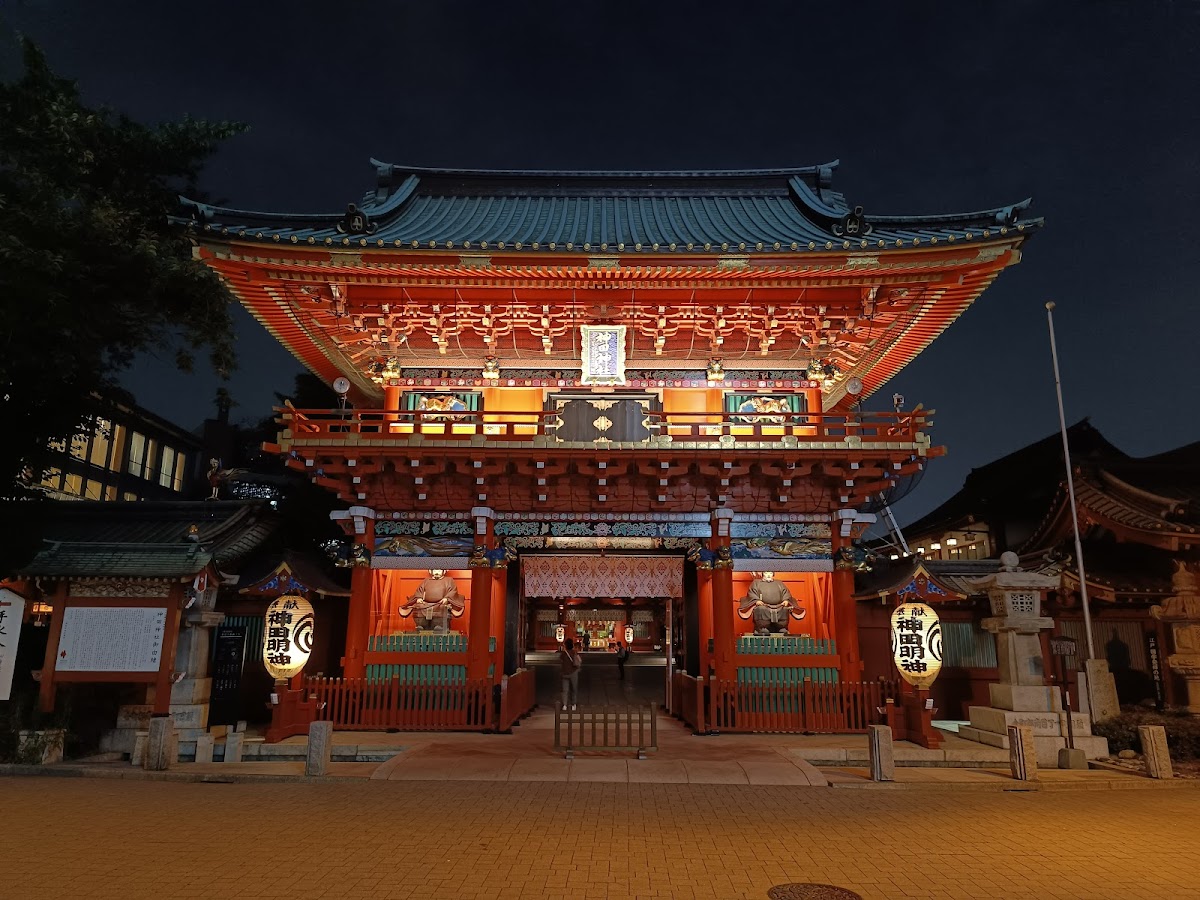
The vermilion-lacquered Zuishinmon Gate, standing at the entrance to Kanda Myōjin Shrine, was built in 1975 to commemorate the 50th anniversary of Emperor Showa’s enthronement. This magnificent gate, constructed entirely of cypress wood, is a symbol of Kanda Myōjin Shrine, welcoming visitors.
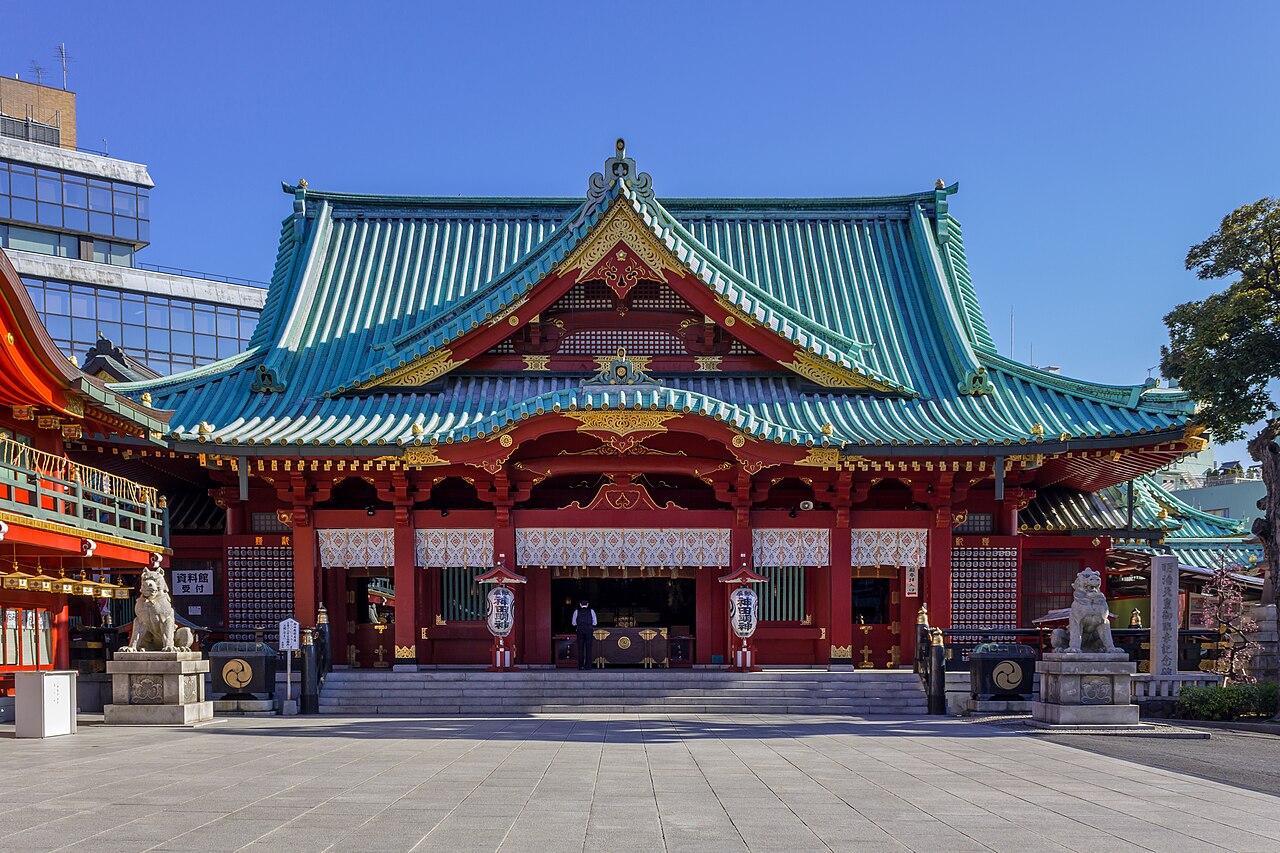
The shrine building was rebuilt in 1934. While constructed of steel-framed reinforced concrete, it incorporates the traditional Gongen-zukuri architectural style. As a reconstruction building after the Great Kanto Earthquake, it is a valuable cultural asset that combines earthquake resistance with traditional beauty.
EDOCCO Cultural Exchange Center
Opened in 2018, the Kanda Myojin Cultural Exchange Center EDOCCO is an experiential facility that broadly disseminates Japanese culture, from traditional culture to subculture.
The EDOCCO STUDIO on the first basement floor hosts performances of traditional arts and workshops, allowing visitors to experience Japanese culture. It also houses restaurants and retail shops, making it a convenient place to rest or eat after visiting the shrine.
Kanda Myojin Hall
The Kanda Myojin Hall, located within the shrine grounds, is a rental hall that can be used for events, seminars, weddings, and more. Its special location within the shrine grounds, where prayers for business prosperity and company success can be offered, is used for corporate ceremonies and cultural events.
The hall and foyer can be used as a single integrated space with movable partitions, accommodating events of various sizes.
Highlights within the Temple Grounds
Daikoku-sama Statue
Within the temple grounds stands a stone statue of Daikoku-sama, approximately 6.6 meters tall. Known for its divine power in matchmaking, it attracts many worshippers who come to make wishes.
Zenigata Heiji Monument
Zenigata Heiji, the protagonist of Nomura Kodō’s novel “Zenigata Heiji Torimonocho,” is depicted as a resident of Kanda Myōjin-shita, and a monument to him has been erected within the temple grounds.
Strength Stone
A strength stone used for strength tests during the Edo period is preserved within the temple grounds, a valuable cultural artifact that conveys the entertainment of the common people at that time.
Lion Mountain
The Lion Mountain within the temple grounds is a stone lion statue dating back to the Edo period, and it has the meaning of warding off evil.
Goshuin (Shrine Seals), Amulets, and Other Items
Kanda Myojin Shrine’s Goshuin
Kanda Myojin Shrine offers not only regular goshuin but also seasonal and special goshuin for special events. Goshuin are available at the shrine office, and the usual offering fee is 300 yen.
During special periods such as the Kanda Festival and New Year’s, limited-edition goshuin are sometimes available, making them a must-see for goshuin collectors.
Distinctive Amulets and Goods
IT Information Security Amulet
Due to its location near Akihabara, IT-related amulets compatible with computers and smartphones are popular. They are attracting attention as modern items suited to the digital age.
Business Prosperity Amulet
The business prosperity amulet, blessed by the divine virtues of Ebisu and Daikoku, is popular among business owners and self-employed individuals.
Victory Charm
This charm, imbued with the divine blessings of Taira no Masakado, is popular among those facing important competitions such as exams, job interviews, and sports matches.
Matchmaking Charm
This charm, imbued with the divine blessings of Ōkuninushi-no-Mikoto, is popular among those seeking a good partner or wishing for marital harmony.
Character Goods
A wide variety of goods featuring Kanda Myojin’s official characters are available, popular with younger generations and tourists. The product line is characterized by a fusion of tradition and pop culture, including goods featuring shrine maiden characters.
Prayers, Weddings, and Exorcisms
Information on Prayers
Kanda Myojin accepts various prayers from both individuals and corporations.
Individual Prayers
- Protection from misfortune and evil influences
- Family safety and good health
- Prayers for safe childbirth and first shrine visit for a newborn
- Prayers for Shichi-Go-San (7-5-3) ceremony
- Prayers for passing exams and academic success
- Prayers for finding a good partner and successful marriage
Corporate Prayers
- Business prosperity and success
- Prayers for safety
- Purification of new company buildings and stores
Prayer reception hours are from 9:00 AM to 4:00 PM (last reception). Reservations are not required, but advance reservations are recommended for groups and corporations.
Shinto Wedding Ceremony
Kanda Myojin Shrine offers traditional Shinto wedding ceremonies. A wedding at this historic shrine, the guardian shrine of Edo (Tokyo), is a solemn ceremony befitting the beginning of a new life.
Wedding receptions can also be held using the facilities of the Kanda Myojin Hall or the EDOCCO Cultural Exchange Center within the shrine grounds, providing comprehensive support from the ceremony to the reception.
Access and Visiting Information
Access by Train
Kanda Myojin Shrine is conveniently located in the heart of Tokyo and is accessible on foot from several stations.
JR Lines
- 5-minute walk from the Hijiribashi Exit of Ochanomizu Station (JR Chuo Line/Sobu Line)
- 7-minute walk from the Electric Town Exit of Akihabara Station (JR Keihin-Tohoku Line/Yamanote Line)
Tokyo Metro
- 5-minute walk from Exit 1 of Ochanomizu Station (Tokyo Metro Marunouchi Line)
- 5-minute walk from Exit B1 of Shin-Ochanomizu Station (Tokyo Metro Chiyoda Line)
- 5-minute walk from Suehirocho Station (Tokyo Metro Ginza Line)
- 7-minute walk from Akihabara Station (Tokyo Metro Hibiya Line)
Access by Car and Parking
Approximately 2 minutes from the Kandabashi Exit of the Metropolitan Expressway Inner Circular Route. While there is some parking space on the shrine grounds, parking for visitors is limited, so using public transportation is recommended.
There are several coin-operated parking lots in the surrounding area, so please consider using them if you are visiting by car.
Visiting Hours and Admission Fees
Opening Hours
- Grounds: Open 24 hours (some restrictions at night)
- Shrine Office/Gift Shop: 9:00 AM – 5:00 PM
- Prayer Reception: 9:00 AM – 4:00 PM
Admission Fee
Entry to the grounds is free. A donation is required for prayers (the amount varies depending on the prayer).
Nearby Tourist Spots and Recommended Courses
Yushima Seido
Located across Hongo-dori from Kanda Myojin Shrine, Yushima Seido is a Confucian temple built by Tokugawa Tsunayoshi during the Edo period. It is a historical building that flourished as a center of Confucian learning, and it is recommended to visit it together with Kanda Myojin Shrine.
Akihabara Electric Town
Akihabara, within walking distance of Kanda Myojin Shrine, is a world-famous electric town and a mecca of subculture. After visiting the shrine, it would be fun to browse the latest electronics and anime merchandise.
Nikolai-do (Tokyo Resurrection Cathedral)
Near Ochanomizu Station, Nikolai-do is a cathedral of the Japanese Orthodox Church. Its beautiful Byzantine-style architecture is designated as a National Important Cultural Property, offering a different kind of religious architectural charm compared to Kanda Myojin Shrine.
Recommended Pilgrimage Courses
Half-Day Course
- Arrive at JR Ochanomizu Station
- Visit Yushima Seido (30 minutes)
- Visit Kanda Myojin Shrine and stroll around the grounds (1 hour)
- Take a break at a cafe in EDOCCO (30 minutes)
- Stroll around Akihabara (1 hour)
Full-Day Course
In addition to the above,
- Visit Yushima Tenjin Shrine (15-minute walk)
- Stroll around Ameyoko (Ueno, travel by train)
- Visit Ueno Park and museums
Annual Events at Kanda Myojin Shrine
Main Annual Events
January
- Saitansai/Hatsumode: A festival celebrating the New Year. It is bustling with many New Year’s visitors.
- Winter Purification Ceremony: A traditional event to purify oneself in the cold of winter.
February
- Setsubun Festival: A bean-throwing ritual is held.
- Kigensai Festival: A festival celebrating the founding of the nation.
May
- Kanda Festival: A grand festival held once every two years (the year of the main festival).
July
- Summer Purification Ceremony: A ritual to purify oneself of sins and impurities accumulated over the past six months.
November
- Shichi-Go-San Pilgrimage: A visit to celebrate the growth of children.
- Niiname-sai Festival: A festival to give thanks for the harvest.
December
- Oharai Ceremony: A ritual to purify oneself of sins and impurities accumulated over the year.
- Joya-sai Festival: A festival to mark the end of the year.
The Fusion of Kanda Myojin Shrine and Modern Culture
Kanda Myojin Shrine as a Holy Site for Anime and Games
Due to its location near Akihabara, Kanda Myojin Shrine has appeared as the setting for many anime, games, and manga. In the popular anime series “Love Live!”, Kanda Myojin Shrine is set near the school attended by the main characters, making it a popular “pilgrimage” spot for fans of the series.
The shrine grounds also display collaborative ema (votive tablets) and merchandise with the anime, creating a unique atmosphere where traditional culture and pop culture coexist.
Faith from IT Companies and Startups
Due to its location in Akihabara and the provision of modern amulets such as those protecting IT information security, the shrine is receiving an increasing number of prayer requests from IT companies and startups. Its divine blessings for business prosperity are widely revered not only by traditional shops but also by modern businesses.
SNS and Kanda Myojin Shrine
Kanda Myojin Shrine operates official X (formerly Twitter) and Instagram accounts, actively disseminating information. It provides timely updates on seasonal events, the shrine grounds, and limited-edition goshuin (shrine stamps), and values communication with younger generations.
Manners and Etiquette for Visiting a Shrine
Basic Shrine Visit Etiquette
Before Passing Through the Torii Gate
Bow before entering the shrine grounds after bowing at the torii gate. Since the center of the path is considered the path of the gods, it is polite to walk along the side.
How to Purify Yourself at the Water Basin
- Take the ladle with your right hand and purify your left hand.
- Switch the ladle to your left hand and purify your right hand.
- Switch the ladle back to your right hand, receive water in your left hand, and rinse your mouth.
- Purify your left hand again.
- Hold the ladle upright, purify the handle, and return it to its original position.
How to Worship at the Main Hall
- Place your offering in the offering box.
- Ring the bell (if present).
- Two bows, two claps, one bow: Bow deeply twice, clap twice, bow deeply once.
Photography Etiquette
Photography is generally permitted on the shrine grounds, but please refrain from taking pictures during prayers or Shinto rituals. Also, please be considerate of other worshippers. Always obtain permission before photographing the interior of the shrine or Shinto priests.
Summary: Experience the Charm of Kanda Myojin Shrine
Kanda Myojin Shrine boasts a history of nearly 1300 years, constantly evolving with the times. As the guardian shrine of Edo (Tokyo), it has watched over the development of Edo/Tokyo, inherited the magnificent Kanda Festival, and attracted people’s faith with its diverse blessings, including business prosperity and matchmaking.
While cherishing traditional shrine architecture and rituals, its proactive approach to integrating with modern culture, such as IT information security protection and collaborations with anime, is truly characteristic of Kanda Myojin, the “guardian shrine of Edo,” walking hand in hand with Tokyo.
Conveniently located in Sotokanda, Chiyoda-ku, Tokyo, just a short distance from Akihabara and Ochanomizu, it’s easy to visit while sightseeing or shopping. The EDOCCO Cultural Exchange Center also offers opportunities to experience Japanese culture, making it a place where you can feel a variety of charms in a single visit.
Kanda Myojin Shrine warmly welcomes all kinds of people, from business owners praying for prosperity, those seeking good fortune in relationships, those wanting to improve their luck in competitions, to tourists wanting to experience traditional Japanese culture. Be sure to visit at least once and experience its history and charm for yourself.