Ryōshinji Temple (Shizuoka Prefecture) Complete Guide | History, Highlights, Zen Meditation Experience, and Access Information
Ryōshinji Temple, located in Kojima-cho, Shimizu-ku, Shizuoka City, is a Zen temple belonging to the Myōshinji branch of the Rinzai school. During the Edo period, it received strong patronage as the temple of the Takiwaki Matsudaira family, the lords of the Kojima domain. Today, it is known for its community-oriented temple activities based on the philosophy of “Bunbuku” (sharing blessings). This article provides detailed information you should know before visiting, from the historical background of Ryōshinji Temple to its seasonal highlights, Zen meditation sessions and temple school activities, information on perpetual memorial graves, and access methods.
History and Origins of Ryōshinji Temple
As an Ancient Temple of the Myōshinji Branch of the Rinzai School
Ryōshinji Temple is a Zen temple of the Myōshinji branch of the Rinzai school, with Nenge-san as its mountain name. The Rinzai school of Zen Buddhism is a branch of Zen Buddhism introduced from China during the Kamakura period, and the Myoshinji branch is known as the largest of its kind. Ryūtsuji Temple, a long-established temple, has played an important role as one of the centers of Zen culture in the eastern Shizuoka Prefecture region.
Deep Connection with the Takiwaki Matsudaira Family, Lords of the Kojima Domain
Ryūtsuji Temple holds a particularly historically significant position due to its relationship with the Kojima Domain during the Edo period. The Kojima Domain was a small domain in Suruga Province (present-day Shizuoka Prefecture), ruled by the Takiwaki Matsudaira family. Ryūtsuji Temple served as the Kojima Domain lord’s family temple (bodhi temple), receiving strong patronage from the lord and flourishing as the domain’s religious and cultural center.
Within the temple grounds, the tomb of Matsudaira Masanobu, the third lord of the Kojima Domain, still exists, and numerous valuable historical documents related to the Kojima Domain are preserved. These documents are invaluable historical sources for understanding the state of local domains during the Edo period and are an important legacy that conveys the history of the region to the present day.
The Faith of Ojima Kannon
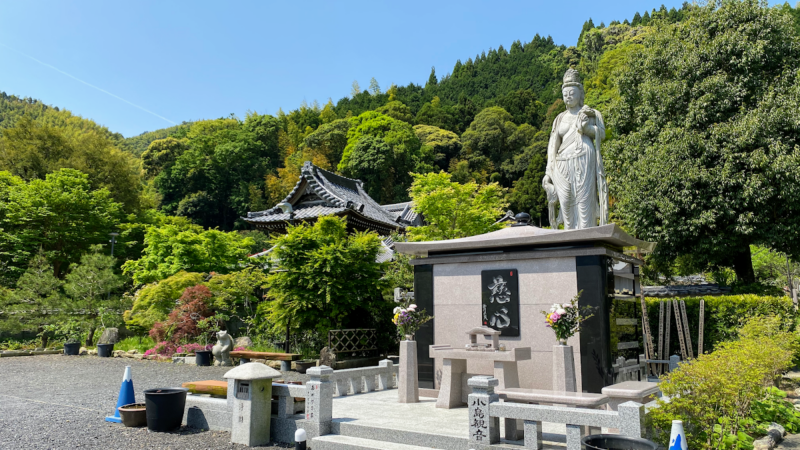
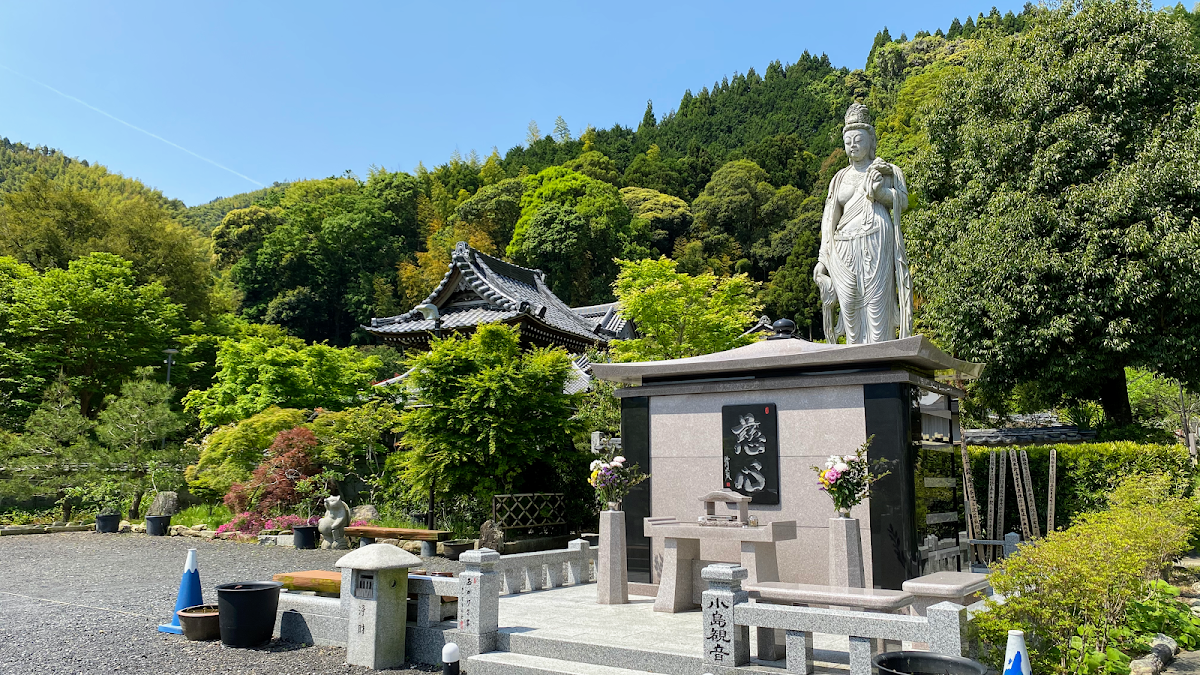
Ryūtsu-ji Temple is affectionately known locally as “Ojima Kannon.” Kannon worship is a widely rooted form of faith in Japan, and Ryūtsu-ji Temple has long been a spiritual haven for the local people. This tradition continues today; a 6-meter-tall Kannon statue is enshrined in the Ojima Kannon Eternal Memorial Tower, built in 2016, watching over visitors.
Highlights of Ryūtsu-ji Temple
Springtime Specialty: Anemone nemorosa (Nirinso)
One must-see when visiting Ryūtsu-ji Temple is the Anemone nemorosa, which blooms in spring. This wild flower has the unusual characteristic of having two flowers on a single stem, and its delicate appearance captivates many visitors. At Ryūtsu-ji Temple, it is in full bloom from April to May each year, adorning a corner of the temple grounds with its small white flowers.
Anemone nemorosa is a plant sensitive to environmental changes, and the presence of its clusters is evidence that a rich natural environment is being preserved. It’s a popular spot for photography and nature lovers, and a must-see during spring visits.
Atmosphere of the Main Hall and Grounds
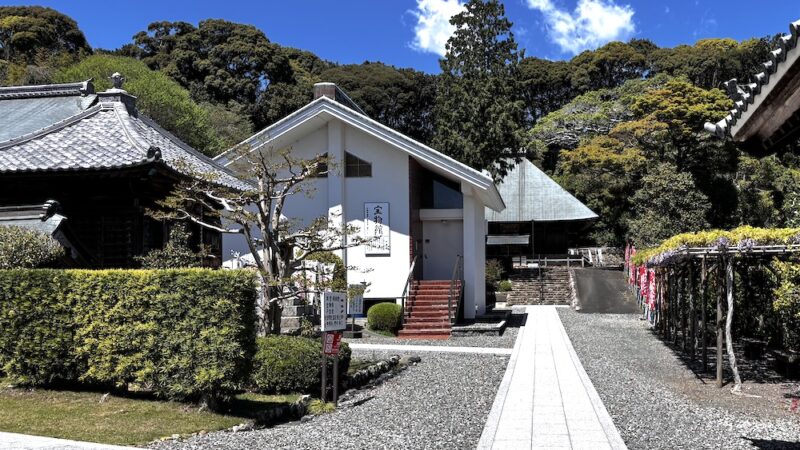
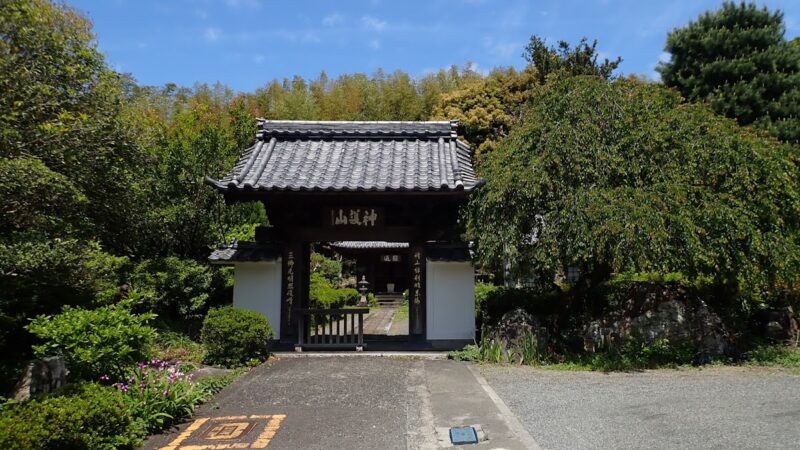
Ryūtsu-ji Temple’s main hall exhibits a simple yet dignified presence, typical of a Zen temple. The grounds are enveloped in a tranquil atmosphere, making it an ideal place to escape the hustle and bustle of the city and find peace of mind. The orderly gardens and architectural style, characteristic of Zen temples, convey the beauty of traditional Japanese culture to visitors.
Various activities such as the temple school, Zen meditation sessions, and sutra copying sessions are held in the main hall, fulfilling its function not merely as a tourist attraction, but as a “living temple.”
Burial Site of the 3rd Lord of the Kojima Domain
Of interest to history enthusiasts is the burial site of Matsudaira Masanobu, the 3rd lord of the Kojima Domain. The well-preserved tombs of feudal lords from the Edo period are rare and valuable historical sites for understanding the tombstone styles and construction techniques of the time. The area surrounding the tombs is quietly maintained, allowing visitors to feel the weight of history while paying their respects.
Ryūtsu-ji Temple’s Activities and Experience Programs
The Philosophy of “Bunbuku”
Ryūtsu-ji Temple has adopted “Bunbuku” as its guiding principle. Bunbuku means “sharing happiness,” and based on the philosophy of “mutual support and sharing,” the temple develops activities open to the local community. This philosophy is an attempt to put the original Buddhist spirit of altruism into practice in modern society and forms the foundation of Ryūtsu-ji Temple’s activities.
Saturday Children’s Terakoya (Temple School)
One of Ryūtsu-ji Temple’s representative activities is the “Saturday Children’s Terakoya.” This program targets elementary school children and provides learning support and experiential activities under the supervision of volunteers from junior high, high school, and university students, as well as working adults.
This initiative, with a history of over 16 years, is highly regarded as a local educational support activity. In 2020, it received the “Fujinokuni Regional Coexistence Award” from the Shizuoka Prefectural Council of Social Welfare, and in 2024, the “Fujisankko Support Award” from Shizuoka Prefecture. These awards demonstrate that Ryūtsuji Temple’s activities extend beyond mere temple activities, making a significant contribution to the local community.
The temple school offers not only academic support but also seasonal events and traditional cultural experiences, providing children with a diverse range of experiences.
Zen Meditation Sessions
Ryūtsuji Temple regularly holds Zen meditation sessions. Held on the first Sunday of each month, these sessions are designed to be accessible even for beginners, offering an experience of calming the mind through Zen meditation, the foundation of Zen.
Zen meditation is a practice that allows one to detach from daily distractions and have time to confront oneself by correcting posture, regulating breathing, and calming the mind. In modern society, where people suffer from stress and information overload, Zen meditation is gaining attention as an effective means of maintaining mental health. At Ryūtsu-ji Temple’s Zen meditation sessions, you can receive careful guidance from the head priest and instructors, making it easy for even beginners to participate.
Sutra Copying Sessions
Sutra copying sessions are another activity regularly held at Ryūtsu-ji Temple. Sutra copying is the act of transcribing Buddhist scriptures and has long been considered a practice for accumulating merit. By carefully transcribing each character of the scriptures, one’s mind naturally calms down and concentration increases.
Sutra copying can be started without any special skills or knowledge, making it a suitable activity for those interested in Buddhism or those seeking quiet time. Ryūtsu-ji Temple provides all necessary materials, making it easy for beginners to participate.
Yoga and Gyrokinesis
In addition to traditional Buddhist activities, Ryūtsu-ji Temple also offers classes in yoga and Gyrokinesis, modern health practices. Practicing yoga in the tranquil environment of a temple offers a unique experience different from a typical studio.
Gyrokinesis is an exercise developed by dancers, a method of adjusting the entire body through flowing movements. These activities represent a unique initiative of Ryūtsu-ji Temple, blending Buddhist spiritual cultivation with modern physical health practices.
Ojima Bunfuku Restaurant
The “Ojima Bunfuku Restaurant” is one of Ryūtsu-ji Temple’s activities embodying its “Bunfuku” (sharing happiness) philosophy. It provides a place for intergenerational interaction and mutual support by bringing together local people to share meals. Building community through meals plays a crucial role in today’s often isolated society and is a pillar of Ryūtsu-ji Temple’s social contribution activities.
Perpetual Memorial Graves and Kojima Kannon Perpetual Memorial Tower
The Need for Perpetual Memorial Graves
In modern Japan, due to the declining birthrate, aging population, and increasing nuclear families, more and more people face the problem of having no successor to manage their graves, or living far away and finding management difficult. Against this backdrop, the demand for “perpetual memorial graves,” where temples provide perpetual memorial services and management, is increasing.
Features of the Kojima Kannon Perpetual Memorial Tower
Ryūtsu-ji Temple erected the “Kojima Kannon Perpetual Memorial Tower” in 2016. This memorial tower was created for those without successors to manage their graves or without a burial plot. It is a peaceful burial site watched over by a 6-meter-tall Kannon statue.
The advantages of the perpetual memorial tower are as follows:
- Perpetual Memorial Service: The temple takes responsibility for providing perpetual memorial services.
- No Maintenance Required: The temple handles the cleaning and maintenance of the grave, relieving the burden on the bereaved family.
- All Religious Affiliations Accepted: In most cases, it is accepted regardless of religious affiliation.
- Cost-Effective: Initial and maintenance costs are lower compared to typical burial plots.
- Accessible: Located within the temple grounds, making it easily accessible for visitors.
The Ryūtsu-ji Temple Perpetual Memorial Tower is designed as a peaceful burial site where one can rest in tranquility under the watchful eye of the Kannon statue, providing peace of mind.
How to Apply for a Perpetual Memorial Grave
For detailed information regarding costs and application procedures for perpetual memorial graves, please contact Ryūtsu-ji Temple directly. We recommend visiting the site in advance to get a feel for the atmosphere, as pre-visit tours and consultations are possible.
Access Information
Basic Information
Address: 135 Kojima-cho, Shimizu-ku, Shizuoka City, Shizuoka Prefecture 424-0304
Phone: 054-393-3028
Sect: Rinzai Zen Myoshin-ji School
Mountain Name: Nengezan
Access by Public Transportation
By Bus
The nearest bus stop is “Kurihara,” served by Shizutetsu Justline buses. It’s very easily accessible, about a 1-minute walk from the bus stop.
By JR
The nearest station is JR Tōkaidō Main Line “Okitsu Station.” From Okitsu Station, you can access the temple by bus or taxi. Okitsu Station is located between Shizuoka Station and Shimizu Station, and is served by local trains.
Access by Car
Using the Expressway
If using the Tomei Expressway, the nearest interchange is “Shimizu Interchange.” From Shimizu IC, take local roads to Ryūtsuji Temple. Travel time varies depending on traffic conditions, but is generally around 15-20 minutes.
Navigation Settings
When using a car navigation system or smartphone map app, searching for “Ryūtsuji Temple, Shimizu Ward, Shizuoka City” or the phone number “054-393-3028” will display the accurate location.
Parking
The temple has a parking lot for visitors. However, congestion is expected during the peak season for Anemone nemorosa and special events, so please consider using public transportation. It is recommended to check with the temple in advance for details regarding parking.
Nearby Tourist Attractions
When visiting Ryūtsuji Temple, you can enjoy a more fulfilling Shizuoka sightseeing experience by also visiting nearby tourist attractions.
Nearby Tourist Attractions – **Shimizu Port**: One of Japan’s three most beautiful ports, a scenic spot offering stunning views of Mt. Fuji.
- Miho no Matsubara: One of the constituent assets of the World Cultural Heritage site “Mt. Fuji”.
- Okitsu-juku: A historic townscape that flourished as a post town on the Tokaido Fifty-three Stations route.
- Satta Pass: A scenic viewpoint offering panoramic views of Mt. Fuji and Suruga Bay.
Notes and Manners for Visitors
Manners for Worship
Ryūtsu-ji Temple remains a place of worship and spiritual training. Please observe the following manners when visiting:
- Be Quiet: Please remain quiet on the temple grounds and refrain from loud conversations.
- Regarding Photography: Photography is generally permitted, but there are areas where photography is restricted, such as inside the main hall and the cemetery. If you are unsure, please check in advance.
- Dress Code: There are no particularly strict regulations, but please dress appropriately and respectfully for a temple.
- Garbage: Please take your garbage home with you or dispose of it in the designated area.
Visiting Hours and Admission Fees
We recommend checking the temple’s official website or calling in advance for visiting hours and admission fees. If you wish to participate in experiential programs such as Zen meditation or sutra copying sessions, advance reservations may be required, so please be sure to check.
Seasonal Highlights
- Spring (April-May): Best time to see the Anemone nemorosa flowers. A beautiful season when the temple grounds are adorned with white flowers
- Summer: The fresh greenery is beautiful, and you can feel the coolness in the tranquil temple grounds.
- Autumn: The autumn leaves color the temple grounds, and you can visit in a calm atmosphere.
- Winter: The air is clear and the silence deepens, making it a suitable season for Zen meditation.
Summary of the Charms of Ryūtsu-ji Temple
Ryūtsu-ji Temple is not merely a historical temple, but an “open temple” that actively engages in community service activities in modern society. It possesses diverse charms, from its historical ties with the Kojima Domain dating back to the Edo period, the natural beauty of the spring anemone, traditional Buddhist experiences such as Zen meditation and sutra copying sessions, to modern social activities such as temple school activities and the Bunbuku Shokudō (Bunbuku Restaurant).
As a Zen temple of the Myoshin-ji branch of the Rinzai school, Ryūtsu-ji Temple provides a place to calm the mind and confront oneself, while continuing its activities open to the local community under the philosophy of “Bunbuku” (sharing happiness). It is a must-visit spot when visiting Shizuoka Prefecture.
This temple is welcoming to a variety of visitors, including those interested in history, nature, Zen meditation, sutra copying, community-based temple activities, and those considering perpetual memorial services.
When visiting Shimizu Ward in Shizuoka City, be sure to visit Ryūtsu-ji Temple and experience both its tranquil atmosphere and warm community activities. The beauty of the four seasons and the warm interactions of the people will leave a deep impression on your heart.
Frequently Asked Questions (FAQ)
Q1: Is a reservation required to visit Ryūtsu-ji Temple?
A1: Reservations are not required for regular visits. However, if you wish to participate in experiential programs such as Zen meditation or sutra copying sessions, we recommend checking and making a reservation in advance by phone (054-393-3028). Advance notice is also required for group visits and participation in special events.
Q2: When is the best time to see the Anemone nemorosa flowers?
A2: The best time to see the Anemone nemorosa flowers is usually from April to May. However, the flowering period may vary depending on the weather conditions of the year, so we recommend checking the flowering status with the temple before visiting. Since many visitors come during the peak season, visiting earlier in the day will allow for a more peaceful viewing experience.
Q3: Can beginners participate in the Zen meditation sessions?
A3: Yes, beginners are welcome. The Zen meditation sessions at Ryūtsu-ji Temple are held on the first Sunday of every month, and beginners receive careful instruction. You can learn the basics of Zen meditation, including posture and breathing techniques, so please feel free to participate. We recommend wearing comfortable clothing.
Q4: How much does an eternal memorial grave cost?
A4: The cost of an eternal memorial grave varies depending on individual circumstances and the plan chosen. For detailed pricing, please contact Ryūtsu-ji Temple directly (Tel: 054-393-3028). We also offer tours and consultations, so we recommend visiting the site in person to see the memorial towers and receive a detailed explanation. ### Q5: Is there parking available?
A5: Yes, there is parking available for visitors. However, congestion is expected during the peak blooming season for Anemone flaccida and during special events. In such cases, please consider using public transportation. It is very easily accessible, about a 1-minute walk from the nearest bus stop, “Kurihara.”
Q6: I would like my child to participate in the temple school activities. How can I do that?
A6: The Saturday Children’s Temple School is for elementary school students. If you wish to participate, please contact Ryutsu-ji Temple directly. You can receive an explanation of the activity details, how to participate, and the schedule. They warmly welcome children from the community as a place for learning support and experiential activities.
Q7: Can I get a Goshuin (temple stamp)?
A7: We recommend that you check directly with the temple regarding the availability and hours of Goshuin. Many temples offer Goshuin, but they may not be able to do so when the head priest is absent or during religious services. If you definitely want to get a Goshuin, please check by phone in advance.