Complete Guide to Mashiyama-ji Temple (Izu City, Shizuoka Prefecture) | The Charm of a Sacred Site Founded by Kobo Daishi and its Giant Trees
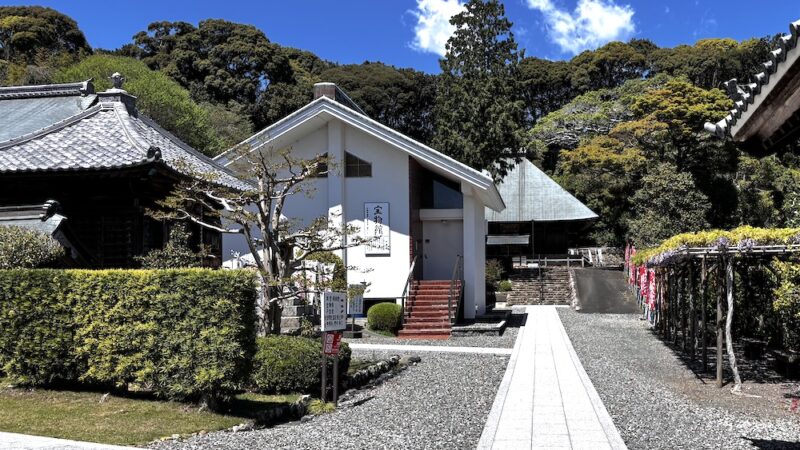
Located in the mountainous region of Izu City, Shizuoka Prefecture, Mashiyama-ji Temple is an ancient Shingon Buddhist temple said to have been founded in the early Heian period by Kobo Daishi Kukai. Built on Mt. Mashiyama, approximately 300 meters above sea level, this temple is the 8th temple on the Izu Eighty-Eight Sacred Sites pilgrimage route and a naturally rich sacred site boasting a large maple tree designated as a prefectural natural monument, attracting many worshippers and tourists. This article comprehensively introduces information you should know before visiting Mashiyama-ji Temple, including its history, highlights, access methods, and surrounding tourist information.
History and Origins of Mashiyama-ji Temple
Founded by Kobo Daishi Kukai
Mashiyama-ji Temple is said to have been founded in 806 AD by Kobo Daishi Kukai. It is said that after Kukai returned from Tang China, he traveled throughout Japan to spread Shingon Esoteric Buddhism. He felt a spiritual presence in this area of Mount Yakusan and built a temple there, marking the beginning of this temple. The principal image, the Thousand-Armed, Thousand-Eyed Kannon Bodhisattva, is said to have been carved by Kukai himself, and has been revered as a highly efficacious Buddha since ancient times.
As a Branch Temple of the Koyasan Shingon Sect
Yakusan-ji Temple belongs to the Koyasan Shingon sect and is a branch temple of Kongobu-ji Temple on Mount Koya in Wakayama Prefecture, which is the head temple. Based on the teachings of Shingon Buddhism, it has preserved the Dharma for over 1200 years as a place for esoteric Buddhist practice and a center of faith for the local people. It also has a history as a place for mountain asceticism, with the climb up the steep approach to the temple being considered part of the training itself.
Izu Eighty-Eight Sacred Sites, Temple No. 8
Masuyama-ji Temple is designated as the 8th temple of the Izu Eighty-Eight Sacred Sites, and is one of the important sacred sites on the pilgrimage route in the Izu region, modeled after the Shikoku Eighty-Eight Sacred Sites. The sight of pilgrims, clad in white robes, climbing this mountain path to worship remains a timeless scene of faith deeply rooted in the region.
Highlights of Masuyama-ji Temple
Principal Image: Thousand-Armed, Thousand-Eyed Kannon Bodhisattva
The principal image of Masuyama-ji Temple is the Thousand-Armed, Thousand-Eyed Kannon Bodhisattva. This Buddha statue, said to have been created by Kobo Daishi Kukai himself, expresses the compassion of Kannon, who saves all sentient beings with a thousand arms and a thousand eyes. It is usually kept as a hidden Buddha within a shrine and is only unveiled during special religious ceremonies. The faith in Kannon Bodhisattva has been strong since ancient times, and there is a constant stream of worshippers praying for recovery from illness, family safety, and the fulfillment of their wishes.
The Great Maple Tree of Masuyama-ji Temple, a Prefectural Designated Natural Monument
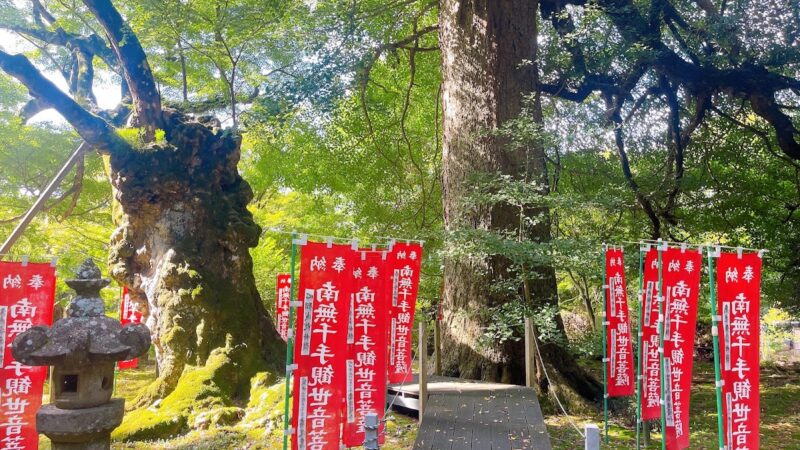
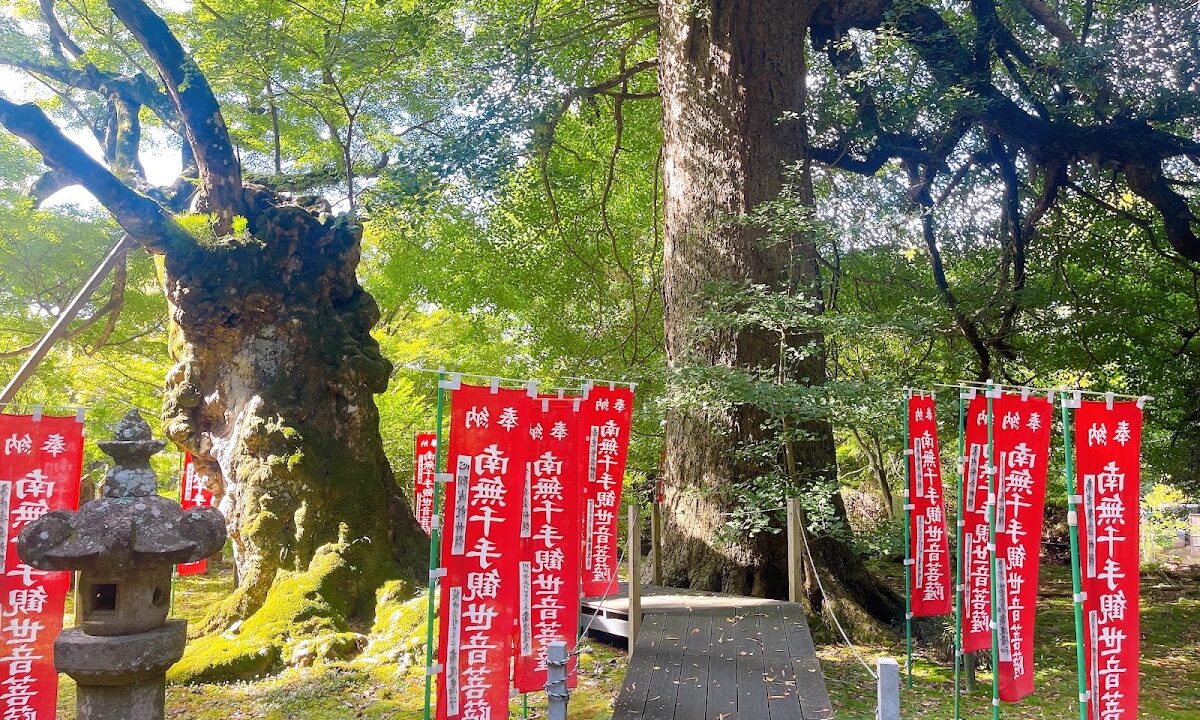
Within the grounds of Masuyama-ji Temple stands a gigantic Japanese maple tree designated as a Shizuoka Prefecture Natural Monument. With a circumference of 5.46 meters at the base and 4.0 meters at chest height, it is one of the largest trees in the prefecture, and its estimated age is said to be several hundred years. In autumn, it displays magnificent autumn foliage, painting the temple grounds in a breathtaking crimson. This great maple tree, which shows different expressions in each of the four seasons—fresh green in spring, deep green in summer, vibrant red in autumn, and covered in snow in winter—is one of the biggest reasons to visit Masuyama-ji Temple.
The Thirty-Three Kannon Stone Buddhas of Saigoku
Along the approach to Masuyama-ji Temple, there are stone Buddha statues modeled after the thirty-three Kannon of Saigoku. These stone Buddha statues were dedicated during the Edo and Meiji periods. It was believed that praying to each one as one ascended the approach to the temple would grant the same merit as a pilgrimage to the Saigoku Kannon Pilgrimage. The moss-covered statues, having become one with nature over the centuries, exude a profound spiritual energy.
Stone Buddhas and Jizo Statues on the Temple Grounds
Around the main hall, in addition to the 33 Kannon statues of the Saigoku Pilgrimage, numerous other stone Buddhas and Jizo statues are enshrined. These were dedicated by local people with various wishes, and are believed to offer different blessings, such as fertility, safe childbirth, child-rearing, and traffic safety. These stone Buddhas, nestled in the quiet mountains, provide peace and solace to visitors.
Views from the Mountaintop
From Masuyama-ji Temple, located near the summit of Mount Masuyama at an altitude of 300 meters, you can enjoy views of the Amagi mountain range and the mountains of Izu. Especially on clear days, you can sometimes see as far as Suruga Bay, a breathtaking view that makes you forget the fatigue of the climb up the approach.
Information on Visiting Mashiyama-ji Temple
Basic Information
Temple Name: Mashiyama-ji Temple
Sect: Koyasan Shingon Buddhism
Principal Image: Thousand-Armed, Thousand-Eyed Kannon Bodhisattva
Founder: Kobo Daishi Kukai
Founded: Daido 1 (806)
Pilgrimage Site: 8th of the Izu Eighty-Eight Sacred Sites
Address: 760 Horikiri, Izu City, Shizuoka Prefecture (Some sources list 760 Yamada)
Postal Code: 410-2418
Chief Priest: Hamada Chokan
Visiting Hours: Open during the day (No visits at night)
Admission Fee: Free
Parking: Several spaces available near the entrance to the temple grounds (Free)
Access Method
Using Public Transportation
- Nearest Station: Izu Hakone Railway “Shuzenji Station”
- Distance from station: Approximately 15km
- Bus: Take the Tokai Bus bound for “Horikiri” from Shuzenji Station, get off at the “Horikiri” bus stop, and walk for approximately 30 minutes (climbing the approach road).
- Taxi: Approximately 20 minutes by taxi from Shuzenji Station to the entrance of the approach road.
By Car
- Tomei Expressway: Approximately 50 minutes from Numazu IC via the Izu Jukan Expressway.
- Shin-Tomei Expressway: Approximately 45 minutes from Nagaizumi-Numazu IC via the Izu Jukan Expressway.
- Izu Jukan Expressway: Approximately 30 minutes from Tsukigase IC via Prefectural Road 12.
- Car Navigation Setting: Search for “760 Horikiri, Izu City, Shizuoka Prefecture” or “Masuyama-ji Temple”.
About the Approach Road
The approach road to Masuyama-ji Temple is a hiking trail of approximately 30 minutes from the parking lot at the foot of the mountain to the main hall. The mountain path is unpaved and features steep slopes and stairs, so please note the following:
- Attire: Comfortable clothing and walking shoes (hiking boots or sneakers recommended)
- Items to bring: Drinking water, towel, rain gear (in case of weather changes)
- Estimated time: Approximately 30 minutes uphill, approximately 20 minutes downhill
- Difficulty: Moderate (Those who do not exercise regularly are advised to take breaks during the climb)
- Caution: The path becomes slippery in rainy weather, so extra caution is needed.
Along the path are stone statues of the 33 Kannon of the Saigoku pilgrimage. Praying to each one as you climb can help alleviate fatigue.
About Goshuin (Temple Stamps)
You can receive a Goshuin at Masuyama-ji Temple. As the 8th temple of the Izu 88 Sacred Sites pilgrimage, it attracts many pilgrims and Goshuin collectors.
- Reception Location: Main Hall or Priest’s Quarters (Prince may be absent, so prior contact is recommended)
- Offering: Approximately 300 yen (Donation of your choice)
- Reception Hours: Around 9:00 AM to 4:00 PM (Subject to change depending on the priest’s schedule)
- Note: If the priest is absent, you may not be able to receive a Goshuin (temple stamp).
Annual Events at Masuyama-ji Temple
Spring Grand Festival
The Spring Grand Festival, held every spring, includes a memorial service for the principal image, the Thousand-Armed Kannon. Local parishioners and believers gather to pray for good health and a bountiful harvest throughout the year.
Autumn Grand Festival and Autumn Leaves Season
In autumn, the large maple trees reach their peak autumn foliage, attracting many worshippers and tourists. The best time to see them is usually from mid- to late November, and the sight of the temple grounds dyed crimson is breathtakingly beautiful. The Autumn Grand Festival is sometimes held around this time.
Tourist Attractions Around Masuyama-ji Temple
Shuzenji Onsen
Shuzenji Onsen, located about 20 minutes by car from Masuyama-ji Temple, is one of Izu’s leading hot spring resorts. A charming hot spring town unfolds around Shuzen-ji Temple, said to have been founded by Kobo Daishi Kukai. Relaxing in the hot springs after visiting Masuyama-ji Temple is highly recommended.
Shuzen-ji Temple
Shuzen-ji Temple, located in the heart of Shuzenji Onsen, is an ancient temple said to have been founded by Kobo Daishi Kukai, just like Masuyama-ji Temple. During the Kamakura period, it was also known as a temple associated with the Minamoto clan, and many historical anecdotes remain.
Bamboo Grove Path
The Bamboo Grove Path in the Shuzenji Onsen town is a walking path through a bamboo forest stretching for approximately 300 meters. A stroll through the tranquil atmosphere, listening to the sound of the wind blowing through the bamboo, is a truly special experience.
Joren Falls
One of Izu City’s representative tourist attractions, this magnificent waterfall is also selected as one of Japan’s Top 100 Waterfalls. The sight of the waterfall cascading down from a height of 25 meters is breathtaking, and it’s a popular spot for relaxation, full of negative ions.
Mount Amagi
Mount Amagi, the main peak of the Amagi mountain range, includes Mount Manzaburo (1,406m), the highest peak on the Izu Peninsula. You can enjoy mountain climbing and hiking, and appreciate the natural beauty of the four seasons.
Mount Daruma
Known as a scenic spot offering panoramic views of Suruga Bay and Mount Fuji, Mount Daruma is about a 40-minute drive from Masuyama-ji Temple. The beauty of the sunset is particularly exceptional, making it a popular spot for photography enthusiasts.
Gourmet Information Around Masuyama-ji Temple
Gourmet Information in Shuzenji Onsen Town
Shuzenji Onsen town has numerous restaurants serving dishes made with fresh seafood and mountain produce from Izu.
- Izu Soba: Handmade soba noodles made with locally produced buckwheat flour
- Wasabi Dishes: Various dishes using wasabi from Amagi
- Black Rice Dishes: Dishes using black rice, a specialty of Izu
- Ayu Dishes: Salt-grilled or sweet-simmered ayu (sweetfish) raised in the clear waters of the Kano River
Local Japanese Sweets
Shuzenji Onsen has long-established Japanese confectionery shops where you can purchase onsen manju (hot spring steamed buns) and seasonal Japanese sweets. They make perfect souvenirs on your way back from visiting the temple.
Points to Note When Visiting Masuyama-ji Temple
Clothing and Equipment
- Comfortable Clothing: Since you will be climbing mountain paths, comfortable pants are recommended.
- Footwear: Wear non-slip shoes such as sneakers or hiking boots.
- Seasonal Precautions: Prepare insect repellent and sunscreen in summer, and warm clothing in winter.
Health Management
- Hydration: Bring plenty of water, especially in summer.
- Rest: Climb at a moderate pace, taking breaks as needed.
- If You Are Feeling Unwell: Avoid visiting if you are feeling unwell; prioritize your health.
Manners and Etiquette
- Quietness: Maintain the silence of the mountain and refrain from loud conversations.
- Garbage: Always take your trash with you (there are no trash cans).
- Photography: Obtain permission before taking photos inside the main hall.
- Smoking: Smoking is strictly prohibited on the approach to the temple and within the temple grounds to prevent forest fires.
Masuyama-ji Temple and Shingon Buddhist Temples in Izu
Besides Masuyama-ji Temple, the Izu Peninsula is dotted with other Shingon Buddhist temples associated with Kobo Daishi Kukai. By visiting the 88 sacred sites of Izu, you can enjoy a pilgrimage following in Kukai’s footsteps.
Pilgrimage to the 88 Sacred Sites of Izu
Masuyama-ji Temple is the 8th temple on the pilgrimage, but there are many other temples in the surrounding area. Those with ample time may want to try a “pilgrimage” visiting multiple temples. Each temple has its own unique history and charm, allowing you to gain a deeper understanding of Izu’s history and culture through the pilgrimage.
The Four Seasons of Masuyama-ji Temple
Spring (March-May)
With the arrival of fresh greenery, the young leaves of the large maple trees shine with a beautiful yellow-green hue. Wildflowers begin to sprout, making it a season where you can feel the breath of nature. The weather is mild, making it a suitable time for hiking the approach to the temple.
Summer (June-August)
The temple grounds, covered in deep green, are enveloped in cool air. Located 300 meters above sea level, the temperature is lower than in the lowlands, making it ideal for escaping the summer heat. However, it’s also the season for many insects, so insect repellent is essential.
Autumn (September-November)
This is the best season to visit Masuyama-ji Temple. Especially from mid- to late November, the large maple tree, a prefectural designated natural monument, displays magnificent autumn colors. The temple grounds, dyed crimson, are truly a breathtaking sight. This is also a time when many tourists and photography enthusiasts visit.
Winter (December-February)
The branches of the large maple tree, even after the leaves have fallen, have a certain charm, and you can enjoy the tranquil atmosphere unique to winter. If there is snow, the snow-covered temple grounds present a fantastical beauty. However, the approach to the temple may freeze, so caution is necessary when visiting in winter.
Inquiries about Masuyama-ji Temple
If you wish to confirm the availability of Goshuin (temple stamps) or event schedules before visiting, it is recommended to contact the temple in advance. However, as it is a small temple, the head priest may be absent.
Contact Information: You can also inquire through the Izu City Tourism Association or the Shuzenji Tourism Association.
Summary
Masuyama-ji Temple in Izu City, Shizuoka Prefecture, is a historic Shingon Buddhist temple founded by Kobo Daishi Kukai. Located on a mountain 300 meters above sea level, the main hall is reached after a 30-minute climb up the approach path. It boasts numerous attractions, including a Thousand-Armed Kannon statue said to have been created by Kukai himself, a large maple tree designated as a prefectural natural monument, and the Saigoku Thirty-Three Kannon stone statues.
The autumn foliage season is especially a must-see; the sight of the large maple tree turning crimson is well worth a visit. It is also known as the 8th temple of the Izu Eighty-Eight Sacred Sites Pilgrimage, making it a popular spot for pilgrims and Goshuin collectors.
Located just a 20-minute drive from Shuzenji Onsen, it’s easily accessible and makes a great addition to a hot spring trip. The time spent in the tranquil mountains, calming your mind and reflecting on the legacy of Kobo Daishi, will be a precious experience that allows you to forget the hustle and bustle of everyday life.
The hike up the approach to the temple is of moderate difficulty, but with comfortable clothing and appropriate equipment, people of all ages can visit. Be sure to visit Masuyama-ji Temple, where the nature, history, and faith of Izu are intertwined.