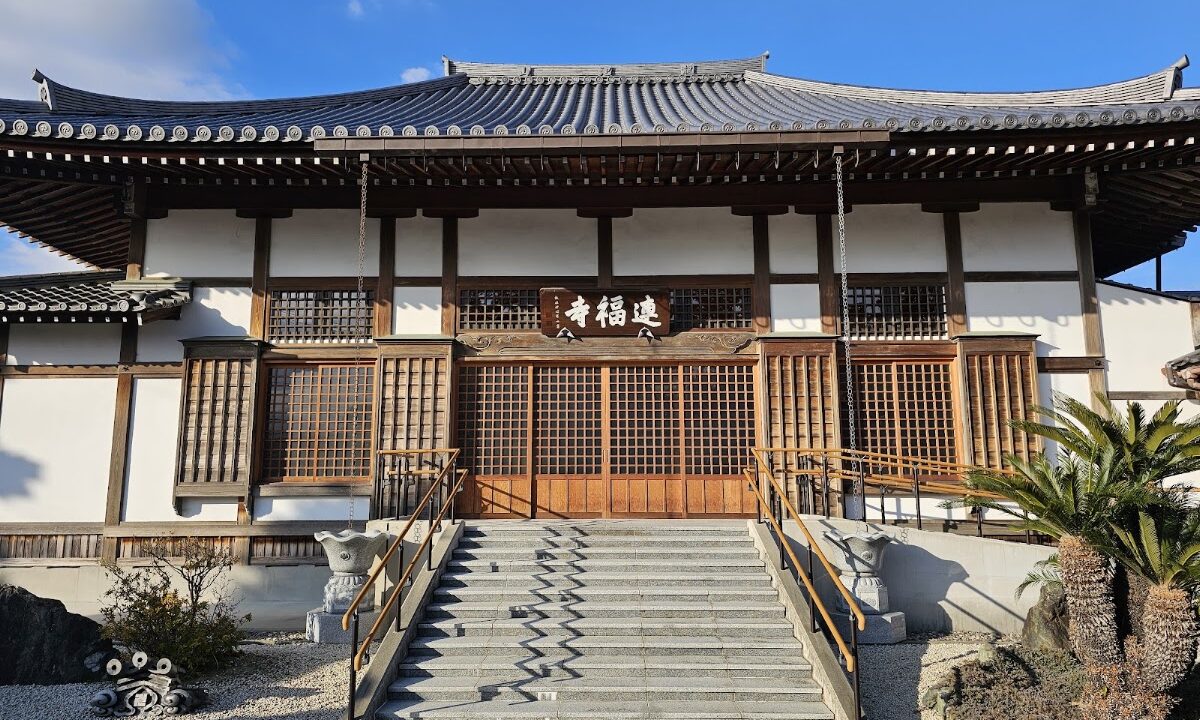
Renpuku-ji Temple (Iwata City, Shizuoka Prefecture) | Complete Guide to History, Highlights, and Access
Located in Ninomiya, Iwata City, Shizuoka Prefecture, Renpuku-ji Temple is an ancient temple of the Myoshin-ji branch of the Rinzai school of Zen Buddhism, said to have been founded at the end of the Heian period. It is counted as one of the three famous temples of Enshu (present-day Shizuoka Prefecture), and boasts numerous historical and culturally significant sights, including the largest statue of Enma Daio (King Yama) in Shizuoka Prefecture and the main hall built on top of an ancient burial mound. This article provides a detailed overview of Renpuku-ji Temple, including its history, highlights within the temple grounds, access methods, and surrounding area information.
Basic Information on Renpuku-ji Temple
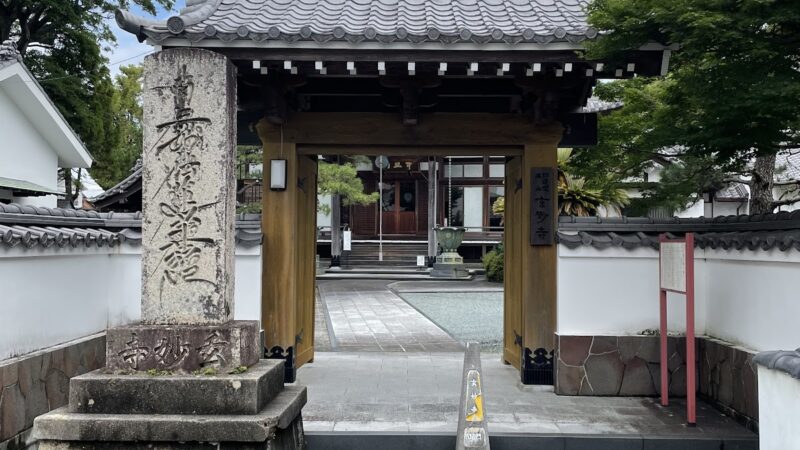
Renpuku-ji Temple is a temple of the Myoshin-ji branch of the Rinzai school of Zen Buddhism, located at 1262 Ninomiya, Iwata City, Shizuoka Prefecture. Its mountain name is Ryuchizan, and it is known as a historical temple that attracts the faith of the local community.
Basic Temple Data
- Temple Name: Ryūchizan Renpuku-ji Temple
- Sect: Rinzai Zen Myōshin-ji School
- Address: 1262 Ninomiya, Iwata City, Shizuoka Prefecture 438-0078
- Phone Number: 0538-32-5082
- Chief Priest: Hishida Yoshitaka
- Nearest Station: Approximately 8 minutes on foot (approx. 612m) from Iwata Station on the JR Tōkaidō Main Line
- Bus Stop: Approximately 3 minutes on foot (approx. 215m) from Ninomiya 4-chome bus stop
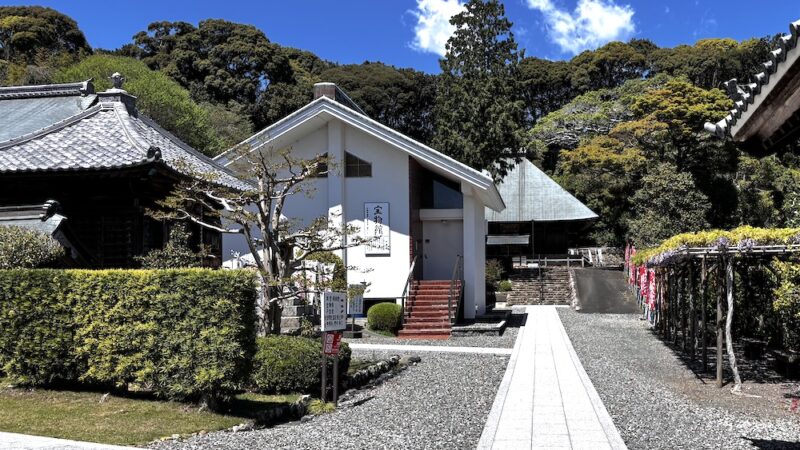
Renpuku-ji Temple is located next to Rokuon Shrine, and its grounds are kept very clean. It is carefully maintained by local residents, providing visitors with a tranquil atmosphere.
History and Origins of Renfuku-ji Temple
Founded by Taira no Shigemori, Son of Taira no Kiyomori
The founding of Renfuku-ji Temple dates back to the late Heian period. According to tradition, it was founded by Taira no Shigemori, son of Taira no Kiyomori and governor of Tōtōmi Province. Taira no Shigemori was known for his high level of education and deep faith in Buddhism, even among the Taira clan. It is believed that he established the temple in this area during his time governing Tōtōmi Province (present-day western Shizuoka Prefecture).
Taira no Shigemori died of illness in 1179 at the young age of 42, but Renfuku-ji Temple continued to develop as a center of faith in the region.
One of the Three Enshu Temples
Renfuku-ji Temple, along with Renjō-ji Temple and Renkaku-ji Temple, is counted as one of the “Three Enshu Temples.” These three temples all include the character “連” (ren) in their names and have historically been positioned as important temples in Tōtōmi Province.
While the three temples are interconnected, each has cultivated its own unique history and culture. Renpuku-ji Temple, in particular, is noteworthy for its unique cultural assets, such as its connection to ancient burial mounds and its statue of Enma Daio (King Yama).
Conversion to the Myoshin-ji School of the Rinzai Zen Sect
There are various theories regarding its original sect, but it currently belongs to the Myoshin-ji School of the Rinzai Zen Sect. The Rinzai Zen Sect is a branch of Zen Buddhism, and the Myoshin-ji School is the largest Zen religious organization in Japan, with Myoshin-ji Temple in Kyoto as its head temple.
The circumstances surrounding Renpuku-ji Temple’s conversion to the Myoshin-ji School of the Rinzai Zen Sect are thought to be related to religious policies from the Sengoku period to the Edo period, as well as the influence of local influential figures, but detailed records do not remain.
Highlights of Renfuku-ji Temple
The Largest Enma Daio Statue in Shizuoka Prefecture
The greatest highlight of Renfuku-ji Temple is the statue of Enma Daio (King Yama) enshrined in the Enma Hall on the temple grounds. This statue is the largest in Shizuoka Prefecture and is a designated cultural property of Iwata City.
Enma Daio is the judge of the underworld in Buddhism, worshipped as the one who judges the actions of the deceased during their lifetime. The Enma Daio statue at Renfuku-ji Temple is known for its powerful expression and exquisite craftsmanship, and is affectionately known as “Enma-sama” by the local people.
The Enma Hall is built independently in a corner of the temple grounds, and visitors can freely view it. Standing before the statue, one is overwhelmed by its majestic presence and is given an opportunity to reflect on one’s own actions.
Main Hall Rebuilt in 2014
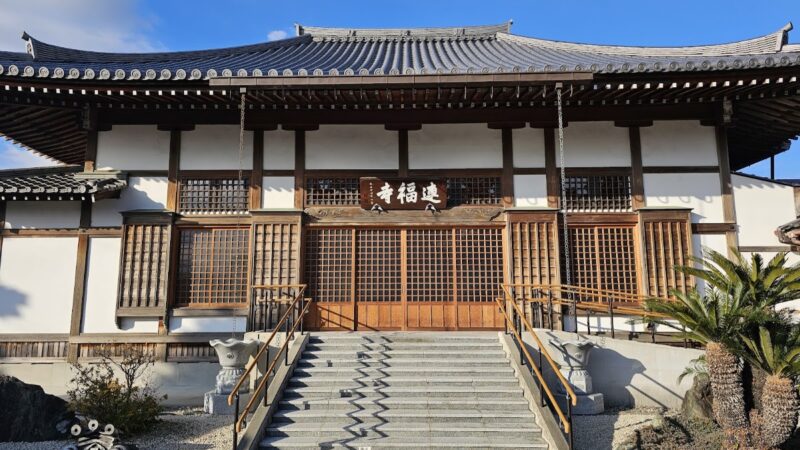
The main hall of Renfuku-ji Temple was rebuilt in 2014. The new main hall, while adhering to the traditional style of temple architecture, boasts a robust structure incorporating modern technology.
The interior of the main hall exudes a tranquil atmosphere, providing a space where worshippers can quietly offer their prayers. The reconstruction was made possible through the cooperation of parishioners and local residents, symbolizing Renfukuji Temple’s deep roots in the community.
The Main Hall Built on Renfukuji Kofun
The main hall of Renfukuji Temple actually stands on top of a keyhole-shaped burial mound called the “Renfukuji Kofun.” This burial mound is believed to have been constructed during the Kofun period (around the 4th to 6th centuries), indicating that this area was an important location in ancient times.
A triangular-rimmed bronze mirror with divine beast motifs was unearthed from the Renfukuji Kofun. This mirror is a representative burial item of the Kofun period and a valuable artifact indicating that the deceased was a powerful figure of the time.
The reason why a temple was built on top of an ancient burial mound is unclear, but the establishment of a Buddhist temple on land considered sacred since ancient times is an interesting example when considering the history of Shinto-Buddhist syncretism in Japan.
Atmosphere and Environment of the Temple Grounds
The grounds of Renfuku-ji Temple are very well maintained, preserving a clean and tranquil atmosphere. Trees and flowers are properly cared for, allowing visitors to experience the beauty of nature throughout the seasons.
The relationship with the adjacent Rokuon Shrine is also distinctive, offering a traditional Japanese religious landscape where a shrine and temple stand side-by-side. A stroll through the grounds allows you to feel the layered history and the deep faith of the local community.
About Goshuin (Temple Seals)
Renfuku-ji Temple does not offer goshuin. While collecting goshuin as part of temple and shrine visits has become increasingly popular in recent years, not all temples offer them.
Even without goshuin, Renfuku-ji Temple has numerous historical and culturally significant points of interest, making it well worth a visit. We recommend visiting quietly and soaking up the atmosphere of the temple.
Access Methods
Access by Train
The nearest station to Renfuku-ji Temple is Iwata Station on the JR Tokaido Main Line.
- Approximately 8 minutes on foot (approx. 612m) from JR Tokaido Main Line Iwata Station
Iwata Station is a stop for local trains only, but it is accessible from Shizuoka Station and Hamamatsu Station without transfers. The route from the station to Renfuku-ji Temple is relatively flat and easily accessible on foot.
Access by Bus
- Approximately 3 minutes on foot (approx. 215m) from Ninomiya 4-chome Bus Stop
If using the bus, you can use Iwata City’s community buses, etc. The bus stop is very close and the location is easily accessible.
Access by Car
If visiting by car, the nearest interchange is the Iwata Interchange on the Tomei Expressway.
- Approximately 10-15 minutes from the Tomei Expressway Iwata Interchange
It is recommended to check with the temple in advance regarding parking availability. Since the surrounding area is residential, please avoid street parking and observe proper etiquette when visiting.
Nearby Attractions
Rokuon Shrine
Located right next to Renfuku-ji Temple, Rokuon Shrine is a shrine worshipped as the local guardian deity. You can experience the traditional Japanese religious landscape where a shrine and temple are adjacent. When visiting Renfuku-ji Temple, be sure to also visit Rokuon Shrine.
Historical and Cultural Facilities of Iwata City
Iwata City has many other historical and cultural spots.
- Former Mitsuke School: One of the oldest existing wooden pseudo-Western style elementary school buildings in Japan (National Historic Site)
- Iwata City Museum of Fragrance: A unique museum themed around fragrance
- Enshu Kokubunji Temple Ruins: The ruins of a Kokubunji temple from the Nara period
Visiting these facilities together will allow you to gain a deeper understanding of Iwata City’s history and culture. ## About Buddhist Services and Memorials at Renfuku-ji Temple
Perpetual Memorial Services and Columbarium
Renfuku-ji Temple, as a Rinzai Zen temple, also handles Buddhist services such as perpetual memorial services. Perpetual memorial services have recently gained attention as a method of memorial service for those without successors or those who do not want to burden their descendants with the responsibility of maintaining the grave.
For detailed information on costs and conditions, we recommend contacting the temple directly.
Cemetery and Gravestones
Renfuku-ji Temple also has a cemetery, with graves available for parishioners and those who wish to have one. Several stonemasons in Shizuoka Prefecture offer services related to gravestones and cemeteries at Renfuku-ji Temple.
For new grave construction, repairs to existing graves, or grave closure, you can consult with the temple or a specialized stonemason.
Annual Events at Renfuku-ji Temple
As a Rinzai Zen temple, Renfuku-ji Temple holds various Buddhist services and events throughout the year. The following events are commonly held at typical Rinzai Zen temples: – New Year’s Day/New Year’s Day Ceremony: A memorial service to welcome the new year.
- Spring Equinox/Autumn Equinox: A memorial service for ancestors.
- Obon Segaki Ceremony: A memorial service to offer alms to hungry ghosts.
- Founder’s Memorial: A memorial service to commemorate the temple’s founder.
For specific dates and participation methods, please contact the temple directly.
Manners and Precautions for Visiting a Temple
Basic Manners for Visiting a Temple
When visiting a temple, please observe the following basic manners:
- Bow at the Temple Gate: Bow before entering the temple grounds.
- Be Quiet: Act quietly on the temple grounds and refrain from loud conversations.
- Photography: Photography inside the main hall and of Buddha statues is generally prohibited. Please refrain from taking photos of the exterior.
- Offering Money: Offer your money quietly and with sincerity.
- Praying and Bowing: Pray with sincere hearts and bow.
Regarding Attire
Unless you are attending a special Buddhist service, everyday clothing is acceptable for visiting. However, please avoid revealing or flashy clothing and strive for modest attire.
Visiting Hours
There is no clear information regarding the visiting hours of Renfuku-ji Temple, but generally, temples are best visited during the daytime (around 9:00 to 17:00). Please avoid visiting early in the morning or after sunset, and visit during reasonable hours.
About the Rinzai Myoshin-ji School
Here is a brief introduction to the Rinzai Myoshin-ji School, to which Renfuku-ji Temple belongs.
What is the Rinzai School?
The Rinzai School is a branch of Zen Buddhism founded by the Chinese Zen monk Linji Yixuan. Zen Buddhism was introduced to Japan during the Kamakura period by Eisai. It is characterized by its training method using question-and-answer sessions called “koans,” and is also known as “Kanna Zen.”
Myoshinji School
The Myoshinji School is the largest branch of the Rinzai sect, with Myoshinji Temple in Ukyo-ku, Kyoto City, as its head temple. It boasts approximately 3,400 temples nationwide, making it the largest Zen Buddhist temple network in Japan.
Myoshinji Temple was founded in 1337 by Emperor Hanazono, with Kanzan Egen as its founding abbot. It values the spirit of “Ōtōkan” (a principle emphasizing rigorous training and practical application in daily life).
History of Iwata City and Renfukuji Temple
Center of Tōtōmi Province
Iwata City was one of the centers of the ancient Tōtōmi Province. During the Nara period, the provincial capital of Tōtōmi Province was located here, and it flourished as a center of politics, economy, and culture.
The place name Ninomiya, where Renfuku-ji Temple stands, is thought to originate from Ninomiya, the second shrine of Tōtōmi Province, indicating that this region has been an important place since ancient times.
Tōkaidō Road and Iwata
During the Edo period, it developed as a post town on the Tōkaidō Road, and Mitsuke-juku was established. It prospered as a transportation hub where many travelers passed through, and as a center of commerce.
Renfuku-ji Temple is a temple that has continued to attract the faith of the local people within this historical background.
The Significance of Visiting Renfuku-ji Temple
Visiting Renfuku-ji Temple has significance beyond mere sightseeing.
Dialogue with History
Renfuku-ji Temple has a history of over 850 years, from its founding at the end of the Heian period to the present day. Standing on its grounds is a dialogue with history that has continued uninterrupted since the time of Taira no Shigemori. Tracing back to the Kofun period, you can feel the flow of time for over 1500 years. ### Protection of Cultural Properties
Cultural properties, including the largest statue of Enma Daio (King Yama) in Shizuoka Prefecture, have been carefully preserved by the local people. Visiting these sites provides an opportunity to recognize the importance of cultural property preservation.
Peace of Mind
The time spent quietly praying in the tranquil temple grounds is a precious opportunity to escape the hustle and bustle of everyday life and calm the mind. The atmosphere of Renfuku-ji Temple, a Zen Buddhist temple, brings peace of mind to visitors.
Summary
Renfuku-ji Temple in Iwata City, Shizuoka Prefecture, is an ancient temple of the Myoshin-ji branch of the Rinzai school, said to have been founded by Taira no Shigemori at the end of the Heian period. It is one of the three Enshu temples and boasts numerous historical and culturally valuable sights, including the largest statue of Enma Daio in Shizuoka Prefecture and the main hall built on top of an ancient burial mound.
With easy access—just an 8-minute walk from JR Iwata Station—the temple grounds, adjacent to Rokuon Shrine, are kept clean, providing visitors with a peaceful time for prayer.
While they don’t offer Goshuin (temple stamps), the atmosphere of this historic temple, the opportunity to view its cultural artifacts, and the chance to offer a peaceful visit are well worth it. When you visit Iwata City, be sure to stop by Renfuku-ji Temple.
When visiting, please observe basic temple etiquette and show respect to the temple and the local community. For detailed information and the latest updates, it is recommended to contact the temple in advance (0538-32-5082).