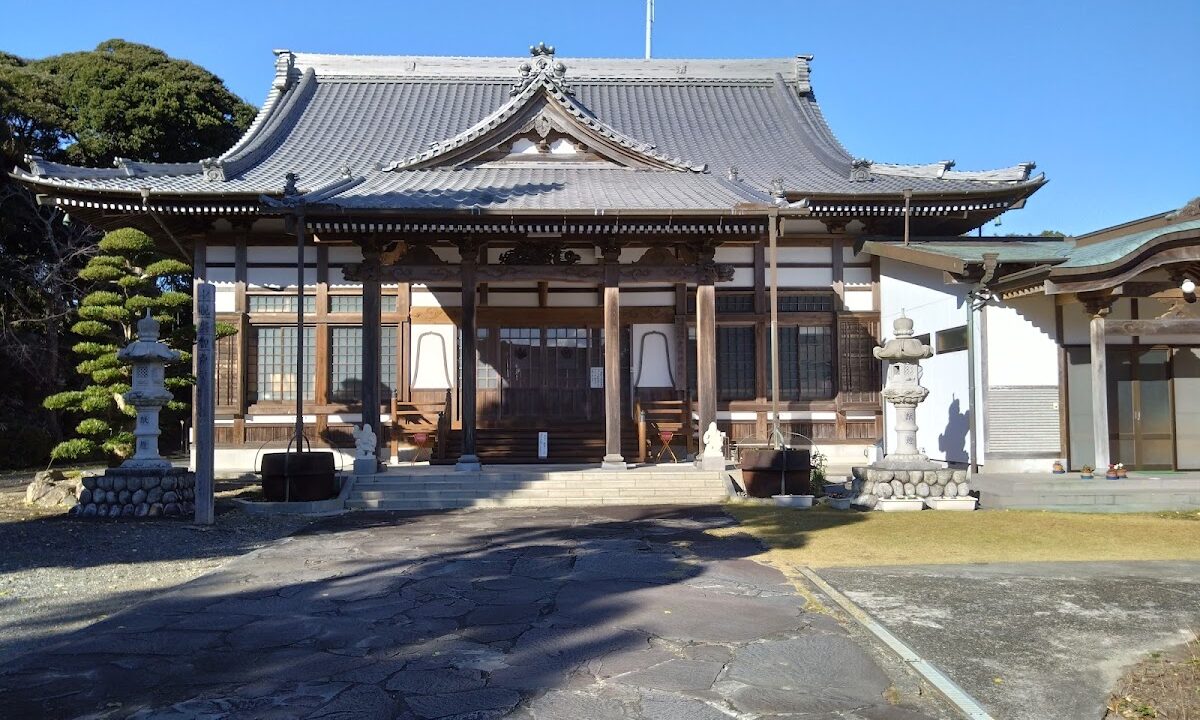
Kanchoji Temple (Omaezaki City, Shizuoka Prefecture) Complete Guide | History, Highlights, and Visiting Information
Located in Sakura, Omaezaki City, Shizuoka Prefecture, Kanchoji Temple is a historic temple belonging to the Soto Zen sect. Affectionately known locally as “Ebisu Temple,” it welcomes visitors with its Niomon gate featuring wooden Kongo Rikishi statues. This article provides detailed information you should know before visiting, from the historical background of Kanchoji Temple to its highlights, visiting information, and nearby tourist spots.
Basic Information on Kanchoji Temple
Kanchoji Temple is a Soto Zen temple located at 566 Sakura, Omaezaki City, Shizuoka Prefecture. Its corporate number is registered as 3080405005105, and the current head priest is Reverend Masami Ota.
Location: 566 Sakura, Omaezaki City, Shizuoka Prefecture 437-1604
Phone Number: 0537-86-2444
Sect: Soto Zen
Chief Priest: Masami Ota
Other Name: Ebisu Temple
Omaezaki City is located at the southernmost tip of Shizuoka Prefecture, a scenic area facing the Pacific Ocean. Kanchoji Temple is an important temple that preserves the Buddhist culture of this region and serves as a center of faith for the local residents.
History and Origins of Kanchoji Temple
While there are no clear records of the founding date of Kanchoji Temple, it is known to have a long history as a Soto Zen temple. The Soto Zen sect is a branch of Zen Buddhism introduced to Japan by Zen Master Dogen during the Kamakura period, and it teaches “Shikantaza,” that is, the practice of simply sitting in meditation.
Kanchoji Temple is affectionately known as “Ebisu Temple” because it enshrines Ebisu, one of the Seven Lucky Gods. Ebisu is worshipped as the guardian deity of business prosperity, abundant harvests, and fishing, and has been deeply intertwined with the lives of the local people.
The Omaezaki region of Shizuoka Prefecture has long been a thriving fishing area, and it is believed that the temple attracted the faith of fishermen praying for safety at sea and a bountiful catch. Furthermore, Kanchoji Temple has played an important role as a place for agricultural workers to pray for a good harvest.
Highlights of the Temple Grounds
Main Gate (Nio-mon Gate) and Kongo Rikishi Statues
The first thing visitors to Kanchoji Temple see is the imposing main gate (Nio-mon Gate). Wooden Kongo Rikishi statues are enshrined within this gate, protecting the temple.
Kongo Rikishi statues, commonly known as “Nio statues,” are arranged in pairs: Agyo (open mouth) and Ungyo (closed mouth). The Agyo statue, with its mouth open, utters the “A” sound, representing the beginning of the universe. The Ungyo statue, with its mouth closed, symbolizes the “Un” sound, representing the end of the universe. The presence of these two statues together is the origin of the phrase “Aun no kokyu” (perfect harmony), signifying complete harmony.
The Kongo Rikishi statues at Kanchoji Temple are made of wood, possessing a dignified presence and power that comes with age. When visiting, we recommend carefully observing the expressions and muscular details of these Nio statues.
Main Hall
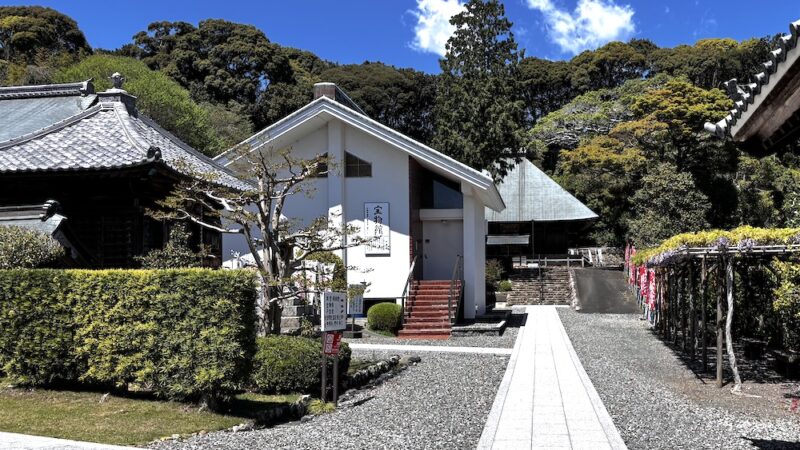
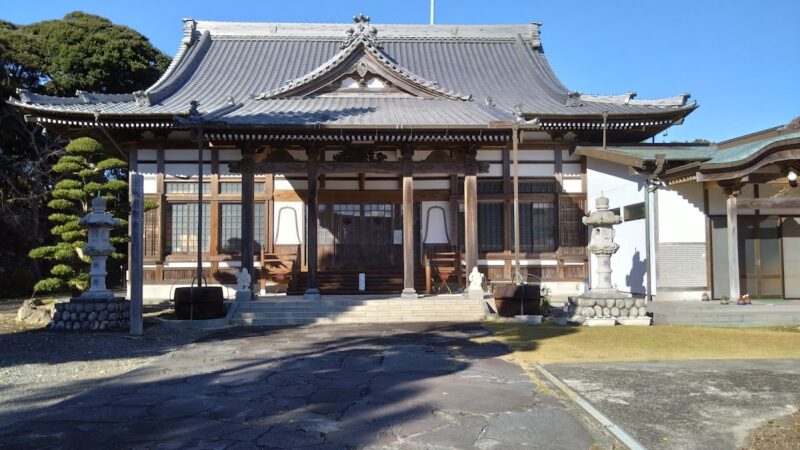
Passing through the temple gate, you enter a tranquil temple grounds. At the center is the main hall, where daily religious services and Zen meditation sessions are held. Typical of a Soto Zen temple, it features a simple and serene appearance.
At the main hall, you can pay your respects to the principal image of Buddha. The time spent quietly joining your hands and offering prayers will be a precious moment away from the hustle and bustle of everyday life.
Ebisu Hall
Within the temple grounds is a hall dedicated to Ebisu, the god of fortune, from whom the temple derives its name. Many visitors come here to pray for business prosperity and family safety. Ebisu is often depicted holding a fishing rod in his right hand and a sea bream in his left, and is characterized by his benevolent smile.
Local shop owners and businesspeople can also be seen visiting at the beginning of the year and at key business milestones, making it a place of faith deeply rooted in the community.
Nature on the Temple Grounds
The grounds of Kanchoji Temple are planted with trees and flowers that allow you to experience the changing seasons. Cherry blossoms and plum blossoms in spring, fresh greenery in early summer, and autumn leaves in fall—each season offers a different view.
Strolling through the tranquil temple grounds and experiencing the changing seasons is one of the great pleasures of visiting Kanchoji Temple.
About the Soto Zen School
Let’s take a closer look at the Soto Zen school, to which Kanchoji Temple belongs. The Soto Zen school is one of the largest Zen Buddhist sects in Japan, with over 14,000 temples nationwide.
The Teachings of the Soto Zen School
The foundation of the Soto Zen school is “Shikan Taza” (just sitting). This teaching emphasizes that sitting meditation is not merely a means to attain enlightenment, but rather that meditation itself is the form of Buddha, and sitting meditation is enlightenment in itself.
Dogen Zenji taught that practice and enlightenment are not separate but one, using the phrase “Shusho Itto” (practice and enlightenment are one). This teaching emphasizes the importance of viewing every action in daily life as practice and cherishing each moment.
The Practice of the Soto Zen School
In Soto Zen temples, not only sitting meditation but all daily actions are considered important as practice. From mealtime etiquette and cleaning to walking, everything is considered a practice of Zen.
Many Soto Zen temples hold Zen meditation sessions and sutra copying sessions for the general public, providing opportunities to experience Zen teachings. It’s possible that Kanchoji Temple also offers such activities, so those interested should inquire directly with the temple.
Etiquette and Manners for Visiting a Temple
Here are some basic etiquette guidelines for visiting Kanchoji Temple.
Bowing at the Temple Gate
When entering the temple, stop briefly in front of the temple gate, bow, and then enter the grounds. This is an act of respect, signifying your entry into the realm of Buddha.
Purification at the Water Basin
If there is a water basin on the temple grounds, purify your hands and mouth there. Scoop water with the ladle, wash your left hand first, then your right hand, then take water again in your left hand and rinse your mouth. Finally, rinse the handle of the ladle and return it to its original position.
Visiting the Main Hall
Before the main hall, quietly join your hands in prayer and bow once. If there is an offering box, quietly place your offering in it, and if there is a bell, ring it. Afterwards, join your hands in prayer and offer your prayers with sincerity.
In Zen temples, unlike Shinto shrines where two bows, two claps, and one bow are customary, quietly joining your hands in prayer is the basic practice.
Manners on the Temple Grounds
Please be quiet on the temple grounds, and refrain from speaking loudly or running around. Photography is often permitted, but it may be prohibited inside the main hall or of Buddha statues, so please check beforehand.
Also, the temple grounds are a place of training, so it is important to be considerate and not disturb the monks’ practice.
Access Information
Access by Car
Access to Kanchoji Temple is convenient by car.
From the Tomei Expressway:
- Approximately 30 minutes from Kikugawa IC via National Route 150
- Approximately 25 minutes from Sagara-Makinohara IC via Prefectural Road Sagara-Omaezaki Line
From the Shin-Tomei Expressway:
- Approximately 40 minutes from Shimada-Kanaya IC via National Route 473 and Prefectural Road Sagara-Omaezaki Line
When using a car navigation system, it is recommended to search for “566 Sakura, Omaezaki City, Shizuoka Prefecture” or the phone number “0537-86-2444”.
Regarding parking, it is recommended to check with the temple in advance.
Access by Public Transportation
When using public transportation, the following routes are possible.
From the JR Tokaido Main Line:
- Take a bus from JR Kikugawa Station or Kakegawa Station
- Take the Shizutetsu Justline Omaezaki Line and get off at the nearest bus stop
- Access on foot from the bus stop
Public transportation in Omaezaki City is limited, so it is important to check the number of buses and operating times in advance. Check the latest timetable on the Shizutetsu Justline official website or by phone.
Using a Taxi
You can also take a taxi from JR Kikugawa Station or Kakegawa Station. The journey takes approximately 20-30 minutes.
Nearby Tourist Attractions
When visiting Kanchoji Temple, you can also enjoy other tourist attractions around Omaezaki City.
Omaezaki Lighthouse
Located at the southernmost tip of Shizuoka Prefecture, the Omaezaki Lighthouse is a historic lighthouse that was first lit in 1874 (Meiji 7). It is characterized by its beautiful white appearance, and you can enjoy a panoramic view of the Pacific Ocean from the top of the lighthouse. On clear days, you can even see Mount Fuji.
Omaezaki Coast
Facing the Pacific Ocean, Omaezaki Coast is known for its beautiful coastline and as a mecca for surfing. The sunsets are particularly stunning; you can spend a peaceful end to the day watching the sun sink below the horizon.
Marine Park Omaezaki
This is a comprehensive leisure facility where you can enjoy swimming and camping. It’s a popular spot for families and is bustling with beachgoers during the summer.
Hamaoka Sand Dunes
Located in the northern part of Omaezaki City, this sand dune area offers a unique landscape. It’s a great spot for observing sand dune plants and taking walks.
Ikemiya Shrine
An ancient shrine located within Omaezaki City, it’s often visited in conjunction with Kanchoji Temple. It’s a place where you can feel the history and culture of the region.
Nearby Gourmet Information
Because Omaezaki City faces the sea, there are many restaurants where you can enjoy fresh seafood.
Seafood Cuisine
The seafood bowls and sashimi set meals made with fresh seafood caught locally are exquisite. Bonito, tuna, and whitebait are particularly famous, and you can enjoy seasonal fish depending on the time of year.
Nabura Market
At “Nabura Market,” adjacent to Omaezaki Port, you can not only purchase fresh seafood but also enjoy seafood dishes at the restaurants. Dishes made with local ingredients are popular with both tourists and locals.
Omaezaki Tea
Shizuoka Prefecture is one of Japan’s leading tea-producing regions, and high-quality tea is produced in Omaezaki City. We recommend purchasing new tea at local tea shops or enjoying Shizuoka tea at a tea cafe.
Annual Events and Memorial Services
At Kanchoji Temple, a Soto Zen Buddhist temple, various memorial services and events are held throughout the year.
First Three Days of the New Year
Many worshippers visit for their first shrine visit of the new year. Kanchoji Temple, especially known as “Ebisu Temple,” is bustling with visitors praying for business prosperity and family safety.
Spring and Autumn Equinox Services
During the Equinox period, centered around the spring and autumn equinoxes, services are held to honor ancestors. Many parishioners participate in the memorial services in the main hall in addition to visiting graves.
Obon Festival
During the Obon period in August, memorial services are held to welcome the spirits of ancestors. Various events, such as Bon Odori (Bon dance) and Segaki (feeding of hungry ghosts) services, are held depending on the region.
Founder’s Memorial Service and Memorial Service for the Two Ancestors
In the Soto Zen sect, memorial services are held on the anniversaries of the deaths of the sect’s founder, Zen Master Dogen, and the great ancestor, Zen Master Keizan. These services are considered important events of the sect.
For specific event dates, we recommend contacting Kanchoji Temple directly.
Funeral and Memorial Services
Kancho-ji Temple conducts funerals and memorial services for its parishioners. Solemn ceremonies are performed according to the customs of the Soto Zen sect.
Funeral Service
Soto Zen funerals are centered around the rituals of “Jukai” (receiving precepts) and “Indo” (guiding the deceased). This involves bestowing a posthumous Buddhist name upon the deceased and guiding them to the Buddhist world as a disciple.
Memorial Services
Memorial services are held at various milestones, from the seventh day after death to the forty-ninth day, the first anniversary, the third anniversary, and so on. These services are important for remembering and honoring the deceased.
For inquiries regarding funerals and memorial services, please contact Kancho-ji Temple directly. The phone number is 0537-86-2444.
Activities such as Zen Meditation and Sutra Copying
Many Soto Zen temples hold Zen meditation sessions and sutra copying sessions to allow the general public to experience the teachings of Zen. Kancho-ji Temple may also offer such activities.
Zen Meditation Session
Zazen (seated meditation) is a fundamental practice in Zen Buddhism. In our Zen meditation sessions, even beginners can learn the correct way to practice under the guidance of a monk. By sitting quietly, regulating your breathing, and calming your mind, you can experience a moment of release from the stresses of daily life.
Sutra Copying Session
Sutra copying, where you carefully copy each character of a Buddhist scripture, has the effect of calming the mind and improving concentration. You can start with short scriptures such as the Heart Sutra, and participation is possible even without prior calligraphy experience.
Dharma Talk Session
In Dharma talk sessions led by the head priest, you can learn about Buddhist teachings and wisdom that can be applied to daily life. There may also be time for questions and consultations, making it an opportunity to feel closer to Buddhism.
For information on the schedule and participation methods of these activities, please contact Kanchoji Temple directly.
History and Culture of Omaezaki City
Let’s take a closer look at Omaezaki City, where Kanchoji Temple is located.
Origins of Omaezaki City
Omaezaki City was formed on April 1, 2004, through the merger of Hamaoka Town and Omaezaki Town in Ogasa District. Located at the southernmost tip of Shizuoka Prefecture, it centers around Omaezaki, a peninsula jutting out into the Pacific Ocean.
Geography and Climate
Blessed with a mild climate, it is a relatively pleasant region throughout the year. Facing the Pacific Ocean, it is influenced by a maritime climate, resulting in cool summers and mild winters.
Industries
Fishing, agriculture, and tourism are the main industries. Fishing in the Enshu Sea is particularly thriving, with catches of bonito and tuna. In agriculture, tea and melon cultivation are well-known.
In recent years, renewable energy facilities such as wind and solar power generation have increased, giving the city an aspect as an energy hub.
Culture and Tradition
The Omaezaki region has a long history of festivals and traditional events that have been passed down through generations. Temples and shrines like Kanchoji Temple have served as spiritual pillars for the community, strengthening the bonds between residents.
Points to Note When Visiting
Here are some points to note when visiting Kanchoji Temple.
Attire
There are no specific dress code requirements, but considering that a temple is a sacred place, it is advisable to avoid overly revealing clothing.
Visiting Hours
Generally, temples are open for worship during the daytime. Avoid visiting early in the morning or late at night, and visit during reasonable hours. If there are religious services or events, please be considerate so as not to disturb them.
Photography
Photography of the temple grounds is generally permitted, but photography inside the main hall or of Buddha statues may be prohibited. Also, please be mindful of the privacy of other worshippers and be careful if people are included in your photos. If you have any questions, please check in advance.
Bringing Pets
Generally, it is discouraged to bring pets into temple grounds. If you absolutely must bring a pet, please check with the temple in advance.
Offerings and Donations
There are no set rules regarding the amount of your offering. Simply offer an amount that reflects your heartfelt feelings.
The Charm and Summary of Kanchoji Temple
Kanchoji Temple is a Soto Zen Buddhist temple located in Omaezaki City, Shizuoka Prefecture, a scenic area facing the Pacific Ocean. Affectionately known as “Ebisu Temple” by the local community, it has attracted the faith of people praying for business prosperity and family safety.
With its imposing Niomon gate housing wooden Kongo Rikishi statues, tranquil grounds, and a place of training based on Soto Zen teachings, Kanchoji Temple serves as a spiritual pillar for the community.
Visitors can escape the hustle and bustle of everyday life and have time to quietly reflect on themselves. They can also experience Zen teachings through activities such as Zen meditation and sutra copying.
Besides Kanchoji Temple, Omaezaki City boasts many other attractive tourist spots, including the Omaezaki Lighthouse and its beautiful coastline. You can enjoy fresh seafood and immerse yourself in nature in a warm climate.
Why not embark on a journey to find inner peace by experiencing traditional Japanese Buddhist culture through a visit to Kanchoji Temple? When you visit Omaezaki City, Shizuoka Prefecture, be sure to stop by Kanchoji Temple.
Contact Information
Kanchoji Temple
566 Sakura, Omaezaki City, Shizuoka Prefecture 437-1604
Phone: 0537-86-2444
When visiting, we recommend calling in advance to check opening hours and any events. Enjoy a peaceful and fulfilling visit.