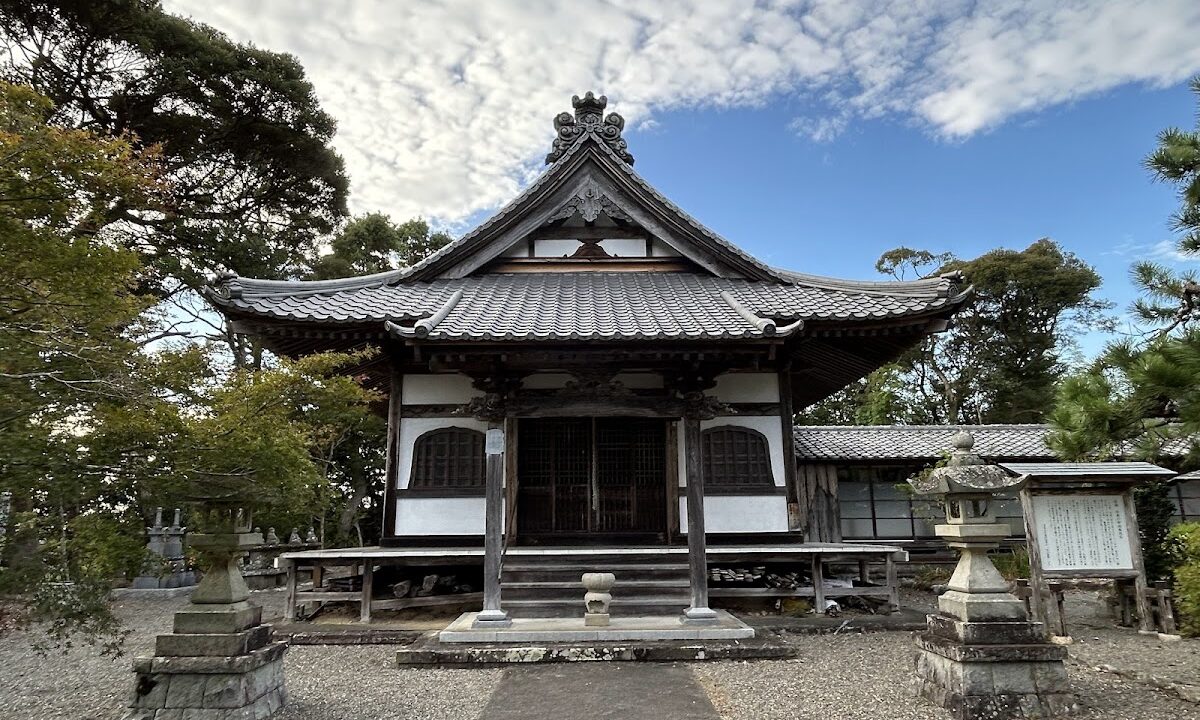
Kyuenji Temple (Kakegawa City, Shizuoka Prefecture) | A Thorough Guide to the Legend of the Night-Crying Stone and the Ancient Temple Associated with Tokugawa Ieyasu
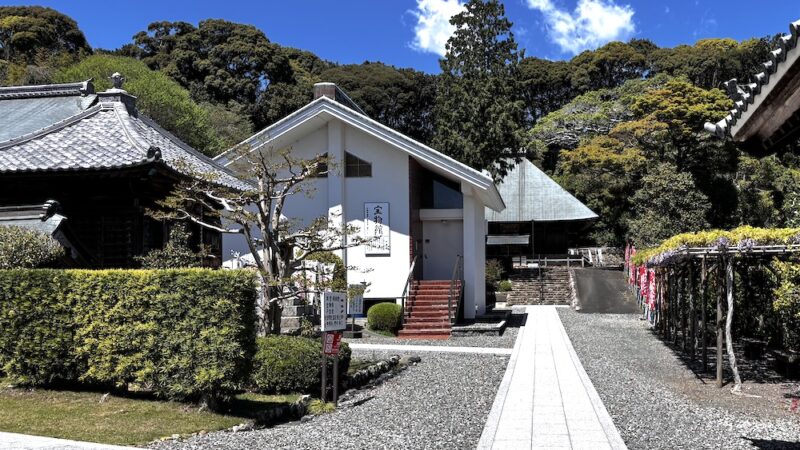
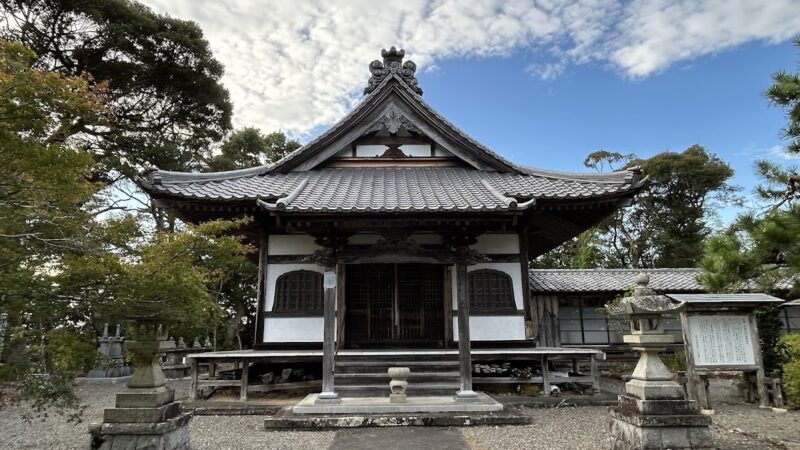
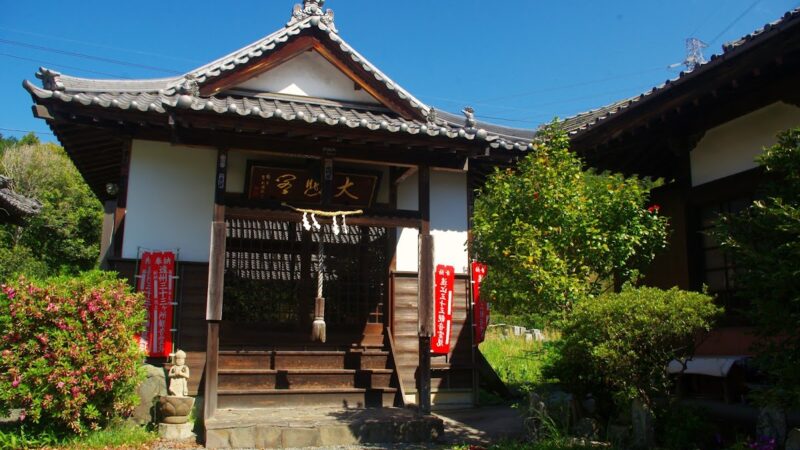
Kyuenji Temple, located on the mountainside of Sayo-no-Nakayama Pass in Kakegawa City, Shizuoka Prefecture, is an ancient temple said to have been founded during the Tenpyo era (729-749). Built on Sayo-no-Nakayama Pass, one of the three most difficult sections of the old Tokaido road, it is known as the setting for the legend of the Night-Crying Stone, and as a historical place where Yamauchi Kazutoyo, the lord of Kakegawa Castle, entertained Tokugawa Ieyasu on his way to the Battle of Sekigahara.
History and Origins of Kyuenji Temple
Founding during the Tenpyo Era and its Path as an Ancient Temple
While Kyuenji Temple is said to have been founded during the Tenpyo era (729-749), detailed records do not remain. Sayo-no-Nakayama Pass has long been known as a crucial point on the Tokaido road and was a rugged mountain pass sometimes called “Enshu’s Little Hakone.” Located between Nissaka-juku and Kanaya-juku, this mountain pass, along with Hakone Pass and Suzuka Pass, is considered one of the three most difficult sections of the old Tokaido road, and was a place where many travelers passed through.
Kyuenji Temple, situated at such a crucial transportation hub, has played an important role throughout its long history as a temple where travelers prayed for safety and as a center of local faith. The entire temple grounds are designated as a cultural property of Kakegawa City, recognizing its historical value.
Historical Events of Keicho 5
Kyuenji Temple first appeared on the historical stage in Keicho 5 (1600). When Tokugawa Ieyasu advanced his army from Osaka to subdue the Aizu Uesugi clan, which triggered the Battle of Sekigahara, Yamauchi Kazutoyo, the lord of Kakegawa Castle, entertained Ieyasu at Kyuenji Temple.
Yamauchi Kazutoyo was a Sengoku period warlord known for the support of his wife, Chiyo. This reception was not merely a formality; it was also a crucial political meeting in which Kazutoyo demonstrated his willingness to surrender Kakegawa Castle to Ieyasu. This decision contributed to the Eastern Army’s victory in the Battle of Sekigahara and became the catalyst for Kazutoyo’s rise to the position of daimyo of Tosa Province with a 200,000 koku domain.
Highlights and Cultural Assets of the Temple Grounds
The Crying Night Stone and Child-Rearing Beliefs
The most famous feature of Kyuenji Temple is the “Crying Night Stone” located within the temple grounds. A sad legend surrounds this stone:
A pregnant woman, on her way to Kyuenji Temple to pray for a safe delivery, was attacked by bandits and lost her life. It is said that the woman’s spirit possessed the stone and cried out in an attempt to save the baby born from her severed abdomen. Later, this baby was found and raised by a candy shop owner and his wife, and eventually became a swordsman known as “Otohachi,” who avenged his mother’s death.
The legend of the Night-Crying Stone is counted as one of the “Seven Wonders of Enshu,” and the Night-Crying Stone at Kyuenji Temple attracts many worshippers as an object of child-rearing faith. Currently, a Night-Crying Stone is also located beside the Sayo-no-Nakayama Tunnel on National Route 1, but the Night-Crying Stone within the grounds of Kyuenji Temple is similarly cherished and worshipped as a stone associated with the legend.
Historical Sites Associated with Tokugawa Ieyasu
Within the temple grounds, the site of the tea house where Yamauchi Kazutoyo entertained Tokugawa Ieyasu remains. This tea house site is a must-see spot for history buffs, as it was the location of a meeting that significantly shaped Japanese history.
Furthermore, the remains of a five-needle pine tree said to have been planted by Ieyasu himself as a token of gratitude for the hospitality also remain. Although currently preserved as a stump, it must have once been a magnificent pine tree adorning the temple grounds. This five-needle pine is an important historical heritage of Kyuenji Temple, known as the “Five-Needle Pine Planted by Tokugawa Ieyasu.”
Okamiido Well
The Okamiido well, said to have been used when Ieyasu was entertained at the tea house, still exists on the temple grounds. This well is a valuable historical site that conveys the atmosphere of that time, and it is a place where you can feel close to historical events that took place more than 400 years ago.
This well, from which pure water likely gushed forth, is thought to have been a valuable water source for travelers on the mountain pass.
Sayo-no-Nakayama Pass and the Old Tokaido Road
A Difficult Pass Known as the “Little Hakone of Enshu”
Although the elevation of Sayo-no-Nakayama Pass is not as high as Hakone Pass, it was known as a difficult pass with steep terrain and winding roads. Its nickname, “Little Hakone of Enshu,” reflects its ruggedness.
During the Edo period, travelers crossing this pass either stayed overnight at Nissaka-juku before attempting to cross the pass, or descended the pass towards Kanaya-juku. Located halfway up the mountain pass, Kyuenji Temple was likely used by many travelers as a place to pray for safe journeys and to rest.
The Fifty-Three Stations of the Tōkaidō and Culture
Sayo-no-Nakayama is depicted in Utagawa Hiroshige’s ukiyo-e print “The Fifty-Three Stations of the Tōkaidō,” vividly portraying the scenery of the pass and the figures of travelers. Many literary figures, including Matsuo Bashō, also crossed this pass, leaving behind travelogues and haiku.
Sayo-no-Nakayama Pass is not merely a difficult point of passage; it is also a place where Japanese culture and history are condensed. Visiting Kyuenji Temple offers a valuable opportunity to experience this rich history and culture.
How to Access Kyuenji Temple
Access by Train and Bus
From JR Kakegawa Station
- Take the Kakegawa City-operated “Sayonaka Bus” from the north exit of JR Kakegawa Station
- Get off at the “Hachimangu-mae” bus stop and walk for about 10 minutes
- Travel time: Approximately 30 minutes by bus + 10 minutes on foot
Since the number of buses is limited, it is recommended to check the timetable in advance. You can check the latest service information on the Kakegawa City website.
Access by Car
From the Tomei Expressway
- Approximately 25 minutes from Kakegawa IC via National Route 1
- Or approximately 20 minutes from Kikugawa IC
Parking Information
- Free parking available for visitors on the temple grounds
- Space for several cars
- Please drive carefully as it is located on a mountain pass.
Address and Basic Information
- Address: 291-1 Sayaka, Kakegawa City, Shizuoka Prefecture
- Visiting Hours: Grounds are open freely (daytime visits are recommended)
- Admission Fee: Free
- Inquiries: Kakegawa City Tourism Association (0537-24-8711)
Nearby Tourist Spots
Nissaka-juku
Located about 10 minutes by car from Kyuenji Temple, Nissaka-juku is the 25th post town on the Tokaido Fifty-three Stations route. The remains of the main inn and secondary inn still exist, preserving the strong atmosphere of an Edo-period post town. At “Hatako Kii-no-Kuniya,” you can see what the inn was like in those days, and at “Yorozuya,” you can enjoy a rest and light meal.
Sayo-no-Nakayama Park
This park is located near the top of the pass and features the “Night-Crying Stone” and a haiku monument to Basho along National Route 1. From the observation deck, you can enjoy a panoramic view of Kakegawa city and the Enshu Sea, and on clear days, you can even see Mount Fuji.
Kakegawa Castle
Kakegawa Castle, where Yamauchi Kazutoyo served as lord, is about a 30-minute drive from Kyuenji Temple. Known as Japan’s first reconstructed wooden castle tower, you can learn about the history of Kazutoyo and Chiyo inside the castle. Visiting after learning about the history of Ieyasu’s hospitality at Kyuenji Temple will allow for a deeper understanding.
Awagatake Mountain and Tea Plantations
Kakegawa City is one of Shizuoka Prefecture’s leading tea-producing areas. Beautiful tea plantations spread around Sayo-no-Nakayama, and the vibrant green is especially delightful during the new tea season (late April to May). The character for “tea” on the summit of Mt. Awagatake has become a symbol of Kakegawa.
Points and Manners for Visiting Kyuenji Temple
Etiquette for Visiting Temple
Kyuenji Temple is a quiet mountain temple. Please observe the following manners within the temple grounds.
- When visiting the main hall, bow slightly before offering your donation and quietly put your hands together in prayer.
- The Night-Crying Stone is cherished as an object of worship for child-rearing. Please visit with respect.
- Photography is permitted, but please be considerate of other visitors.
- Smoking is prohibited on the temple grounds.
Recommended Time to Visit
Spring (March-May)
- The fresh greenery is beautiful, and you can enjoy the scenery of the tea plantations.
- The weather is mild, making it ideal for strolling along the mountain pass.
Autumn (October-November)
- The season for beautiful autumn foliage.
- The air is clear, allowing for expansive views.
Notes for Summer and Winter
- In summer, the sun is strong, so a hat and sunscreen are necessary.
- In winter, the mountain pass can freeze, so caution is needed when visiting by car.
Estimated Time Required
- Visiting only the temple grounds: Approximately 30 minutes
- Strolling around the surrounding historical sites: 1-1.5 hours
- Combining with sightseeing in the surrounding area, such as Nissaka-juku: Half a day to a full day
Kyuenji Temple and the Seven Wonders of Enshu
The legend of the Night-Crying Stone is counted as one of the “Seven Wonders of Enshu.” The Seven Wonders of Enshu are a collective term for mysterious legends passed down in western Shizuoka Prefecture (Enshu region). Besides the Night-Crying Stone of Kyuenji Temple, these legends include the following:
- The Bell of Endlessness (Mori Town): A legendary bell said to send those who ring it to hell.
- The Dragon God of Sakuragaike Pond (Omaezaki City): A legend of a dragon god said to reside in the pond.
- The One-Leafed Reed (Iwata City): A legend of a reed that grows leaves on only one side.
A “Tour of the Seven Wonders of Enshu,” exploring these legends, is a popular way to gain a deeper understanding of the history and culture of western Shizuoka Prefecture.
Experiences and Learning at Kyuenji Temple
Experiencing History Firsthand
Visiting Kyuenji Temple offers the following historical insights:
A Turning Point in the Sengoku Period
Standing at the site of the tea house where Yamauchi Kazutoyo entertained Tokugawa Ieyasu, you can truly feel that the Battle of Sekigahara, a major turning point in Japanese history, began at this very spot. Without Kazutoyo’s decision, the course of history might have been drastically different.
Culture of the Old Highway
As a temple built on a difficult section of the Tokaido highway, Kyuenji Temple preserves the travel culture of the Edo period. One can imagine the hardships of travelers at the time, the bustling post towns, and the forms of faith along the highway.
World of Folklore
The legend of the crying stone, while a sad story, contains universal themes of a mother’s love and a child’s growth. Through the legend, one can learn about the values and faith of people in the Edo period.
Meditation in Silence
Due to its location on the mountainside of Sayo-no-Nakayama Pass, the grounds of Kyuenji Temple are extremely quiet. The environment, where only the chirping of birds and the sound of the wind can be heard, is ideal for escaping the hustle and bustle of everyday life and finding peace of mind.
Sitting on the bench in front of the main hall and quietly closing your eyes, you can feel the passage of time in the temple’s 400-year history and its 1300-year history.
Gourmet Information After Visiting Kyuenji Temple
Enjoying Kakegawa’s Tea Culture
Kakegawa City is famous as a production area for deep-steamed green tea. After visiting Kyuenji Temple, we recommend taking a break at a local tea house.
Tea Houses in Hisaka-juku
Hisaka-juku has traditional tea houses where you can enjoy local tea and sweets. A cup of tea to soothe the fatigue of crossing the mountain pass was surely enjoyed by travelers in the Edo period as well.
Kakegawa Tea Sweets
In Kakegawa city, there are many cafes and shops that offer sweets made with locally produced matcha. You can enjoy a variety of tea-based gourmet treats, such as matcha soft serve ice cream, tea soba noodles, and tea manju (steamed buns).
Local Regional Cuisine
Enshu Cuisine
Around Kakegawa, you can enjoy regional cuisine from the Enshu region. Known as the birthplace of takuan (pickled daikon radish), it is characterized by its simple flavors using local ingredients.
Events and Annual Festivals at Kyuenji Temple
Kyuenji Temple holds various events throughout the year.
Spring Ceremony
In spring, ceremonies for safe childbirth and child-rearing are held, attracting many worshippers. It is a center of child-rearing faith, associated with the legend of the crying stone, and is cherished by the local people.
Autumn Grand Festival
In autumn, the grand festival is held, with ceremonies and events taking place on the temple grounds. It is a valuable opportunity to experience local culture.
You can get event information by contacting the Kakegawa City Tourism Association before your visit.
Summary: The Charm of Kyuenji Temple
Kyuenji Temple, located on the Nakayama Pass in Sayo, Kakegawa City, Shizuoka Prefecture, is a unique place where the folk legend of the crying stone intersects with the history of Sengoku period warlords such as Tokugawa Ieyasu and Yamauchi Kazutoyo.
Stepping onto the temple grounds, you can feel the tranquil atmosphere of this ancient temple with a 1300-year history, as well as the historical turning point of the Battle of Sekigahara. The story of a mother’s love embodied in the Night-Crying Stone continues to touch the hearts of many across generations.
Visiting the Sayo-no-Nakayama Pass, a difficult section of the old Tokaido road, offers a valuable opportunity to relive the hardships of Edo-period travelers and experience Japanese highway culture firsthand.
Combining a visit to nearby tourist spots such as Kakegawa Castle and Nissaka-juku will allow you to enjoy a more fulfilling historical exploration. When visiting western Shizuoka Prefecture, be sure to stop by Kyuenji Temple and experience its rich history and culture.