Oshokyoin Temple (Kikugawa City, Shizuoka Prefecture): A Complete Overview of a Jodo Sect Temple with 1100 Years of History
Nestled in the rural area of Kikugawa City, Shizuoka Prefecture, Oshokyoin Temple is a Jodo sect temple boasting a history of over 1100 years. It is known for its vermilion-lacquered temple gate, designated as a National Important Cultural Property, its history associated with Honen Shonin, and the cultural assets and points of interest scattered throughout its grounds. This article thoroughly explains the charm of this ancient temple, from its history and cultural assets to its points of interest and access information.
Overview of Oshokyoin Temple
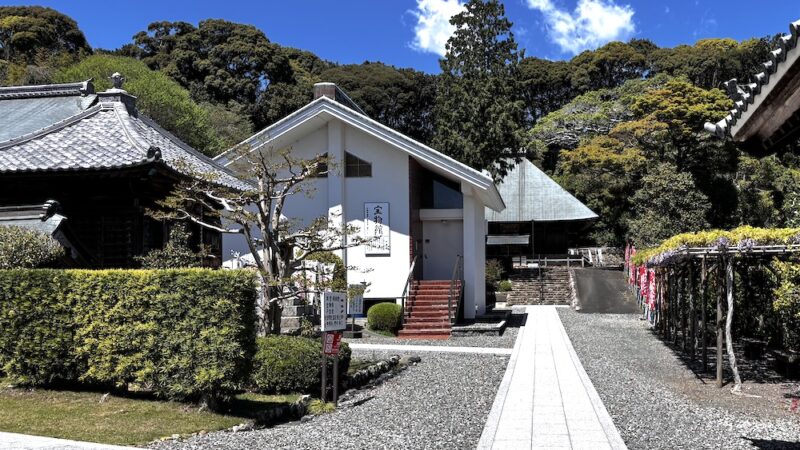
Oshokyoin Temple is a Jodo sect temple located in Nakauchida, Kikugawa City, Shizuoka Prefecture. Its mountain name is Shofu Reizan, and its official name is “Shofu Reizan Gokoku Honji Oshokyoin.” Its principal image is Amida Buddha, and it is known as an important base temple in the Tokai region that continues to transmit the teachings of the Jodo sect. Located on a small hill in a rural area, the temple’s vermilion gate is a striking sight even from afar. From the temple grounds, visitors can enjoy a panoramic view of the Kikugawa city countryside, and the tranquil atmosphere provides peace of mind to those who visit.
Location and Access
Location: Nakauchida, Kikugawa City, Shizuoka Prefecture
Access:
- Approximately 15 minutes by car from JR Tokaido Main Line “Kikugawa Station”
- Approximately 10 minutes by car from Tomei Expressway “Kikugawa IC”
- Approximately 20 minutes by car from Shizuoka Airport
Public transportation access is somewhat inconvenient, so visiting by car is recommended. A parking lot for visitors is available on the temple grounds.
History of Oshokyoin Temple
The history of Oshokyoin Temple dates back to the early Heian period. Throughout its long history, it has experienced important turning points, including a conversion from the Tendai sect to the Jodo sect and its connection to Honen Shonin, leading to its present state.
Founding: As Tendai Sect’s Tengakuin Temple
Oshokyoin Temple was founded in 855 (Saiko 2) by Jikaku Daishi Ennin, a high-ranking priest of Enryaku-ji Temple on Mount Hiei. At the time, it was known as “Tengakuin,” a Tendai sect temple, and was a prestigious temple established as an imperial prayer temple by Emperor Montoku, the 55th emperor.
An imperial prayer temple is a temple founded or designated by the emperor or retired emperor to perform prayers, indicating that Tengakuin was positioned as an important prayer temple at the national level.
Jikaku Daishi Ennin was a high-ranking priest known as the 3rd head of the Tendai sect. He studied esoteric Buddhism and Tendai teachings in Tang China and made significant contributions to the development of the Japanese Tendai sect. The fact that it was founded by Ennin further highlights the importance of Tengakuin.
Honen Shonin and the Conversion to the Jodo Sect
The greatest turning point in the history of Oshokyoin Temple is its connection with Honen Shonin, the founder of the Jodo sect.
In his youth, while training on Mount Hiei, Honen Shonin studied under a master named Koen Ajari. Koen Ajari was a benefactor who greatly influenced Honen. Later in life, Honen Shonin, in remembrance of his mentor Koen Ajari, visited Sakuragaike Pond in Totomi Province (present-day western Shizuoka Prefecture), and on his way back, stopped at Tenkakuin Temple.
It is said that at this time, Honen Shonin enshrined the Habuki Nyorai statue at Tenkakuin Temple, converted it from the Tendai sect to the Jodo sect, and changed the temple’s name to “Oshokyoin.”
The name “Osho” is said to originate from the *Contemplation Sutra*, a Pure Land Buddhist scripture, and expresses the Jodo sect’s doctrine that Amida Buddha saves sentient beings in response to their calls. This conversion made Osho-kyoin an important Jodo sect temple in the Tokai region.
Development after the Edo Period
During the Edo period, Osho-kyoin also developed ties with the Tokugawa family. In particular, the current temple gate was originally built in 1626 by the second shogun, Tokugawa Hidetada, at the renowned temple Hōdai-in in Shizuoka City for the repose of his deceased mother (Saigō-no-Tsubone, later Hōdai-in). It was relocated to Osho-kyoin in 1918.
This temple gate, a valuable cultural asset that preserves the architectural style of the early Edo period, was designated a National Important Cultural Property on September 17, 1954.
Having weathered the storm of anti-Buddhist sentiment during the Meiji era, Osho-kyoin has continued to uphold its religious traditions as a center of local faith.
Cultural Properties of Osho-kyoin
Osho-kyoin houses numerous valuable cultural properties, including those designated as National Important Cultural Properties.
Osho-kyoin Temple Gate (National Important Cultural Property)
The most striking feature of Osho-kyoin is its vermilion-lacquered temple gate, designated as a National Important Cultural Property.
Architectural Style and Features:
- Construction Period: Early Edo period (circa 1615-1660, with 1626 being the most likely date)
- Structure: Three bays wide, one bay deep, single story, gable roof, tiled roof
- Features: Elegant appearance with vibrant vermilion paint
- Designated as an Important Cultural Property: September 17, 1954
The temple gate was originally built by Tokugawa Hidetada at Hōdai-in Temple in Tokiwa-cho, Shizuoka City, as a memorial for his mother, Saigo-no-Tsubone (Oai-no-kata). Hōdai-in Temple was named after Saigo-no-Tsubone’s posthumous Buddhist name.
There are various theories as to why this temple gate was moved to Ōshōkyō-in Temple in 1918, but it is believed to have been moved for cultural property preservation purposes following the decline and abandonment of Hōdai-in Temple.
The beautiful gate, with its gabled roof, tiled roof, and vibrant vermilion paint, harmoniously blends these elements, showcasing the finest architectural techniques of the early Edo period. Standing amidst the rural landscape, the vermilion gate is a striking sight even from afar, and serves as a symbol of Osho-kyoin Temple.
Tooth-Blowing Buddha Statue
The Tooth-Blowing Buddha statue, said to have been enshrined by Honen Shonin, is an important object of worship at Osho-kyoin Temple.
The unusual name “Tooth-Blowing Buddha” is said to have originated from the legend that when Honen Shonin carved the statue while chanting the Nembutsu, wood shavings scattered as if blown out of its mouth. It is also known as an object of worship for the healing of toothaches.
This statue is a valuable cultural asset demonstrating the deep connection between Honen Shonin and Osho-kyoin Temple, and holds significant importance in the history of the Jodo sect.
Other Cultural Properties and Stone Monuments
Many other cultural properties and stone monuments are scattered throughout the grounds of Oshokyoin Temple.
Sazareishi: A “sazareishi” (small pebbles) is enshrined on the temple grounds. Known as the stone sung about in the national anthem “Kimigayo,” it is a large rock formed from many small stones that solidified over a long period of time. It is worshipped as an auspicious symbol of national prosperity and longevity.
Aizen Myoo Hall: A hall dedicated to Aizen Myoo is located on the temple grounds, attracting worshippers seeking matchmaking, marital harmony, and successful love. Aizen Myoo is believed to have the power to transform worldly desires into enlightenment, and is particularly worshipped as a Buddha who elevates lust to enlightenment.
Frog Statues: Frog statues are placed throughout the temple grounds. Due to wordplay such as “safe return” and “return of good fortune,” they are popular as auspicious symbols for traffic safety and good luck. Visitors can enjoy strolling around the temple grounds while searching for frogs.
Stone Monuments: Numerous stone monuments and memorial towers donated by successive chief priests and parishioners remain on the temple grounds, telling the story of Osho-kyoin’s long history and its connection to the local community.
Temple Grounds Guide and Highlights
The grounds of Osho-kyoin are a beautiful space where historical buildings and nature harmonize. Here are some must-see points during your visit.
From the Temple Gate to the Main Hall
Passing through the vermilion temple gate, the path leads to the main hall. Stone lanterns line both sides of the path, creating an atmosphere of an ancient temple. The view looking up at the main hall from the temple gate is one of Osho-kyoin’s representative landscapes.
Located on a small hill, the temple grounds are terraced, allowing visitors to view the grounds from various angles as they ascend the path.
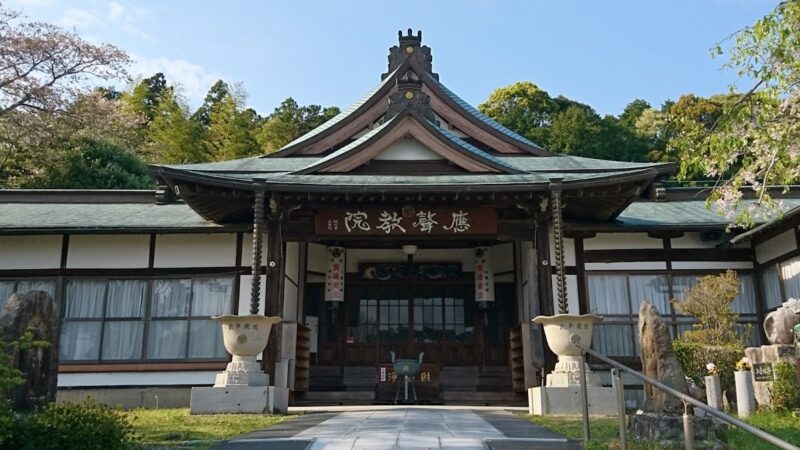
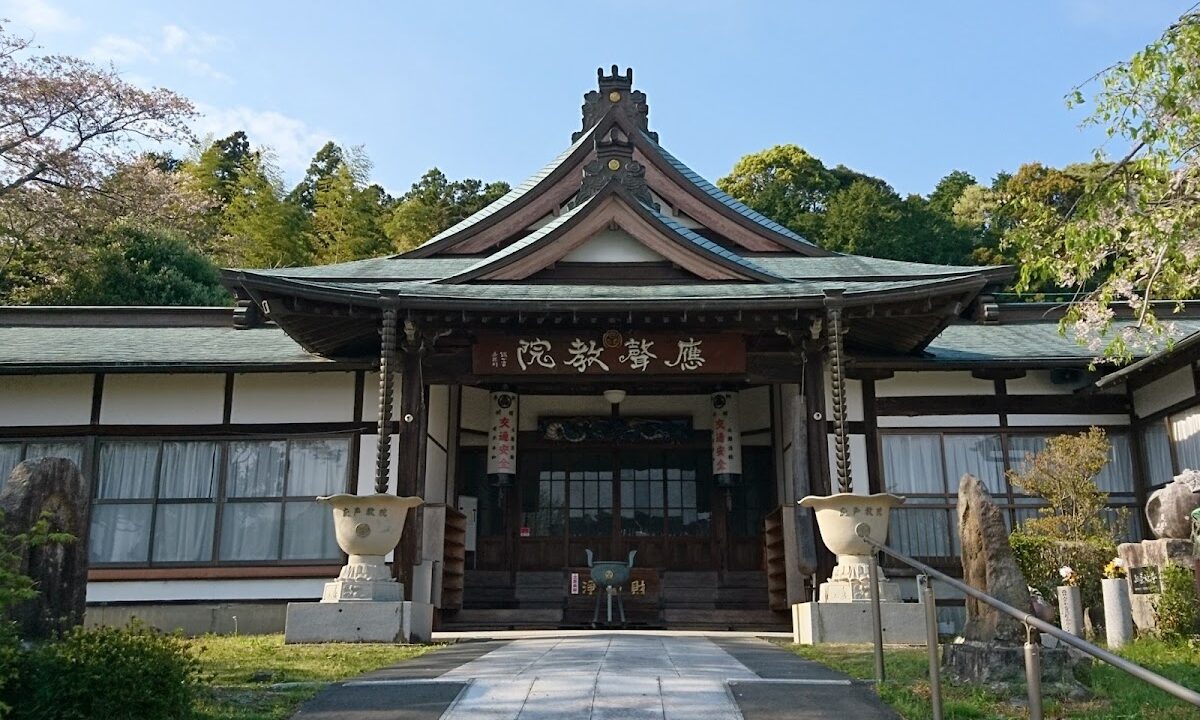
Main Hall
The main hall houses the principal image, Amida Buddha. Amida Buddha, the principal deity of the Jodo sect, is the Buddha who vowed to welcome all those who chant the Nembutsu (invocation of Amida Buddha) into the Western Pure Land.
Inside the main hall, religious services and ceremonies are held, and general visitors can also quietly offer their prayers. One can offer prayers in a solemn atmosphere within the hall.
View from the Temple Grounds
From the grounds of Osho-kyoin Temple, located on a small hill, you can enjoy a panoramic view of the rural landscape of Kikugawa City. The surrounding fields create particularly beautiful scenery during the fresh greenery of spring and the harvest season in autumn.
One of the charms of Osho-kyoin Temple is the opportunity to find peace of mind while experiencing the nature of Enshu in its tranquil grounds.
Religious Services and Events Held at Osho-kyoin Temple
Osho-kyoin Temple holds various religious services and events throughout the year.
Regular Memorial Services
- Monthly Memorial Service: Memorial service held every month on the anniversary of death
- Spring and Autumn Equinox Service: Memorial service held around the spring and autumn equinoxes
- Obon Memorial Service: Obon service for ancestors
Various Memorial Services
Oshokyoin accepts the following types of memorial services:
- Perpetual Memorial Service: Perpetual memorial service for those without successors or those who do not wish to burden their descendants
- Memorial Service for Stillborn Children: A memorial service to comfort the spirits of stillborn children
- Ancestral Memorial Service: Memorial service for the ancestors of each family
- Various Anniversary Memorial Services: From the first anniversary to the fiftieth anniversary
Prayers
Oshokyoin also accepts the following types of prayers:
- Prayer for Conception: A prayer for the blessing of children.
- Matchmaking and Marital Harmony: A prayer for successful relationships and deepening the bond between spouses.
- Prayer for Protection from Evil: A prayer for protection from evil during unlucky years.
- Prayer for Traffic Safety: A prayer for accident-free travel.
About Cemeteries and Perpetual Memorial Services
Oshokyoin Temple also offers cemetery plots for sale, allowing you to honor your ancestors in a peaceful environment.
General Cemeteries
In the temple’s cemetery, burial with traditional tombstones is possible. Many residents of Kikugawa City and surrounding areas utilize this service.
Perpetual Memorial Graves
For those without successors or those who do not wish to burden their descendants with grave maintenance, perpetual memorial graves are available. The temple takes responsibility for continuing perpetual memorial services, providing peace of mind.
For details, please contact Oshokyoin Temple directly.
Osho-kyoin and Honen Shonin
When discussing Osho-kyoin, its deep connection to Honen Shonin, the founder of the Jodo (Pure Land) sect, is indispensable.
Who was Honen Shonin?
Honen Shonin (1133-1212) was a Buddhist monk who was active from the late Heian period to the early Kamakura period, and is the founder of the Japanese Jodo sect. After studying the Tendai sect at Mount Hiei, he preached the doctrine of exclusive recitation of the Buddha’s name, “Namu Amida Butsu,” stating that everyone can equally attain rebirth in paradise simply by chanting the name. He founded the Jodo sect, a new Buddhist sect.
Honen Shonin and Totomi Province
In 1207, Honen Shonin was exiled to Sanuki Province (present-day Kagawa Prefecture) due to the suppression of the Nembutsu practice. It is believed that he traveled around the eastern provinces before and after his exile.
When Honen Shonin visited Tōtōmi Province (present-day western Shizuoka Prefecture), he visited Sakuragaike Pond (present-day Omaezaki City), a place associated with his mentor, Kōen Ajari. Legend says that Kōen Ajari threw himself into Sakuragaike Pond, vowing to enter into meditation until the appearance of Maitreya Bodhisattva.
After paying his respects at Sakuragaike Pond in memory of his mentor, Honen Shonin stopped at Tenkakuin Temple (present-day Ōshōkyōin Temple) and converted it into a Jōdo-shū temple.
As a Jōdo-shū Hub in the Tōkai Region
This conversion made Ōshōkyōin Temple an important Jōdo-shū hub temple in the Tōkai region. As a temple directly converted by Honen Shonin, it holds a special place in the history of Jōdo-shū.
Even today, Ōshōkyōin Temple continues to attract local devotion as a temple that preserves and transmits the teachings of Jōdo-shū.
Tourist Attractions Around Oshokyoin Temple
When visiting Oshokyoin Temple, we recommend also visiting the surrounding tourist attractions.
Sakuragaike Pond
Sakuragaike Pond, said to have been visited by Honen Shonin, is about a 30-minute drive from Oshokyoin Temple (Omaezaki City). This mystical pond is associated with the legend of the death of Koen Ajari, and a traditional event called “Ohitsu-osame” (offering of rice containers) is held here every October.
Ogasayama Mountain
Ogasayama Mountain, a symbol of Kikugawa City, is a low mountain at 264m above sea level, but the view from the summit is magnificent, making it a popular hiking destination.
Tea Plantations in Kikugawa City
Kikugawa City is one of Shizuoka Prefecture’s leading tea-producing areas. Beautiful tea plantations spread around Oshokyoin Temple, and a vibrant green carpet of tea fields spreads out, especially during the new tea season (late April to May).
Kakegawa Castle
Kakegawa Castle, located in the neighboring city of Kakegawa, is about a 20-minute drive from Oshokyoin Temple. Known as Japan’s first fully restored wooden castle tower, this magnificent castle still conveys the atmosphere of the Sengoku period.
Notes and Manners for Visiting
When visiting Oshokyoin Temple, please note the following points:
Basic Visiting Manners
- Bow at the Temple Gate: When passing through the temple gate, bow before entering.
- Be Quiet: Act quietly within the temple grounds and be considerate of other visitors.
- Photography: Photography of cultural properties is permitted, but please refrain from taking pictures inside the main hall or during religious ceremonies.
- Dress Code: There are no specific rules, but please avoid revealing clothing and dress modestly.
Visiting Hours
The temple grounds are generally open for free visits during the day, but if you wish to visit the main hall or receive a temple stamp, it is recommended to check with the temple in advance.
Parking
A parking lot for visitors is available, but it may be crowded during religious ceremonies. Please use the facilities with a spirit of consideration for others.
Summary of the Charms of Oshokyoin Temple
Oshokyoin Temple is a valuable cultural heritage site in Kikugawa City, Shizuoka Prefecture, as an ancient temple with a history of over 1100 years.
Historical Value: Founded by Jikaku Daishi Ennin and converted to the Jodo sect by Honen Shonin, it leaves an important mark on the history of Japanese Buddhism.
Cultural Property: The vermilion-lacquered temple gate, designated as a National Important Cultural Property, is a valuable structure that conveys the architectural style of the early Edo period.
Place of Worship: Even today, it attracts the faith of local people and serves as a spiritual haven through perpetual memorial services and various Buddhist ceremonies.
Harmony with Nature: Located on a small hill in a rural area, the temple grounds, enveloped in tranquility, offer peace of mind to visitors.
When you visit Shizuoka Prefecture, be sure to visit Oshokyoin Temple and experience its history, culture, and serene atmosphere. The vermilion-lacquered gate of Oshokyoin Temple welcomes visitors, making it a special place where you can feel the weight of faith and culture that has been passed down through the ages.
Related Information & Inquiries
Temple Name: Matsukaze Reizan Gokoku Honji Oshokyoin
Sect: Jodo-shu (Pure Land Buddhism)
Principal Image: Amida Buddha
Location: Nakauchida, Kikugawa City, Shizuoka Prefecture
Cultural Property: Oshokyoin Temple Gate (Nationally Designated Important Cultural Property)
For detailed information and to apply for memorial services, please contact Oshokyoin Temple directly.
Oshokyoin Temple is a precious cultural heritage site that Shizuoka Prefecture is proud of, open to history buffs, architecture enthusiasts, and all those seeking peace of mind. Please experience its solemn atmosphere for yourself.