Jizai-zaka Shrine (Hiroshima Prefecture) Complete Guide | History, Access, and the Charm of the Kagura Stage
Jizai-zaka Shrine, located in Ushita-shinmachi, Higashi-ku, Hiroshima City, is a historic shrine within walking distance of Fudōin-mae Station. Historically known as “Sarugū” (Monkey Shrine) and “Chinju Hachiman-sha” (Guardian Hachiman Shrine), it has long been revered as the guardian deity of Ankoku-ji Temple (present-day Fudōin Temple). This article provides a comprehensive overview of Jizai-zaka Shrine, including its detailed history, enshrined deities, access methods, distinctive Kagura stage, and the charm of its autumn festival.
Basic Information on Jizai-zaka Shrine
Jizai-zaka Shrine is a shrine located in Ushita-shinmachi, Higashi-ku, Hiroshima City, Hiroshima Prefecture, and is a beloved local guardian deity.
Location: 3-5-20 Ushita Shinmachi, Higashi-ku, Hiroshima City, Hiroshima Prefecture 732-0068 (Also sometimes listed as 3-3-1)
Nearest Stations:
- Approximately 3 minutes on foot (approx. 266m) from Fudōin-mae Station on the Astramline
- Approximately 11 minutes on foot (approx. 845m) from Gion Shinbashi Kita Station on the Astramline
The shrine boasts excellent transportation access, making it easily accessible from central Hiroshima City via the Astramline.
History and Origins of Jizai-zaka Shrine
Jizai-zaka Shrine has a long history, believed to have been enshrined in this location since ancient times. Its history reveals several important changes.
Ancient Enshrinement and the Name “Sarugyu”
It has been enshrined in this location since ancient times and was also known as “Sarugyu” (Monkey Shrine). This name is thought to be related to the enshrined deity and the local religious practices.
As the Guardian Deity of Ankoku-ji Temple (Fudo-in Temple)
Jizai-zaka Shrine played an important role as the guardian deity of the renowned temple formerly known as Ankoku-ji Temple, now Fudo-in Temple. Therefore, it was called “Chinju Hachiman-sha” (Guardian Hachiman Shrine), and there was a period when it was a syncretic Shinto-Buddhist entity, with the temple and shrine integrated. Fudo-in Temple is one of the oldest temples in Hiroshima City, and the fact that Jizai-zaka Shrine was revered as its guardian deity speaks to the high status of this shrine.
The Establishment Theory of 1339
One theory suggests that the shrine was established in 1339 (Rekio 2). This falls within the Nanboku-cho period, suggesting the possibility that it was formally established as a shrine during this time.
Renaming in Meiji 3 (1870)
With the Meiji Restoration, the Shinto-Buddhist Separation Order led to the nationwide separation of shrines and temples. In this context, the shrine was renamed from “Chinju Hachiman-sha” to “Jizai-zaka Shrine” in Meiji 3 (1870). This name change established the current shrine name.
Relocation in 1985
A noteworthy event in the history of Jizai-zaka Shrine is its relocation in March 1985. Due to the construction of Gion Shindo, the shrine was moved from its old location at the bridge crossing to its current site. This relocation was a crucial decision to balance urban development with the preservation of a traditional place of worship, and was achieved with the cooperation of local residents. The current shrine buildings and grounds were developed after this relocation.
Deities and Divine Virtues
Jizai-zaka Shrine is considered to have a strong character as a Hachiman shrine, with Hachiman (Emperor Ojin) as its principal deity. Hachiman is widely worshipped as the god of military fortune and victory, and has also been revered as the guardian deity and tutelary deity of the region.
The following divine blessings can be expected:
- Family Safety: As the local guardian deity, it protects the peace and well-being of families.
- Health and Longevity: Prayers are offered for the health and longevity of worshippers.
- Protection from Misfortune and Good Fortune: It wards off disasters and brings good fortune.
- Academic Success: Emperor Ojin is also worshipped as the god of learning.
- Traffic Safety: In modern times, due to its proximity to a major transportation hub, prayers for traffic safety are also offered.
Characteristic Facilities of Jizai-zaka Shrine
Magnificent Permanent Kagura Stage
The most distinctive feature of Jizai-zaka Shrine is the magnificent Kagura stage located within its grounds. This stage is a permanent stone structure, and its size and grandeur surprise many worshippers.
While most shrines erect temporary stages during festivals, Jizai-zaka Shrine has a permanent stone stage, demonstrating its deep respect for Kagura culture and strong commitment to the region’s traditional performing arts. The presence of this stage indicates that Jizai-zaka Shrine functions not only as a place of worship but also as a center of local culture.
Atmosphere of the Shrine Grounds
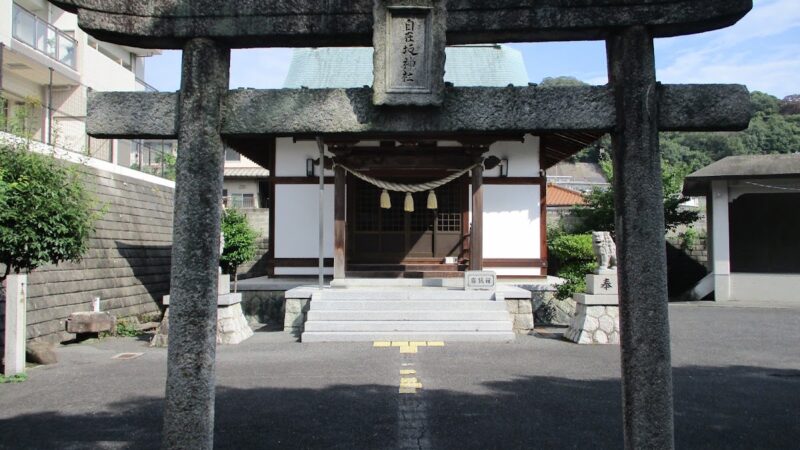
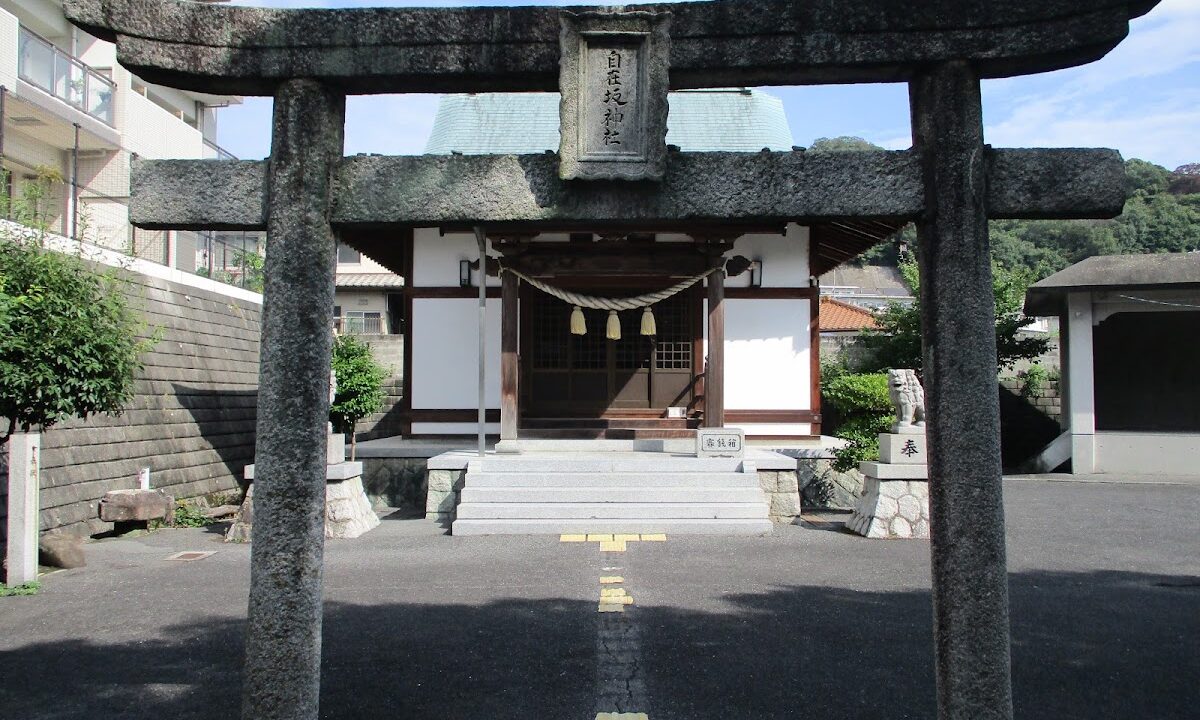
Despite being located in the residential area of Ushida Shinmachi, the shrine grounds are enveloped in a tranquil atmosphere. The grounds, which were renovated after the shrine’s relocation in 1985, are kept clean, reflecting the careful management by local residents.
Autumn Festival and Kagura Performance
The Jizai-zaka Shrine Autumn Festival is a beloved and important annual event in the community. The Kagura performance, in particular, is the highlight of the shrine’s festival.
Performance by Kagura Troupes from Northern Hiroshima Prefecture
At the Autumn Festival, authentic Kagura troupes are invited from northern Hiroshima Prefecture, including Aki-Takata City, where Kagura is thriving, to perform. Northern Hiroshima Prefecture is sometimes called the “Kingdom of Kagura,” and its traditional Kagura culture remains strong. Having these authentic Kagura troupes perform in Hiroshima City is a valuable opportunity for cultural experience. ### Performances Offered
In past autumn festivals, the following performances have been offered:
- Akuko-den: A performance depicting the battle between a fox spirit and the gods.
- Takiyasha-hime: The story of Takiyasha-hime, the daughter of Taira no Masakado.
- Yamata no Orochi: A representative performance based on the myth of Susanoo-no-Mikoto slaying the Yamata no Orochi (eight-headed serpent).
These performances, featuring gorgeous costumes, powerful dances, and musical accompaniment by flutes and drums, captivate the audience. “Yamata no Orochi” in particular is a popular and representative Kagura performance, with the battle scene between the serpent and the gods being breathtaking.
Viewing on the Kagura Stage
The opportunity to watch Kagura on a magnificent permanent stone stage is a unique charm of Jizai-zaka Shrine. The Kagura performances on the spacious stage allow you to fully appreciate the performers’ movements and experience the essence of traditional performing arts. During the autumn festival season, it’s a popular event attracting not only local residents but also Kagura (traditional Shinto dance) enthusiasts.
Nearby Attractions
Fudoin Temple
Fudoin Temple, formerly the guardian temple of Jizai-zaka Shrine, is within walking distance. This ancient temple boasts numerous important cultural properties, including the National Treasure Golden Hall, making it one of the most historically significant temples in Hiroshima City. When visiting Jizai-zaka Shrine, a visit to Fudoin Temple is highly recommended.
History of the Ushida District
The Ushida district is located in the northeastern part of Hiroshima City and has developed as a long-established residential area. Surrounded by tributaries of the Ota River, it was once a rural area but is now a quiet residential neighborhood. Historic temples and shrines are scattered throughout the area, making it suitable for historical walks.
Detailed Access Information
Access by Public Transportation
Using the Astramline:
- Board the Astramline from central Hiroshima (e.g., Hondori Station)
- Get off at “Fudoin-mae Station” (approximately 15 minutes from Hondori Station)
- Jizai-zaka Shrine is approximately a 3-minute walk from the station.
The Astramline is Hiroshima City’s new transit system, connecting central Hiroshima with the northern area. Fudoin-mae Station is a relatively small station, but the route from the station to the shrine is easy to follow, and you can reach it in a few minutes on foot through a residential area.
Access by Car
It takes approximately 15-20 minutes by car from central Hiroshima. However, it is recommended to check in advance whether there is a dedicated parking lot on the shrine grounds. Since the surrounding area is residential, avoid street parking and use nearby coin-operated parking lots or public transportation.
Manners and Precautions for Visiting a Shrine
Basic Worship Etiquette
- Bow before passing through the torii gate: As a sign of respect before entering the sacred area.
- Purify yourself at the water basin: Purify your left hand, right hand, and mouth in that order.
- Etiquette in front of the main hall: Two bows, two claps, and one bow is the basic ritual.
- Worship quietly: As the shrine is located in a residential area, please be considerate of the neighbors.
Photography
Photography is generally permitted on the shrine grounds, but please be considerate of festivals and other worshippers. Especially during Kagura performances, please take photos from a position that does not obstruct the performers.
About Goshuin (Shrine Seals)
Regarding the issuance of Goshuin at Jizai-zaka Shrine, there may not be a permanent shrine office. If you wish to receive a Goshuin, it is recommended to inquire in advance with the Hiroshima Prefectural Shrine Association or a nearby shrine. Smaller shrines may only offer Goshuin on special days such as annual festivals.
The Role of Jizai-zaka Shrine in the Community
Jizai-zaka Shrine, as the tutelary shrine of the Ushida Shinmachi district, serves as a spiritual pillar for the local community. Annual events, including the autumn festival, bring together local residents and provide a place for intergenerational exchange.
Despite undergoing a major change with the relocation of the shrine in 1985, Jizai-zaka Shrine has been preserved to this day through the faith and cooperation of the local people. In the increasingly urbanized city of Hiroshima, it can be considered a valuable example of tradition and modernity coexisting.
Comparison with Other Shrines in Hiroshima Prefecture
Hiroshima Prefecture boasts numerous famous shrines, including the World Heritage site Itsukushima Shrine and Hiroshima Gokoku Shrine. While smaller than these large shrines, Jizai-zaka Shrine possesses unique value as a community-oriented tutelary shrine and a place for preserving and passing down Kagura culture.
The warm, community-rooted atmosphere and authentic Kagura stage, features not found in larger shrines, are unique charms of Jizai-zaka Shrine.
Recommended Time to Visit
Autumn Festival Season
The most recommended time to visit is during the autumn festival, when Kagura (sacred Shinto music and dance) is performed. Specific dates may vary from year to year, so it’s recommended to check local information or the Hiroshima Prefectural Shrine Association website beforehand.
Regular Visits
For regular visits, you can visit anytime throughout the year. Especially during the seasons of fresh greenery and autumn leaves, the surrounding nature is beautiful, making for an enjoyable visit combined with a stroll.
Summary
Jizai-zaka Shrine is a historical shrine located in Ushita-shinmachi, Higashi-ku, Hiroshima City. Historically, it has long been revered as the guardian deity of Fudoin Temple and as the local tutelary deity. Despite undergoing a major change with the relocation in 1985, it has been preserved to this day through the cooperation of the local people.
Notably, it boasts a magnificent permanent stone Kagura stage, and during the autumn festival, it invites a full-fledged Kagura troupe from northern Hiroshima Prefecture to perform Kagura – a truly cultural endeavor. This Kagura stage demonstrates that Jizai-zaka Shrine functions not only as a place of worship but also as a hub of local culture.
With excellent access, just a 3-minute walk from Fudoin-mae Station on the Astramline, it’s easily accessible from central Hiroshima. Visiting both Jizai-zaka Shrine and Fudoin Temple will allow you to experience the region’s history and culture more deeply.
Nearby in a quiet residential area, Jizai-zaka Shrine preserves and passes down the traditional performing art of Kagura. When visiting Hiroshima, it’s definitely worth a visit. The Kagura performance during the autumn festival, in particular, is a wonderful cultural experience well worth seeing.