Complete Guide to Okoppe Shrine (Hokkaido) | History, Deities, Goshuin (Shrine Seals), and Festival Information
Okoppe Shrine, located in Okoppe-cho, Monbetsu-gun, Hokkaido, is a historic shrine founded during the Meiji era’s pioneering period. As the tutelary shrine of Okoppe-cho, facing the Sea of Okhotsk, it has been revered by local residents. This article comprehensively introduces information useful for visiting Okoppe Shrine, including its detailed history, enshrined deities, goshuin information, annual festivals, highlights within the shrine grounds, and access methods.
Basic Information on Okoppe Shrine
Okoppe Shrine is located at 1066 Okoppe, Okoppe-cho, Monbetsu-gun, Hokkaido. It is situated on a hill overlooking the sea along National Route 238, within Okoppe Park, near the T-junction of Hokkaido Prefectural Road 334 (Nakamo-Okoppe-Okoppe Line) and Hokkaido Prefectural Road 1055 (Monbetsu-Okoppe Line).
Location: 1066 Okoppe, Okoppe-cho, Monbetsu-gun, Hokkaido 098-1600
Management: Currently managed by Omu Shrine, the shrine is unmanned, but the approach is properly maintained with snow removal.
Affiliation: Affiliated with the Hokkaido Shrine Association
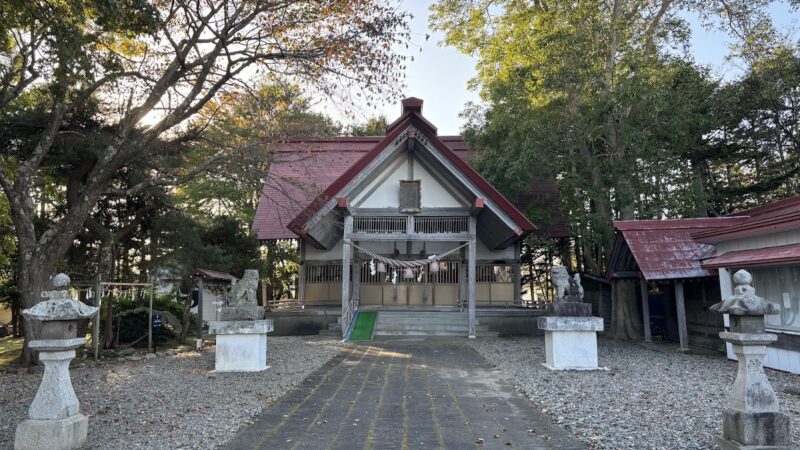
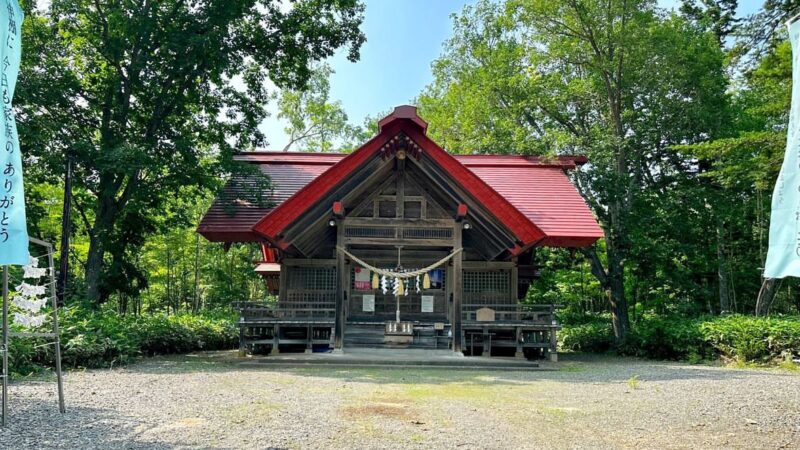
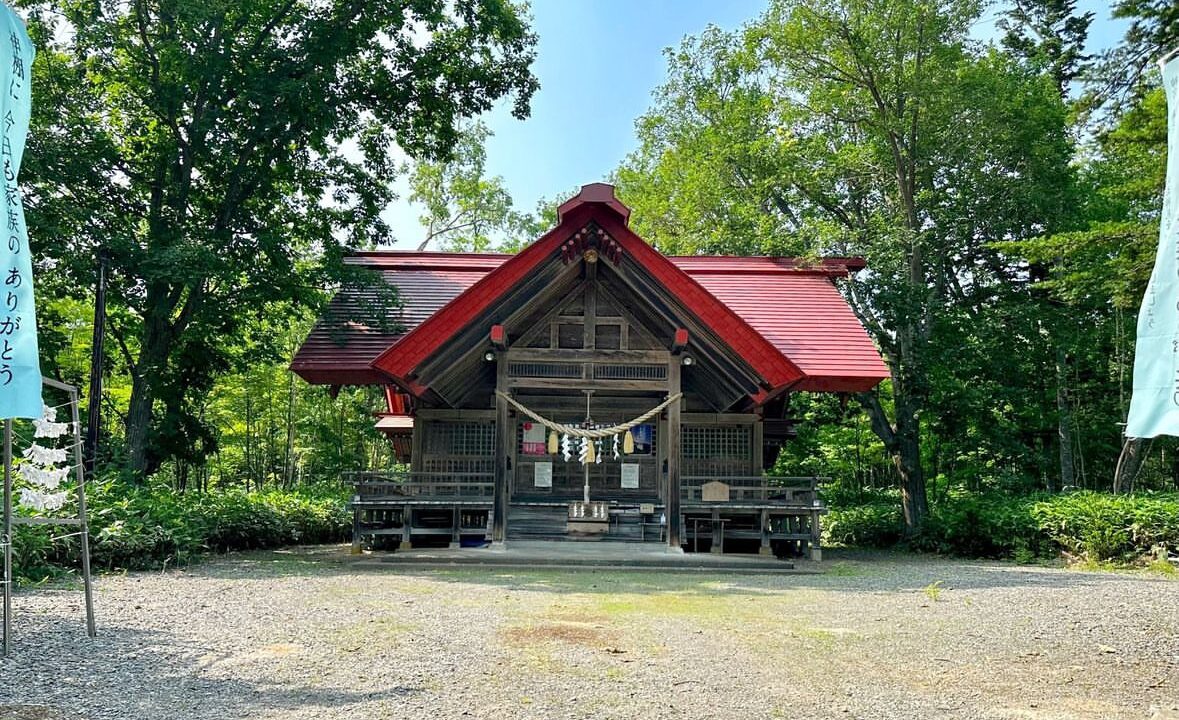
The shrine features a distinctive red roof and stands in a quiet environment surrounded by the greenery of Okoppe Park.
Deity Enshrined
The deity enshrined at Okoppe Shrine is Amaterasu Omikami.
Amaterasu Omikami is the supreme deity in Japanese mythology, known as the personification of the sun. She is the ancestral deity of the Imperial Family and is also enshrined at the Inner Shrine of Ise Grand Shrine. She is believed to bestow blessings such as abundant harvests, national peace and security, and good fortune. During the Hokkaido pioneering period, she was enshrined by the collective will of the residents who prayed for peace and prosperity in their new land.
History of Okoppe Shrine
Founding (1899)
The history of Okoppe Shrine begins in September 1899, during the early stages of the town’s development. At that time, as Hokkaido’s development progressed, the residents who had settled in Okoppe united their will, and Tsunemon Sakai, the head of the Toyama Prefecture immigration group, and others initiated the construction of a small shrine in the Okoppe wilderness (Kita-Okoppe area).
The enshrinement of Amaterasu Omikami in this small shrine is considered the founding of Okoppe Shrine. It was a construction imbued with the hopes of our ancestors who sought a place of faith to serve as a spiritual anchor in the harsh environment of development.
Relocation to the City Center (Early Taisho Period)
Although the shrine was initially located in the Okoppe wilderness (Kita-Okoppe), the development of Okoppe’s city center progressed in the early Taisho period. Accordingly, the shrine was relocated to its current location on a hill in Midorigaoka, making it more accessible to a wider range of residents.
This relocation strengthened Okoppe Shrine’s role as the local guardian shrine, as it is now more easily accessible from the town center.
To the Present
Through the Meiji, Taisho, Showa, Heisei, and Reiwa eras, Okoppe Shrine has continued to serve as a spiritual anchor for the local residents. Currently, it is an unmanned shrine under the management of Omu Shrine, but activities are underway to revitalize the shrine and reaffirm its role as a community center and guardian shrine.
As a shrine with over 120 years of history, having walked hand in hand with the development of Okoppe Town, it continues to watch over the community.
Highlights of the Shrine Grounds
Shrine Building
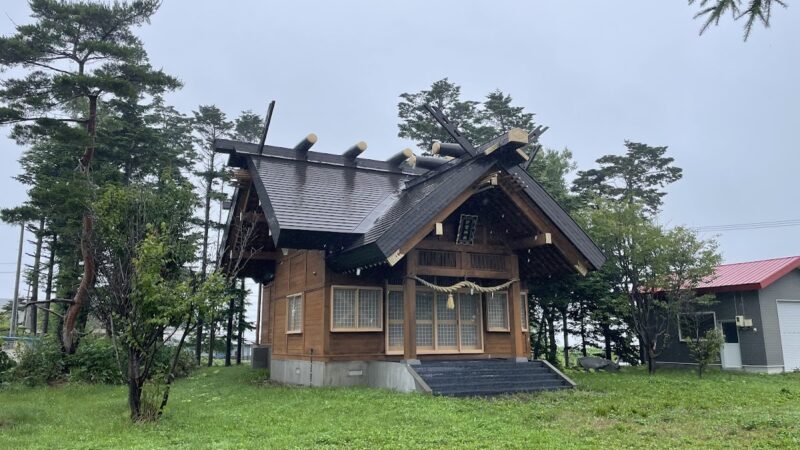
Okoppe Shrine’s building is characterized by its red roof, creating a beautiful contrast with the surrounding greenery. The wooden building is sturdily constructed to withstand Hokkaido’s climate, telling the story of its history of enduring the harsh winters of Okhotsk. ### Monument to the War Dead
A Monument to the War Dead stands within the shrine grounds. This stone monument commemorates those who died in the war, specifically those from Okoppe Town who perished on the battlefield. It stands quietly as an important cultural asset that conveys the history of the region.
Soma Okami Monument
Another stone monument, the Soma Okami Monument, also stands within the shrine grounds. This demonstrates the diversity of beliefs during the pioneering period and is evidence of Okoppe Shrine’s history of accepting various local faiths.
Okoppe Park
Okoppe Shrine is located within Okoppe Park, allowing visitors to enjoy a stroll through the park after their visit. From the hilltop, you can also enjoy views of the Sea of Okhotsk, especially on clear days.
Goshuin (Shrine Seal) and Goshuincho (Shrine Seal Book) Information
Okoppe Shrine is currently unmanned, therefore direct issuance of Goshuin (shrine seals) at the shrine is not available.
However, it may be possible to obtain a pre-printed goshuin (seal) of Okoppe Shrine at Omu Shrine, which manages Okoppe Shrine. Those wishing to receive a goshuin are advised to contact Omu Shrine directly.
Omu Shrine Information:
- Location: Omu-cho, Monbetsu-gun, Hokkaido
- Shrines managed by: Multiple shrines, including Okoppe Shrine
Regarding goshuin notebooks, while Okoppe Shrine does not have its own, you will likely receive a goshuin in a notebook issued by the Hokkaido Shrine Association or other shrines.
Okoppe Shrine Festival (Annual Grand Festival)
Okoppe Shrine holds its annual Autumn Grand Festival, known as the “Okoppe Shrine Festival,” which is an important annual event in the region.
Dates
It is typically held over two days, September 9th and 10th.
Festival Details
The main festival on September 10th includes the following traditional events:
- Purification Ceremony at the Shrine: The festival begins with a purification ceremony performed by Shinto priests.
- Portable Shrine Procession: After the purification ceremony at the shrine, the portable shrine is paraded through the town. This is an important Shinto ritual praying for the safety and good health of the residents.
- Horse Dance: The horse dance, a traditional performing art of the Okoppe region, is performed alongside the portable shrine as it parades through the town. Dancers in colorful costumes perform a magnificent dance.
- Yakko-san (Yakko-buri): A traditional procession called the Yakko-gyoretsu adds to the festive atmosphere.
- Stalls: Numerous stalls are set up during the festival, providing entertainment for local residents.
Significance of the Festival
The Okoppe Shrine Festival is more than just a religious event; it also serves as an important community event where residents of the Okoppe district gather together. It provides a place for intergenerational exchange and an opportunity to pass on the region’s traditional culture to future generations.
Main Annual Events
In addition to the Autumn Grand Festival, the following Shinto rituals are performed at Okoppe Shrine:
- New Year’s Day Festival: January 1st, prayers for happiness in the new year
- Spring Festival: prayers for a bountiful harvest in spring
- Autumn Grand Festival: September 9th and 10th, the most important annual event
- Niiname-sai (Harvest Festival): November 23rd, thanksgiving for the harvest
For specific dates and details, please contact the managing shrine, Omu Shrine, or the Hokkaido Shrine Association.
Access Methods
Access by Car
The most convenient way to access Okoppe Shrine is by car.
From Asahikawa:
- Head north on National Route 238, approximately 3 hours 30 minutes.
- Enter the town of Okoppe and head towards Okoppe Park on the hill.
From Monbetsu:
- Head north on National Route 238, approximately 40 minutes.
- Head to the hill overlooking the sea in the town of Okoppe.
From Abashiri:
- Head south on National Route 238, approximately 1 hour 30 minutes.
Parking is available at the parking area of Okoppe Park.
Access by Public Transportation
Nearest Station: JR Hokkaido “Nisshin Station” (Sekihoku Main Line)
- However, there is a considerable distance from Nisshin Station to Okoppe Town, and direct public transportation is limited.
Bus:
- There are local buses operating within Okoppe Town, but the number of buses is limited, so it is recommended to check the timetable in advance.
- There are also intercity bus routes from Monbetsu City that pass through Okoppe Town. Taxis:
- There are taxi companies within Okoppe Town, which can be used for transportation within the town.
Google Maps
You can find the exact location by searching for “Okoppe Shrine” or “1066 Okoppe, Okoppe-cho, Monbetsu-gun, Hokkaido”. You can also search using your car’s navigation system.
Manners and Etiquette for Visiting Shrines
When visiting Okoppe Shrine, please observe the following basic shrine visiting etiquette.
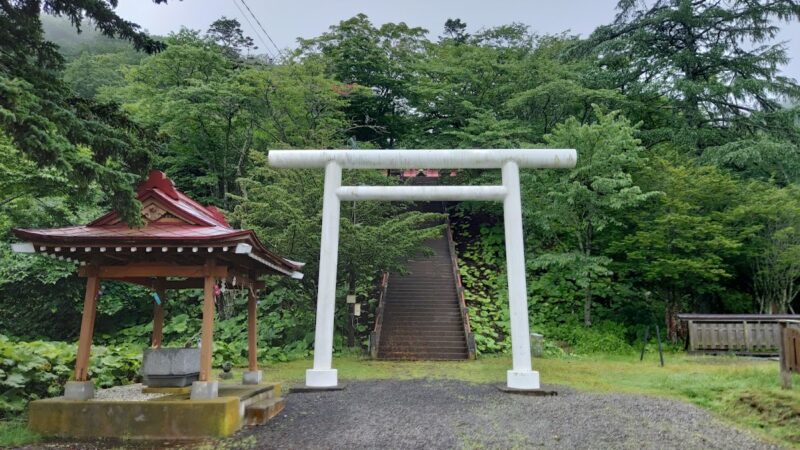
How to Pass Through a Torii Gate
- Bow before the torii gate.
- Walk along the edge of the path, as the center is considered the path of the gods.
How to Wash Your Hands at the Water Basin
If there is a water basin:
- Take the ladle with your right hand and wash your left hand.
- Switch the ladle to your left hand and wash your right hand.
- Switch the ladle back to your right hand, receive water in your left hand, and rinse your mouth.
- Wash your left hand again.
- Stand the ladle upright to wash the handle and return it to its original position.
How to Worship at the Shrine Hall
- Quietly place your offering in the offering box.
- Ring the bell if there is one.
- Worship using the two bows, two claps, one bow method.
- Bow deeply twice.
- Clap your hands twice.
- Finally, bow deeply once.
Mindset at an Unmanned Shrine
Okoppe Shrine is currently an unmanned shrine, but the gods still reside there. Even without a resident Shinto priest, let’s visit with a reverent heart.
About Okoppe Town
Okoppe Town is located in Monbetsu District, under the jurisdiction of the Okhotsk General Subprefectural Bureau of Hokkaido, and faces the Sea of Okhotsk. With a population of approximately 3,800 (as of 2023), it is a town rich in nature, with dairy farming and fishing as its main industries.
Highlights of Okoppe Town
Drift Ice of the Sea of Okhotsk: In winter, drift ice reaches the shore, allowing visitors to observe a magnificent natural phenomenon.
Dairy Farming Experience: There are many dairy farms in the town, and dairy products such as milk and cheese are local specialties.
Omusaro Primeval Flower Garden: In early summer, a beautiful primeval flower garden blooms with a variety of colorful flowers.
Michi-no-Eki Okoppe: A tourist hub where you can purchase local specialties.
History of Okoppe Town
The name Okoppe is said to originate from the Ainu word “Okoppe” (place where the river mouth is blocked). Full-scale development began in the late Meiji era, with settlers from Toyama Prefecture and other areas leading the development. The founding of Okoppe Shrine is closely linked to this pioneering period.
Nearby Shrines
When visiting Okoppe Shrine, if you have time, why not visit the surrounding shrines as well?
Omu Shrine
This shrine manages Okoppe Shrine and is located in Omu Town, Monbetsu District. It is located just north of Okoppe Town, about a 30-minute drive away.
Shrines in Monbetsu City
Monbetsu City, located south of Okoppe Town, has several shrines, including Monbetsu Gokoku Shrine. You can visit them when touring shrines in the Okhotsk region.
Okoppe Shrine and Regional Revitalization
Okoppe Shrine is engaged in activities to revitalize the shrine, aiming to reaffirm its role as a local community center and to re-emphasize its role as a tutelary shrine. In rural areas experiencing population decline, shrines are expected to play a role not merely as religious institutions, but as centers of local communities. Efforts to deepen intergenerational exchange and community bonds continue through traditional events such as the Okoppe Shrine Festival.
Precautions When Visiting
Visiting in Winter
Hokkaido winters are extremely harsh, and Okoppe Town is no exception. Please note the following when visiting in winter:
- Take thorough precautions against the cold.
- Be careful of icy roads and wear non-slip shoes.
- The approach to the shrine is cleared of snow, but check the snow conditions beforehand.
- As the sun sets early, visiting during daylight hours is recommended.
Visiting in Summer
Summer in the Okhotsk region is relatively cool and comfortable, but:
- Wear a hat and sunscreen on sunny days.
- Don’t forget insect repellent.
- It can be windy as the shrine is located on high ground.
Observing Manners
- The shrine grounds are a sacred place. Please pray quietly and without making noise.
- Please take your trash with you.
- Photography is permitted, but please be considerate of other worshippers.
- Although it is an unmanned shrine, please treat the shrine buildings and grounds with care.
Hokkaido’s Shrine Culture
To understand Okoppe Shrine more deeply, let’s touch upon Hokkaido’s shrine culture.
Development and Shrines
Many shrines in Hokkaido, like Okoppe Shrine, were founded during the Meiji era’s pioneering period. People who settled from various parts of Honshu sought spiritual support by inviting branch shrines from their hometowns or by creating new shrines.
Characteristics of Hokkaido’s Shrines
- Relatively recent history (many founded after the Meiji era)
- Closely linked to the history of pioneering
- Robust shrine structures adapted to the harsh climate
- Due to their scattered locations across vast areas, many shrines are managed by a single shrine.
Inheritance of Ujigami Faith
In rural areas with declining populations, maintaining and managing shrines is a challenge. The practice of neighboring shrines taking over the management of a larger shrine, as seen at Okoppe Shrine, is becoming increasingly common among shrines in Hokkaido. Nevertheless, the faith in the shrine as the local guardian deity is passed down, and community ties are maintained through events such as the annual festival.
Summary
Okoppe Shrine has watched over the community as the guardian deity of Okoppe Town, Monbetsu District, Hokkaido, for over 120 years since its founding in 1899 (Meiji 32). Its history spans from a small shrine built by the collective will of the pioneers during the settlement period to its current location on Midorigaoka, reflecting its development alongside Okoppe Town.
Okoppe Shrine, with its distinctive red-roofed building and Amaterasu Omikami as its enshrined deity, is currently unmanned, but the worship environment is maintained under the appropriate management of Omu Shrine. The Okoppe Shrine Festival, held every September, is an important community event through traditional events such as the portable shrine procession and the Komadori dance.
When visiting Okoppe Town, a town blessed with abundant nature facing the Sea of Okhotsk, we highly recommend visiting Okoppe Shrine. Reflect on the history of its development and offer your prayers to the local guardian deity. The view of the Okhotsk Sea from the hilltop of Okoppe Park, along with the shrine’s scenery, will surely make for a memorable visit.
For those wishing to receive a Goshuin (shrine stamp), please contact the managing shrine, Omu Shrine. For detailed information, please inquire with the Hokkaido Shrine Association. We recommend visiting Okoppe Shrine as part of your Hokkaido shrine pilgrimage.