Complete Guide to Erimo Shrine (Hokkaido) | History, Goshuin (Shrine Seals), Access, and Annual Festival: A Thorough Explanation
Erimo Shrine, located near Cape Erimo at the southernmost tip of Hokkaido, is a historic shrine that has been revered by local people as the guardian deity of fishing and navigation since the Edo period. Originally situated at the very tip of Cape Erimo, the shrine has now relocated to the Misaki settlement and continues to attract many worshippers.
This article comprehensively covers everything you need to know before visiting Erimo Shrine, including its detailed history, enshrined deities, goshuin information, annual festival, access methods, and even points of interest at its former location.
Basic Information about Erimo Shrine
Official Name: Erimo Shrine (Erimo Jinja)
Location: 170-10 Misaki, Erimo-cho, Horozumi-gun, Hokkaido 058-0342
Former Shrine Rank: Village Shrine
Deity Enshrined: Ukemochi-no-kami
Annual Festival Date: September 9th (Autumn Grand Festival)
Telephone Number: 01466-2-2374 (Erimo Sumiyoshi Shrine)
Shrine Office: Unmanned (Goshuin stamps are available at Erimo Sumiyoshi Shrine)
Erimo Shrine is a shrine belonging to the Hokkaido Shrine Association. Currently unmanned, it is managed by its parent shrine, Erimo Sumiyoshi Shrine.
History and Origins of Erimo Shrine
Founding History (Bunka 11, 1814)
The history of Erimo Shrine dates back to the late Edo period. In Bunka 11 (1814), when Shimaya Sahei, a merchant from Hakodate, Kameda District (present-day Hakodate City), became a fishing grounds contractor for the district, he established an Inari shrine on a rock at Cape Erimo in Ogoshi Village (present-day Erimo Town).
From the beginning, the shrine enshrined Uke Mochi no Kami as its main deity, playing the role of a guardian deity for safe voyages and the prosperity of fishing grounds. The area around Cape Erimo has long been known as a rich fishing ground, blessed with abundant marine resources such as kelp, salmon, and trout. For those engaged in fishing, Erimo Shrine served as a spiritual support, a place to pray for safety at sea and a bountiful catch.
The Meiji Era Shrine Ranking System and Erimo Shrine
In 1875 (Meiji 8), when the Meiji government revised the shrine ranking system, Erimo Shrine was ranked as a village shrine. A village shrine, in the modern shrine ranking system, was ranked below prefectural shrines and local shrines, and was primarily given to shrines that enshrined the tutelary deity of a village.
This ranking established Erimo Shrine’s status as a public religious institution in the region, and it became an administratively recognized entity. At that time, the Erimo region was a settlement centered around fishing, and the shrine played a central role in the local community.
Development in the Showa Era and Designation as a Shrine Receiving Offerings of Sacred Food and Cloth
On September 9, 1944 (Showa 19), Erimo Shrine was designated as a shrine receiving offerings of sacred food and cloth. This designation signifies that the expenses for offerings (shinsen) and heihaku (heihaku, cloth offered to the gods) to the shrine are covered by public funds from the national or local government, indicating that the shrine’s importance to the region is officially recognized.
This designation can be seen as evidence that Erimo Shrine functioned not merely as a shrine for a single village, but as the center of faith for the entire region.
Relocation from Cape Erimo to its Current Location
Originally, Erimo Shrine was located on the tip of Cape Erimo, right on a rock jutting out into the Pacific Ocean. However, Cape Erimo is known as one of Japan’s windiest areas, with wind speeds exceeding 10 meters per second for more than 260 days a year. Due to these harsh natural conditions, the shrine was later relocated to its current location within the village of Misaki.
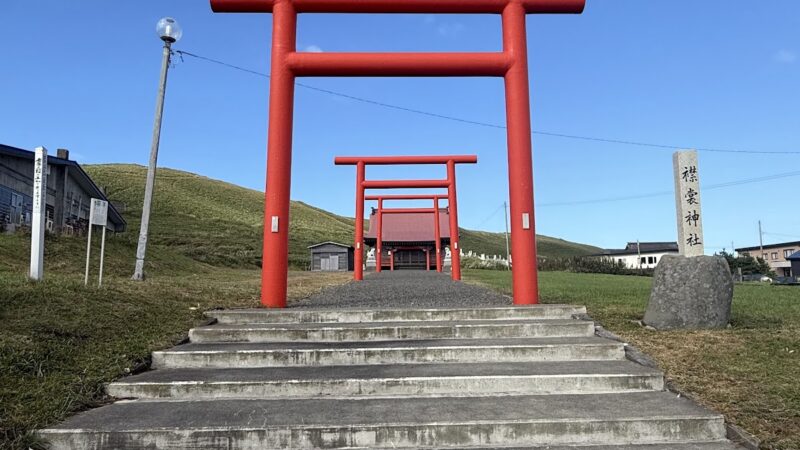
A small torii gate and a monument still remain at the former site of the shrine, allowing visitors to reminisce about the past as the “Former Site of the Erimo Shrine.” This former site can be visited during sightseeing at Cape Erimo, making it a valuable spot to experience the historical location where the shrine once stood.
About the Deity: Uke-mochi-no-kami
The deity enshrined at Erimo Shrine is Uke-mochi-no-kami. Uke-mochi-no-kami is a goddess of food in Japanese mythology. According to the *Nihon Shoki* (Chronicles of Japan), after being killed by Tsukuyomi-no-Mikoto, grains and livestock were born from her body.
The Divinity and Worship of Uke-mochi-no-kami
“Uke” in “Uke-mochi” means food, and “mochi” means to possess or have, literally meaning “the god who possesses food.” She is widely worshipped as a god of agriculture and food, and is believed to bring blessings such as bountiful harvests, abundant catches, and business prosperity.
Erimo Shrine has a particularly deep connection to fishing, and has been revered as a deity protecting the bounty of the sea and the safety of those engaged in fishing. Uke Mochi-no-Kami is sometimes identified with Inari-no-Kami, and the fact that Erimo Shrine was originally called “Inari Shrine” stems from this theological background.
Erimo’s Fishing and the Worship of Uke Mochi-no-Kami
Erimo Town is nationally known as a kelp producing area and is a major producer of Hidaka kelp. It is also a region blessed with abundant marine products such as salmon, trout, and sea urchins. As a deity that brings these blessings from the sea, the worship of Uke Mochi-no-Kami has been deeply intertwined with the lives of the local people.
Even today, during the annual festival, rituals are performed to pray for a bountiful catch and safety at sea, attracting many worshippers, including those involved in the local fishing industry.
Characteristics of the Grounds and Shrine Buildings of Erimo Shrine
Unique Grounds Layout
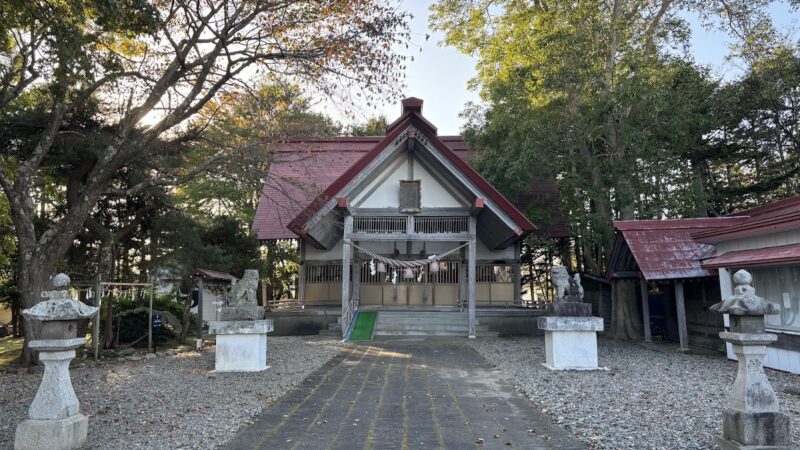
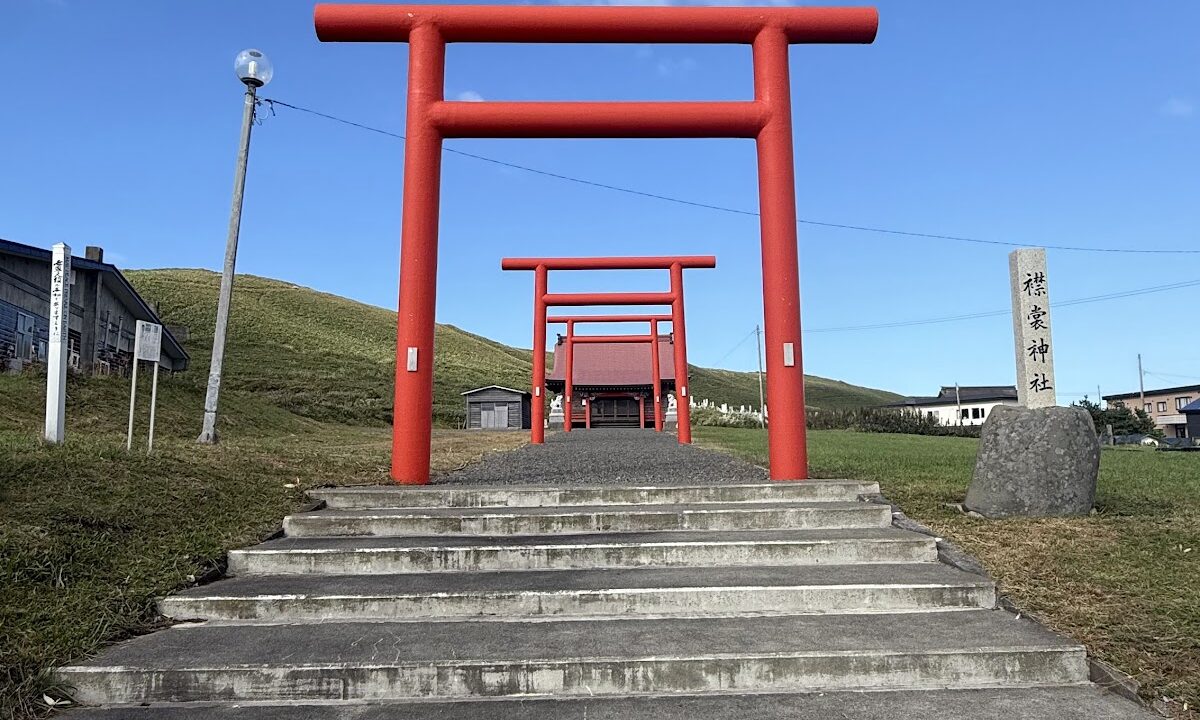
The grounds of Erimo Shrine have a unique atmosphere that differs from typical shrines. The torii gate stands directly by the roadside along Hokkaido Prefectural Road 34 (Erimo Park Line), and the torii gate and shrine building are positioned in an open plaza without a shrine forest, a somewhat unique configuration.
This is thought to be influenced by the natural environment, including the strong winds around Cape Erimo. Because the environment is unsuitable for tree growth, the dense shrine forests seen at many shrines do not form. Instead, the dignified shrine building standing proudly in the open space tells the story of the history of preserving faith amidst the harsh natural environment of Erimo.
Shrine Buildings and Komainu (Guardian Dogs)
A pair of komainu (guardian dogs) are placed on the grounds, welcoming visitors. The shrine building is a simple yet dignified wooden structure and is regularly maintained.
Located on a hilltop, the shrine grounds offer panoramic views of the surrounding landscape, allowing visitors to experience the natural beauty of Erimo, surrounded by the rough waves and strong winds of the Pacific Ocean, while offering prayers.
Torii Gate and Monument at the Former Shrine Site
At the tip of Cape Erimo, a small torii gate and monument mark the former location of Erimo Shrine remain. Inscribed with “Former Shrine Site of Erimo Shrine,” this is a historical site where the shrine once stood.
Visiting this former shrine site when you visit Cape Erimo will allow you to gain a deeper understanding of Erimo Shrine’s history. The torii gate, standing on a cliff battered by the rough waves of the Pacific Ocean, conveys the spirit of the ancestors who continued to uphold their faith amidst a harsh natural environment.
Information on Erimo Shrine’s Goshuin (Shrine Seal)
Where to Obtain Goshuin
Erimo Shrine is an unmanned shrine, therefore there is no shrine office. Those wishing to receive a Goshuin (temple/shrine stamp) can obtain one at the shrine office of the main shrine, Erimo Sumiyoshi Shrine.
Erimo Sumiyoshi Shrine
Address: 206 Honcho, Erimo-cho, Horozumi-gun, Hokkaido
Phone Number: 01466-2-2374
Features of the Goshuin
The Goshuin of Erimo Shrine uses the same stamp as that of Erimo Sumiyoshi Shrine (same stamp as the main shrine). The Goshuin will have the name of “Erimo Shrine” and the date of visit written in ink, and the shrine’s seal will be stamped on it.
If you wish to receive a Goshuin, it is recommended that you call Erimo Sumiyoshi Shrine in advance to confirm availability. Especially during winter or in bad weather, the shrine office may be unattended, so contacting them beforehand is recommended to ensure you receive one.
About Goshuincho (Stamp Books)
While Erimo Town doesn’t seem to have its own original goshuincho, you can have your stamped in your own goshuincho. For those visiting shrines throughout Hokkaido, the goshuin (stamp) from Erimo Shrine will be a precious addition to your collection.
Annual Festivals and Events
Autumn Grand Festival (September 9th)
The most important festival at Erimo Shrine is the Autumn Grand Festival, held annually on September 9th. During this festival, a solemn Shinto ritual is performed to express gratitude for a year’s abundant catch and to pray for safety at sea and a bountiful catch in the coming year.
Many parishioners and devotees, including those involved in the local fishing industry, attend the festival. A celebratory feast (naorai) is held after the ritual, providing an opportunity to deepen the bonds of the local community.
Other Annual Events
In addition to the annual festival, Erimo Shrine also holds other events such as the New Year’s Day Festival and monthly festivals, which are performed by the shrine’s priests. However, these ceremonies may not be open to the public, so if you wish to attend, it is recommended that you contact Erimo Sumiyoshi Shrine in advance.
Access to Erimo Shrine
Access by Car
The most convenient way to access Erimo Shrine is by car.
From Sapporo:
- Take the Hokkaido Expressway south and exit at Tomakomai East IC.
- Head east on National Route 235 (Hidaka National Highway).
- Pass through the town of Erimo and take Hokkaido Prefectural Road 34 (Erimo Park Line).
- Travel time: Approximately 3 hours 30 minutes to 4 hours.
From Obihiro:
- Take National Route 236 south.
- Pass through Hiroo and take National Route 336 to Erimo.
- Travel time: Approximately 2 hours 30 minutes.
Car Navigation Setting:
You can search using the address “170-10 Misaki, Erimo-cho, Horozumi-gun, Hokkaido” or the phone number “01466-2-2374”. It is located near Misaki Elementary School, just before Cape Erimo.
Access by Public Transportation
Using JR and Bus:
- Take a bus from JR Hidaka Main Line Mukawa Station (some sections are currently closed) or JR Obihiro Station.
- Get off at the “Misaki Elementary School” bus stop on the Donan Bus “Erimo Line”.
- Approximately 5 minutes on foot from the bus stop (approximately 368 meters).
Important Notes:
Public transportation is very limited, and some services are suspended, especially during winter. It is recommended to check the timetable in advance and plan your trip with ample time. Outside of the tourist season, renting a car is a more practical option.
Parking Information
Erimo Shrine has its own parking area, but it is not a large parking lot. It may get crowded during events such as the annual festival, so please try to arrive early.
If you are visiting Erimo Cape in conjunction with your shrine visit, you can also use the public parking lot (free) adjacent to the “Kaze no Yakata” (Wind Museum) at Erimo Cape.
Tourist Attractions Around Erimo Shrine
Cape Erimo
If you visit Erimo Shrine, be sure to also visit Cape Erimo. Cape Erimo is the point where the southernmost tip of the Hidaka Mountains sinks into the Pacific Ocean, and is designated as a national scenic spot.
Highlights:
- A grand panoramic view of the Pacific Ocean from the cliffs
- A group of reefs extending for approximately 7 kilometers from the cape
- Habitat of harbor seals (observable with binoculars)
- Cape Erimo Lighthouse (first lit in 1889)
This area is one of Japan’s windiest regions, with wind speeds exceeding 10 meters per second for more than 260 days a year, and is also known as the “Land of the Wind.” It is also famous as the setting for Shinichi Mori’s hit song “Cape Erimo.”
Wind Museum
Located on a hill overlooking Cape Erimo, this tourist facility is popular for its “Wind Experience,” where visitors can feel the wind of Erimo. Inside the museum, there’s a corner where you can experience a wind speed of 25 meters per second, and exhibits introducing the nature and history of Erimo.
From the observation room on the second floor, you can enjoy a panoramic view of Cape Erimo, and on a clear day, you can see all the way to the horizon of the Pacific Ocean.
Erimo Town Local History Museum “Horoizumi”
This museum allows you to learn about the history and culture of Erimo Town. It features exhibits on Ainu culture, the history of fishing, and the nature of Cape Erimo, and is also helpful in understanding the historical background of Erimo Shrine.
Hyakunin-hama Beach
This sandy beach stretches for approximately 15 kilometers along the eastern side of Erimo Town, boasting a beautiful coastline. Its name originates from a tragic history during the Edo period, when the bodies of over 100 people who drifted ashore from a shipwreck washed ashore.
Currently, a windbreak forest has been established, and from spring to summer, it is a scenic spot where coastal plants bloom in abundance.
Erimo Sumiyoshi Shrine
Let’s also visit Erimo Sumiyoshi Shrine, the main shrine where you will receive your Goshuin (shrine stamp). Located in Honmachi, Erimo Town, this is a historical shrine that also attracts the faith of the local community.
Etiquette and Precautions for Visiting Erimo Shrine
Shrine Visiting Manners
Although Erimo Shrine is an unmanned shrine, please observe basic shrine visiting manners.
- Bow before passing through the torii gate: This is a courtesy before entering the sacred area.
- Avoid walking in the center of the approach: The center is considered the path of the gods.
- Two bows, two claps, one bow: This is the general etiquette for visiting a shrine.
- Keep the shrine grounds clean: Always take your trash with you.
Clothing and Items to Bring
Erimo is a windy area, so cold and windproof clothing is essential, especially from autumn to spring.
Recommended Clothing and Items:
- Windproof windbreaker or jacket
- Hat (ideally with a strap to prevent it from blowing away)
- Comfortable walking shoes
- Camera (be careful not to let it blow away in the wind)
- Binoculars (for observing seals)
Suitable Season for Visiting
Erimo Shrine is open for worship year-round, but the impression varies greatly depending on the season.
Spring (April-June): Relatively calm days, making it an easy season to visit. You can also enjoy the spring flowers.
Summer (July-August): The tourist season, and Cape Erimo is bustling. It’s also a time when fog is likely to occur.
Autumn (September-November): The annual festival is held on September 9th, making it the most lively time for the shrine. The autumn leaves are beautiful, but the wind begins to pick up.
Winter (December-March): Very windy and bitterly cold. The rugged winter scenery of the Pacific Ocean is breathtaking, but be sure to dress warmly.
Regarding Photography
Photography is generally permitted within the shrine grounds, but please refrain from taking photos inside the shrine buildings. Also, please be considerate of other visitors.
The torii gate at the former location of the shrine on Cape Erimo is an excellent photo spot, but please take extra care to secure your tripod and camera during strong winds.
The Charm and Significance of Visiting Erimo Shrine
The greatest charm of Erimo Shrine lies in its historical background and the way its faith has been preserved amidst the harsh natural environment.
For over 200 years since the Edo period, this shrine has served as a spiritual anchor for people who made their living from fishing. It is not merely a tourist spot, but a place of worship deeply intertwined with the local lifestyle and culture.
The history of its relocation from the tip of Cape Erimo to its current location, and the shrine buildings maintained amidst the harsh natural environment of strong winds, tell the story of the wisdom and faith of people who have lived in harmony with nature.
Through your visit, you can learn about the history of fishing in Hokkaido, the faith in Uke Mochi no Kami (the goddess of food), and the unique characteristics of the Erimo region. A major attraction of Erimo Shrine is the experience of a simple yet powerful form of faith, different from that of urban shrines.
Summary: Points to Remember When Visiting Erimo Shrine
Erimo Shrine is a historic shrine located near the southernmost tip of Hokkaido. Since its founding in 1814, it has been revered by the local community as the guardian deity of fishing and navigation.
Points to Remember When Visiting:
- A shrine dedicated to Uke Mochi no Kami, associated with fishing and food.
- Also visit the former site of the shrine at Cape Erimo.
- Obtain a Goshuin (shrine stamp) at Erimo Sumiyoshi Shrine.
- The most important festival is the annual grand festival on September 9th.
- Take precautions against strong winds.
- It is recommended to visit in conjunction with sightseeing at Cape Erimo.
Erimo Shrine offers a chance to experience the magnificent nature and history of Hokkaido. When you visit Cape Erimo, be sure to stop by this historic shrine and experience its history of faith that spans over 200 years. The sight of this faith, preserved in a land surrounded by the rough waves and strong winds of the Pacific Ocean, will surely leave a deep impression on your heart.