Kitashirakawa Tenjin Shrine (Kyoto Prefecture) Complete Guide: History, Goshuin (Shrine Seals), Access, and Highlights Explained in Detail
Located in the Kitashirakawa district of Sakyo Ward, Kyoto City, approximately 400 meters north of Ginkaku-ji Temple, Kitashirakawa Tenjin Shrine is a historic shrine with a history dating back to the Asuka period. Situated on the slightly elevated Senkoyama hill along the Shirakawa River, it has been cherished by the local people as the tutelary deity of Kitashirakawa. This article provides a detailed explanation of everything you need to know before visiting Kitashirakawa Tenjin Shrine, including its history, enshrined deities, highlights, goshuin (shrine seals), and access methods.
History and Origins of Kitashirakawa Tenjin Shrine
Origins of an Ancient Shrine Dating Back to the Asuka Period
The history of Kitashirakawa Tenjin Shrine is very old, dating back to the Asuka period. This area has been a settlement since the Jomon period, and people have lived here for a long time. Initially known as “Tenshi Daimyojin,” it was deeply revered by the people of Shirakawa Village as a god of agriculture, healing, and health and longevity.
Known as “Tenshi Daimyojin” even before the Engi era (901-923) of the Heian period, it held an important position as one of the tutelary deities of the seven ri (7 km) at the foot of Mount Hiei. It is believed to have initially been enshrined in a place called “Kubota no Mori.”
Relocation by Ashikaga Yoshimasa and Move to the Current Location
A significant turning point in the history of Kitashirakawa Tenjin Shrine occurred during the Bunmei era (1469-1486) of the Muromachi period. It is said that Ashikaga Yoshimasa, the 8th shogun of the Muromachi shogunate, felt a powerful divine presence every time he passed by Kubota no Mori while constructing Higashiyama-dono (later Ginkaku-ji Temple).
When Ashikaga Yoshimasa had the area investigated, it was discovered that “Tenshi Daimyojin” was enshrined there. Yoshimasa, seeking to benefit from the divine power, is said to have constructed a shrine at its current location, “Senkozan Myojin no Mori,” which is the northeast (the unlucky direction) of the capital, and relocated the deity there as a guardian of the imperial city. This relocation also gave Kitashirakawa Tenjin-gu the role of a guardian deity of Kyoto.
Development in the Edo Period and the Establishment of the Name “Kitashirakawa Tenjin-gu”
In 1619 (Genna 5), during the early Edo period, when Prince Kōi, the younger brother of the 107th Emperor Go-Yōzei, rebuilt Shōkōin near Kitashirakawa Toyama-chō, “Tenshi Daimyōjin” began to receive deep reverence from the imperial family.
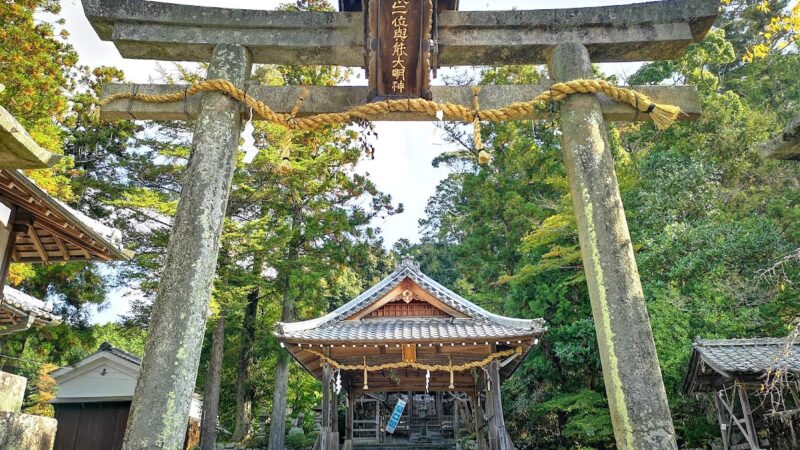
A particularly important event occurred in 1673 (Kanbun 13). Under the reverence of Prince Dōkō, the 5th head of the Shōkōin-no-miya family, it became a place of prayer for the imperial family, and a large stone torii gate and a plaque bearing the divine name “Tenjin-gu” were donated. From this time onward, the shrine came to be known as “Kitashirakawa Tenjin-gu,” and its current name was established.
Since this period, Kitashirakawa Tenjin-gu has maintained deep ties with the Imperial Family while continuing to fulfill its role as the local tutelary deity.
Deities and Divine Virtues
Sukunahikona-no-Mikoto
The deity enshrined at Kitashirakawa Tenjin-gu is Sukunahikona-no-Mikoto. Sukunahikona-no-Mikoto is a god appearing in Japanese mythology, known for his role in nation-building alongside Okuninushi-no-Mikoto.
Sukunahikona-no-Mikoto is believed to possess the following divine virtues:
- Healing of Illness: He has been worshipped since ancient times as the god of medicine.
- Healthy Longevity: He attracts the faith of people wishing for a long and healthy life.
- Protection of Agriculture: He was the object of prayer for bountiful harvests as the god of agriculture.
- Industrial Development: He is considered the god who protects the development of various industries.
- Academic Achievement: He also has an aspect as the god of wisdom.
The Kitashirakawa area has long been a thriving agricultural area, utilizing the clear waters of the Shirakawa River for farming. Therefore, it is thought that the worship of Sukunahikona-no-Mikoto as the god of agriculture was particularly strong.
Relationship with Tenjin Worship
Although the name “Tenjin-gu” sometimes leads to confusion with Tenman-gu shrines dedicated to Sugawara no Michizane, the enshrined deity of Kitashirakawa Tenjin-gu is Sukunahikona-no-Mikoto. Here, “Tenjin” means “god of heaven,” reflecting his characteristics as a god of agriculture and a god who controls the weather.
Grounds and Highlights of Kitashirakawa Tenjin Shrine
The Sacred Grounds and Approach to the Shrine on Mount Chigo
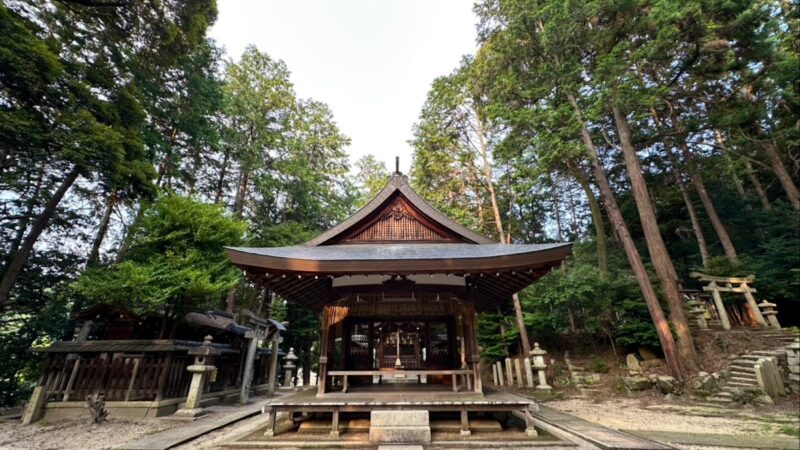
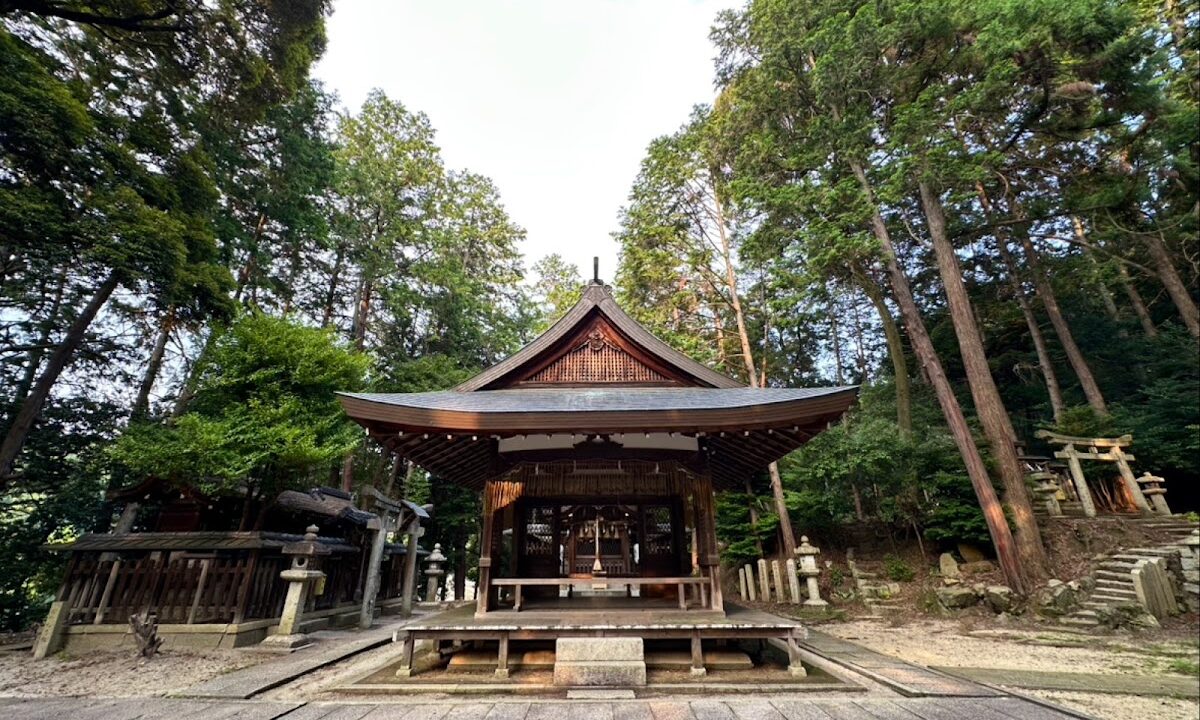
Kitashirakawa Tenjin Shrine is situated on Mount Chigo, a small hill along the Shirakawa River. The sacred grounds, known as “Chigo-yama Myojin no Mori” (Forest of Chigo-yama Myojin), are a tranquil space where ancient natural forests remain.
The approach to the shrine begins from Shirakawa-dori (Yamanaka-goe) and leads up stone steps to the shrine buildings. These steps have a historical charm, and the sacred atmosphere intensifies with each step. Trees grow thickly around the steps, allowing visitors to experience the changing seasons.
Shrine Buildings and Architecture
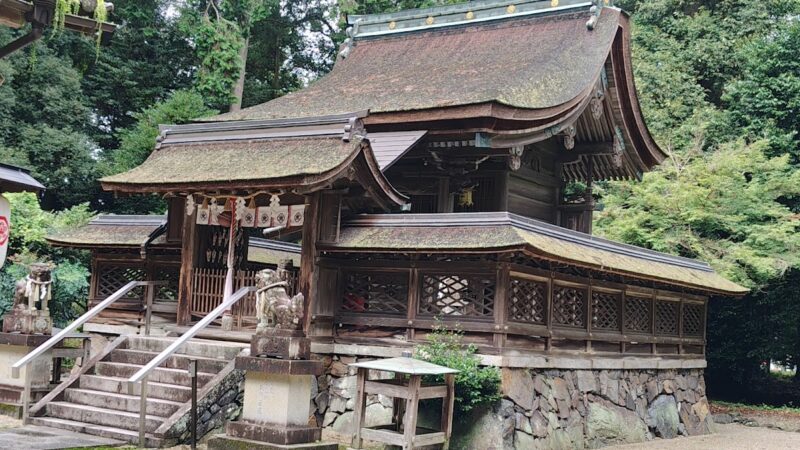
The current shrine buildings retain architectural styles from the Edo period onward. While small in scale, they exude a sense of dignity. The main hall and worship hall are neatly arranged, giving it the dignified appearance of a local tutelary shrine.
In front of the shrine stands a large stone torii gate donated by Prince Michiaki, bearing a plaque inscribed with the divine name “Tenjin-gu.” This torii gate is a valuable cultural asset that conveys the history from the Edo period.
Shirakawa River and Cherry Blossom Spot
One of the major attractions of Kitashirakawa Tenjin-gu Shrine is the cherry blossoms along the Shirakawa River. The Shirakawa River, which crosses the approach to the shrine, is known for its clear waters, and in spring, cherry blossoms bloom profusely along its banks.
The cherry blossoms known as “Miyako Beniitozakura” are particularly magnificent, attracting many worshippers and tourists. The scenery created by the flow of the Shirakawa River, the cherry blossoms, and the shrine grounds can be said to be one of the representative spring landscapes of Kyoto.
The best time to see the cherry blossoms is usually from late March to early April. During this time, many people visit not only from the local area but also from far away.
Shirakawa Stone and Local Culture
The Kitashirakawa area is known as a production area for “Shirakawa stone.” Shirakawa stone is a type of granite that has been widely used in Kyoto’s gardens and architecture. Stone structures made from this Shirakawa stone can be seen within and around the grounds of Kitashirakawa Tenjin Shrine.
Furthermore, in the past, flower vendors known as “Shirakawa-onna” (Shirakawa women) sold flowers grown in the clear waters of the Shirakawa River throughout Kyoto. Kitashirakawa Tenjin Shrine is a shrine deeply connected to the history and culture of this region.
Famous Water “Tenjin-sui”
Within the shrine grounds is a spring known as “Tenjin-sui.” This water, originating from the underground waters of Mount Hiei, has long been known as a source of pure water and has supported the lives of the local people.
Even today, worshippers visit to draw water, making it an important resource for the shrine. The pure water is also associated with the divine virtues of Sukunahikona-no-Mikoto: healing illnesses and longevity.
Goshuin (Shrine Seal) Information
About the Issuance of Goshuin
Kitashirakawa Tenjin Shrine offers Goshuin. Goshuin are cherished by many visitors as proof of their visit and as a way to forge a connection with the shrine.
The Goshuin features the calligraphy of “Kitashirakawa Tenjin Shrine” and the shrine’s seal, creating a simple yet dignified design. The date is also included, making it a cherished memento of the visit.
Issuance Hours and Location
Goshuin are only available during the shrine office’s opening hours. Generally, this is from 9:00 AM to around 5:00 PM, but this may vary depending on religious ceremonies and events. To ensure you receive a Goshuin, it is recommended to confirm by phone in advance.
Phone Number: 075-781-8488
About Goshuincho (Shrine Seal Books)
It is recommended to inquire about the availability of original Goshuincho upon your visit. Many shrines offer their own uniquely designed Goshuincho, but smaller shrines may not.
Annual Events and Festivals
Annual Festival
At Kitashirakawa Tenjin Shrine, various Shinto rituals are performed throughout the year. Particularly important is the annual festival, where local people gather to express gratitude to the gods and pray for a bountiful harvest and peace in the community.
Seasonal Events
During the New Year, the shrine is bustling with worshippers making their first shrine visit of the year. Although small, it is a deeply rooted community shrine, and many local people visit with their families.
In spring, during cherry blossom season, people can be seen enjoying the blossoms in the shrine grounds and along the Shirakawa River. Bonfires are sometimes lit at night, creating a magical atmosphere.
In autumn, the autumn leaves are beautiful, making it a shrine where you can enjoy nature throughout the seasons.
Access Information
Location
42-1 Kitashirakawa Shibushicho, Sakyo-ku, Kyoto City, Kyoto Prefecture 606-8283
Phone: 075-781-8488
Access by Public Transportation
Kyoto City Bus
- From Kyoto Station: Take City Bus routes 5, 17, or 203 and get off at “Kitashirakawa Bettōmachi,” then walk approximately 8 minutes.
- From Shijo Kawaramachi: Take City Bus routes 5 or 203 and get off at “Kitashirakawa Bettōmachi,” then walk approximately 8 minutes.
- From Demachiyanagi Station: Take City Bus routes 5 or 203 for approximately 10 minutes, get off at “Kitashirakawa Bettōmachi,” then walk approximately 8 minutes.
Eizan Electric Railway
- Approximately 15-20 minutes on foot from Eizan Electric Railway’s “Mototanaka Station” or “Chayama Station.”
Keihan Railway
- Take a city bus from Keihan Railway’s Demachiyanagi Station, or walk for approximately 25 minutes.
Access by Car
From the Expressway
- Exit the Meishin Expressway at the Kyoto East Interchange, head west, then north on Shirakawa Street towards the International Conference Center (approximately 20 minutes).
Parking
There is some parking space on the temple grounds, but the number of spaces is limited. Especially during peak seasons such as cherry blossom season, we recommend using public transportation. There are also coin-operated parking lots nearby that you can use.
Location relative to surrounding tourist attractions
Kitashirakawa Tenjin Shrine is conveniently located near major tourist attractions in Kyoto:
- Ginkaku-ji Temple (Jisho-ji Temple): Approximately 10 minutes on foot south
- Philosopher’s Path: Approximately 15 minutes on foot south
- Kyoto University: Approximately 15 minutes on foot southwest
- Shugakuin Imperial Villa: Approximately 10 minutes by bus northeast
- Shisendo Temple: Approximately 20 minutes on foot southeast
We recommend extending your trip a little to visit Kitashirakawa Tenjin Shrine when you visit Ginkaku-ji Temple or the Philosopher’s Path.
History and Culture of the Kitashirakawa Area
A Historic Area at the Foot of Mount Hiei
The Kitashirakawa area is located at the foot of Mount Hiei and has long been an important area connecting Kyoto and Mount Hiei. The Yamanakagoe (Shirakawa Road) was one of the main roads leading from Kyoto to Mount Hiei, and was frequently traveled by many nobles and monks. During the Heian period, aristocrats sometimes built mountain villas in this area. The construction of Higashiyama-dono (Ginkaku-ji Temple) by Ashikaga Yoshimasa also demonstrates the scenic beauty and historical importance of this region.
Shirakawa Culture
The Shirakawa River, a clear stream flowing from Mount Hiei, has been cherished by the people of Kyoto since ancient times. As a source of Shirakawa stone and the birthplace of the Shirakawa women’s flower-selling culture, it has fostered a unique regional culture.
The Shirakawa women walked through the streets of Kyoto with flower baskets on their heads, selling flowers. This custom continued from the Meiji era to the early Showa era and was known as a characteristic sight of Kyoto. Even today, events recreating this scene are sometimes held during festivals such as the Gion Festival.
Kitashirakawa as a Place of Learning
The current Kitashirakawa area, being close to Kyoto University, also has the characteristics of a student town. It is a region with a unique atmosphere, where old history and a new academic spirit coexist.
Manners and Precautions for Visiting a Shrine
Basic Worship Etiquette
When visiting Kitashirakawa Tenjin Shrine, please observe the following basic etiquette:
- Bow before passing through the torii gate: This is a courtesy before entering the sacred area.
- Avoid walking in the center of the approach: The center is considered the path of the gods.
- Purify yourself at the water basin: Cleanse your hands and mouth before praying.
- Etiquette at the main hall: Two bows, two claps, and one bow are the basics.
- Bow upon leaving: Turn around and bow when leaving the torii gate.
Photography
Photography is generally permitted on the shrine grounds, but please note the following:
- Do not take photos in areas where photography is prohibited, such as inside the main hall.
- Refrain from taking photos during Shinto rituals.
- Be considerate of other worshippers.
- Use flash sparingly.
Dress Code for Visitors
While there are no specific dress code requirements, please dress appropriately and respectfully when visiting a shrine. Especially when participating in formal worship or receiving prayers, it is recommended to avoid overly casual attire.
Summary of the Charms of Kitashirakawa Tenjin Shrine
Kitashirakawa Tenjin Shrine boasts a long history dating back to the Asuka period, yet it remains a friendly and community-oriented shrine. Its charms include:
- Deep History: A long history dating back to the Asuka period, with connections to Ashikaga Yoshimasa and the Imperial Family.
- Natural Beauty: Cherry blossoms along the Shirakawa River, the forests of Senkoyama, and seasonal scenery.
- Tranquil Atmosphere: A calm and peaceful environment for worship, not overly commercialized.
- Connection to Local Culture: Experience local history and culture through Shirakawa stone, Shirakawa women, and other local customs.
- Easy Access: Within walking distance of major tourist attractions such as Ginkaku-ji Temple.
Kitashirakawa Tenjin Shrine offers a quiet and peaceful worship experience, unlike large-scale tourist shrines. This shrine is well worth a short detour during your Kyoto sightseeing trip.
Recommended nearby spots
Ginkaku-ji Temple (Jisho-ji Temple)
A World Heritage Site located about a 10-minute walk south from Kitashirakawa Tenjin-gu Shrine. Built by Ashikaga Yoshimasa, it represents the Higashiyama culture and is famous for its dry landscape gardens, including the Ginshadan and Kogetsudai.
Philosopher’s Path
A walking path approximately 2 kilometers long, connecting Ginkaku-ji Temple to Nanzen-ji Temple. Known for its cherry blossoms and autumn leaves, it is one of Kyoto’s most representative walking paths.
Around Kyoto University
Cafes, restaurants, and used bookstores are scattered throughout this student district. You can enjoy reasonably priced meals while experiencing an academic atmosphere.
Shugakuin Imperial Villa
About a 10-minute bus ride northeast from Kitashirakawa Tenjin-gu Shrine. Built in the early Edo period by Emperor Go-Mizunoo, it is a vast garden consisting of three sections: upper, middle, and lower (reservations required). ## Summary: A Kyoto Experience of History and Nature at Kitashirakawa Tenjin Shrine
Kitashirakawa Tenjin Shrine is a precious shrine located in a quiet place slightly away from the hustle and bustle of Kyoto, where you can experience both ancient history and the beauty of nature. As the tutelary deity enshrining Sukunahikona-no-Mikoto, its history of attracting the faith of local people leaves a deep impression on visitors.
The shrine grounds, which show different expressions in each season—cherry blossoms in spring, fresh greenery in summer, autumn leaves, and the silence of winter—offer new discoveries with every visit. When visiting Ginkaku-ji Temple or the Philosopher’s Path, be sure to extend your trip a little and visit Kitashirakawa Tenjin Shrine as well.
At Kitashirakawa Tenjin Shrine, a special experience awaits you, where you can feel the depth of Kyoto’s history and culture in a simple atmosphere that hasn’t been commercialized for tourism. Receiving a Goshuin (shrine stamp) and spending time slowly while gazing at the clear waters of the Shirakawa River—that may be the true way to experience the charm of Kyoto.