Complete Guide to Sugawara-in Tenmangu Shrine (Kyoto Prefecture) | Pray for Academic Success at the Birthplace of Sugawara no Michizane
Located along Karasuma Street in Kamigyo Ward, Kyoto City, Sugawara-in Tenmangu Shrine is a historic shrine said to be the birthplace of Sugawara no Michizane, known as the god of learning. It is affectionately known as “Karasuma no Tenjin-san” by locals and also called “Gosho Nishi no Tenjin-san” due to its location west of the Kyoto Imperial Palace.
This article comprehensively introduces information you should know before visiting Sugawara-in Tenmangu Shrine, including its historical background, highlights within the grounds, blessings, access methods, and annual events.
About Sugawara-in Tenmangu Shrine
Overview and History of the Shrine
Sugawara-in Tenmangu Shrine is located in Horimatsu-cho, Shimotachiuri-sagaru, Karasuma-dori, Kamigyo Ward, Kyoto City. Its former shrine rank was Village Shrine. This site is believed to be the location of the “Sugawara-in” residence, a three-generation estate dating from Sugawara no Kiyokimi to the grandson of Sugawara no Michizane during the Heian period. It is also said to be the sacred birthplace of Sugawara no Michizane, born on June 25, 845 (Jōwa 12).
The Sugawara clan was a family renowned for their academic achievements; the grandfather, Sugawara no Kiyokimi, rose to the rank of Junior Third Rank, and the father, Sugawara no Koreyoshi, served as a Councilor. The Sugawara-in Tenmangu Shrine was built on the site of this historic Sugawara family residence to enshrine Michizane and his ancestors.
A stone monument marking the “Site of the Sugawara Family Residence” stands at the entrance to the shrine, commemorating the Sugawara clan’s stronghold. Within the shrine grounds, the “Sugawara-ko First Bath Well,” believed to have been used for Michizane’s first bath, still exists, and visitors can still draw water from it.
Deities and Benefits
The deities enshrined at Sugawara-in Tenmangu Shrine are the following three:
- Sugawara no Michizane: Revered nationwide as the god of learning.
- Sugawara no Koreyoshi: Michizane’s father, a scholar who served as a Doctor of Literature.
- Sugawara no Kiyokimi: Michizane’s grandfather, who served as a Vice-Envoy to Tang China.
Because the shrine enshrines a family of scholars spanning three generations, it is particularly famous for its blessings related to academic success and passing exams. Many students and those preparing for qualification exams visit the shrine.
Furthermore, due to its history as the birthplace of Michizane, it is also believed to offer blessings for healing from illness and successful marriage. The well water on the shrine grounds is revered as “water of wisdom” and “water of healing from illness,” and many visitors take some home.
The First Temple of the Twenty-Five Sacred Sites of Sugawara no Michizane
Sugawara-in Tenmangu Shrine is designated as the first temple of the “Twenty-Five Sacred Sites of Sugawara no Michizane,” which leads to Dazaifu Tenmangu Shrine. This is a pilgrimage to sacred sites associated with Sugawara no Michizane, starting at this shrine, his birthplace, and continuing to Dazaifu, where he passed away.
As the first temple, it is an important sacred site marking the starting point of Michizane’s life, and pilgrims from all over Japan visit it.
Highlights of the Shrine Grounds
Main Hall and Worship Hall
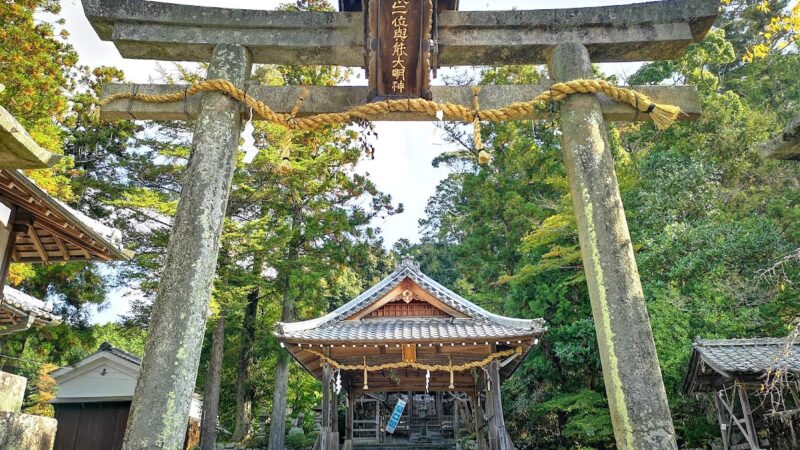
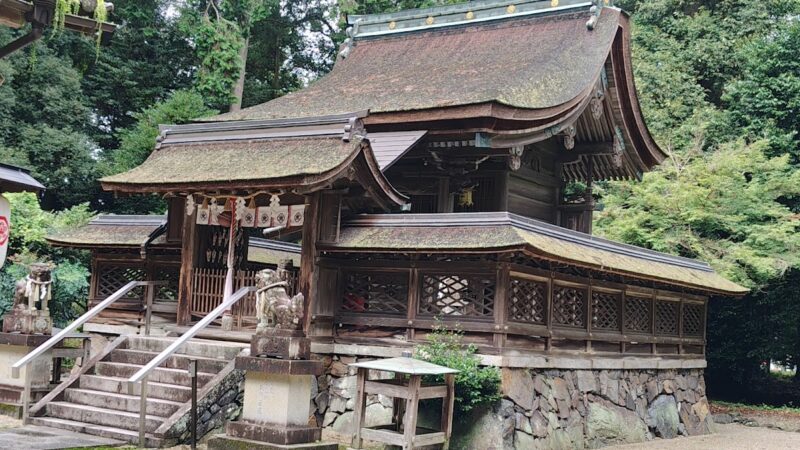
The main hall of Sugawara-in Tenmangu Shrine is built in a dignified style befitting its location near the Kyoto Imperial Palace. Despite the small size of the grounds, there is a magnificent worship hall in front of the main hall, allowing for a tranquil atmosphere of worship.
The main hall enshrines three deities: Sugawara no Michizane, Koreyoshi, and Kiyokimi, making it a precious place where one can directly pray to the gods of learning. During exam season, many students and their parents visit, and the hall is filled with votive tablets praying for success.
Sugawara no Michizane’s First Bath Well (The Well of His First Bath)
The most important historical site on the temple grounds is the “Sugawara no Michizane’s First Bath Well.” This well is said to have been used for the first bath of Sugawara no Michizane when he was born, and pure water still flows from it today.
This well water is revered as “the water of wisdom,” and visitors can freely draw it. Many people bring plastic bottles to take it home, using it in various ways, such as drinking it before exams or using it for calligraphy. The area around the well is well-maintained, and ladles are provided, making it easy to access the well water.
The well water is also believed to have healing properties, making it popular with visitors praying for good health.
Umemaru Okami
Within the shrine grounds is a small shrine dedicated to “Umemaru Okami.” Umemaru Okami is said to be the incarnation of a cow that Sugawara no Michizane cherished in his childhood.
Michizane had a deep connection with cows, and “Nade-ushi” (stroking cows) are placed in Tenmangu shrines throughout Japan. However, at Sugawara-in Tenmangu Shrine, a unique faith has been cultivated in Umemaru Okami. It is believed that by praying at this shrine, one can receive deeper protection from Michizane.
Stone Monuments and Memorials
Within the shrine grounds are a stone monument marking the “Site of the Sugawara Residence,” as well as explanatory plaques detailing the achievements of Sugawara no Michizane and the history of Sugawara-in. Reading these plaques allows one to understand the aristocratic culture of the Heian period and the historical role of the Sugawara clan.
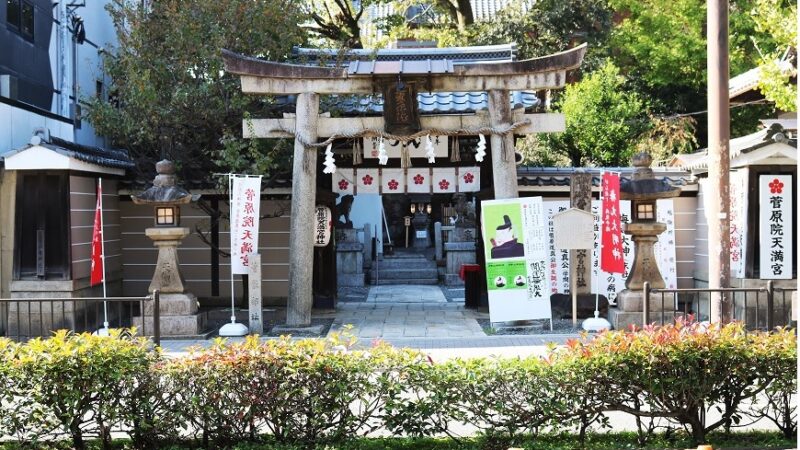
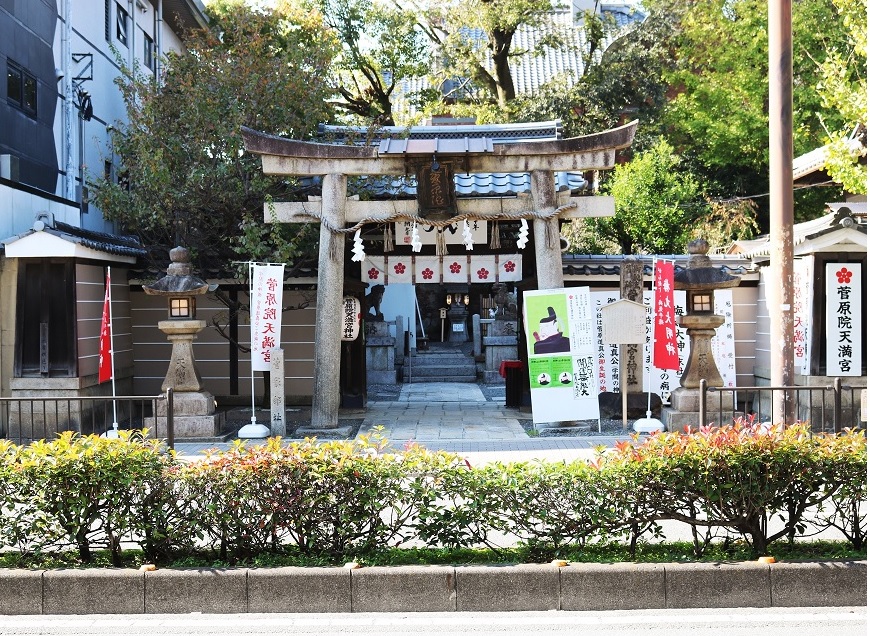
Next to the torii gate facing Karasuma Street, there is also a sign indicating that this is the birthplace of Michizane, conveying history to passersby.
Annual Events and Festivals
Sugawara-in Tenmangu Shrine holds various festivals throughout the year.
Major Annual Events
- Monthly Beginning Festival: A festival held on the 1st of each month to mark the beginning of the month.
- Monthly Festival: A festival held on the 25th of each month to commemorate the anniversary of Michizane’s death.
- Prayer for a Bountiful Harvest Festival: A festival held in February to pray for a bountiful harvest.
- Annual Festival: Held on July 25th, the most important festival of the year, commemorating the birth month of Sugawara no Michizane.
- Niiname-sai Festival: A harvest thanksgiving festival in November where new grains are offered to the gods.
In particular, the Monthly Festival on the 25th of each month is held in commemoration of Michizane’s death in Dazaifu on February 25th, and attracts many worshippers.
Special Prayers During Exam Season
During the exam season from January to March, special prayers for success in exams are offered. In addition to individual prayers, group prayers from schools and cram schools are also accepted, and many students preparing for exams visit the shrine.
After the prayer, visitors can receive amulets for academic success and pencils for passing exams, which they can wear until the day of the exam to pray for the protection of Sugawara no Michizane.
Goshuin (Shrine Seal) and Gifts
Goshuin (Shrine Seal)
At Sugawara-in Tenmangu Shrine, in addition to the regular goshuin, a special goshuin is available as it is the first of the 25 sacred sites associated with Sugawara no Michizane. The calligraphy includes the words “Sugawara-in Tenmangu” and a phrase indicating that it is his birthplace.
Goshuin are available at the shrine office during visiting hours. Pre-printed goshuin are also available, so they may be given even when the shrine priest is absent.
Gifts
The following gifts are available at the shrine office:
- Academic Success Charm: A charm for academic success and passing exams.
- Passing Exam Pencil: A pencil blessed for use in exams.
- Wisdom Charm: A charm to bestow wisdom.
- Healing Charm: A charm for good health.
- Ema (Votive Tablet): A votive tablet adorned with plum blossoms and cows.
- Sacred Talisman: A talisman to be enshrined in the home.
The Academic Success Charm and Passing Exam Pencil are particularly popular among students taking exams, and many receive them as good luck charms.
Access Information
Location
Address: 408 Horimatsu-cho, Shimotachiuri-sagaru, Karasuma-dori, Kamigyo-ku, Kyoto City, Kyoto Prefecture
Access by Train
The nearest station is Marutamachi Station on the Kyoto Municipal Subway Karasuma Line, approximately a 5-minute walk.
Exit the north ticket gate of Marutamachi Station and proceed north along Karasuma-dori (towards the Kyoto Imperial Palace). Just before Shimotachiuri Street, on the west side along Karasuma Street, you’ll see the shrine’s torii gate. It’s located almost directly opposite the Shimotachiuri Gate of the Kyoto Imperial Palace, so using the Imperial Palace as a landmark will make it easy to find.
It’s also accessible in about 10 minutes on foot from Imadegawa Station on the Kyoto Municipal Subway Karasuma Line. The route from Imadegawa Station is south along Karasuma Street.
Access by Bus
Get off at the “Karasuma Shimotachiuri” bus stop on the Kyoto City Bus, and it’s about a 1-minute walk.
Available routes:
- City Bus Route 51
- City Bus Route 203
The shrine is immediately visible along Karasuma Street from the bus stop.
Access by Car and Parking
There is no dedicated parking lot for the shrine, but there are several coin-operated parking lots nearby. However, the roads around the Kyoto Imperial Palace are narrow and can be crowded during peak tourist season, so using public transportation is recommended.
Visiting Hours and Admission Fee
Visiting Hours
- Gate Opening Hours: 6:00 AM to 5:00 PM (Some official websites state 7:00 AM to 7:00 PM)
- Shrine Office Reception Hours: 9:00 AM to approximately 5:00 PM
While you can freely visit the shrine during opening hours, if you wish to receive a Goshuin (shrine stamp) or other items, you must visit during the shrine office’s reception hours.
Admission Fee
Entry to the shrine grounds is free. A donation is required for prayer services.
Nearby Tourist Attractions
Kyoto Gyoen National Garden and Kyoto Imperial Palace
Kyoto Gyoen National Garden stretches out immediately east of Sugawara-in Tenmangu Shrine, across Karasuma Street. Visitors can enjoy tours of the Kyoto Imperial Palace (reservations required) and strolls through the vast garden. The garden is known for its beautiful seasonal nature and is famous for its plum and cherry blossoms.
Goō Shrine
Located about 600m north of Karasuma Street, approximately an 8-minute walk, Goō Shrine is famous as the “Wild Boar Shrine.” It is believed to bring good health to the legs and lower back, and visitors are greeted by “guardian wild boars” instead of guardian lions.
Shiramine Shrine
Located about 700m west of Imadegawa Street, approximately a 10-minute walk, this shrine is dedicated to kemari (traditional Japanese ball game) and sports. Many visitors come to pray for improvement in ball games, including soccer.
Seimei Shrine
Located along Horikawa Street, this shrine enshrines Abe no Seimei, the Onmyoji (diviner). It’s about a 15-minute walk from Sugawara-in Tenmangu Shrine. It’s a popular power spot, especially among younger generations.
Kitano Tenmangu Shrine
The head shrine of all Tenmangu shrines nationwide, dedicated to Sugawara no Michizane. It’s located about 2.5km northwest of Sugawara-in Tenmangu Shrine, approximately a 20-minute bus ride away. Many people visit both shrines, as they both enshrine the same Sugawara no Michizane.
Nearby Gourmet Spots
Cafes near the Kyoto Imperial Palace
The area west of the Imperial Palace is dotted with stylish cafes housed in renovated townhouses. It’s recommended to relax in a cafe with a distinctly Kyoto atmosphere after visiting the shrine.
Lunch Spots near Karasuma Street
Along Karasuma Street, from Marutamachi Station to Imadegawa Station, you’ll find a variety of restaurants, from renowned Kyoto cuisine establishments to casual eateries. Many offer Kyoto-style dishes like Yudofu (boiled tofu) and Kyoto-style Kaiseki cuisine, making it a convenient dining spot for tourists.
Long-Established Japanese Confectionery Shops
Several long-established Japanese confectionery shops, some hundreds of years old, are located near the Imperial Palace, making them perfect souvenirs for visitors. They also sell Japanese sweets featuring plum blossoms, which are associated with Sugawara no Michizane.
Points and Manners for Visiting a Shrine
Proper Etiquette for Visiting a Shrine
- Bow before passing through the torii gate.
- Cleanse your hands and mouth at the water basin.
- Bow twice, clap twice, and bow once in front of the main hall.
- Make your wish specific in your heart.
- Bow again when leaving the torii gate after praying.
Precautions When Drawing Well Water
When drawing well water used for a baby’s first bath, remember to be considerate of the next person. Prepare a container in advance, and be careful not to wet the surrounding area after drawing the water. The area around the well is sacred, so please use it quietly and respectfully.
Regarding Photography
Photography is generally permitted on the shrine grounds, but please refrain from taking pictures inside the main hall or during prayers. Please be considerate of other visitors.
The Charms of Sugawara-in Tenmangu Shrine
A Quiet and Peaceful Environment for Worship
Compared to large Tenmangu shrines such as Kitano Tenmangu, Sugawara-in Tenmangu Shrine has a small precinct and relatively few tourists. Therefore, you can worship in a quiet environment and offer your prayers to Sugawara no Michizane at your own pace.
A Special History as the Birthplace of Sugawara no Michizane
Of the approximately 12,000 Tenmangu shrines nationwide, Sugawara-in Tenmangu Shrine is the only one said to be the actual birthplace of Sugawara no Michizane. Praying at the birthplace of the god of learning holds special significance for students preparing for exams.
A Personal Experience with the Well Water Used for His First Bath
The ability to actually draw and take home the well water said to have been used for Sugawara no Michizane’s first bath is a unique charm not found at other shrines. By drinking this water or placing it on your study desk, you can feel a closer connection to Sugawara no Michizane.
Easy Access
Located just a 5-minute walk from Marutamachi Subway Station, it’s easily accessible during your Kyoto sightseeing. Combining it with a visit to the Kyoto Imperial Palace allows you to efficiently experience Kyoto’s history and culture.
Visitor Trends and Reviews
Who Visits?
- Students and Families: The most common reason for visiting is to pray for success in exams.
- Qualification Exam Takers: An increasing trend of working adults praying for qualifications.
- History Enthusiasts: Those interested in Sugawara no Michizane and the history of the Heian period.
- Goshuin (Shrine Stamp) Collectors: Pilgrims completing the 25-visit Sugawara no Michizane site pilgrimage.
- Local Residents: Regular visits and participation in monthly festivals.
Visitor Voices
Many visitors comment: “It was quieter than Kitano Tenmangu Shrine, allowing for a more thorough prayer,” “I drew water from the well where Michizane was born and drank it on the day of my exam,” and “It was deeply moving to think that this was the birthplace of Michizane.”
Despite its small size, the shrine’s dignified atmosphere and its special historical value as the birthplace of Sugawara no Michizane seem to leave a deep impression on visitors.
Summary
Sugawara-in Tenmangu Shrine holds a special significance unlike other Tenmangu shrines, as it is the birthplace of Sugawara no Michizane, the god of learning. Within its quiet grounds along Karasuma Street, the well where he was given his first bath still holds clear water, conveying the spirit of Michizane.
Its excellent location, close to the Kyoto Imperial Palace, and convenient access (a 5-minute walk from Marutamachi Subway Station) are also attractive features. It’s recommended not only for those preparing for entrance exams or qualification tests, but also for those who want to experience Kyoto’s history or find peace of mind in a quiet shrine.
Sugawara-in Tenmangu Shrine, affectionately known locally as “Karasuma no Tenjin-san,” is a place where those praying for academic success should definitely offer their prayers at the birthplace of Michizane. Drawing water from the well where he was given his first bath will allow you to feel Michizane’s blessings even closer. When sightseeing in Kyoto, be sure to include a visit to Sugawara-in Tenmangu Shrine in your itinerary, along with the Kyoto Imperial Palace and the surrounding shrines and temples.