Fukunaga Shrine (Kyoto Prefecture) Complete Guide | Guardian Deity of Wells Since Heian-kyo and Goshuin Information
Fukunaga Shrine, nestled in a residential area of Kamigyo-ku, Kyoto City, may appear small at first glance, but it is a venerable shrine with a history dating back to the Heian period. It enshrines the guardian deity of a well that was once enshrined in the Western Precinct of the Jingikan (Department of Shinto Affairs) of the Heian-kyo Imperial Palace, and is still cherished by the local community. This article provides a detailed introduction to Fukunaga Shrine, including its history, enshrined deities, access methods, and goshuin (shrine stamp) information.
About Fukunaga Shrine
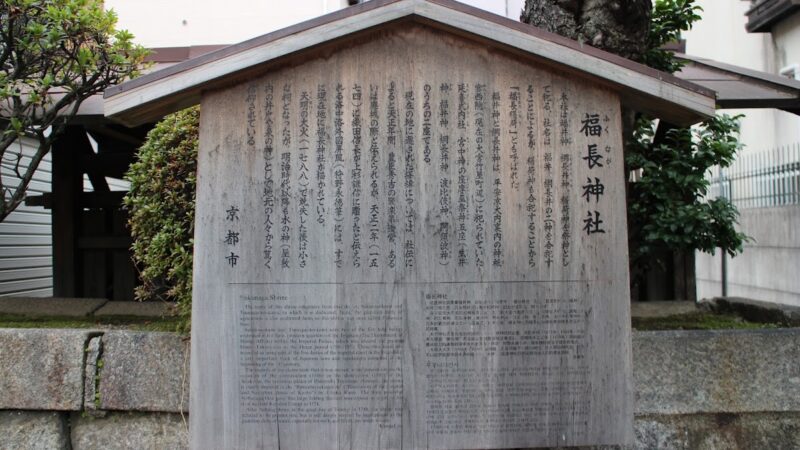
Fukunaga Shrine is a shrine located at 538 Fukunaga-cho, Kamigyo-ku, Kyoto City, Kyoto Prefecture. It is a shrine listed in the Engishiki Jinmyocho (a list of shrines compiled in the Heian period) as a major shrine (two shrines). It is also known as “Fukunaga Inari” and is affectionately called “Fukunaga-san” by locals.
Although currently situated on a small plot of land nestled between private houses, this shrine boasts a long and distinguished history dating back to the Heian period. Despite its location in a residential area along Muromachi Street, its convenient access—approximately a 2-minute walk from Imadegawa Station—has led to an increasing number of visitors stopping by during their Kyoto sightseeing.
Deities and the Shrine’s Origin
Main Deities
Fukunaga Shrine enshrines the following three deities:
Sakui-no-kami
This deity protects wells and springs, and is believed to bestow the blessing of pure water. “Sakui” means “splitting well,” symbolizing the clear water gushing forth from the earth.
Tsunagai-no-kami
Similarly a guardian deity of wells, this deity prays for the long-lasting continuation of water sources. “Tsunagai” signifies the uninterrupted flow of water from the well.
Inari-shin
This is Ukanomitama-no-kami, widely worshipped as the god of abundant harvests and business prosperity. Later, after being enshrined together with other deities, the shrine acquired the alternative name “Fukuchō Inari.”
Origin of the Shrine Name
The shrine name “Fukuchō” is derived from taking one character each from the names of Fukui-no-kami and Tsunagai-no-kami. These two deities originally corresponded to two of the “Five Deities of Ikasuri-no-mikanko-no-matsuri-kami” enshrined in the Western Precinct of the Jingikan (Department of Shinto Affairs) of the Imperial Palace in Heian-kyo.
The Five Deities of Ikasuri-no-mikanko-no-matsuri-kami are Ikui-no-kami, Fukui-no-kami, Tsunagai-no-kami, Hahiki-no-kami, and Asuha-no-kami. All five were enshrined in the Imperial Palace as guardians of wells, springs, and land within the residence.
History of Fukunaga Shrine
Heian Period: Founding at the Imperial Palace
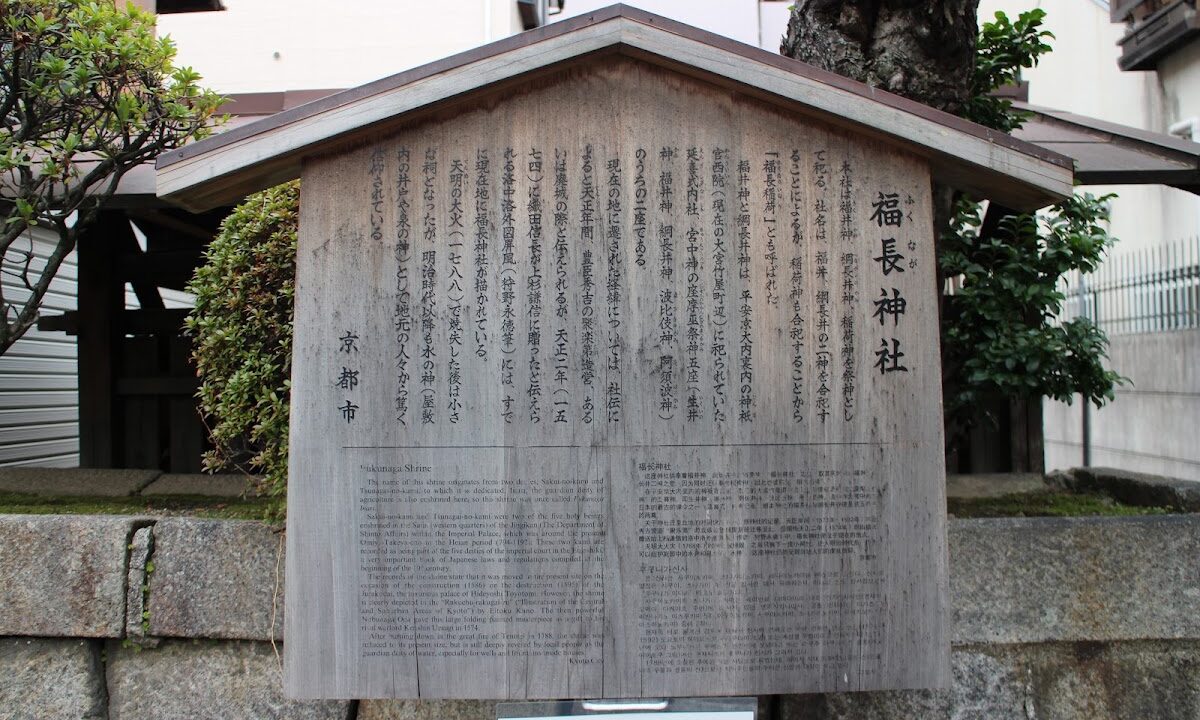
The history of Fukunaga Shrine dates back to the construction of Heian-kyo (Kyoto) during the Heian period (794-1185). At that time, five deities of the Zama-Mikoto Shrine were enshrined in the western part of the Jingikan (Department of Shinto Affairs) of the Heian-kyo Imperial Palace (near Ichijo Inokuma), and they played a role in protecting the wells and springs of the palace.
The Engishiki Jinmyocho (compiled in 927) lists Fukui Shrine and Tsunagai Shrine as major shrines in Kadono District, Yamashiro Province, indicating their importance even then.
Muromachi Period: Relocation to the Current Site
Records from the Muromachi period already refer to the area around the current site as “Fukunaga-cho,” suggesting that Fukunaga Shrine was already located at its current site around this time.
The “Scenes of Kyoto and its Surroundings (Uesugi Version)” screen painting by Kano Eitoku, believed to have been a gift from Oda Nobunaga to Uesugi Kenshin in 1574, depicts Fukunaga Shrine at its current location, confirming that it was situated there at least during the Sengoku period. This screen painting is designated a National Treasure and is a valuable historical document for understanding Kyoto at that time.
Azuchi-Momoyama Period: Relationship with Jurakudai
In 1587, when Toyotomi Hideyoshi built Jurakudai (or Jurakutei), Fukunaga Shrine was incorporated into its grounds. According to tradition, at this time, the two deities, Fukui-no-kami and Tsunagai-no-kami, were enshrined together and moved to their current location as “Fukunaga Daimyojin.”
Within Jurakudai Castle, it was worshipped as the guardian deity of the castle and the protector of the wells, playing an important role in protecting the castle’s water sources. After Hideyoshi’s death, Jurakudai Palace was demolished in 1599, but Fukunaga Shrine continued to exist as the local tutelary shrine.
From the Edo Period Onward: As a Local Tutelary Shrine
During the Edo period, it was revered as the tutelary shrine of the surrounding Fukunaga town and other areas. It is said to have been particularly revered by those in the water trade and restaurants, as it was considered the god of wells.
After the separation of Shinto and Buddhism in the Meiji era and urban development after the war, the shrine is now a small building, but it continues to be carefully preserved by local residents.
Highlights of the Shrine Grounds
Shrine Building and Torii Gate
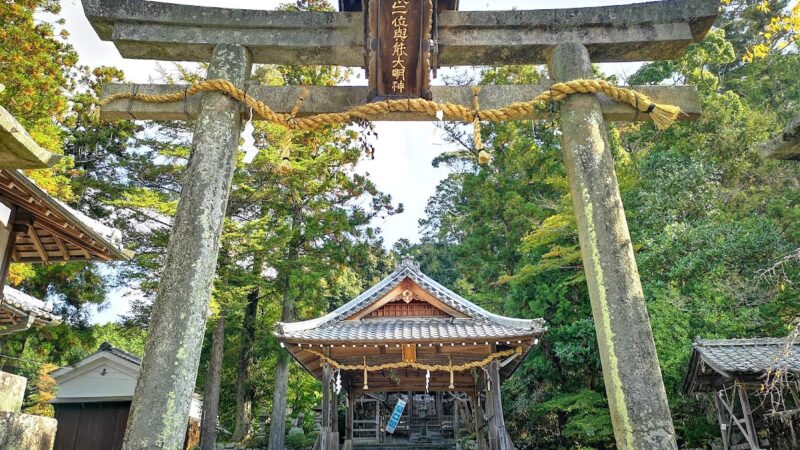
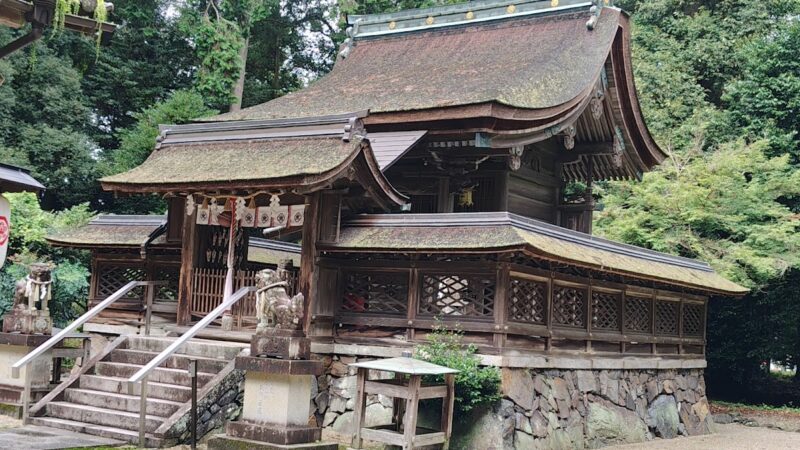
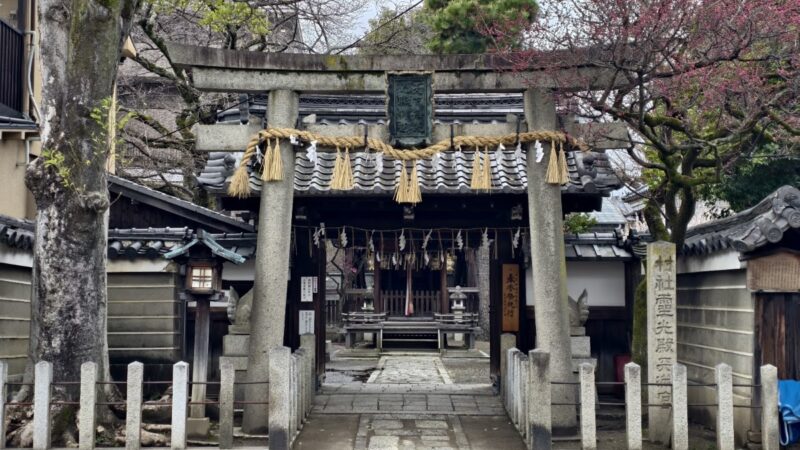
The grounds of Fukunaga Shrine are so small that they are described as “the size of a cat’s forehead,” but the vermilion torii gate and main hall are neatly arranged. Although small, the main hall maintains the style of traditional shrine architecture and is carefully maintained.
After passing through the torii gate, you immediately come to the worship hall, and beyond that sits the main hall. Despite being located amidst the hustle and bustle of the city, the shrine grounds are enveloped in a tranquil atmosphere, providing a peaceful space for worship.
Characteristics of the Inari Shrine
As the shrine enshrines Inari, elements related to Inari worship can be seen within the grounds. Small shrines and donated torii gates contribute to the unique atmosphere of an Inari shrine.
Sacred Water and Well Worship
It is said that there was once a well within the grounds, and the shrine was centered on the worship of the guardian deity of wells. Although the well no longer exists, the worship of the water deity continues.
Information on Goshuin (Shrine Seals) and Other Items
About Goshuin
Fukunaga Shrine is an unmanned shrine; there are no resident priests or shrine office. However, a self-stamping goshuin is available for visitors.
A goshuin stand is set up within the grounds, allowing visitors to stamp their goshuin books themselves. The offering is placed in the offering box. The general price is around 300 yen, but please offer whatever you feel is appropriate.
When stamping yourself, please note the following:
- Adjust the amount of ink to prevent smudging.
- Remember to be considerate of other visitors before and after you.
- Don’t forget to bring your goshuincho (stamp book).
- You may need to fill in the date yourself.
Items Offered
Since there is no resident Shinto priest, amulets and talismans are generally not distributed. The main purpose of visiting is worship and obtaining a goshuin (temple stamp).
Access and Visiting Information
Location
Address: 538 Fukucho, Kamigyo-ku, Kyoto City, Kyoto Prefecture
Transportation Access
Access by Train
- Approximately 2 minutes on foot from Exit 6 of Imadegawa Station on the Kyoto Municipal Subway Karasuma Line
- Approximately 15 minutes on foot from Demachiyanagi Station on the Keihan Railway
Access by Bus
- Approximately 5 minutes on foot from the Karasuma Imadegawa bus stop
- Approximately 3 minutes on foot from the Imadegawa Muromachi bus stop
Access by Car
- Approximately 30 minutes from the Kyoto Minami Interchange on the Meishin Expressway
- There is no dedicated parking lot; please use nearby coin-operated parking lots.
Visiting Hours
The temple grounds are open 24 hours a day, but as it is located in a residential area, please refrain from visiting early in the morning or late at night, and be considerate of the nearby residents. Visiting during daylight hours is recommended.
Admission Fee
Free
Nearby Tourist Attractions
Numerous of Kyoto’s most famous tourist spots are located around Fukunaga Shrine.
Kyoto Imperial Palace and Kyoto Gyoen National Garden
The Kyoto Imperial Palace, located about a 10-minute walk from Fukunaga Shrine, was the residence of the Emperor until the Meiji Restoration. The vast Kyoto Gyoen National Garden is a place of relaxation for citizens, where they can enjoy nature throughout the seasons.
Shokokuji Temple
The head temple of the Rinzai sect’s Shokokuji branch, founded by Ashikaga Yoshimitsu, the third shogun of the Muromachi shogunate. It is also known as the head temple of Kinkakuji and Ginkakuji temples and houses many cultural properties. About a 5-minute walk from Fukunaga Shrine.
Doshisha University Imadegawa Campus
A beautiful campus with a group of red brick buildings designated as important cultural properties. You can see Western-style architecture from the Meiji period.
Goō Shrine
Known as the “Wild Boar Shrine,” this shrine is believed to bring good fortune for leg and back health. About an 8-minute walk from Fukunaga Shrine.
Annual Events at Fukunaga Shrine
As it is a small, unmanned shrine, large-scale festivals are not held. However, daily maintenance is carried out by local residents. During the New Year, worshippers visit, quietly celebrating the new year.
Manners and Precautions for Visiting a Shrine
Basic Worship Etiquette
- Bow before entering the shrine grounds after bowing at the torii gate.
- If there is a purification fountain, cleanse your hands and mouth.
- Quietly place your offering in the offering box.
- Worship using the two bows, two claps, and one bow ritual.
- Bow again at the torii gate when leaving.
Consideration in a Residential Area
Fukunaga Shrine is located in a residential area, so please be mindful of the following:
- Refrain from loud conversations.
- When taking photographs, be careful not to include surrounding houses in your shots.
- Always take your trash with you.
- Never park on the street.
- Refrain from visiting at night.
The Charm of Fukunaga Shrine
Historical Value
This shrine holds the status of a Shikinaisha (a shrine listed in the Engishiki, an ancient Japanese legal text) dating back to the Heian period, and is a historically valuable shrine depicted in the Rakuchu Rakugaizu folding screen. Despite its small size, it is a precious presence that conveys the history of Kyoto to the present day.
Faith as the Guardian Deity of Wells
Even today, water is essential to life. The belief in the well god, praying for the blessings of pure water and peace of mind, has been passed down through generations. It is said that many people from restaurants and businesses that handle water visit the shrine.
Tranquility in the City
Despite its convenient location just a 2-minute walk from Imadegawa Station, the shrine grounds are enveloped in a quiet and peaceful atmosphere. It has recently gained attention as a hidden gem to casually visit during Kyoto sightseeing.
A Faith Rooted in the Community
Although it is an unmanned shrine, its continued preservation by the local community symbolizes the relationship between Japanese local communities and shrine faith.
Recommended Itinerary for Visiting Fukunaga Shrine
Half-Day Course: Stroll Around the Imperial Palace
- Arrive at Imadegawa Station
- Visit Fukunaga Shrine (15 min)
- Visit Shokokuji Temple (60 min)
- Stroll through Kyoto Gyoen National Garden (60 min)
- Visit Goō Shrine (30 min)
- Visit Kyoto Imperial Palace (90 min)
Full-Day Course: Exploring the History of Kamigyo Ward
Morning:
- Visit Kitano Tenmangu Shrine
- Visit Seimei Shrine
- Lunch (Nishijin area)
Afternoon:
- Visit Fukunaga Shrine
- Visit Shokokuji Temple
- Stroll through Kyoto Gyoen National Garden
- Visit Doshisha University Campus
Fun Facts About Fukunaga Shrine
What is a Shikinaisha?
Shikinaisha are shrines listed in the “Engishiki Jinmyōchō” (a list of shrines compiled in the Heian period), and are high-ranking shrines recognized by the state during the Heian period. Fukuchō Shrine is listed as one of the two major shrines in the Engishiki (ancient Japanese legal code), indicating its particularly important status.
About the Ikasuri Deities
The five Ikasuri deities are gods worshipped by special shrine maidens (Ikasuri) in the imperial court. “Ikasuri” means to appease the land. Of these five deities, three—Ikui-no-kami, Fukui-no-kami, and Tsunagai-no-kami—are also enshrined at the Ikasuri Shrine in Osaka.
Relationship with the Rakuchū Rakugai-zu Folding Screen
The Uesugi version of the Rakuchū Rakugai-zu folding screen is a valuable historical document depicting Kyoto during the Sengoku period and is designated a National Treasure. The depiction of Fukuchō Shrine in this screen is evidence that it was recognized as an important local shrine even at that time.
Summary
Fukuchō Shrine is a venerable shrine listed in the Engishiki, enshrining the guardian deity of wells since the Heian period. Although it is a small shrine today, its historical value and the faith deeply rooted in the community remain unchanged.
Located near major tourist spots such as the Kyoto Imperial Palace and Shokokuji Temple, and easily accessible, it is definitely worth a visit during your Kyoto sightseeing trip. The self-stamped goshuin (shrine stamp) would also make a wonderful souvenir.
Nestled quietly in a residential area, Fukunaga Shrine is a precious place where you can experience the unspoiled side of Kyoto. It is a hidden gem that offers both a sense of approachability and historical weight, something not found in larger shrines.
Giving thanks for the blessings of pure water and praying for peace and tranquility in daily life—this simple and universal form of faith still thrives at Fukunaga Shrine.