Ura Shrine (Ine Town, Kyoto Prefecture) Complete Guide | Goshuin (Shrine Seal), Access, and Highlights of the Shikinaisha Shrine with the Legend of Urashima Taro
Ura Shrine, located in Honjohama, Ine Town, Yosa District, Kyoto Prefecture, is a rare shrine nationwide that enshrines Urashima Taro, a figure known to all Japanese people. Also known as Urashima Shrine, it is a historically significant shrine listed in the Engishiki Jinmyocho (a list of shrines compiled in the Heian period), and has attracted worshippers since ancient times.
This article comprehensively introduces information you should know before visiting Ura Shrine, including its history, enshrined deity, the shrine buildings designated as a National Registered Tangible Cultural Property, valuable treasures, goshuin information, detailed access methods, and nearby attractions.
Basic Information about Ura Shrine
Official Name: Ura Shrine (Ura Jinja)
Alternative Names: Urashima Shrine (Urashima Jinja), Urashima Shrine
Location: 191 Honjohama, Ine-cho, Yosa-gun, Kyoto Prefecture 626-0403
Former Shrine Rank: Gosha (Village Shrine)
Shikinaisha (Shrine listed in the Engishiki): Ura Shrine, Yosa-gun, Tango Province
Visiting Hours: Grounds are freely accessible (Treasure Museum: 9:00 AM – 5:00 PM, reservations required)
Admission Fee: Grounds are free (Treasure Museum: 400 yen)
Parking: Available (Free)
Telephone Number: 0772-32-0277 (Ine Town Tourism Association)
History and Origins of Ura Shrine
Founded in 825 AD
Ura Shrine is said to have been founded in 825 AD, during the reign of Emperor Junna. According to shrine tradition, it began with the enshrinement of Urashima-ko as “Tsutsukawa Daimyojin.”
The Engishiki Jinmyocho (compiled in 927 AD) lists it as “Ura Shrine, Yosa District, Tango Province,” indicating that it was already a prestigious shrine recognized by the imperial court during the Heian period. Its status as a Shikinaisha (a shrine listed in the Engishiki) demonstrates that this shrine has been an important object of worship since ancient times.
Deep Connection to the Urashima Legend
What sets Ura Shrine apart from other shrines is its reputation as the birthplace of the oldest legend of Urashima Taro in Japan. The Nihon Shoki and Tango no Kuni Fudoki (a fragment) record the reign of Emperor Yuryaku, in which a fisherman named Urashima-ko rescued a turtle and traveled to the land of Tokoyo (the eternal world).
Near Ine Town is the Tsutsukawa district, considered to be Urashima-ko’s birthplace, and this entire area has long been recounted as the setting for the Urashima legend. Among the treasures preserved at the shrine is the “Tamatebako” (treasure box) said to have been brought back by Urashima-ko from Ryugu-jo (the Dragon Palace), making it a unique place where legend and history intersect.
From the Edo Period to the Present
During the Edo period, it flourished as a center of local faith under the patronage of the Miyazu Domain. In the Meiji era, it was ranked as a Gosha (village shrine), establishing its position as an important shrine in the region.
From the Showa to the Heisei period, the main hall, middle hall, and worship hall were designated as registered tangible cultural properties of Japan, officially recognizing their historical value. Currently, the shrine attracts many tourists due to its connection to the Urashima legend, while also enjoying deep reverence from local residents as their guardian deity.
Deities and Divine Virtues
Main Deity: Urashima-ko
The main deity of Ura Shrine is Urashima-ko, also known as Urashima Taro. According to the *Nihon Shoki* (Chronicles of Japan), he was a real person who lived around 478 AD (the 22nd year of Emperor Yuryaku’s reign) and is recorded as a resident of Tsutsukawa in Tango Province (present-day Tsutsukawa area of Ine Town).
Urashima-ko is believed to possess the following divine virtues due to his compassion in saving a turtle, his granting of immortality in the land of Tokoyo (the Dragon Palace), and his transcendent existence.
- Longevity and Immortality: From the legend of being granted eternal youth and immortality at Ryugu-jo (the Dragon Palace)
- Safety at Sea and Abundant Catch: From the profession of Urashima Taro, who was a fisherman
- Matchmaking: From the love story with Otohime
- Good Fortune and Prosperity: As a returnee from the land of Tokoyo (the eternal world)
- Fertility and Safe Childbirth: As a symbol of the bounty of the sea and vitality
Enshrined Deities
In addition to the main deity, the following gods are also enshrined:
Tsukuyomi-no-Mikoto: The younger brother of Amaterasu-Omikami, the god who governs the night and the moon. He has a deep connection to fishing because he controls the tides of the sea.
Haraedo-no-Okami: A collective term for the gods who purify and cleanse away sins and impurities. This refers to the four deities Seoritsuhime, Hayakitsuhime, Ibukidonushi, and Hayasasurahime. Due to the deities enshrined here, Ura Shrine also possesses the character of a shrine that protects the safety and purity of the sea.
Highlights of the Shrine Grounds
Nationally Registered Tangible Cultural Property Shrine Buildings
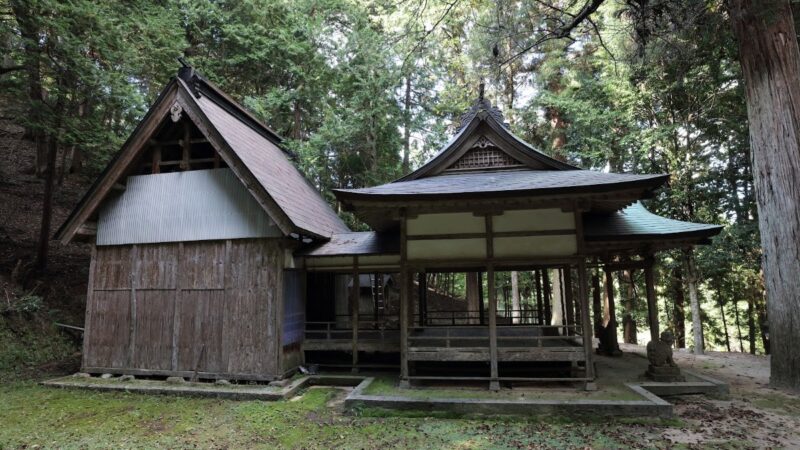
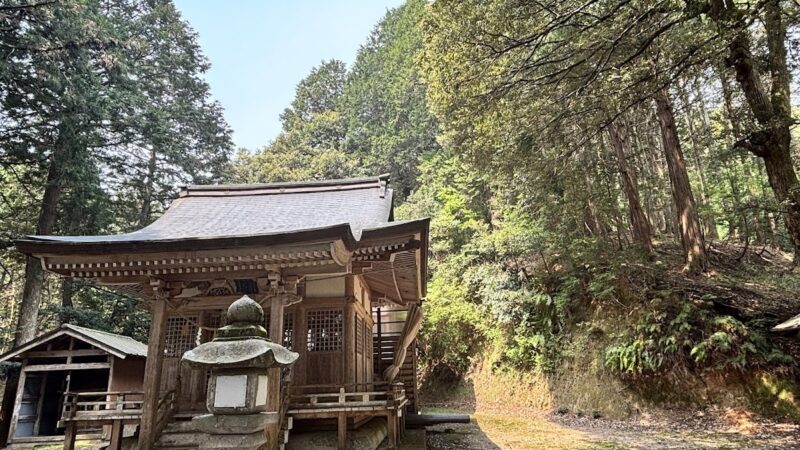
The main hall, middle hall, and worship hall of Ura Shrine are all designated as Nationally Registered Tangible Cultural Properties.
Main Hall: Built in the Ikkensha Nagare-zukuri style, it features intricate carvings. The roof is covered with cypress bark, strongly retaining the characteristics of traditional shrine architecture in the Tango region.
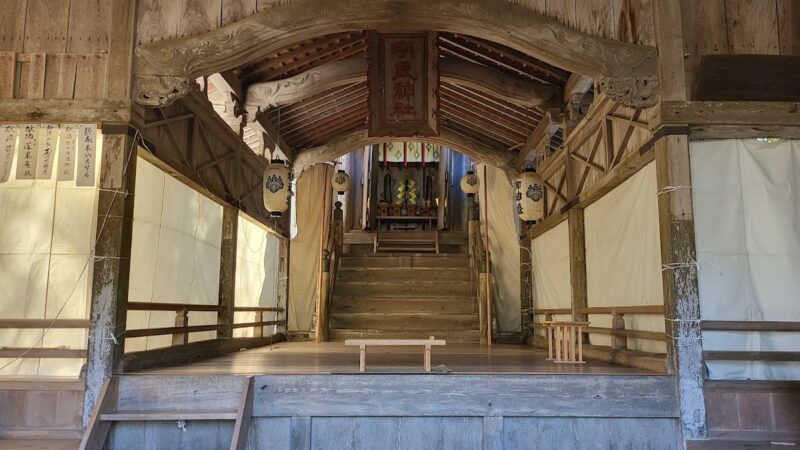
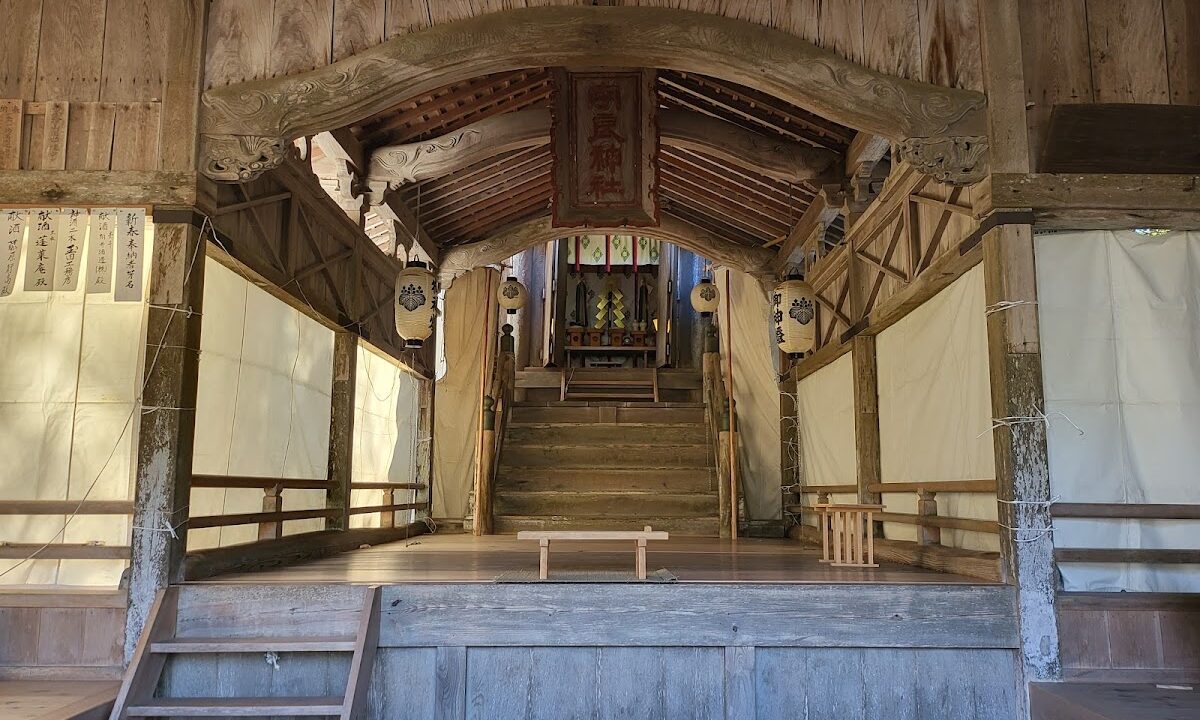
Middle Hall: Connecting the main hall and the worship hall, the middle hall is an important space where worshippers offer their prayers.
Worship Hall: A dignified building with a hipped roof, it serves as the main entrance welcoming worshippers.
These buildings are valuable cultural assets that convey architectural styles from the late Edo period to the Meiji period, and therefore hold high architectural historical value.
Horai Garden
Within the temple grounds is a Japanese garden called “Horai Garden.” This garden is modeled after the Tokoyo-no-Kuni (Dragon Palace) visited by Urashima Taro, representing Mount Horai, the land of immortality.
The pond features turtle-shaped stones, and the pine trees and stone arrangements evoke the world of an underwater palace. The seasonal plantings are beautiful, and many visitors come, especially during the fresh greenery of spring and the vibrant autumn foliage.
Monument to Urashima Taro and Otohime
Adjacent to the shrine is Urashima Park, where bronze statues of Urashima Taro and Otohime are located. The statues, set against the backdrop of the sea, are a perfect photo spot, allowing visitors to feel closer to the world of the legend.
Turtle Stone Statues
Throughout the temple grounds, you can find stone statues and decorations featuring turtles. Turtles, a key element of the Urashima legend, are placed throughout this shrine as its symbol, delighting visitors.
Valuable Collections in the Treasure Museum
Ura Shrine has an attached treasure museum housing valuable items related to the Urashima legend. Advance reservations are required for visits (admission fee: 400 yen), but visitors can see historically valuable treasures that can only be seen here up close.
Urashima’s Treasure Box
The main highlight is the “treasure box” that Urashima is said to have brought back from Ryugu-jo (the Dragon Palace). This beautiful lacquered box, believed to be from the Muromachi period, is designated as a Kyoto Prefecture cultural property. Many visitors are amazed that the treasure box, which in the legend is said to emit white smoke and cause the person who opened it to become an old man, actually exists.
Urashima Myojin Engi Emaki (Illustrated Scroll of the Legend of Urashima Myojin)
The shrine houses an illustrated scroll depicting the story of Urashima Taro, painted during the Edo period. The vividly colored illustrations depicting Urashima’s adventures are a valuable resource for understanding how people at the time perceived the Urashima legend.
Ancient Documents
The shrine also houses fragments of the *Tango no Kuni Fudoki* (a historical and geographical record of Tango Province) and copies of ancient documents related to Urashima. These documents reveal that the Urashima legend was treated not merely as a folktale, but as a historical event recorded since ancient times.
Other Treasures
- A divine statue from the Muromachi period
- A votive plaque from the Edo period
- Shrine records written by successive chief priests
- Items related to Urashima
These treasures are rotated periodically, so the items on display may vary depending on the time of your visit.
Goshuin (Shrine Seal) Information
Standard Goshuin
Ura Shrine offers pre-printed goshuin. They typically bear the seal of “Ura Shrine” or “Urashima Shrine” and include the date. The offering fee is approximately 300 yen.
Goshuin (temple/shrine stamps) are given out at the shrine office, but since the chief priest may be absent, it is recommended to contact them in advance if you wish to be sure to receive one.
Special Goshuin
During seasons and special events, limited-edition special goshuin may be given out. In the past, goshuin featuring illustrations of Urashima Taro and turtles, as well as goshuin in collaboration with JR Tokai, have been offered.
Information on special goshuin is often announced on the Ine Town Tourism Association website and social media, so it is recommended to check in advance.
Goshuincho (Goshuin Notebook)
Ura Shrine also offers original goshuincho. The goshuincho featuring Urashima Taro and a turtle is a popular souvenir unique to this shrine.
Items and Amulets
Ura Shrine offers unique items related to the Urashima legend.
Turtle Amulet
This amulet, modeled after the turtle that Urashima Taro saved, is believed to bring longevity, good health, and safety at sea. The adorable turtle design is very popular.
Love Charm
This love charm is inspired by the love story of Urashima Taro and Otohime. It’s popular with worshippers seeking good fortune in love.
Ema (Votive Tablet)
You can write your wish on an ema depicting Urashima Taro, a turtle, and Ryugu-jo (the Dragon Palace) and dedicate it to the shrine. The ema rack in the shrine grounds is filled with wishes from worshippers who have come from all over Japan.
Other Items Available
- Maritime Safety Charm (Popular with those in the fishing industry)
- Good Fortune Charm
- Traffic Safety Charm
- Fortune Slip
The types and availability of items available may vary depending on the season, so please check details when you visit.
Access Methods
Access by Public Transportation
Using the Kyoto Tango Railway
- From Amanohashidate Station:
- Get off at Amanohashidate Station on the Kyoto Tango Railway Miyazu Line
- Take the Tango Kairiku Kotsu bus (Tankai Bus) bound for Kyogamisaki, Kamairi, or Ine (approximately 60-74 minutes)
- Get off at the Urashima Shrine bus stop and walk for approximately 3 minutes
- Bus fare: Approximately 1,000 yen one way
- From Miyazu Station:
- Get off at Miyazu Station on the Kyoto Tango Railway Miyazu Line
- Take the Tango Kairiku Kotsu bus bound for Kyogamisaki, Kamairi, or Ine (approximately 50 minutes)
- Get off at the Urashima Shrine bus stop and walk for approximately 3 minutes
Important Note:
- Since the number of buses is limited to only a few per day, we strongly recommend checking the timetable on the Tango Kairiku Kotsu website in advance.
- Especially during winter, the number of bus services may be reduced.
- Be sure to check the return bus schedule.
Example of access from Kyoto city:
- JR Kyoto Station → (Limited Express Hashidate, approx. 2 hours) → Amanohashidate Station → (Bus, approx. 60 minutes) → Urashima Shrine
- Travel time: Approx. 3 hours or more one way
Access by car
Via Kyoto Jukan Expressway:
- Exit the Kyoto Jukan Expressway at “Yosa-Amanohashidate IC”
- Take National Routes 176 and 178 towards Ine Town
- Travel time: Approx. 40 minutes from the IC (approx. 30 km)
From Osaka:
- Chugoku Expressway → Maizuru-Wakasa Expressway → Kyoto Jukan Expressway → Yosa-Amanohashidate IC
- Travel time: Approx. 2 hours 30 minutes from Osaka city
Parking:
- Free parking available for the shrine (approx. 5-6 regular cars)
- During busy times, the parking lot at Urashima Park can also be used.
- If you’re visiting in conjunction with sightseeing in the famous Ine boathouse district, you can use the public parking lot in Ine town and walk (approximately 15 minutes).
Taxi Access
If taking a taxi from Amanohashidate Station or Miyazu Station:
- From Amanohashidate Station: Approximately 40 minutes, fare approximately 8,000-10,000 yen
- From Miyazu Station: Approximately 35 minutes, fare approximately 7,000-9,000 yen
Using a sightseeing taxi plan allows for efficient touring of Amanohashidate, the Ine boathouse district, and other locations.
Annual Events
Grand Festival (Mid-October)
The most important festival of Ura Shrine is the Grand Festival, held annually in mid-October. A portable shrine procession and Kagura (sacred dance) performances take place, and local residents participate wholeheartedly to make the festival a success.
New Year’s Visit (January 1st-3rd)
From New Year’s Day to the third day, local residents and tourists visit the shrine for their first shrine visit of the year. It is bustling with people praying for good health and safety at sea in the new year.
Other Events
- Spring Festival (April)
- Summer Purification Ceremony (June 30th)
- Autumn Festival (November)
The detailed dates of these events may vary from year to year, so it is recommended to check before visiting.
Nearby Tourist Attractions
Here are some sights to see around Ine Town that you might want to visit in conjunction with your visit to Ura Shrine.
Ine Boathouses (approx. 15-minute walk)
The boathouses, the largest tourist attraction in Ine Town, are a group of traditional architectural styles lined up facing the sea. With a unique structure where the first floor is a boat garage and the second floor is living space, it has been designated a National Important Traditional Buildings Preservation District.
Sightseeing boats operate from the sea, offering exceptional views of the boathouses. Cafes and guesthouses housed in renovated boathouses are also scattered throughout the area, allowing visitors to experience life in Ine.
Funaya no Sato Ine Roadside Station (approx. 5 minutes by car)
This roadside station is located on a hill overlooking Ine Bay. The observation deck offers panoramic views of the boathouses, making it a perfect photo spot. It also features a shop selling local seafood and specialty products, as well as a restaurant.
Arai-zaki Shrine (approx. 10 minutes by car)
Another important shrine in Ine Town, it is revered by fishermen as a guardian of maritime safety. The shrine building, situated on a cape jutting out into the sea, and the view of the Sea of Japan below are particularly impressive.
Kyogamisaki Lighthouse (approx. 20 minutes by car)
Located at the northernmost tip of the Tango Peninsula, this white lighthouse is one of “Japan’s 50 Best Lighthouses.” The walk from the parking lot to the lighthouse takes about 15 minutes, but the magnificent views of the Sea of Japan and the towering cliffs are well worth seeing.
Amanohashidate (approx. 40 minutes by car)
Amanohashidate, one of Japan’s three most scenic spots, is a classic destination often visited in conjunction with Ura Shrine. The landscape, with its approximately 8,000 pine trees growing on a sand spit, has captivated many people since ancient times.
Points and Manners for Visiting a Shrine
Proper Way to Visit a Shrine
- Bow before passing through the torii gate.
- Purify your body and mind at the water basin.
- Hold the ladle in your right hand and wash your left hand.
- Switch the ladle to your left hand and wash your right hand.
- Switch the ladle back to your right hand, receive water in your left hand, and rinse your mouth.
- Finally, hold the ladle upright and rinse the handle.
- Bow twice, clap twice, and bow once in front of the main hall.
- Stroll around the shrine grounds.
- Bow once again after passing through the torii gate when leaving.
Regarding Photography
Photography is generally permitted on the shrine grounds, but please note the following:
- Photography is prohibited inside the main hall.
- Photography may be prohibited inside the treasure museum; please follow the instructions of the staff.
- Be considerate of other visitors.
- Avoid using tripods during crowded times.
Regarding Attire
While there are no specific dress code requirements for visiting the shrine, please avoid revealing clothing and aim for clean, presentable attire. Also, since the shrine grounds include gravel paths and stairs, comfortable walking shoes are recommended.
Estimated Time Required
- Shrine Visit Only: 20-30 minutes
- Including a Stroll Through the Grounds: 40-60 minutes
- Including a Visit to the Treasure Museum: 90-120 minutes
Recommended Seasons for Visiting Ura Shrine
Spring (March-May)
This is the season when the cherry blossoms and fresh greenery on the shrine grounds are beautiful. The plants in the Horai Garden are also budding, creating a vibrant landscape. The weather is mild, making it ideal for visiting.
Summer (June-August)
The greenery is lush, and the blue of the sea stands out. The summer purification ritual (Natsukoshi no Harae) (June 30th) involves passing through a ring of reeds. However, the sun is strong, so precautions against heatstroke are necessary.
Autumn (September-November)
October, when the annual festival is held, is the busiest time of year. The autumn foliage is beautiful, especially from early to mid-November. The weather is stable, making it an ideal season for sightseeing.
Winter (December-February)
This season has fewer tourists, allowing for a quiet visit. The rugged scenery of the Sea of Japan in winter is also impressive. However, caution is advised when accessing by car due to the possibility of snowfall and icy roads. The shrine is bustling with locals during the New Year’s visit period.
Frequently Asked Questions
Q: Are Ura Shrine and Urashima Shrine the same shrine?
A: Yes, they are the same shrine. The official name is “Ura Shrine,” but it is also called “Urashima Shrine” or “Urashima Jinmyocho.” It is listed as “Ura Shrine” in the Engishiki Jinmyocho (a list of shrines compiled in the Heian period).
Q: Can I definitely get a Goshuin (shrine stamp)?
A: Since the chief priest may not always be present, it is recommended to contact the shrine in advance if you definitely want a Goshuin. Sometimes, pre-printed Goshuin (temple/shrine stamps) are available.
Q: Is it guaranteed that I can see the Tamatebako (treasure box)?
A: The Treasure Museum requires advance reservations (admission fee 400 yen). Please contact the Ine Town Tourism Association (0772-32-0277) in advance to make a reservation.
Q: There are few buses, what is the most efficient way to sightsee?
A: Renting a car is the most efficient option. Alternatively, we recommend a plan where you take a sightseeing taxi from Amanohashidate Station or Miyazu Station and tour Amanohashidate, the Ine boathouses, and Ura Shrine in one day.
Q: How far is it from the Ine boathouses?
A: It’s about a 15-minute walk or a 5-minute drive. Many people visit it in conjunction with sightseeing in the boathouses.
Q: Is parking free?
A: Yes, parking at the shrine is free. However, space is limited, so we recommend arriving early during peak season.
Summary
Ura Shrine (Urashima Shrine) is a historically and culturally significant shrine, considered the birthplace of the beloved Japanese legend of Urashima Taro. Founded in 825 AD, it boasts a history of nearly 1200 years. Its value is widely recognized as a Shikinaisha (a shrine listed in the Engishiki Jinmyocho) and as a shrine with a nationally registered tangible cultural property.
The precious treasures, including the Tamatebako (treasure box), the Horai Garden (modeled after the land of Tokoyo), and the beautiful scenery overlooking the Sea of Japan leave a deep impression on visitors. The shrine’s goshuin (stamped seals) and other offerings are unique and related to the Urashima legend, making them memorable souvenirs.
While access takes some time, visiting Ura Shrine in conjunction with other nearby attractions such as the Ine boathouses and Amanohashidate allows you to fully enjoy the rich nature and historical culture of the Tango Peninsula.
Please visit Ura Shrine while reflecting on the story of Urashima Taro. You can receive divine blessings for longevity, safety at sea, and successful relationships, and spend a special time in a sacred place where Japanese legends come alive.