Takamatsu Shinmei Shrine (Kyoto Prefecture) Complete Guide | The Jizo Statue of Wisdom Associated with Sanada Yukimura and the Suikinkutsu Cave
Nearby nestled in the Karasuma Oike area of Nakagyo Ward, Kyoto City, Takamatsu Shinmei Shrine is a historic shrine built on the former site of “Takamatsu-dono,” the residence of Prince Minamoto no Takaakira during the Heian period. It’s attracting attention as a power spot with many highlights, including the “Yukimura’s Jizo Statue of Wisdom,” known as Sanada Yukimura’s personal devotional image, and the suikinkutsu (water harp cave) that produces beautiful sounds.
This article provides a detailed introduction to Takamatsu Shinmei Shrine, including its history, enshrined deities, blessings, highlights within the grounds, information on goshuin (shrine stamps), and access methods.
Basic Information about Takamatsu Shinmei Shrine
Location: 790 Tsugaru-cho, Higashi-iru, Kamaza-dori, Anekoji-dori, Nakagyo-ku, Kyoto City, Kyoto Prefecture 604-8271
Phone Number: 075-231-8386
Visiting Hours: 9:00 AM – 6:00 PM (Grounds open to the public)
Nearest Station:
- Approximately 4 minutes on foot from Karasuma Oike Station on the Kyoto Municipal Subway Tozai Line
- Approximately 4 minutes on foot from Karasuma Oike Station on the Kyoto Municipal Subway Karasuma Line
Annual Festival: Third Sunday of October
History of Takamatsu Shinmei Shrine
Founding of Takamatsu-dono and Minamoto no Takaakira
The history of Takamatsu Shinmei Shrine dates back to the mid-Heian period, specifically to Engi 20 (920 AD). Prince Takamatsu, born in 914 (Engi 14) as the tenth son of Emperor Daigo, was granted the surname Minamoto no Ason at the age of seven and, as Minamoto no Takaaki, built a residence called Takamatsu-dono in Sanjo Sanbo (or Ichijo Ichibo, according to one theory) in Sakyo.
It is said that Minamoto no Takaaki invited Amaterasu Omikami from Ise Grand Shrine to be enshrined as the guardian deity of Takamatsu-dono, which marked the beginning of Takamatsu Shinmei Shrine. Ancient records state, “This is the former site of Takamatsu-dono and the guardian shrine,” suggesting that Takamatsu-dono and the shrine flourished together as one.
Fujiwara no Michinaga and Takamatsu-dono
Minamoto no Takaaki’s daughter, Akiko, married Fujiwara no Michinaga, a powerful figure of the Heian period, and made Takamatsu-dono her residence. This connection led to Takamatsu Palace playing an important role as one of the centers of regency politics.
Subsequently, Takamatsu Palace maintained deep ties with the Imperial family, with Emperor Go-Shirakawa and others using it as a palace (a temporary imperial residence). The grounds of Takamatsu Shinmei Shrine still retain traces of its history as a place where the splendid culture of the Heian aristocracy flourished.
The Era of Shinto-Buddhist Syncretism and Hōshō-in
In 1565 (Eiroku 8), when Yūgyoku Hōin entered the shrine as a priest from Yamanouchi, Takamatsu Shinmei Shrine became a Shinto-Buddhist syncretic temple called “Takamatsu Shinmei-gū Hōshō-in,” and developed as a branch temple of Tōji Hōbodai-in of the Shingon sect.
During this period, Yūgyoku Hōin received the personal Buddha image of Sanada Yukimura, which had been enshrined on Mount Karada in Kudoyama, Kishū, and enshrined it on the shrine grounds as “Shinmei Jizō-son.” This Jizo statue is still revered by many worshippers today as “Yukimura’s Wisdom Jizo.”
After the Meiji Restoration
Due to the Separation of Shinto and Buddhism decree of the Meiji era, Takamatsu Shinmei Shrine was reorganized as a Shinto shrine and remains so to this day. Having weathered war and urban development, it has been protected by the local community as a valuable historical heritage site in the heart of Kyoto.
Deities and Benefits
Deities
Takamatsu Shinmei Shrine enshrines the following three deities:
- Amaterasu Omikami
- The principal deity of Ise Grand Shrine, and the supreme deity in Japanese mythology.
- As the goddess symbolizing the sun, she brings vitality, prosperity, and good fortune.
- Hachiman Okami / Hondawake no Mikoto
- A deified form of Emperor Ojin.
- Worshipped as the god of military fortune, victory in competitions, and protection from evil.
- Kasuga Okami / Amenokoyane no Mikoto
- The principal deity of Kasuga Taisha Shrine.
- The god of wisdom, learning, and family safety.
Benefits
Takamatsu Shinmei Shrine is said to offer the following benefits:
- Good Fortune and Protection from Evil: Comprehensive protection from three deities
- Imbushing Wisdom: Academic success and passing exams through the Jizo Bodhisattva of Wisdom, associated with Sanada Yukimura
- Good Fortune in Competition: Improved luck in competition through the connection between Hachiman Daishin and Sanada Yukimura
- Family Safety: Peace and security for the family through Kasuga Daishin
- Business Prosperity: Business prosperity through the blessings of Amaterasu Omikami
Highlights of the Shrine Grounds
Sanada Yukimura’s Jizo Bodhisattva of Wisdom (Shinmei Jizo Bodhisattva)
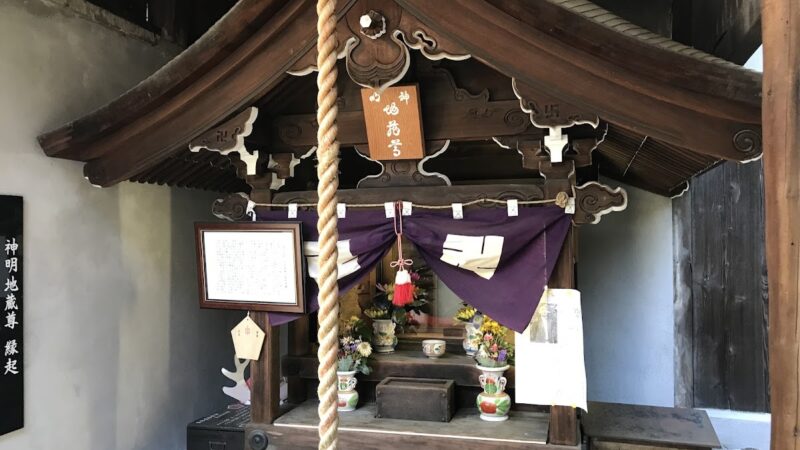
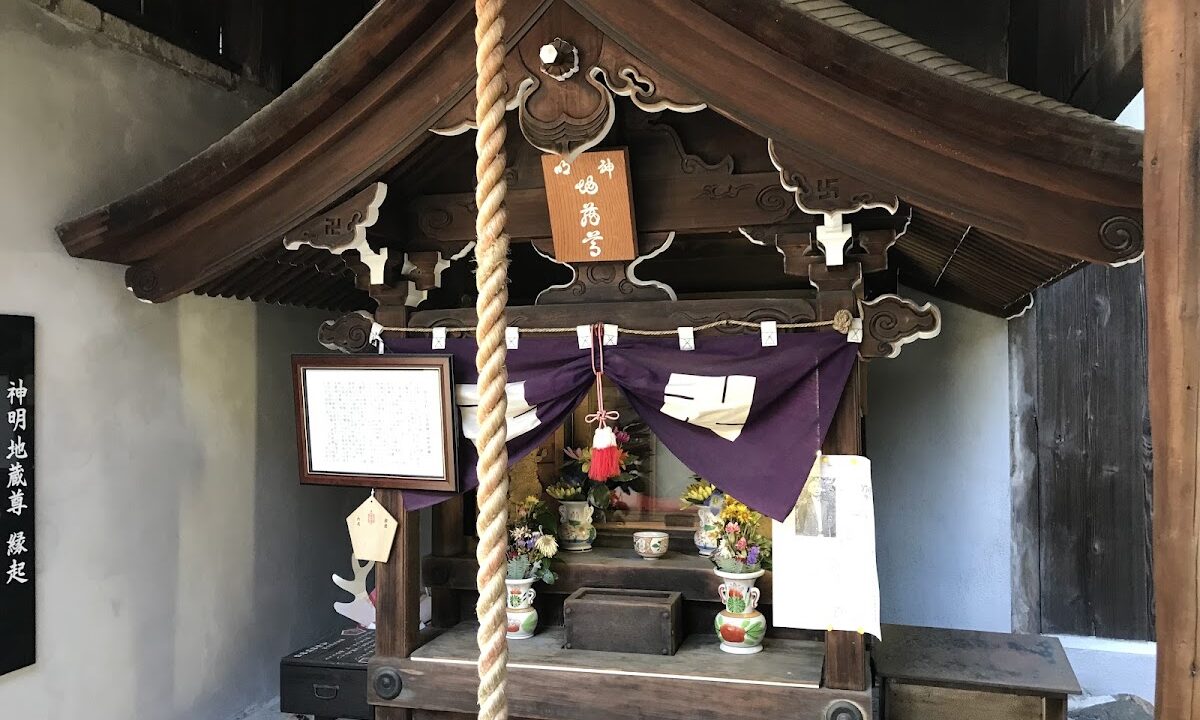
The greatest highlight of Takamatsu Shinmei Shrine is the “Yukimura’s Jizo Bodhisattva of Wisdom,” which is the personal devotional image of Sanada Yukimura.
This Jizo statue, said to have been cherished throughout his life by the renowned Sengoku period general Sanada Yukimura (Sanada Nobushige), was received by Yugyoku Hoin from Karada-san in Kudoyama, Kishu, and enshrined at Takamatsu Shinmei Shrine. It is said that Yukimura worshipped this statue while in seclusion in Kudoyama after the Battle of Sekigahara.
Known as the “Jizo of Wisdom,” it attracts worshippers from all over Japan who pray for academic success, passing exams, and the bestowal of wisdom. Especially during exam season, many people offer the Sanada family crest, the six coins, as a votive offering.
Suikinkutsu (Water Harp Cave)
Below the purification fountain on the shrine grounds is a suikinkutsu (water harp cave) that produces beautiful sounds.
A suikinkutsu is a quintessential Japanese garden feature where water overflowing from a washbasin drips into an underground earthenware pot, creating a clear, resonant sound reminiscent of a xylophone.
At Takamatsu Shinmei Shrine, the suikinkutsu produces a faint yet soothing sound that soothes the hearts of visitors. After using the washbasin, be sure to listen carefully. You’ll experience a beautiful world of sound in silence, a welcome respite from the hustle and bustle of the city.
Main Hall and Worship Hall
The main hall of Takamatsu Shinmei Shrine, though modest, exudes a sense of dignity. Given its history of enshrining Amaterasu Omikami from Ise Grand Shrine, it possesses a pure and dignified atmosphere, incorporating the Shinmei-zukuri architectural style.
In front of the worship hall, you can see decorations featuring the six-coin crest of the Sanada family, reflecting its deep connection to Sanada Yukimura.
Stone Monument at the Site of Takamatsu Palace
Within the shrine grounds stands a stone monument marking the “Takamatsu Palace Site,” signifying that this was once the location of a Heian-period aristocratic residence.
Standing on the site where historically important figures such as Minamoto no Takaakira, Fujiwara no Michinaga, and Emperor Go-Shirakawa once resided, one can feel the atmosphere of Heian-kyo from over a thousand years ago.
Atmosphere of the Shrine Grounds
Despite being located in a residential area in the heart of Kyoto, Takamatsu Shinmei Shrine maintains a tranquil atmosphere. While the grounds are not large, the carefully maintained landscaping and cleanliness provide visitors with a peaceful experience.
Especially during morning visits, one can see locals making it a daily routine, giving a warm feeling of the shrine’s deep roots in the community.
Information on Goshuin (Shrine Seals) and Goshuincho (Shrine Seal Books)
Goshuin (Shrine Seals)
At Takamatsu Shinmei Shrine, you can receive a Goshuin as proof of your visit.
The Goshuin (temple/shrine stamp) bears the name of Takamatsu Shinmei Shrine and a stamp indicating its connection to Sanada Yukimura. Depending on the time of year, a special Goshuin featuring the Sanada family crest, the rokumonsen (six coins), may be available.
Goshuin Reception Hours: 9:00 AM – 6:00 PM (We recommend calling ahead as staff may be absent.)
Offering Fee: Usually around 300-500 yen
Goshuincho (Stamp Book)
Takamatsu Shinmei Shrine also offers original Goshuincho. Designs featuring Sanada Yukimura and the rokumonsen are available, making them perfect mementos of your visit.
The availability and types of Goshuincho may vary depending on the time of year, so please inquire at the shrine office for details.
Access
Access by Train
Using the Kyoto Municipal Subway is the most convenient option.
- Approximately 4 minutes on foot from Exit 3-2 of Karasuma Oike Station (Karasuma Line/Tozai Line)
- After exiting, head south, then west along Anekoji Street. You will see it on your right.
Access by Bus
If using Kyoto City Bus:
- Get off at the “Karasuma Oike” bus stop, approximately 5 minutes on foot
- Get off at the “Horikawa Oike” bus stop, approximately 7 minutes on foot
Access on Foot
Located approximately 15 minutes on foot from Nijo Castle and approximately 20 minutes on foot from the Kyoto Imperial Palace, it’s possible to stop by during your Kyoto sightseeing.
Access by Car
There is no dedicated parking lot, so please use nearby coin parking. There are several parking lots around Karasuma Oike.
Nearby Tourist Attractions
Nijo Castle
A World Heritage Site located approximately 15 minutes on foot from Takamatsu Shinmei Shrine. A historical building constructed by Tokugawa Ieyasu, it was the stage for the Taisei Hokan (restoration of imperial rule).
Kyoto Imperial Palace
Approximately 20 minutes on foot. This palace, which served as the residence of the Emperor until the Meiji Restoration, offers free tours of its beautiful gardens and architecture (reservations may be required).
Nishiki Market
Approximately 10 minutes on foot. This shopping street, known as “Kyoto’s Kitchen,” offers an opportunity to experience Kyoto’s food culture.
Kyoto International Manga Museum
Approximately 8 minutes on foot. A comprehensive manga museum housed in a former elementary school, housing approximately 300,000 manga-related items.
Annual Events
Grand Festival (Third Sunday of October)
The most important festival of Takamatsu Shinmei Shrine, where local residents gather for a portable shrine procession and Kagura (sacred dance) performances.
New Year’s Visit (January 1st-3rd)
The shrine is bustling with worshippers praying for good fortune and protection from evil in the new year. Many students also visit to pray for academic success to the Jizo statue of wisdom associated with Sanada Yukimura.
Setsubun Festival (around February 3rd)
Prayers for warding off evil are offered, and traditional events such as bean-throwing are performed.
Manners and Points for Visiting the Shrine
Proper Way to Visit
- Bow before passing through the torii gate.
- Purify your hands and mouth at the water basin. (Enjoy the sound of the suikinkutsu.)
- Bow twice, clap twice, and bow once in front of the main hall.
- Pay your respects to the Jizo statue of wisdom associated with Sanada Yukimura.
Photography
Photography is generally permitted on the shrine grounds, but please be considerate of other visitors. Photography inside the main hall may be prohibited.
Best Time to Visit
The quiet morning hours (around 9:00-10:00 AM) are recommended for a peaceful visit. The sound of the suikinkutsu is also more clearly audible during these quiet times.
Cultural Assets of Takamatsu Shinmei Shrine
Takamatsu Shinmei Shrine possesses the following cultural assets of historical value:
Sanada Yukimura’s Personal Buddha (Shinmei Jizo)
This Jizo statue is said to have been cherished throughout the life of the Sengoku period warlord Sanada Yukimura and is the most important object of worship at Takamatsu Shinmei Shrine.
Ancient Documents
Valuable documents are preserved here, including ancient records concerning Minamoto no Takaaki and Takamatsu-dono, and records of shrine building repairs from the Edo period.
Connections with the Community
Takamatsu Shinmei Shrine has long been a central presence in the local community of Nakagyo Ward, Kyoto City, and has been cherished by the local people.
Local residents work together to protect the shrine through activities such as cleaning and organizing the annual festival. Furthermore, in recent years, the Sanada Yukimura boom and the Goshuin (shrine stamp) boom have attracted visitors from all over Japan, contributing to the revitalization of the region.
Summary of Takamatsu Shinmei Shrine’s Charms
Takamatsu Shinmei Shrine is a shrine with the following charms:
- History from the Heian Period: A historically significant site, the former residence of Minamoto no Takaakira.
- Connection to Sanada Yukimura: The blessing of wisdom bestowed by Yukimura’s personal Buddha, the “Jizo of Wisdom.”
- Beautiful Sound of the Suikinkutsu (Water Harp Cave): Traditional Japanese beauty that soothes the soul in the heart of the city.
- Convenient Access: A prime location, just a 4-minute walk from Karasuma Oike Station.
- Tranquil Atmosphere: A peaceful space for worship, far from the hustle and bustle.
Located in the heart of Kyoto, this is a precious shrine where you can feel history and tranquility, and a place we highly recommend visiting.
Frequently Asked Questions (FAQ)
Q1: Can I get a Goshuin (shrine stamp) at Takamatsu Shinmei Shrine anytime?
A1: Goshuin are available from 9:00 to 18:00, but the chief priest may be absent. If you want to be sure to get a Goshuin, we recommend calling in advance (075-231-8386). Please note that the shrine is likely to be closed, especially on weekdays and during early mornings and evenings.
Q2: Is there parking available?
A2: Takamatsu Shinmei Shrine does not have its own parking lot. If you are coming by car, please use a nearby coin-operated parking lot. There are several parking lots around Karasuma Oike Station. However, using public transportation (a 4-minute walk from Karasuma Oike Subway Station) is more convenient.
Q3: What kind of blessings can I expect from visiting the Jizo statue of Sanada Yukimura’s wisdom?
A3: The Jizo statue of Sanada Yukimura’s wisdom is said to bestow wisdom, and is particularly popular with visitors praying for academic success, passing exams, and success in qualification tests. It is also said that, in honor of the Sengoku period warlord Sanada Yukimura, one can receive wisdom to overcome difficulties and good fortune in competitions.
Q4: How can I hear the sound of the suikinkutsu (water harp)?
A4: After purifying your hands at the water basin, if you put your ear close to the basin, you can hear a clear, xylophone-like sound coming from underground. The sound is faint, so the key is to listen quietly. The quiet morning hours are especially recommended.
Q5: When was Takamatsu Shinmei Shrine founded?
A5: Takamatsu Shinmei Shrine is said to have originated in 920 AD when Minamoto no Takaaki invited Amaterasu Omikami from Ise Grand Shrine to serve as the guardian shrine of Takamatsu-dono. It is an ancient shrine with a history of over 1100 years, dating back to the mid-Heian period.
Q6: Are there any other shrines associated with Sanada Yukimura?
A6: There are several temples and shrines associated with Sanada Yukimura throughout Japan, but a major feature of Takamatsu Shinmei Shrine is that it directly enshrines Yukimura’s personal Buddha image. Other famous sites include Yasui Shrine in Osaka (the site of Yukimura’s death) and Kudoyama Town in Wakayama Prefecture (the site of Yukimura’s confinement).
Q7: What kind of building was Takamatsu-dono?
A7: Takamatsu-dono was a residence built by Minamoto no Takaakira in the mid-Heian period. Later, Fujiwara no Michinaga’s daughter, Akiko, lived there, and it was a prestigious building used as a temporary palace by Emperor Go-Shirakawa and others. Although the building no longer exists, a stone monument marking the “site of Takamatsu-dono” stands within the grounds of Takamatsu Shinmei Shrine.
Q8: How long does it take to visit the shrine?
A8: The grounds are not very large, so a normal visit takes about 15-20 minutes. However, if you want to receive a goshuin (shrine stamp), enjoy the sound of the suikinkutsu (water harp), or appreciate the history of the grounds, it’s best to allow 30 minutes to an hour.
Q9: What is the connection to the Sanada family’s six-coin crest?
A9: The six-coin crest of the Sanada family represents the six coins used as payment for crossing the Sanzu River (the river of the dead), symbolizing a resolve to “fight without fear of death.” Because Takamatsu Shinmei Shrine enshrines a personal Buddha image of Sanada Yukimura, the six-coin motif is sometimes used in the shrine’s decorations and on its goshuin (seal stamps).
Q10: When is the annual festival held? Can the general public participate?
A10: The annual festival is held on the third Sunday of October every year. The general public is free to participate and observe. It’s a valuable opportunity to see traditional festival events such as the portable shrine procession and Kagura (sacred dance) performance up close. You can also enjoy interacting with local residents.
Summary
Takamatsu Shinmei Shrine is a historic shrine built on the site of the Takamatsu Palace of Minamoto no Takaakira during the Heian period. It’s a fascinating spot where history and culture blend seamlessly, featuring the “Jizo of Wisdom,” a personal devotional image of Sanada Yukimura, and a beautiful suikinkutsu (water harp cave).
Despite its convenient location just a 4-minute walk from Karasuma Oike Station in central Kyoto, it’s a precious shrine where visitors can pray in a tranquil atmosphere, beloved by locals and visitors from all over Japan.
If you’re seeking blessings for good fortune, protection from evil, wisdom, and academic success, be sure to visit Takamatsu Shinmei Shrine. You’ll be able to spend a soul-cleansing time in its grounds, where over a thousand years of history breathe life into.